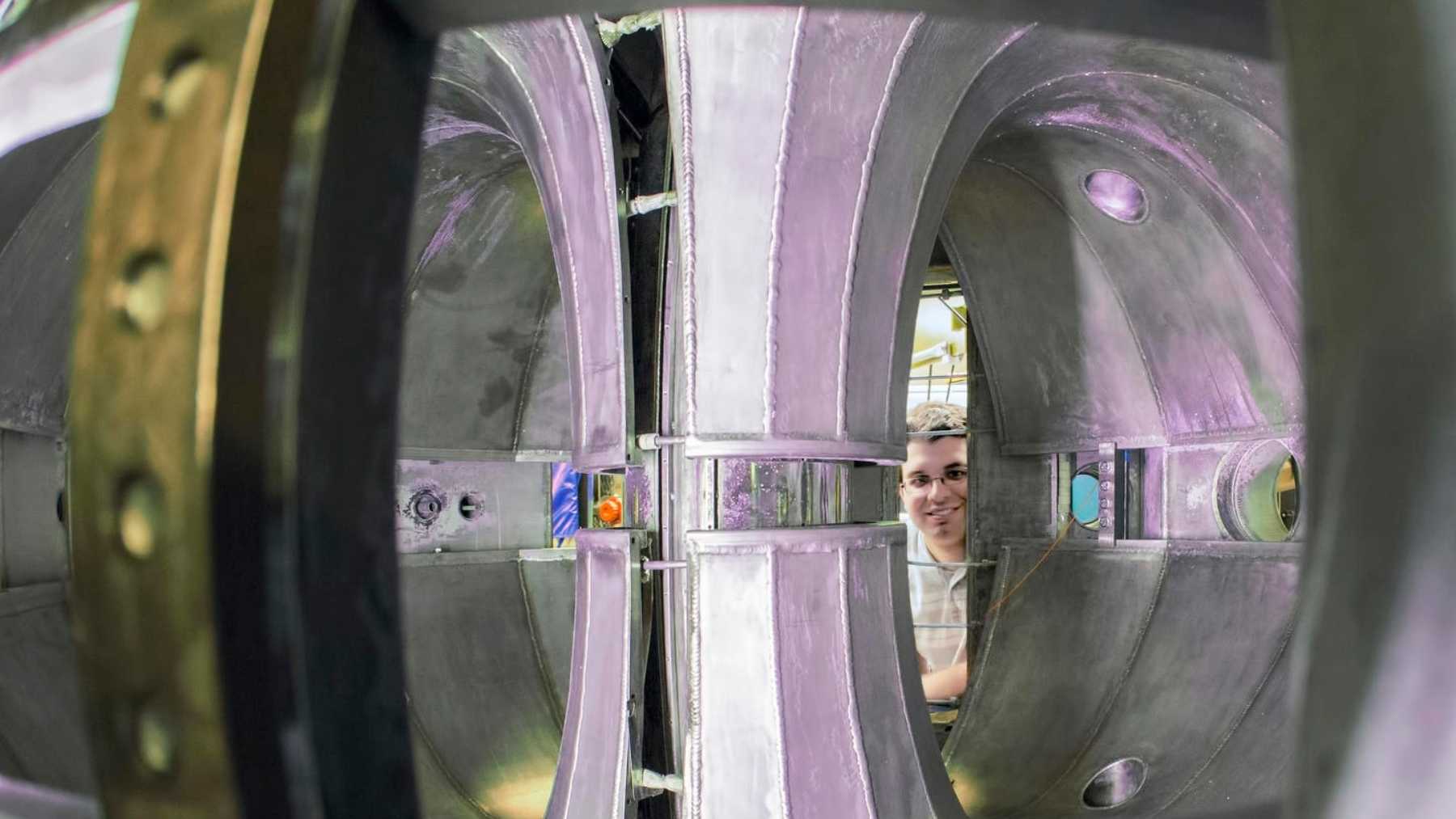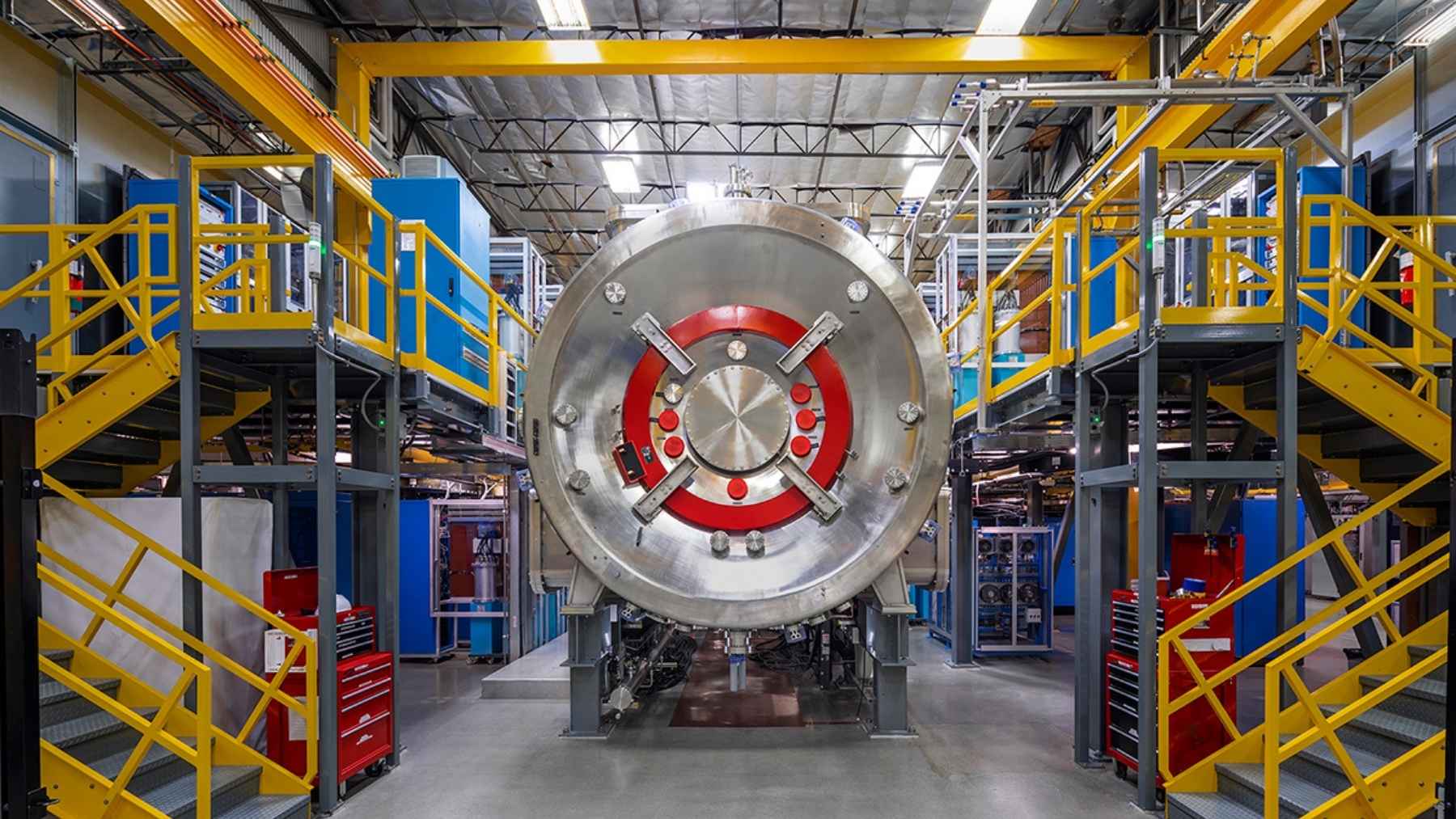

Fusion startups usually get in the news for adding things. A bigger magnet, a taller building, another few hundred million dollars in funding. So a company showing off what it removed isn’t something you see every day, and frankly it’s a nice change of pace. TAE Technologies pulled the plasma formation sections, quartz tubes and all, off both ends of its fusion machine in Foothill Ranch, California, and the shortened machine still makes the plasma those sections were built to launch.
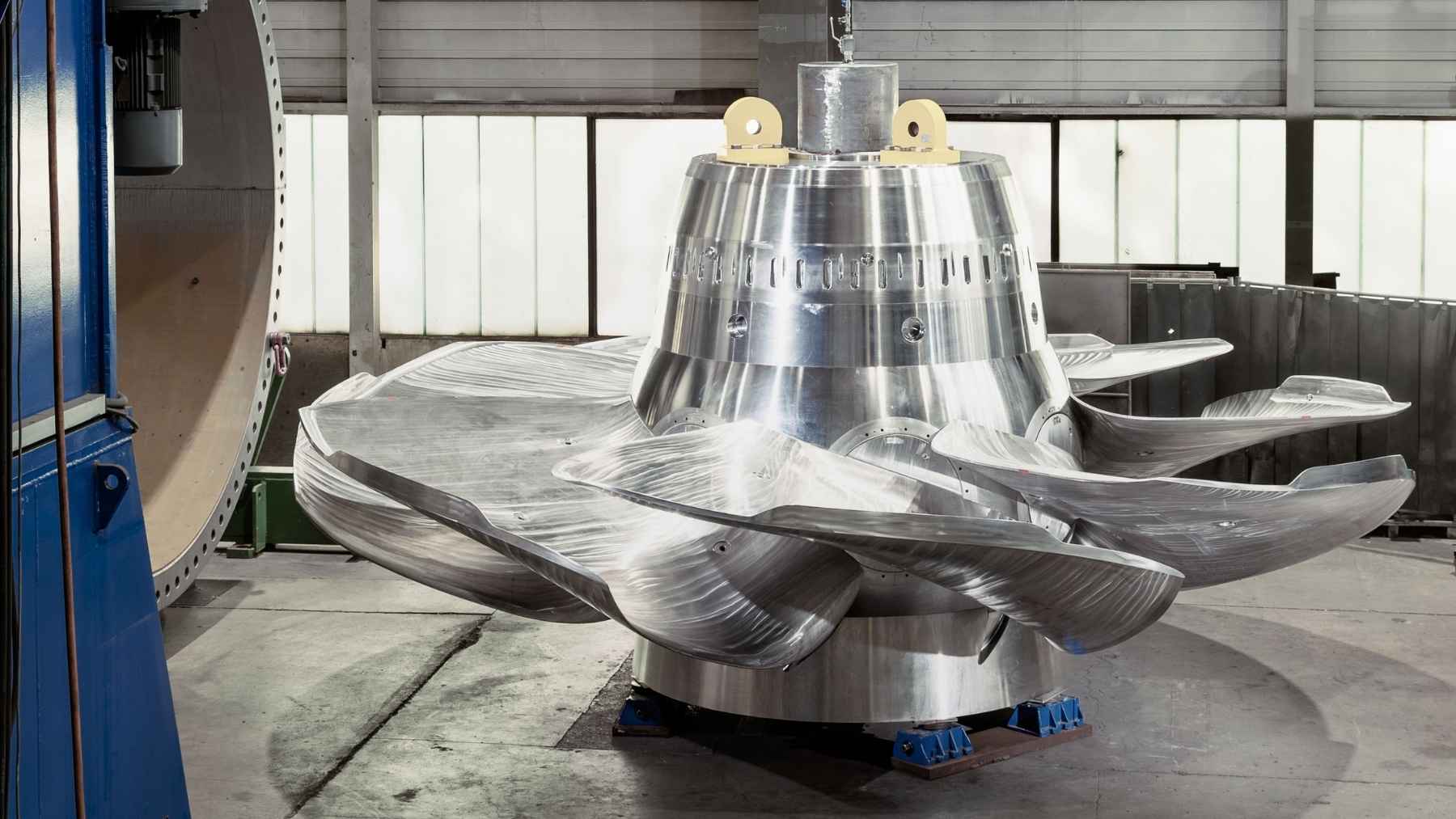
The machine is called Norm, and the name is the actual joke: it’s the shortened version of Norman, the configuration that came before it. Norman was a serious piece of hardware. TAE’s own figures put it at about 80 feet long and 22 feet tall, weighing around 60,000 pounds, with a build cost of roughly $150 million. Take the formation sections off both ends and you get Norm, which TAE says trims the machine’s length and complexity by up to 50%. The company hasn’t published an exact length for the shortened version anywhere I can find, so up to half shorter is as specific as it gets, and that number is TAE’s own estimate.
Norman made its plasma the theatrical way. Coils wrapped around quartz tubes at each end dumped a colossal pulse of electricity, up to 100 gigawatts for about 10 microseconds according to Thomas Roche, TAE’s director of diagnostics, and fired two rings of plasma at each other at around 670,000 mph. The rings met in the middle, merged, and their speed became heat. It worked for years. But those quartz tubes were “prohibitively expensive,” in Roche’s words, and finding anyone who could manufacture them apparently wasn’t much fun either.
So what replaces a 100-gigawatt plasma launcher?
Particle beams, a faint seed plasma, and about 10 milliseconds of patience. That’s the result TAE and its university co-authors published in Nature Communications on April 12, 2025, and it’s the reason the tubes could come off at all.
So how does a particle beam build a magnetic trap?
The object TAE makes is called a field-reversed configuration, or FRC. If you’ve read any fusion coverage, you’ve mostly seen tokamaks, the donut-shaped machines that cage their plasma with heavy external magnets, like the San Diego tokamak we covered in September. An FRC skips most of that. The plasma carries so much of its own electrical current that it bends the surrounding magnetic field back around itself and basically becomes its own bottle. Less external hardware per unit of plasma is arguably the whole sales pitch, and TAE isn’t the only one making it: a New Jersey startup is betting the same way by swapping a stellarator’s 50 twisted magnets for 300 identical flat ones.
The startup sequence in the paper goes like this. Small plasma guns on the machine’s axis, working with a set of biasing electrodes, light a thin seed plasma in 1 to 4 milliseconds. Eight neutral beams then fire hydrogen atoms into that seed at 15 keV, with up to 13 megawatts of combined power, angled 20 degrees off the perpendicular and aimed to miss the centerline by about 8 inches, so every atom that gets ionized starts circling the axis in the same direction. Circulating charge is a current, and that current makes a magnetic field pointed against the external one. Stack up enough fast ions and the field along the axis doesn’t just sag, it flips, and the plasma closes itself into a trap. The full change of topology takes about 10 milliseconds. And of the 13 megawatts, about 8 typically gets absorbed by the plasma once you account for duct losses and the slice of the beam that shines straight through.
This wasn’t supposed to be simple, by the way. A mirror machine at Lawrence Livermore tried to flip its field with neutral beams in the late 1970s and topped out at 0.9 on the index physicists use for this, and a real reversal starts at 1. According to the paper, nobody attempted the method again until Norm. The authors call it the first experimental demonstration of field reversal by beam injection alone.
Norm has done this a few thousand times
One good shot proves nothing in plasma physics, so the paper leans on volume. The published distribution covers 4,671 shots in which the plasma grew wider than 16 inches in radius and lasted longer than 30 milliseconds. Those aren’t all the shots the machine ever fired; they’re the ones that cleared the paper’s size and duration cut, and the lifetime odometer on this hardware is north of 50,000. Reconstructions of a typical shot put the trapped plasma at about six and a half feet long and two and a half feet across, wrapped in roughly 300,000 amps of current. Each run ends near the 40-millisecond mark, which is when the stored energy driving the beams runs out.
Two honest caveats before anyone gets carried away. You can’t directly measure the magnetic field inside one of these plasmas with today’s diagnostics, so the field maps come from wall sensors and magnet currents fed through reconstruction models, and the paper says so plainly. And these experiments ran mostly on plain hydrogen, which doesn’t fuse in any meaningful amount at these conditions. Norm’s results are plasma physics, period. The campaign didn’t produce fusion power or generate any electricity.
TAE is already skipping a machine
TAE’s endgame is a hydrogen-boron power plant it calls Da Vinci, and the company treats Norm as the machine that clears the road there. “With Norm, we have mastered the remaining complexities of the FRC,” CEO Michl Binderbauer said when the results went public. That’s a company describing its own machine, so apply the usual discount, and remember the up-to-50% figure for size and cost is TAE’s estimate too. Still, the physics underneath the marketing is peer-reviewed and unusually well documented.
The company also says Norm is planned to run at 100 million degrees Celsius, that’s about 180 million degrees Fahrenheit. The key word is planned. That’s a target for the upgrade program, and the published results don’t report the machine operating there.
The most recent milestone TAE has put a date on came on November 17, 2025: in a roadmap update, the company said Norm had “performed beyond expectations” and that it would skip its planned next device, Copernicus, and go straight to designing Da Vinci.