
- 1 MONTH AGO · ENERGYA 471-megawatt reactor in Slovakia started climbing toward full power at 3:33 in the afternoon, its operator told the neighbors to expect loud tests on the safety valves that blow off steam, and three weeks in, the unit’s still drawing 17.7 megawatts from the grid
- 1 MONTH AGO · ENERGYThree 365-ton steam generators, each as tall as a six-story building, crossed the world by ship and rode a river barge and a special trailer into a French nuclear plant, where they’ll sit in storage until the reactor shuts down for an eight-month overhaul
- 1 MONTH AGO · ENERGYFour 474-ton steam generators sailed around Spain and Portugal to reach a nuclear plant on the French coast, then crawled the last 22 miles by road over three days, an inch from a roadside cross, and will sit in storage for a year before the reactor shuts down to take them
- 4 WEEKS AGO · ENERGYA 60,000-pound steel cask holding up to 1,900 graphite fuel balls from a German reactor shut down 38 years ago rolled out at 10:40 at night under a police helicopter and reached a storage hall 105 miles away at 1:40 a.m., with 126 more casks still to go
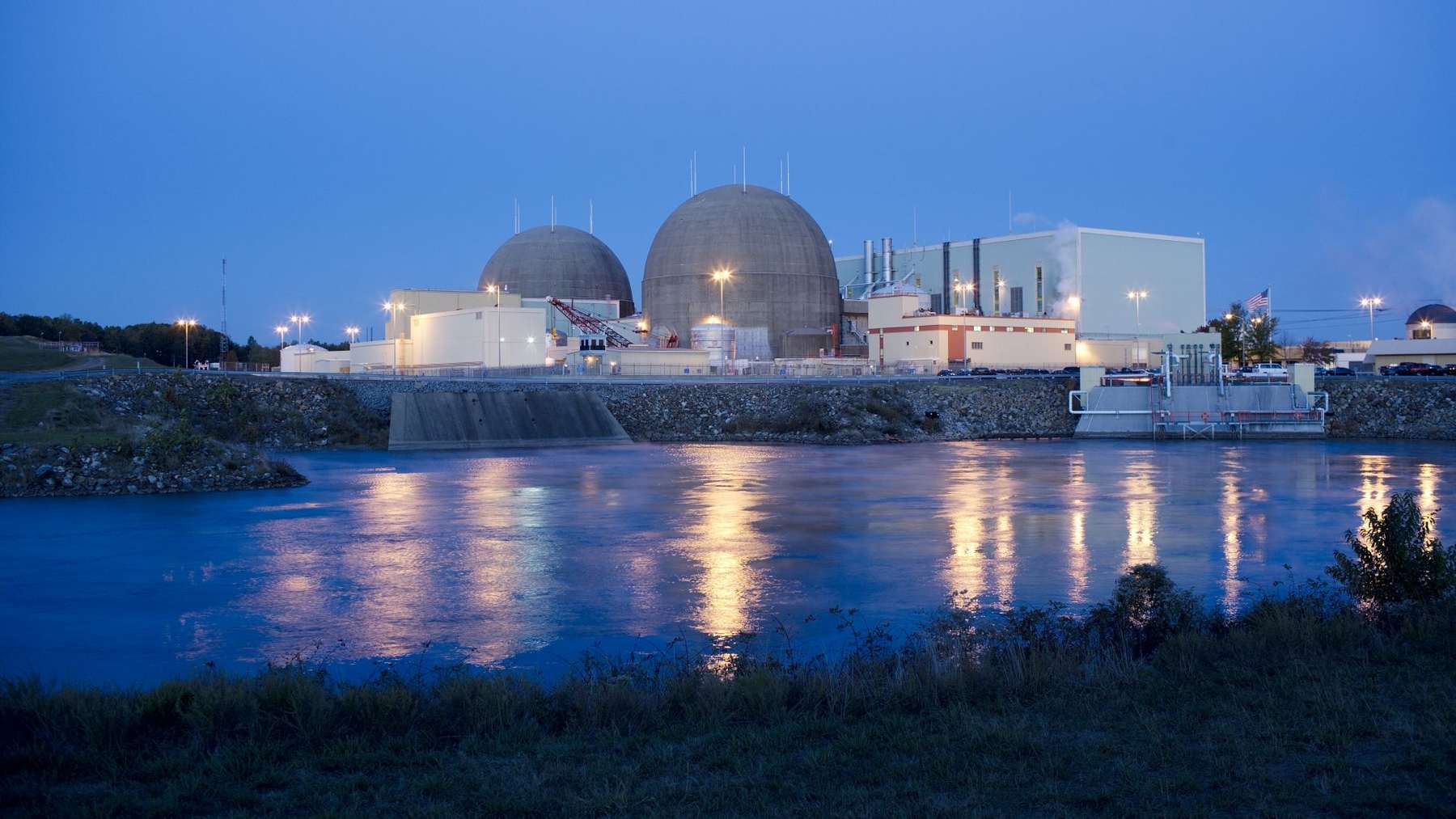
- TODAY · THIS ARTICLETwo Virginia reactors of 903 and 972 megawatts once shut themselves down at 1:51 in the afternoon when a 5.8 earthquake struck 11 miles away, and out on the storage pad 25 of 27 spent-fuel casks, each 16 feet tall and 115 tons, slid as much as 4.5 inches across the concrete
Most of the reactor shutdowns we’ve covered lately start with something going wrong inside the fence. A main generator locks out on the Lake Michigan shore, or a Mississippi reactor trips the night before it’s due for refueling. The plant explains what broke, the NRC takes a look, and it’s back to business.
North Anna, in central Virginia, is a different kind of shutdown. Its trouble came up out of the ground.
On August 23, 2011, at 1:51 p.m., a magnitude 5.8 earthquake hit near the small town of Mineral, about 11 miles from the plant. Both reactors, a pair of Westinghouse pressurized water reactors rated at 903 and 972 megawatts, shut themselves down automatically. That part went exactly the way it’s supposed to.
What happens when a nuclear plant loses the grid?
The quake also knocked out offsite power, which sounds a little backward if you’ve never thought about it. A nuclear plant makes electricity, but once its reactors are shut down it can’t run its own safety systems off them. It still needs power to keep pumps moving and the fuel cooling, so when the grid drops out, it falls back on emergency diesel generators.
Four diesels started up at North Anna. One of them sprang a coolant leak and quit, so a fifth standby generator took its place while workers repaired the broken one. Offsite power came back later that same day. I’d say that’s a pretty good argument for keeping a spare generator on site.
And if you want to see what a long stretch on diesel looks like, the Zaporizhzhia plant in Ukraine ran on its generators for 18 days after losing its last outside power line. North Anna got off a lot easier than that.
The plant declared an Alert, the second-lowest of the NRC’s four emergency levels. It didn’t come out of that status until 11:16 the next morning.
The quake beat the plant’s design
For the NRC, the real headache was how hard the ground shook. Dominion, which runs North Anna, told the agency on August 26 that the quake may have shaken the site harder than it was built to handle. By September 8, the company had confirmed that the plant’s design basis earthquake had been exceeded.
If you haven’t run into the term, a design basis earthquake is basically the shaking a plant is engineered and licensed to ride out. North Anna got more than that, at least at some frequencies, which is the kind of thing regulators like to take their time over.
So the NRC wasn’t going to let Dominion just flip the reactors back on. Its position, laid out in the NRC’s restart announcement, was simple enough: the reactors had taken more shaking than they were designed for, so it was on Dominion to show that nothing important for safety had been broken.
That didn’t happen overnight. The NRC approved the restart on November 11, 80 days after the quake, and Dominion started bringing the first unit back the same day. By December 20, both reactors were back at full power. Honestly, 80 days seems pretty reasonable to me for a plant that had just been shaken past its design limits.
So what happened to the spent fuel?
Here’s where it gets a bit more unusual. Out on one of the plant’s storage pads, 25 of the 27 vertical spent-fuel casks had moved.
If you’re not sure what a cask is, it’s basically a giant steel-and-concrete can. Once fuel has done its time in a reactor and spent a while cooling in a pool, it can be sealed inside one of these and parked on a concrete pad outdoors. North Anna’s older casks stand upright, and each one is 16 feet tall and weighs 115 tons.
The shaking did all the work. Try to scoot your fridge an inch across the kitchen floor, then picture the fridge weighing 115 tons. Early reports from Dominion and the NRC put the movement at 1 to 4 inches. Later reporting, including Power Engineering’s, puts the biggest slide at as much as 4.5 inches. I can’t tell you how far each individual cask went, because none of the reports I found break it down cask by cask.
According to NRC spokesman Roger Hannah, it was the first time an earthquake had shifted casks like these at a US nuclear plant. He also wasn’t exactly worried about them. “To say they are robust would be an understatement,” he told UPI.
So did anything leak?
Dominion said the casks stayed upright and intact, and its helium leak sensors didn’t pick up anything escaping. No radiation was released. The plant’s second pad held 26 newer casks that lie on their sides instead of standing up, and those didn’t move at all, although some concrete flaked off their outsides, CBS News reported. Only 13 of those had fuel in them at the time.
Dominion has said it knew the casks had moved shortly after the quake. The news reached the public about a week later, at the end of August.
Why not just push them back?
You’d think the obvious fix would be to shove 25 casks back where they started. The NRC didn’t make Dominion do that. The casks still met the agency’s spacing requirements where they ended up and showed no other signs of damage, and moving them would’ve meant a lot of work plus potential radiation exposure for the workers doing it. That’s a pretty sensible trade, if you ask me. Dragging that much spent fuel around to win back a few inches is arguably more risk than the inches are worth.
A year after the quake, in August 2012, the NRC noted that North Anna’s staff had installed additional seismic and backup equipment. And in February 2014, Power Engineering reported that Dominion wouldn’t be required to move the 25 casks back to their original spots.
Credit: Dominion Energy
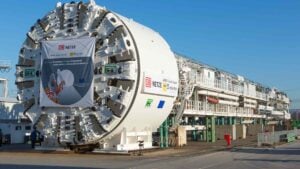 A 1,930-ton German boring machine was once 16 feet under one of Europe’s busiest freight railroads when the tracks above her sank 1.6 feet, so about 525 feet of tunnel was pumped full of concrete with her still inside and the main line stayed shut for 51 daysEnergy · 1 hour ago
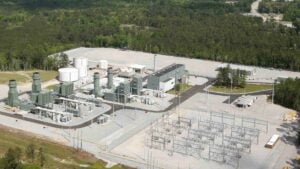 A salt cavern 1,500 feet under Alabama was built to hold 19.8 million cubic feet of compressed air, pumped in over about 40 hours and let out through a 110-megawatt turbine for up to 26 hours, and the plant on top has been the only one of its kind in the country for 35 yearsEnergy · 17 hours ago
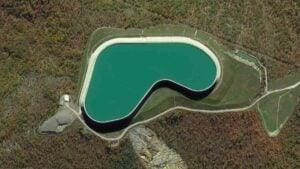 A 100-foot wall around a lake on top of a Missouri mountain was overfilled by its own pumps before dawn, split open along 720 feet and let go of a billion gallons in 12 minutes, and the power plant under it now runs on a rebuilt bowl of 3 million cubic yards of concreteEnergy · 18 hours ago