
- 2 MONTHS AGO · ENERGYA 900-megawatt reactor on the French coast came off the grid at four in the afternoon and a second one overnight, both shut by hand before returning jellyfish could pack the seawater screens and trip them, and both were back inside four days against twenty for the last swarm
- 2 MONTHS AGO · ENERGYA reactor at Canada’s largest nuclear plant came off the grid by evening and a second one dialed back to 87 percent power, both pulled by hand as millions of gizzard shad packed the intake screens, and the count hit up to 4.95 million fish against a site record of 800,000
- 1 MONTH AGO · ENERGYA 930-megawatt reactor on the South African coast was cut to half power when dead sardines packed its seawater intake and a cooling pump shut itself off, the only nuclear plant in Africa was already down to one machine with its twin in refueling, and on Friday that one tripped too
- 4 WEEKS AGO · ENERGYA 1,152-megawatt reactor on the Mississippi shut itself down at 10:45 at night, hours before operators planned to shut it down by hand for refueling, when a turbine test tripped it, one electrical bus failed to switch over and an emergency diesel started on its own
- TODAY · THIS ARTICLEA 1,118-megawatt reactor on the California coast was once shut down by hand at 10:27 at night because salps, jellyfish-like animals 2 to 3 inches long, were packing its seawater screens, and with its twin down for refueling the whole 2,256-megawatt plant sat idle for more than two days
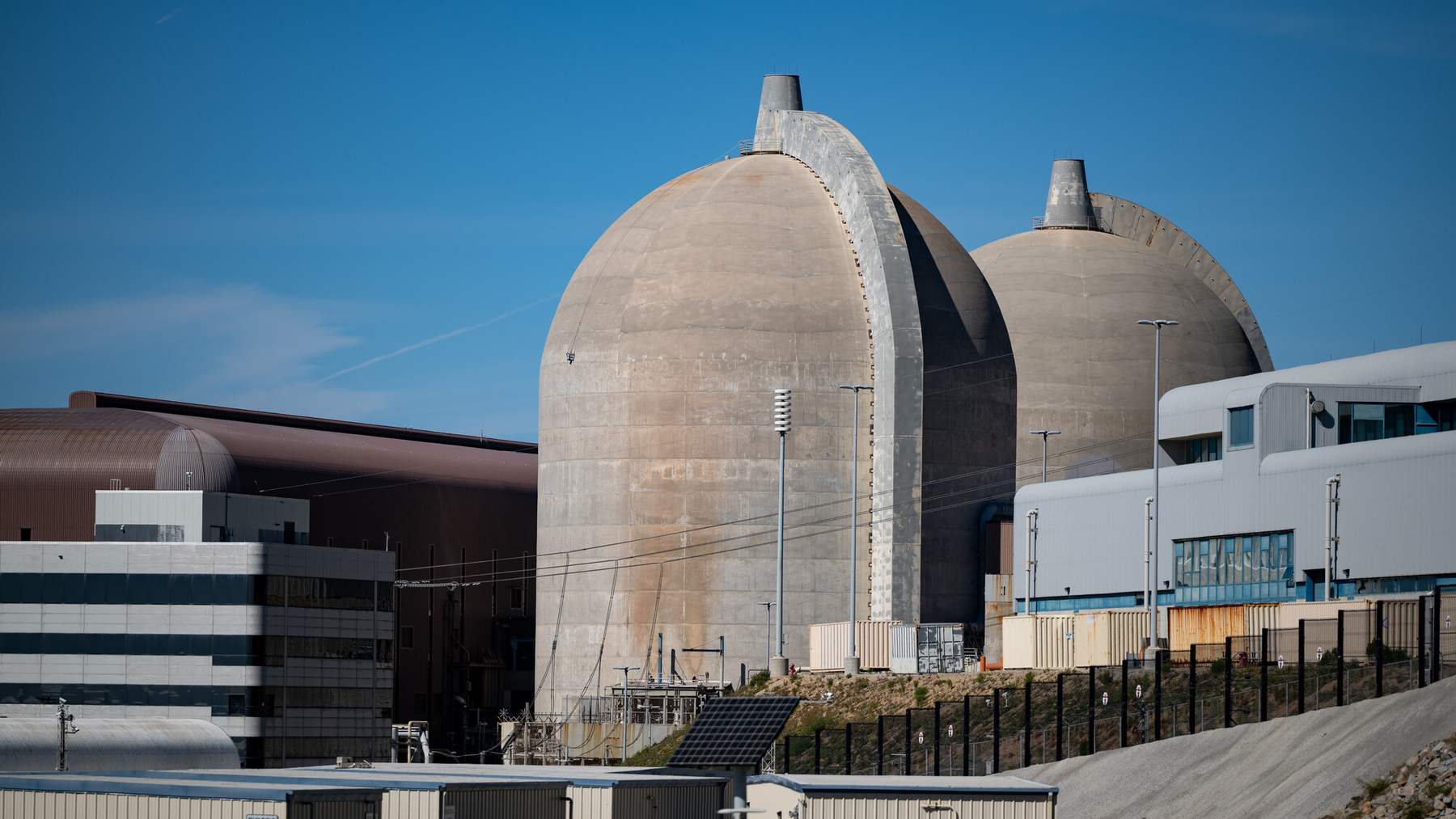
Ask most people what could knock Diablo Canyon offline and they’ll probably say an earthquake. That’s fair enough. The plant sits on the San Luis Obispo County coast with faults running offshore, and PG&E has spent decades proving it can take a hit (we’ve covered how it had to be reworked mid-construction after geologists found a new fault offshore). But in April 2012, California’s only operating nuclear plant got switched off by a swarm of salps.
If you’ve never heard of a salp, you’re not alone. They’re see-through, barrel-shaped animals that drift around offshore and look a lot like jellyfish. Scientists who spoke to NBC News at the time pointed out that salps are tunicates, and they’re actually more closely related to animals with backbones than to anything that stings you at the beach. They’re harmless to swimmers. They can also multiply fast enough to form enormous blooms.
How big are they? That depends on who’s doing the measuring. NBC News put them at one to two inches long, Newser at two to three. Either way, each one’s smaller than a credit card.
So how does a 1,118-megawatt reactor lose to a blob?
Diablo Canyon cools itself with the Pacific. It pulls seawater in from a cove next to the plant, runs it through condensers that turn the steam coming off the turbines back into water, and sends it back out to sea. Before that water gets anywhere near the equipment, it passes through rolling screens. Those are basically giant mesh conveyor belts that catch fish, seaweed and anything else that shouldn’t be in there.
The screens don’t mind the usual stuff. A dense swarm of jelly is a different story, because the animals can pack into the mesh faster than the screens rotate and get washed off. Less water makes it through, and a plant that can’t cool its condensers properly can’t run at full power.
One write-up from the time put the intake structure at 240 feet long, 100 feet wide and 18 feet high. I couldn’t find PG&E publishing those dimensions itself, so treat them as a decent ballpark rather than gospel.
Operators spent two days trying to ride it out
Southerly winds started pushing salps into the intake cove early that week, according to the Associated Press. On Monday night, April 23, operators saw pressure differences at the intake, found the screens clogging up and cut Unit 2 to 15 percent power, PG&E said at the time.
Unit 1 couldn’t pick up the slack. It had come off the grid on April 22 for its 17th scheduled refueling outage, according to the Nuclear Regulatory Commission.
Dropping to 15 percent helped for a while. The NRC’s daily status reports show Unit 2 at 20 percent on April 24 and 24 percent on April 25, still listed as reduced because of the salps. Then, at 10:27 p.m. Pacific time on Wednesday, April 25, operators manually took the unit offline and shut down the reactor, according to the event report PG&E filed with the NRC. The same report says the crew started the auxiliary feedwater pumps by hand, as procedures require, and that everything did what it was supposed to.
If you’re wondering what “manually” means here, it’s pretty simple. People in the control room decided conditions at the intake had gotten bad enough, disconnected the generator from the grid and shut the reactor down on purpose. That’s frankly the boring, sensible option, and boring is exactly what you want from a nuclear plant.
Newser quoted PG&E’s chief nuclear officer, Ed Halpin, who’d taken the job that February, putting it about as plainly as you can: “The conditions got to the point where we had to shut it down.”
Both reactors were sitting at zero
With Unit 1 in its refueling outage, the whole plant wasn’t producing anything. That’s 2,240 megawatts of summer capacity, split between the 1,122-megawatt Unit 1 and the 1,118-megawatt Unit 2, according to the Energy Information Administration. The California Energy Commission notes that by mid-2012, Diablo Canyon was the state’s one operating nuclear plant, so for a few days California basically had no nuclear generation at all.
Luckily, the grid didn’t seem to care much. The California Independent System Operator told the AP it didn’t expect shortages, thanks to healthy reserves and cool weather. Which is arguably the best possible timing for losing a plant that size: a mild week in April, not a heat wave in August.
So how long was it actually down?
Here’s where the reporting gets a little messy. The AP said PG&E restarted Unit 2 six days after the shutdown and had it back at full power on Monday. The NRC’s daily logs tell a slightly different story. Unit 2 shows up at zero and “preparing for restart” on April 28, back on the grid at 40 percent on April 29, then stuck at 48 percent for a couple of days because of air leaking into its condenser, which has nothing to do with salps. It doesn’t hit 100 percent until the May 2 status report.
So the plant sat at zero for more than two days, and Unit 2 needed about a week to get all the way back. I’d trust the regulator’s paperwork over the wire story here, mostly because the NRC numbers come from the plant itself, day by day.
Diablo Canyon had been here before
On October 21, 2008, less than four years earlier, a mass of jellyfish that POWER magazine described as basketball-sized hit the same intake. PG&E manually tripped Unit 2 and ran Unit 1 at 50 percent as a precaution, according to POWER. Salps were new, though. Larry Madin, a salp expert at the Woods Hole Oceanographic Institution, told NBC News he hadn’t heard of them messing with a nuclear plant before.
Coastal reactors deal with this kind of thing more often than you’d think. Other plants have had to shut reactors down by hand over jellyfish, and two Florida reactors keep pulling sea turtles into their cooling canal.
And Unit 1? It was still busy with its refueling. The NRC’s May 3, 2012, report lists it as defueled with the core offloaded, while Unit 2 was holding steady at 100 percent.
Credit: KQED
 Two Virginia reactors of 903 and 972 megawatts once shut themselves down at 1:51 in the afternoon when a 5.8 earthquake struck 11 miles away, and out on the storage pad 25 of 27 spent-fuel casks, each 16 feet tall and 115 tons, slid as much as 4.5 inches across the concreteEnergy · 5 hours ago
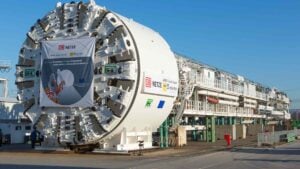 A 1,930-ton German boring machine was once 16 feet under one of Europe’s busiest freight railroads when the tracks above her sank 1.6 feet, so about 525 feet of tunnel was pumped full of concrete with her still inside and the main line stayed shut for 51 daysEnergy · 6 hours ago
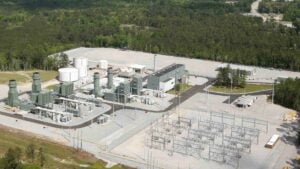 A salt cavern 1,500 feet under Alabama was built to hold 19.8 million cubic feet of compressed air, pumped in over about 40 hours and let out through a 110-megawatt turbine for up to 26 hours, and the plant on top has been the only one of its kind in the country for 35 yearsEnergy · 21 hours ago