
Inspector general reports aren’t usually what you’d call page-turners. Most of them deal with procurement rules, IT systems or whether someone kept the right log, which is important, but it’s not exactly couch reading.
The one the Tennessee Valley Authority’s watchdog released on November 4 is a bit different. It covers the job that put a new turbine into Fort Loudoun Dam, near Lenoir City, Tennessee. And it found that 196 of the 240 welds on one key piece of that job failed.
If you haven’t run into one before, an inspector general’s office is basically an in-house auditor with some independence. TVA’s sits inside the agency but reports to the TVA board and to Congress, and its job is to dig through projects and check whether the rules were followed.
The old turbine went in during World War II
Fort Loudoun Dam rises 122 feet and runs 4,190 feet end to end on the Tennessee River, according to TVA’s page for the dam. It has four generating units, and TVA says they can put about 151 megawatts on the grid on an average summer day, after the dam takes what it needs to run itself.
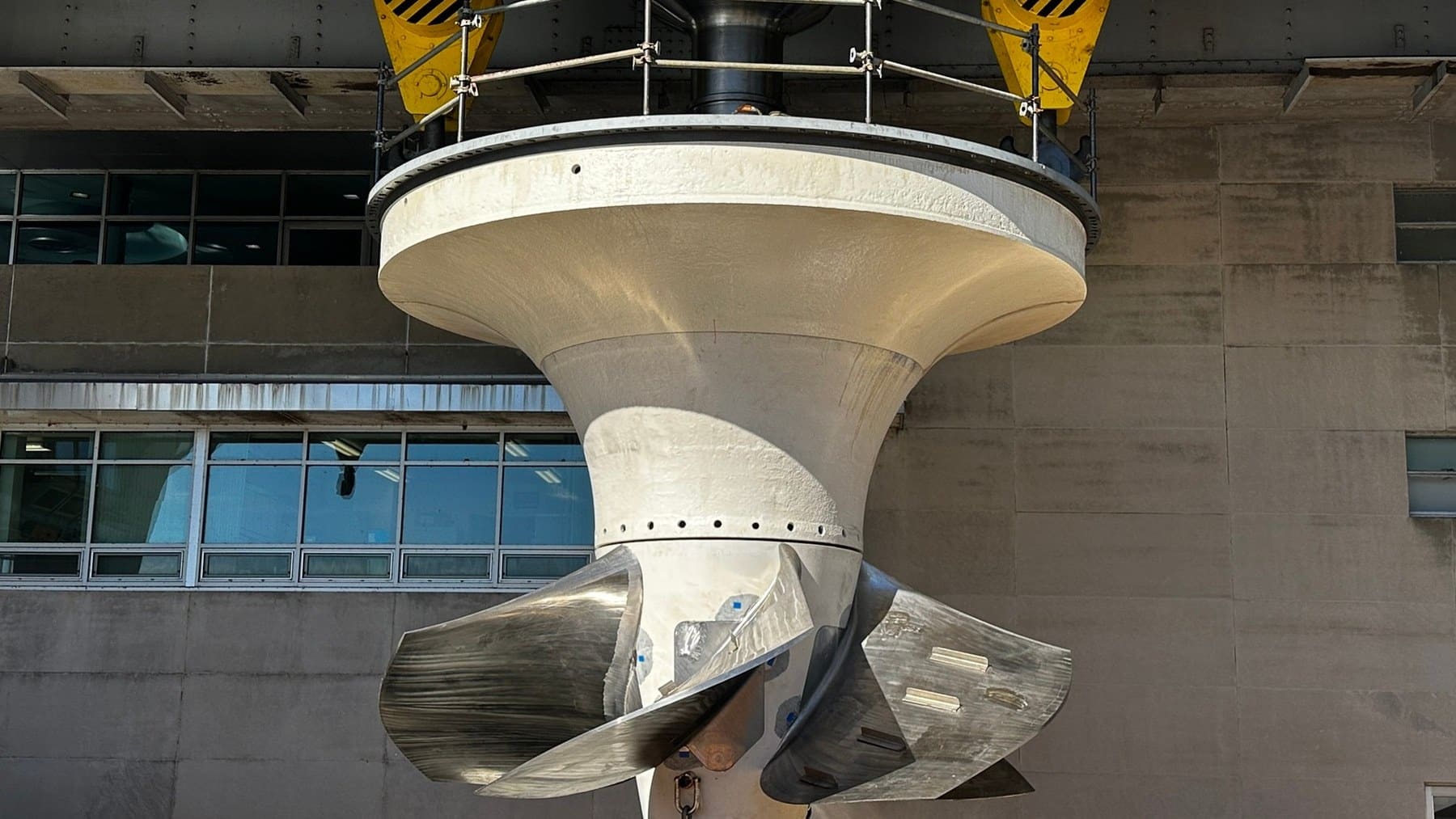
Unit 2 is the one in the report. Last December, TVA said the unit’s new fixed-blade turbine weighs nearly 375,000 pounds and replaced the original, which had been turning since 1943, as Knoxville TV stations WATE and WVLT reported. TVA said at the time that the new turbine would “boost reliability and help deliver low-cost energy for decades to come.”
Fixed-blade, if you’re curious, means pretty much what it sounds like. The blades are set at one angle, unlike the adjustable blades on some big hydro turbines that pivot as the water flow changes.
The turbine was part of a much bigger rebuild. The OIG says TVA kicked off the Unit 2 project in November 2017, aiming to swap out or rebuild the unit’s major equipment and keep it running for another 40 years.
TVA calls this its Hydro Life Extension program. According to the report, it was laid out as an $800 million plan, spread over five years, to rebuild units across a hydro fleet of 29 plants and 109 generating units, and as of 2022 there were 19 of those projects on the books, Fort Loudoun Unit 2 among them.
TVA has been pretty open about how big these jobs get. In a write-up on its own site, the agency said each overhaul typically runs between $40 million and $50 million and takes about five years from planning to finish, with the unit itself offline for about a year. We’ve also covered TVA’s 95,000-pound valve swap at Watauga Dam, if you want another look at the hardware that goes into keeping these old plants running.
So what’s a discharge ring?
That’s where the welds were. The OIG defines it as a ring-shaped structure that steers the water coming out of the turbine and evens out the flow, so there’s less turbulence and the unit runs more efficiently. Think of it as the collar the water passes through right after it’s done spinning the blades.
TVA handed that part of the job to a contractor. The turbine work and the discharge ring rehab went, on a fixed-price deal, to what the report calls the original equipment manufacturer, which was hired for three TVA jobs: Melton Hill Unit 1, Fort Loudoun Unit 1 and Fort Loudoun Unit 2, in that order.
The report doesn’t name the company, which isn’t unusual for these reports as far as I can tell. I haven’t found an official source that does, so I’m not going to guess.
A fixed-price deal basically means the contractor agrees to do the job for a set price. This one also required the contractor to fix any defects, or anything that didn’t meet the contract, at its own expense, according to the report. Hold onto that detail.
What did TVA find wrong with the welding?
TVA’s project management asked its construction manager to keep an eye on the welding. The construction manager ran an assessment and, according to the OIG, documented multiple instances where welders weren’t qualified for the process and techniques the job needed, the contractor didn’t witness the welders’ qualification tests, and the testing records were invalid or missing the qualification procedures.
In plain terms, a welder on structural work doesn’t just pick up a torch and go. They’re supposed to pass a test on the specific process the job calls for, someone’s supposed to watch that test, and there’s paperwork that says the welder is cleared for that work. The construction manager found problems at each of those steps.
Then there’s the rebar. The construction manager also found the contractor had put nonweldable rebar into certain welds where weldable rebar should have gone. Here in the US, rebar meant for welding is usually a low-alloy grade (ASTM A706), while the common carbon-steel stuff isn’t really made with welding in mind. The report doesn’t say which grades were involved or exactly where the rebar went in the discharge ring work, and I’d rather not guess at that either.
TVA then brought in an outside firm to review the contractor’s welding program and work out why so many welds were failing. That review confirmed the welder qualification problems and said the nonweldable material could have played a part in the failed welds.
I keep coming back to one line in the report. The OIG says the project manager at the time was told about the qualification concerns and saw what both the construction manager’s assessment and the outside review turned up. He let the work carry on without requiring corrective action on the unqualified personnel, the report says, “because he viewed the issues as low risk.”
That’s frankly the most uncomfortable sentence in the whole document.
So how bad is 196 out of 240?
That’s about 82% of the welds, or a bit more than four out of every five. The OIG says skipping corrective action contributed to the rework on the project and to those 196 welds failing.
You might be wondering whether the unit is safe to run now. The report doesn’t get into that. It’s focused on how the project was managed, and it doesn’t make any claims either way about the unit’s condition today. It also doesn’t walk through what happened to each failed weld afterward. What it does say is that Unit 2 was placed back in service in July 2026.
The bill a little more than doubled
The OIG lays out the money step by step. TVA first authorized the project at $27.4 million. In April 2022, it reset the budget to $37.6 million and pushed the in-service date to September 2024.
By March 2026, the forecast had climbed to $56.5 million, with the unit due back in July 2026. It did go back into service that July, and as of August 2026, TVA had spent $55.8 million on it.
TVA’s $55.8 million is a little over double the $27.4 million it first authorized. It’s also above the $40 million to $50 million TVA itself has quoted as the usual range for one of these overhauls, though every unit is different, so you should treat that as a rough yardstick at best.
The calendar slipped too. July 2026 is about 22 months after the September 2024 date TVA set when it reset the budget. The report doesn’t give the original in-service target from when the project started, so I can’t tell you how late the unit is against that one.
The OIG also went through the change requests, which are the formal paperwork TVA uses to approve changes to a project’s scope, cost or schedule. It looked at 33 of the 217 entries in the log, picking the biggest by dollar value. Those 33 covered $14.9 million of the $17.2 million in documented changes, or about 87%. The OIG says the project team did follow some of TVA’s cost management practices. TVA came up short on tracking rework.
Why can’t TVA get the rework money back?
Remember that fixed-price deal? According to the OIG, some of the contractor’s work was found to be defective and had to be redone. On top of that, TVA found one key component had degraded worse than expected, so it added more work to the contract through a change request. The report doesn’t name the component.
Together, the rework and the added scope put at least 290 extra days on the schedule and $4 million on the cost, based on TVA’s own documentation. But TVA didn’t track the costs closely enough to separate the rework from the new scope. As a result, the report says, TVA couldn’t recover the rework costs from the contractor.
If you’ve ever tried to get a contractor to pay for fixing their own mistake, you know the first thing they’ll ask is which part was their mistake. Without a clean split, TVA apparently didn’t have much to go on. I’d argue that’s the most frustrating finding in the report, because the contract was already set up to cover exactly this.
That $4 million isn’t all rework, and neither are the 290 days. Some of it was legitimate extra work on that degraded component. The report doesn’t break it down, and from the sound of it, TVA’s records can’t either.
So what’s TVA doing about it?
TVA management agreed with all four of the OIG’s recommendations. It says it has reminded project managers that they’re required to keep a change request log and told construction managers to start recording rework in an issue log or a delay log. It’ll also require project teams to report that the log is being kept, along with the total cost exposure for the period and any rework.
On the money, TVA says it’ll go back through the costs, pin down which ones were rework and see whether there’s a chance of getting any of that money back. The report doesn’t put a deadline on that, so we don’t know yet how that’ll turn out.
Then there’s the paperwork problem. The project has had four project managers since it started, and the current one took over in December 2025. When the OIG asked for documents, it learned he didn’t have access to the full project records and was still working with his management to get them. His handoff from the previous project manager amounted to a general chat about the project and being shown where some files were kept.
TVA says it finished a new central document repository in August 2026 and plans a project management handbook that spells out what has to be handed over when a project changes hands. It’s arguably the least exciting recommendation in the report. I suspect it’s also the one that’ll matter most on the next job.
There’s one more thing the report doesn’t answer. The same contractor worked on Melton Hill Unit 1 and Fort Loudoun Unit 1 before this job, and the OIG’s evaluation doesn’t say whether those projects ran into the same welding issues.
TVA isn’t the only federal operator taking apart old hydro units, either. The Army Corps of Engineers recently opened up a 400-ton generator at South Dakota’s Fort Randall Dam for the first time in 70 years.
Fort Loudoun’s Unit 2 has been back on the grid since July 2026, and by August, TVA had put $55.8 million into a project it first authorized at $27.4 million.