
- 2 MONTHS AGO · ENERGYCurved solar mirrors stand more than 36 feet over a live railroad track in a Belgian port, on piles driven 66 feet into ground made of dredged sand, and the plant has never made a watt of electricity, because everything it catches leaves as 145-psi steam
- 2 MONTHS AGO · ENERGY16,000 solar panels blanket a 2-mile concrete tunnel over a Belgian high-speed rail line, held down by ballast tiles because nobody wanted to drill a single hole above live overhead power lines, and trains have run on the roof’s electricity for 15 years
- 2 MONTHS AGO · ENERGYAn 88-ton tunnel boring machine punched out of the seabed off England after five months of being shoved along by hydraulic jacks on shore, finishing a 2,034-foot tunnel with one job, carrying the fish a nuclear power plant pulls in with its cooling seawater back out to sea
- 6 DAYS AGO · ENERGYA 590-megawatt reactor on the Lake Michigan shore shut itself down from full power at 5:12 in the morning when its main generator locked out, its leftover heat went out as steam through valves that vent to the open air, and three days later the 56-year-old unit was still at zero
- TODAY · THIS ARTICLEA 1,930-ton German boring machine was once 16 feet under one of Europe’s busiest freight railroads when the tracks above her sank 1.6 feet, so about 525 feet of tunnel was pumped full of concrete with her still inside and the main line stayed shut for 51 days
On Monday, November 23, Deutsche Bahn’s infrastructure company plans to start running test trains through a new tunnel under the German town of Rastatt. Passengers aren’t invited yet. It’s rail operators checking that their trains work with the new signaling, and if that goes well, the tunnel opens for real with the timetable change on December 13.
That’s about four years late. Back in 2012, when the money for this stretch was agreed, the tunnel was supposed to open in 2022.
So what took so long?
A big chunk of the answer is a tunnel boring machine called Wilhelmine, who spent more than seven years entombed in concrete under one of Europe’s busiest freight lines. Engineers put her there on purpose, which sounds a bit insane until you hear what was going on above her head.
So what was Wilhelmine doing under the tracks?
Rastatt sits on the Rhine Valley Railway, the main freight route between the North Sea ports and Italy. Deutsche Bahn is adding two new tracks to the corridor, and in Rastatt that meant boring a pair of parallel tubes, each about 2.65 miles long, under the whole town.
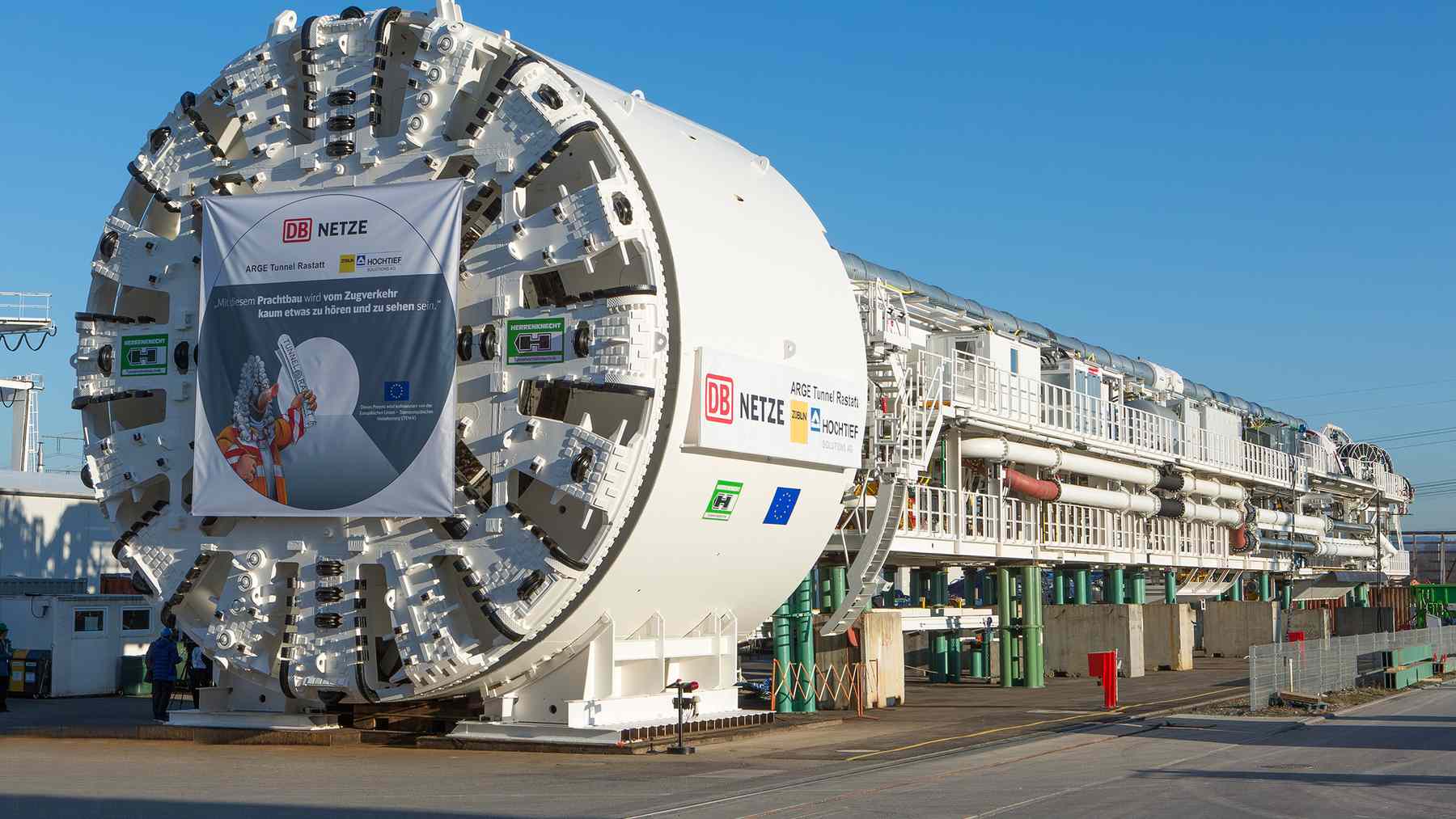
Two Herrenknecht machines did the digging. Wilhelmine took the eastern tube and her sister, Sibylla-Augusta, took the western one. Tunnel boring machines traditionally get women’s names, which is why you’ll hear everyone call them “her.”
Each machine was roughly 295 feet long, with a cutting shield 36 feet across, and weighed about 1,930 short tons by the most widely cited figures. Rail Engineer reported a heavier 2,300 metric tons for the full rig, so I’d treat the exact weight as a little fuzzy. Either way, it’s a lot of steel to leave in the ground.
Near the south end of town, the eastern tube had to pass under the existing line while trains kept running on it. There wasn’t much room to play with. Only about 16 feet of soil sat between the top of the tunnel and the tracks. If you’ve read our piece on the drill rig that pushed a hole under a live London railroad, it’s the same headache, just with a far bigger machine.
Freezing the ground is a pretty standard trick
You can’t really bore through loose, wet ground that close to the surface and expect it to stay put. So the contractors froze it. Basically, they ran pipes through the soil and pumped a very cold liquid through them until the ground turned into something closer to a block of ice, which holds its shape while a machine chews through it.
At Rastatt, the ground was frozen to about 27 below zero (Fahrenheit) over a stretch of roughly 670 feet. Deutsche Bahn told German lawmakers that the only thing specific to Rastatt was how long that continuously frozen corridor was. Everything else, apparently, was business as usual.
The Saturday the tracks sank
On Saturday, August 12, 2017, at 10:47 a.m., the shift engineer noticed water getting into the tunnel, according to the Deutsche Bahn timeline relayed by the German parliament. Rail Engineer later reported that it got in right behind the steel shield at the front of the machine.
By around 11, the tracks overhead had dropped about 1.6 feet over a stretch 20 to 26 feet long. Rail Engineer says no one was hurt, and Deutsche Bahn didn’t wait around before shutting the line.
Why would you bury a $20 million machine?
Here’s where it gets brutal. With water and soil pushing into the tube, the ground under the tracks could keep slipping as long as there was an empty space for it to slip into. That’s why Deutsche Bahn and the contractors decided to fill that space with concrete, machine and all.
Crews pumped about 13,700 cubic yards of concrete into roughly 525 feet of the eastern tube. Rail Engineer says the pour ran for 150 hours straight and wrapped up on August 25. After that, they cast a concrete slab about 394 feet long and 3 feet thick over the damaged section to carry new track.
Wilhelmine alone was valued at €18 million. That’s about $20 million at the European Central Bank’s November 17 reference rate of $1.0989 per euro. Admittedly, that’s a lot of money to bury. But I’d argue it was pretty much the only sane call, because every extra day of shifting ground meant another day without freight trains on the Rhine Valley line.
Seven weeks without trains isn’t cheap
The line stayed closed from August 12 to October 2, a total of 51 days. Passengers got replacement buses, which ran every six minutes starting August 14. Freight didn’t get off so lightly, because you can’t exactly put a trainload of shipping containers on a bus.
Freight companies were losing an estimated €12 million (about $13 million) a week in revenue, and estimates of the total damage reached as high as €2 billion (about $2.2 billion). Those aren’t audited totals, so I’d take the bigger one with a grain of salt.
So whose fault was it? I honestly can’t tell you. Deutsche Bahn and the contractor group, Arbeitsgemeinschaft Tunnel Rastatt (Ed. Züblin as technical lead, Hochtief on the commercial side), went into an evidence-gathering and arbitration process instead of court. A few weeks after the collapse, Rail Engineer reported that one early theory blamed a stretch of hot weather on top of heavy rain. As far as I can tell, a final finding hasn’t been made public, and we’re only going on what’s been published.
Wilhelmine came out in pieces
Deutsche Bahn eventually decided to go at Wilhelmine from above. Crews lifted roughly 68,000 cubic yards of material out of an open pit, and by December 2024 they’d cut what was left of her with a wire saw into chunks weighing about 55 to 66 short tons each. Parts are being recycled where it makes sense.
So after more than seven years in concrete, she left the job site the way plenty of old cars do, in pieces.
Sibylla-Augusta had a far less dramatic career. She reached the end of the western tube in December 2021. The last stretch of the eastern tube, about 655 feet, was built from the bottom up in that open pit, and tunneling on the project wrapped up in August 2025. If you’d rather see the version where everything went to plan, look at the tunnel borer that spent 19 months under the runways at Paris’s main airport.
Now it’s down to test runs. DB InfraGO says those can start on November 23, on weekdays between 7 a.m. and 5 p.m., with no passengers on board, and they’ll end by December 11 at the latest. The new section is fitted with ETCS, a European system that basically moves the signals from poles beside the track into the driver’s cab. DB InfraGO says the section through the Rastatt tunnel enters service with the timetable change on December 13.
Credit: Herrenknecht
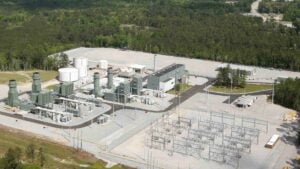 A salt cavern 1,500 feet under Alabama was built to hold 19.8 million cubic feet of compressed air, pumped in over about 40 hours and let out through a 110-megawatt turbine for up to 26 hours, and the plant on top has been the only one of its kind in the country for 35 yearsEnergy · 15 hours ago
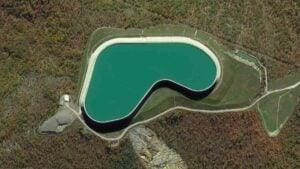 A 100-foot wall around a lake on top of a Missouri mountain was overfilled by its own pumps before dawn, split open along 720 feet and let go of a billion gallons in 12 minutes, and the power plant under it now runs on a rebuilt bowl of 3 million cubic yards of concreteEnergy · 17 hours ago
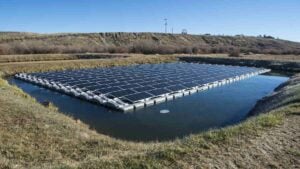 208 solar panels have floated since their first winter on a pond 8,100 feet up in the Colorado Rockies, in a town that has seen 47 below zero and two feet of snow in a day, and the first freeze locked their mooring lines into the ice without puncturing a single floatEnergy · 18 hours ago