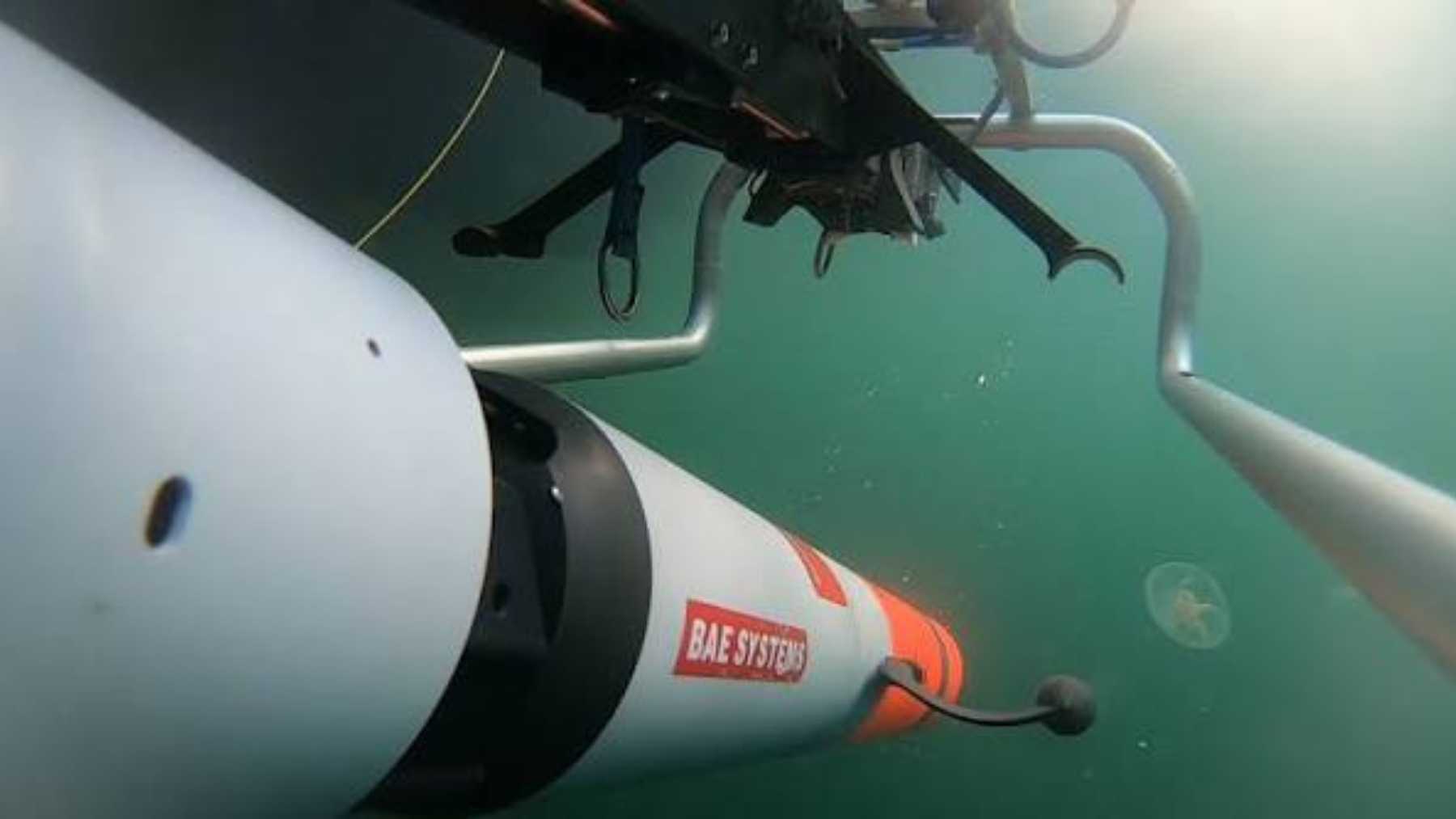

A sonobuoy is arguably the least impressive-looking piece of hardware any navy owns. It’s a tube about the size of a fire extinguisher that falls out of an airplane on a little parachute, floats, lets a microphone down on a cable, listens for a few hours, and then sinks itself on purpose so nobody can fish it out.
The buoy was never the clever part. The clever part was the airplane overhead, because something with a crew and a lot of fuel had to drop the buoys, stay close enough to hear what they radioed back, and make sense of the noise.
Turkey just took the airplane out of that recipe. Sort of.
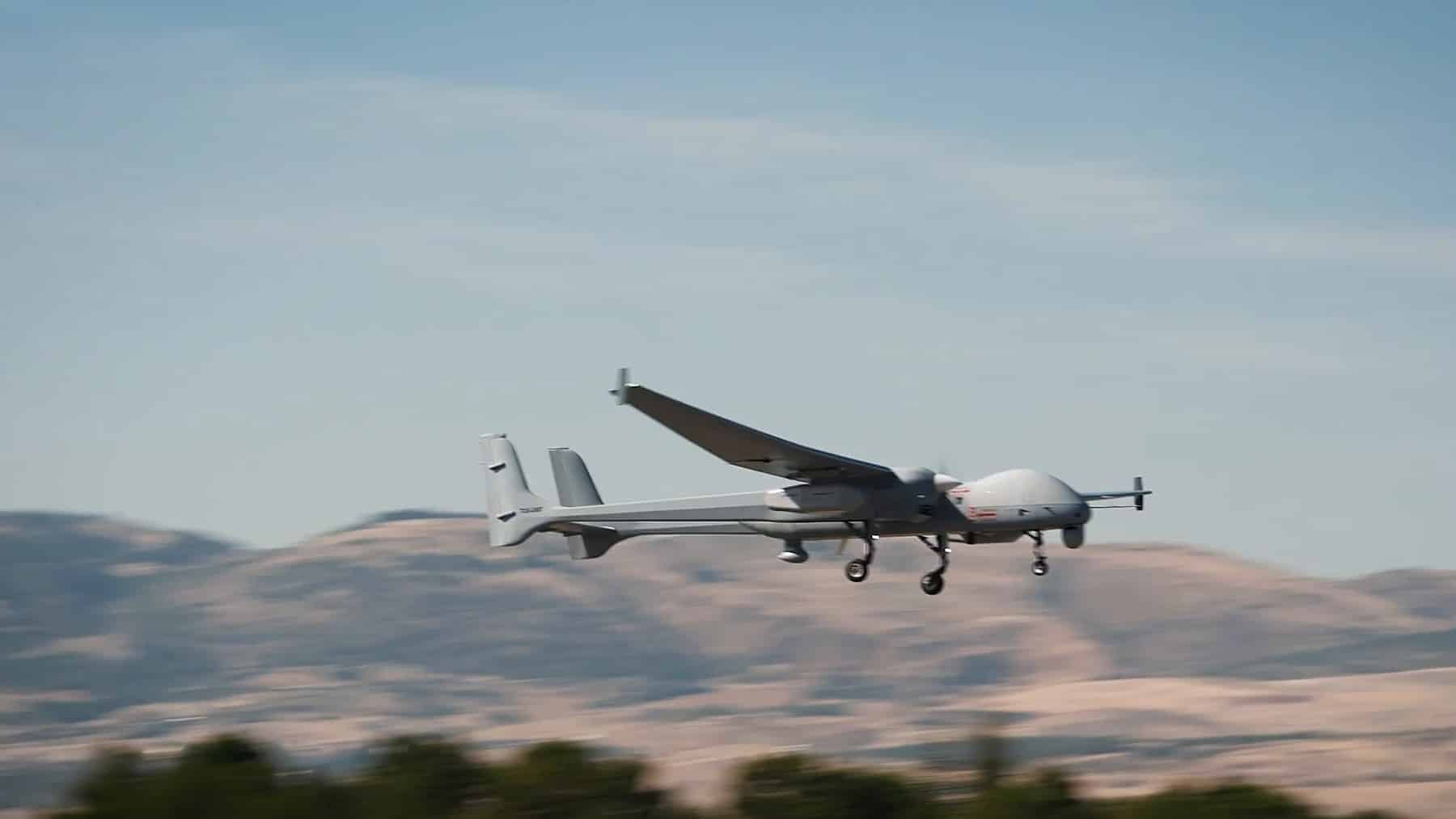
On October 24, Turkish Aerospace, the state-owned company everybody in Turkey calls TUSAŞ, put out a video of its Aksungur drone dropping sonobuoys into the Mediterranean during a Turkish Navy exercise off Antalya. Anadolu Agency, the state news service, had the details the same day: the drone took off from Ankara, flew to the exercise area under satellite control, dropped four buoys from 1,000 feet, climbed to 6,000 feet and spent about four hours circling and listening, with the sound piped back to a ground station in Ankara, where the processing was done and underwater targets were picked up.
So the airplane isn’t gone. It’s just 250 miles away, and nobody’s sitting in it.
So what did the drone actually do?
Let me walk you through the flight, because the altitudes are the interesting part. Ankara to the Gulf of Antalya is about 250 miles, roughly New York to Washington, and the Aksungur made that leg on a satellite link rather than a line-of-sight radio.
That’s what lets a ground crew in the capital fly a drone that’s over the sea a few hundred miles south. It’s the same trick the U.S. Air Force has used to fly Reapers from Nevada for 20 years.
Over the water it came down to 1,000 feet and released the buoys from a pod on the airframe: three of Aselsan’s aselBUOY 100P units, plus a fourth buoy that neither TUSAŞ nor Anadolu identified. Then it climbed to 6,000 feet.
Why climb? Because sonobuoys talk over VHF, and VHF doesn’t bend around the curve of the Earth. The higher the listener sits, the farther its radio horizon, so an aircraft that wants to hear a buoy 10 miles away gets up high and stays there.
Naval News puts the aselBUOY’s transmit range at up to 20 km, which is about 12 miles, and I’d guess 6,000 feet is comfortably enough to cover a pattern of four buoys. TUSAŞ hasn’t said how far apart it dropped them.
Then it orbited for about four hours while the buoys’ audio went back over the satellite to Ankara, where it was processed and, in Anadolu’s wording, underwater targets were detected. That’s the phrase, and I’m going to leave it there, because a Turkish submarine took part in the exercise and nobody has said the drone found it. Picking up a target in a drill where you know roughly where the target is and catching a sub that’s trying to slip past you are two very different achievements.
A 22-pound tube that scuttles itself
Now seems like a good time to explain what the Aksungur dropped, since Aselsan’s a name most Americans will never have run into. It’s Turkey’s biggest defense electronics company, and the aselBUOY 100P is its first homegrown sonobuoy. The company started it as a self-funded project in late 2015 and first dropped one from a Cessna turboprop in 2018, per Naval News.
Aselsan’s brochure makes it a NATO A-size buoy, 36 inches long, 4.7 inches across and 22 pounds, which is the same form factor American sonobuoys have had since 1942. It’s passive, meaning it listens and never pings, and it’s directional, so it can tell you roughly which way a noise came from.
You pick a listening depth of 98 or 492 feet before it goes in, you set a working life anywhere from half an hour to eight hours, and when the timer runs out it floods and sinks. It covers 5 to 2,400 hertz, which is the low, rumbly end of the spectrum where propellers and diesel generators live.
A passive buoy’s weakness is obvious enough if you think about it for a second: a submarine creeping along on batteries doesn’t give it much to hear. Aselsan has been working on an active version that pings, and a passive buoy that only hands you a bearing is a long way from a weapon. But a cheap tube that can sit in the water for eight hours is, frankly, a pretty good thing to own a lot of, and the whole point of dropping them from a drone is that the drone can afford to wait around.
The drone is basically a Reaper with two engines
If you’ve seen a Reaper, you’ve more or less seen an Aksungur. TUSAŞ’s spec sheet gives it a 79-foot wingspan, which happens to be the same figure General Atomics quotes for the MQ-9B SeaGuardian, a length of 41 feet, a maximum takeoff weight of 7,275 pounds, a payload of more than 1,650 pounds and a ceiling of 40,000 feet. The difference is the back end: two twin-turbocharged diesels instead of one turboprop, built in Turkey by a company called TEI, which is why every Turkish outlet made a point of mentioning the engine.
Endurance is where I have to pick a number. TUSAŞ’s own spec table says up to 50 hours. Naval News and Defence Blog both wrote that it stays airborne beyond 50, and TUSAŞ’s marketing copy calls it the longest-flying drone in its class, and that’s the company’s claim, not something I can check.
I’m going with the table. The verified figure on the Turkish engine is 41 hours, on a flight in November 2023 that also took it to 30,000 feet, and TUSAŞ says it has since pushed past 40,000 feet on the same engine.
Even at 41 hours, that’s the number that matters for submarine work. A patrol plane crew goes home after a long day. A diesel-electric submarine, on the other hand, has to come up near the surface and run its engines to charge its batteries at some point, and the whole game is being overhead when it does.
A drone that can hold a box over a strait for a day and a half without anyone needing a bathroom break cuts down on how often a sub gets a free window. That’s the pitch, anyway, and it’s one I find pretty convincing, even though the Turkish Navy hasn’t published a word about how it actually uses the aircraft day to day.
The Navy took its first Aksungur in October 2021, and TUSAŞ has been showing the drone with a sonobuoy pod at defense shows since. At the NAVDEX show in Abu Dhabi in 2023 it also showed concepts for hanging a lightweight torpedo under it.
That’s still a concept. Nothing in the Antalya video shoots anything.
Twenty-five robots in one exercise
The sonobuoy drop happened inside TURNAs-26, which the Turkish Navy says is its first exercise built around unmanned systems. By the Defense Ministry’s count, relayed by Anadolu, it brought 18 ships and 11 aircraft to the Gulf of Antalya and the eastern Mediterranean, plus nine aerial drones, seven underwater drones and nine drone boats, 41 systems from 17 companies, and about 1,300 people.
The crewed side included an amphibious assault ship, frigates, corvettes, a submarine, a mine hunter, a maritime patrol aircraft and SH-70 helicopters. Naval News dates it October 19 to 27.
Admiral Ercüment Tatlıoğlu, who runs the Turkish Navy, said after the observer day that “future naval warfare will be fought with unmanned vehicles,” per Naval News. Every admiral on Earth is saying some version of that right now, but Turkey’s version comes with hardware, and we’ve covered a fair bit of it, including a 17.8-ton drone submarine built to fire full-size torpedoes.
No, it isn’t the first drone to do this
You’ll see this written up as a first, so I want to pin down which first. Anadolu says it’s the first time an aselBUOY has been dropped from a drone, and TUSAŞ says it’s the first time the Aksungur has run the full chain of carry, drop, listen and process.
The second one is certainly true. There’s a wrinkle on the first one, and we’ll get to it.
What it isn’t is the first drone to drop sonobuoys, or even the first Turkish one. General Atomics put an A-size buoy out of an MQ-9A Reaper over a Navy range off California in November 2020 and has kept building on that with the MQ-9B SeaGuardian, whose dispenser pods hold 10 A-size buoys apiece. And a month before Antalya, Baykar’s smaller Bayraktar TB3 dropped two sonobuoys from a wing pod while flying off TCG Anadolu, an amphibious assault ship, during the Denizkurdu exercise in September.
Naval News called the TB3 the first Turkish unmanned aircraft to do it, and in the same piece wrote that the Aksungur’s “public progress on that platform’s sub-surface payload suite stalled” after the 2023 show. The TB3 did it again at TURNAs-26, by the way, the same week the Aksungur flew down from Ankara.
Here’s the wrinkle. Baykar never said what type of buoy the TB3 dropped in September, and the Turkish defense site TURDEF reported at the time that they were aselBUOYs, which would make Anadolu’s “first” wrong. I can’t settle that from here, so I’m not going to pretend to.
What you can take to the bank from Antalya is the chain: carry, drop, listen, process, 250 miles from the people running it. What you can’t take from it is a detection range, a buoy spacing or a submarine caught in open water, because none of that’s been published, and in my experience navies don’t publish that stuff even when the result is good.
TUSAŞ posted the video on October 24. TURNAs-26 wraps up in the Gulf of Antalya on October 27, and the Turkish Navy, which took delivery of its first Aksungur in October 2021, now has two different drones that have dropped sonobuoys in the space of five weeks.