
If you’ve ever torn out an old bathroom or cut through a rusted pipe, you’ve probably used a reciprocating saw. It’s the loud, shaky tool that’ll chew through pretty much anything, and it’s a lot of fun right up until you’ve been holding it for an hour.
So it’s a little surprising to learn that workers at a nuclear waste plant in Tennessee were using one to cut up steel drums. Now they’ve got a machine for that.
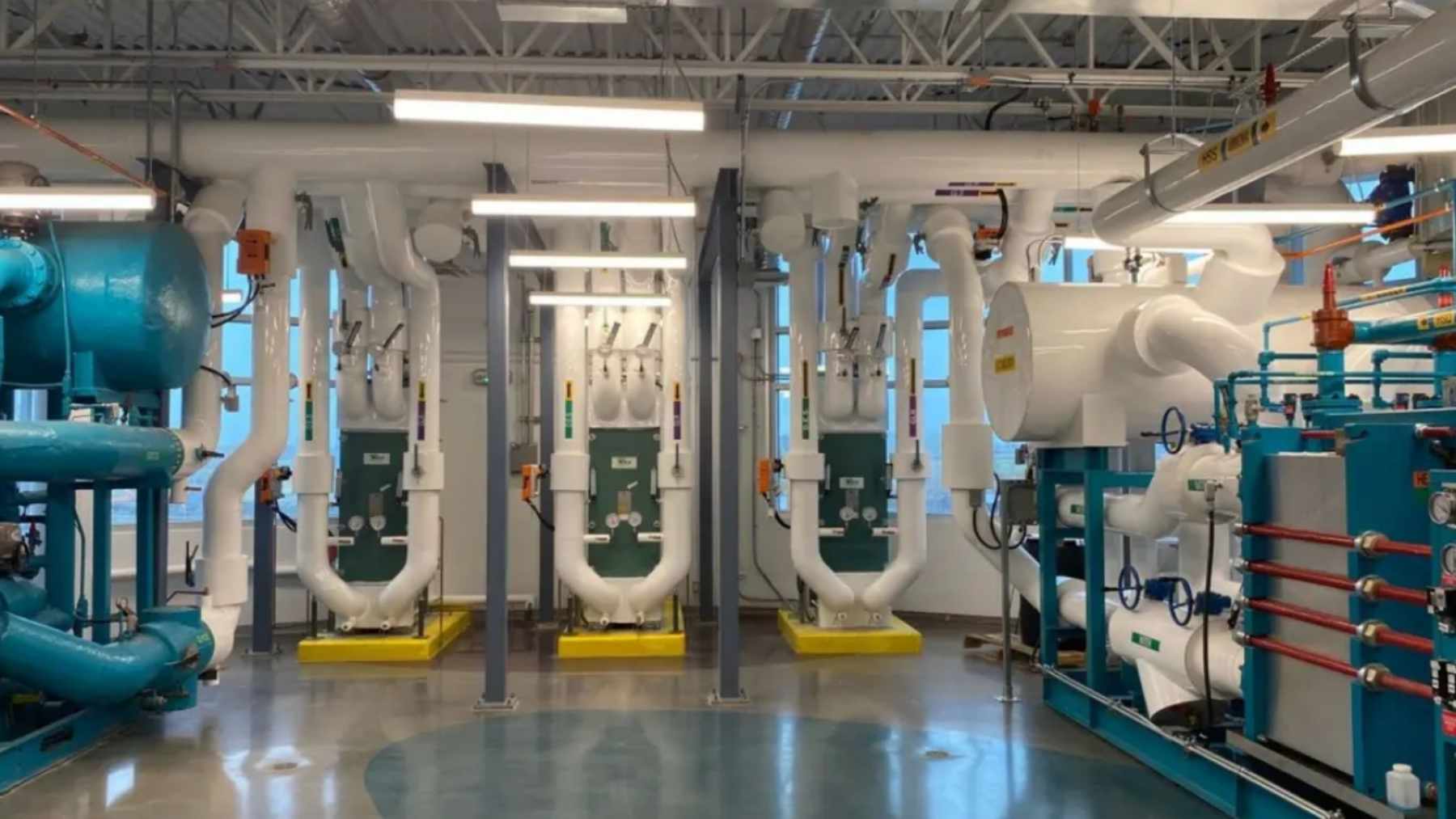
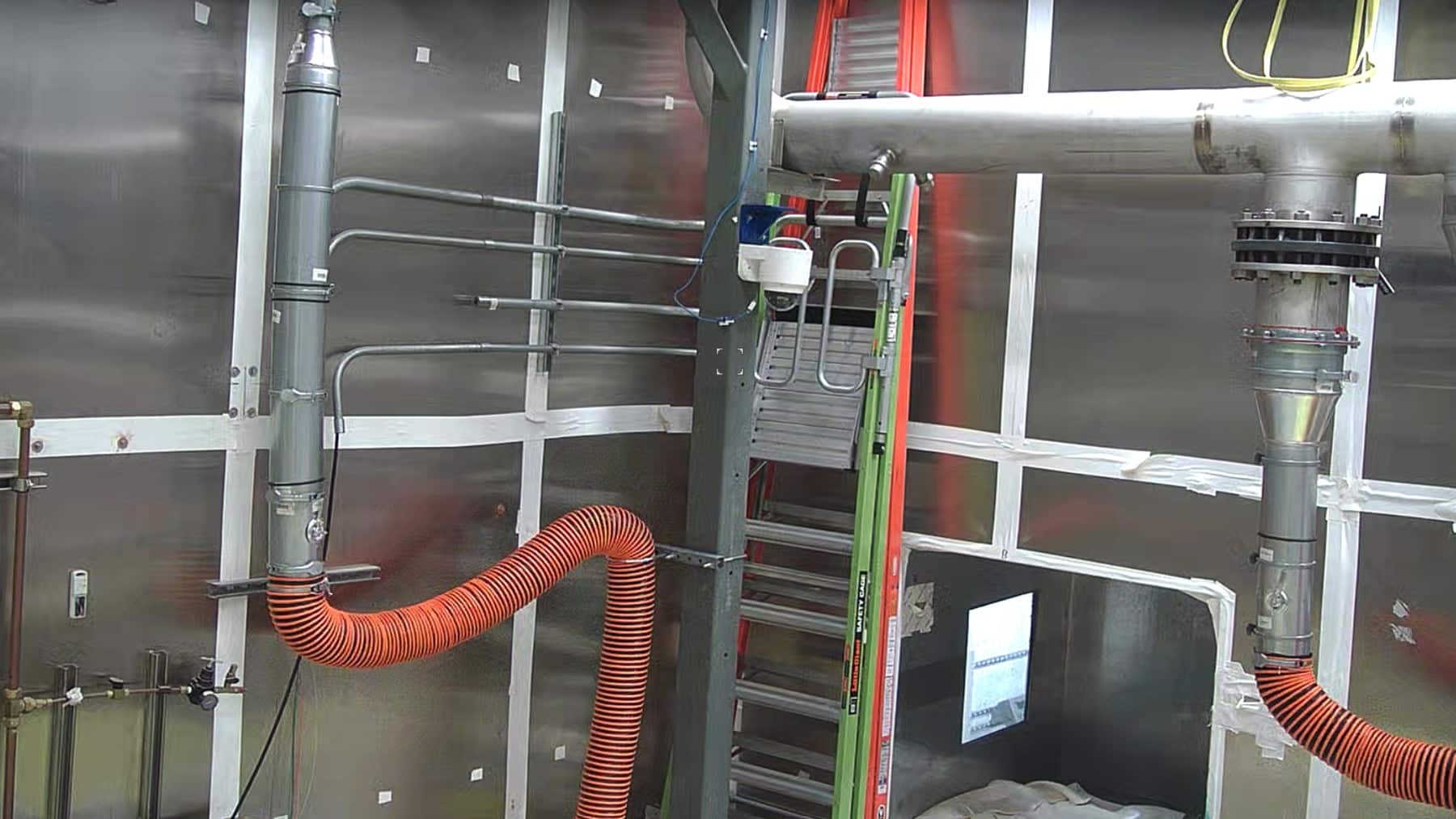
The Department of Energy’s Office of Environmental Management said on November 3 that its Oak Ridge cleanup office and contractor United Cleanup Oak Ridge (UCOR) have reworked one section of the Transuranic Waste Processing Center. Old equipment came out, the ventilation got reworked, and a drum crusher, new cameras and monitoring software went in. DOE says the point is to let the center take large waste boxes from demolition work at Oak Ridge National Laboratory (ORNL) and the Y-12 National Security Complex.
It’s probably the least flashy nuclear story you’ll read this week. I’d argue it’s also one of the more honest looks at how cleanup actually gets done, which mostly comes down to rebuilding rooms so they can handle the next mess.
So what is the Transuranic Waste Processing Center?
Transuranic waste, or TRU waste as the industry calls it, is material contaminated with elements heavier than uranium, mostly plutonium. According to the Waste Isolation Pilot Plant, it’s usually tools, rags, protective clothing, sludge and soil left over from the country’s nuclear defense work. Basically, it’s the dirty laundry of decades of weapons research.
That New Mexico site, known as WIPP, is where this stuff ends up for good, buried deep underground. But it won’t take waste straight off a storage shelf. Someone has to open the containers, sort through what’s inside, repack it and get it certified as meeting WIPP’s rules first.
That’s the Oak Ridge center’s job. It sits on about 25 acres in the Melton Valley area of ORNL, and its main processing building covers 38,000 square feet. DOE says just one other facility in the department’s entire complex can process legacy TRU waste. (Legacy is DOE’s word for waste left over from past work, as opposed to anything being made today.) The release doesn’t name the other facility, and I’d rather not guess.
The building has four work areas. There’s the cask processing enclosure (CPE), a hot cell, a box breakdown area and a glovebox. The CPE is the one that’s been rebuilt.
If you’re wondering why a plant needs a glovebox and a hot cell, it comes down to radiation dose. WIPP defines contact-handled waste as anything reading 200 millirem an hour or less at the surface of its container, so workers can handle it directly with the right protection. Remote-handled waste can read as high as 1,000 rem an hour, so it gets moved with manipulator arms and cranes from behind heavy shielding.
The enclosure is on its third job
The CPE’s first assignment was waste pulled out of casks that had spent years underground. Once that was done, DOE reconfigured it to treat contaminated soil dug up while cleaning out an old tank that had been buried at ORNL, and a soil mixer went in for that. That job’s finished too.
The American Nuclear Society’s Nuclear Newswire has some useful backstory on why the room exists at all. Crews had first been sorting the cask waste in the center’s hot cell, but some of it turned out to be lower-dose material than expected, dose rates swung around from item to item and groundwater had gotten into the mix. All of that kept wearing out the hot cell’s delicate equipment and causing delays. The CPE gave the center a better setup for sorting and packing that waste.
Which gave DOE a contained processing room with nothing to process. Adam Fraser, the center’s facility operations manager, said the site doesn’t have a lot of space to work with, so turning “nonfunctional space” into something useful and giving workers more tools is essential to getting the reservation’s old waste cleaned up faster.
Frankly, I think that’s the smartest part of this whole thing. Building a brand-new contained work area at a nuclear site is probably slow and expensive, and this one already had the walls and the airflow controls.
What came out, and what went in
UCOR crews started pulling old equipment and electrical controls out of the CPE earlier this year. According to DOE’s captions for its before-and-after photos, the removed gear included a conveyor, the soil mixer and the old ventilation system, and a new ventilation line has been added so the room can handle more processing work.
DOE also says the ventilation system was modified, and the room now has sharper cameras and new monitoring software. Ventilation is a big deal in a room like this. Contained areas at nuclear sites are generally set up so air gets pulled through filters on its way out, which keeps contamination from drifting anywhere it shouldn’t. DOE doesn’t spell out what the new cameras are for, but I’d assume they let operators keep a closer eye on the work without standing right on top of it. Remote viewing seems to be a running theme in nuclear cleanup these days, too.
We recently covered a 44-ton machine built to lift a demolition robot inside a retired Lithuanian nuclear plant, and the logic there was pretty similar: the less time people spend up close, the better.
Why swap a saw for a crusher?
So why does a waste plant need to crush drums in the first place?
When a drum arrives at the center, workers empty it so they can get at the waste inside, process it and repack it. The empty drum counts as waste too, so it has to be shrunk down and disposed of. DOE laid all of that out in an earlier update about the center’s other crusher.
Yep, this isn’t the plant’s first one. According to DOE, the center’s main operating gallery has a 900-pound drum crusher mounted on top of the contact-handled glovebox. At one point it broke. While it was down, workers had to suit up and cut old drums apart by hand, which DOE said was riskier, slower and more labor-intensive. A replacement went in, and DOE said early last year that the center was back at full production.
The new crusher is a separate machine in the CPE. DOE says drums in that room used to be cut open with a reciprocating saw, and that the crusher will make the work safer and more efficient. That seems pretty obvious once you picture it. A saw means a person holding a vibrating blade against contaminated steel for as long as it takes, and a crusher just flattens the thing.
Unfortunately, DOE hasn’t said how big the new crusher is, how much it weighs, who built it or how many drums it can get through in a shift. I’d have liked the weight at least, since we know the other one is 900 pounds, but the release sticks to what the room can now do.
So what’s in the big boxes?
Deactivation and demolition, or D&D, is DOE’s term for shutting old buildings down and tearing them apart. Every one of those jobs leaves behind debris, old equipment and contaminated material, and some of it ends up packed into large boxes that someone has to open and deal with.
The remodeled CPE is meant to process those boxes from ORNL and Y-12. If the name Y-12 is new to you, it’s the National Nuclear Security Administration’s plant in Oak Ridge that handles uranium for the country’s nuclear weapons program. A DOE presentation from October describes the CPE as three contained rooms set up for big boxes and other containers with lower radiation levels.
DOE’s release doesn’t say exactly what’s in those boxes, how many there are, or when the first one goes through the new setup. It also doesn’t say the crusher has started work on any of them, so I wouldn’t assume it has. As far as I can tell, the room is ready and the boxes are the next job.
That same October presentation lists helping with TRU waste from across the DOE complex among the center’s near-term priorities. So a center built to deal with Oak Ridge’s own old waste looks like it’s going to stay busy for a while yet. If you read our piece on uranium-233 canisters being cut apart in a glovebox at ORNL, that’s a separate project run by a different contractor, but it’s the same basic idea of old material and new tools.
DOE’s Office of Environmental Management announced the CPE upgrades on November 3, and Michael Griswold, the federal project director for the Oak Ridge center, said its capabilities for getting TRU waste ready for final offsite disposal are unique and that investing in the site supports the department’s mission.