- 2 MONTHS AGO · ENERGYA fusion magnet system of 44 superconducting coils peaked at 13.7 tesla, against the 1.5 to 3 of a hospital MRI, and spent about 10,000 hours energized across 14 months, riding out sideways stresses of 21,750 psi trying to shove the conductors loose
- 2 MONTHS AGO · ENERGYAn 8-foot clear column filled with 25% salt water let researchers watch how a nuclear battery would move its liquid fuel with no pump, heated by electric current pushed straight through the water, and the reactor it stood in for is designed to put out 20 megawatts of heat
- 4 WEEKS AGO · ENERGYA 70-foot room in Idaho full of argon, behind four feet of concrete, is where America cuts open used fuel rods, the cuts get marked with a Sharpie wrapped in tape, a plumber’s pipe cutter does the rough work, and a 181-ton cask of used fuel is now coming to it by rail
- 3 DAYS AGO · ELECTRIC VEHICLES (EVS)A 427-foot ferry carrying more than 275 tons of batteries just started hauling up to 2,100 passengers and 225 cars nearly 35 miles across the River Plate, on a charge that lasts about 90 minutes and a roughly 40-minute top-up at the dock before it turns around on eight electric waterjets
- TODAY · THIS ARTICLEA 500-kilowatt-hour battery box under 10 feet long is built from packs too worn out for electric cars, and it is now the first system of its kind to clear the two safety certifications that let it go to work behind factories, hospitals and airports across North America
If you’ve kept a phone for three or four years, you already know how a lithium battery gets old. It doesn’t die all at once. It just holds a little less every year, until it needs a charger by mid-afternoon.
Electric car batteries age the same way. A pack that’s lost a chunk of its capacity means a car that can’t go as far as it used to, and at some point someone decides it’s done. But “done for a car” and “done” aren’t the same thing, and a Canadian company called Moment Energy has built its whole business on that gap.
On November 17, at the RE+ show in Las Vegas, the company unveiled Nova, a stationary storage block built from repurposed EV batteries. According to Moment Energy’s announcement, it’s the first system of its kind certified to both UL 1973 and UL 9540, the two safety standards that matter most when someone wants to set a big battery on a concrete pad next to a building.
So what happens to a worn-out EV battery?
The pack doesn’t stop working. It just stops being good enough for a car. Moment takes in end-of-life packs at roughly 70% state of health, according to EV Infrastructure News, which basically means each one can still hold about 70% of what it held when it was new. That’s not much help if you bought the car for its range. A battery sitting on a pad all day doesn’t care about range, though.
The company pulls out the cells that underperform and rebuilds what’s left into storage modules at its Megafactory 1 plant in Surrey, British Columbia. The plant opened in June, and it’s certified to UL 1974, the standard for sorting, grading and repurposing used EV batteries. I’d argue that’s the quiet foundation for everything else here, because a pile of used packs is only as safe as the process that decides which ones get a second job.
Mixing packs from different cars isn’t simple
Nova takes packs from different EV models, and they don’t all show up in the same condition. One car might have been fast-charged every day while another barely left the garage, and a battery system can get dragged down by its weakest pack.
The fix is a battery management system, or BMS. A BMS is the computer that watches each pack’s voltage, temperature and charge, and decides how hard each one gets worked. Moment throws out the original automotive controls and runs its own software, which it says uses AI to grade every battery by its state of health. From the looks of things, that lets a tired pack take it easy while a healthier one carries more of the load.
Then there’s the swapping. When a pack ages out, it can be pulled and replaced while the enclosure and the concrete pad stay where they are. The company says that, plus periodic capacity top-ups, should keep a block working for more than 20 years. That’s frankly a pretty sensible way to build something out of used parts, because you’re planning for the parts to wear out instead of pretending they won’t.
So what’s the catch?
Mostly, it’s what hasn’t been said yet. There’s no word on whether a block keeps running while a pack is swapped, and there’s no price. There’s no height or weight either, which I’d have liked to see for something that has to be trucked to a site. Nor does the company say which cars or cell makers the packs come from.
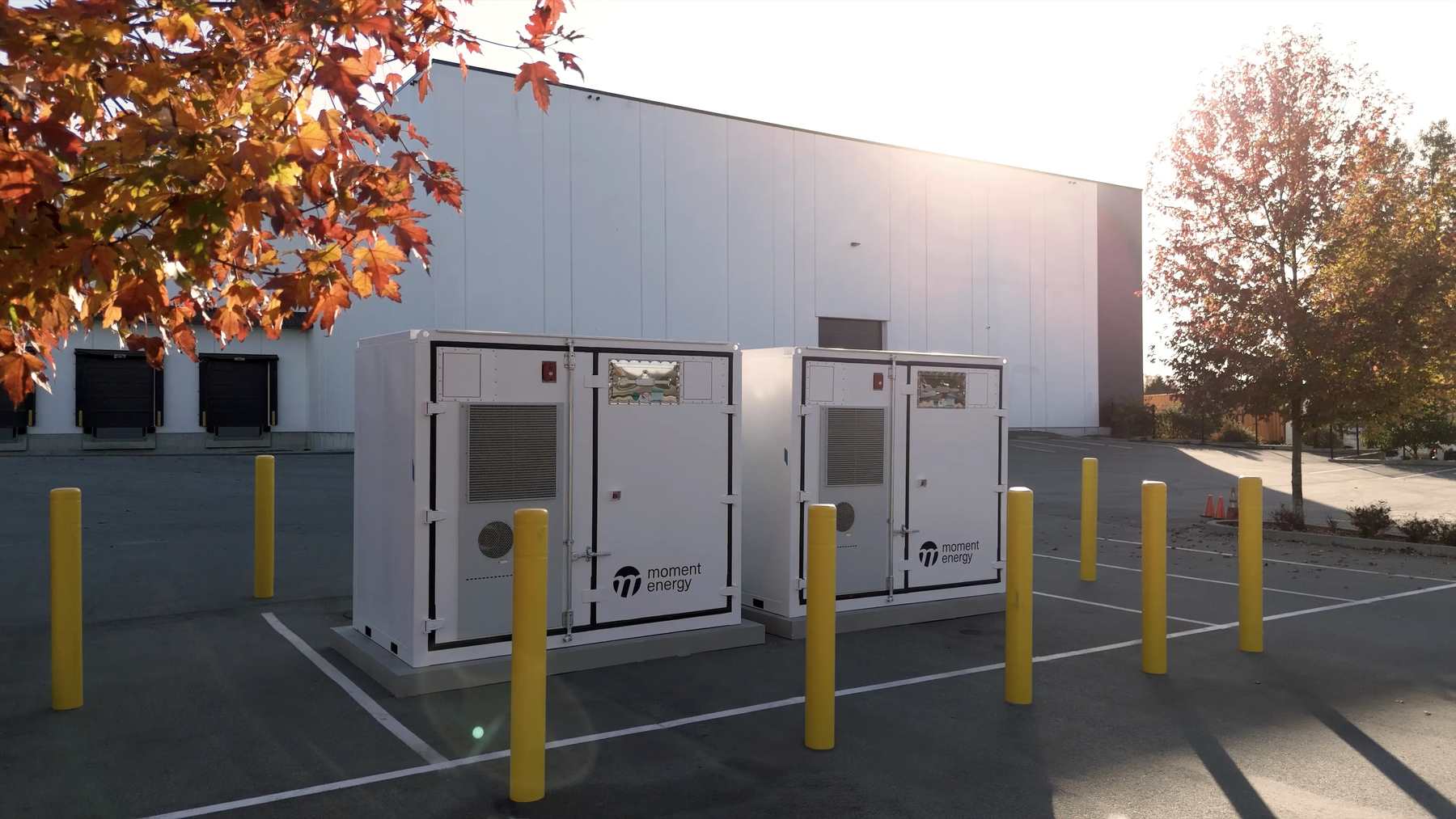
Each Nova block is 9.65 feet long and 5.9 feet wide, delivers 200 kilowatts and stores 500 kilowatt-hours. If those two units blur together for you, you’re in good company. Kilowatts tell you how fast the box can push power out, and kilowatt-hours tell you how much it holds, so in theory a full block running flat out would last about two and a half hours.
So why do the UL certifications matter?
Because someone local has to sign off before one of these goes in. US electrical and fire codes generally want a stationary battery system listed to UL 9540, a standard that UL Solutions tests and certifies to. Roughly speaking, UL 1973 asks whether the battery modules are safe on their own, and UL 9540 asks whether the whole thing, with its controls, cooling and cabinet, is safe as a package.
Then there’s UL 9540A, which is the fire test. A lab pushes cells into thermal runaway, the chain reaction where an overheating lithium cell cooks the ones next to it, and measures whether the fire spreads. Nova was tested to UL 9540A. That’s a test method rather than a certification, so you’ll see “tested to” instead of “certified to,” and that’s the correct wording.
Nova also gets liquid cooling, smoke and heat detectors, flammable gas detection and a built-in deflagration prevention system. Deflagration is the fast-burning explosion you can get when a failing battery vents flammable gas into a closed cabinet.
One caveat on the “first.” In October of last year, the company said its earlier system, Luna, had been independently tested and verified to UL 1973, UL 9540 and UL 9540A, according to pv magazine USA. This time the claim is narrower: Nova is the first BESS built from EV batteries that UL Solutions has certified to UL 9540. It’s a fine distinction, but it’s arguably the one an inspector cares about most.
Gurmesh Sidhu, Moment’s co-founder and chief product officer, says the company has “solved the engineering challenges that have prevented BESS made with EV batteries” from scaling commercially. That’s a big claim, and I’d say a year of real deliveries will tell us more than any launch event.
Where these boxes are headed
Nova is built for commercial and industrial sites. The company says its systems already run at airports, hospitals, farms and factories, and Interesting Engineering lists hospitals, airports and production sites as the kind of places Nova is meant for. The work isn’t glamorous. A block soaks up power when it’s cheap or when on-site solar makes a surplus, then hands it back during demand spikes, which is usually when a commercial power bill hurts most.
Nova can also run in grid-forming mode, which means it can set the voltage and frequency for a site on its own instead of just following the grid. That’s what lets a battery keep a building running through an outage. The cabinet is a Type 3R outdoor enclosure with a high seismic rating under IEEE 693, so it’s pretty well suited to sitting outside behind a hospital or a plant.
We’ve covered stranger ways to store energy, like the abandoned gold pits in Queensland that now work as a water battery and the pumped-storage plant inside a Massachusetts mountain. Both push water uphill. Nova just gives batteries that already did one job a second one, which is a less dramatic idea and probably an easier one to copy.
Moment Energy says Nova is already in production at Megafactory 1 and orders are open. The first blocks are due to ship to customers across North America in the first quarter of 2027.
 A 22-ton yellow Canadian machine called Iceberg is finally off the California coast making fresh water with no motor, no battery and nothing to plug into, and every gallon goes straight back into the Pacific about 15 feet from its brine outlet, because the pipe to shore was droppedEnergy · 16 hours ago
 A 480-foot concrete dam in North Carolina, the tallest in the eastern United States, has been swelling for decades, enough to crack itself where it curves, so about every five years the federal utility that owns it saws a slot through it with diamond wire to give it roomEnergy · 17 hours ago
 A 1,118-megawatt reactor on the California coast was once shut down by hand at 10:27 at night because salps, jellyfish-like animals 2 to 3 inches long, were packing its seawater screens, and with its twin down for refueling the whole 2,256-megawatt plant sat idle for more than two daysEnergy · 20 hours ago