
You’ve been told your whole life not to put a fork in a microwave. The one in your kitchen runs at about 1,000 watts, and that’s enough to throw sparks off a piece of cutlery and stink up the room. The microwave sources that heat fusion plasmas are a different animal. The Max Planck Institute for Plasma Physics, which runs the Wendelstein 7-X fusion machine in Greifswald, says the next-generation tube it’s developing for that machine would put out the power of roughly 2,000 kitchen microwaves at about 50 times the frequency.
So someone had to find out what a small coil of wire does in a room like that.
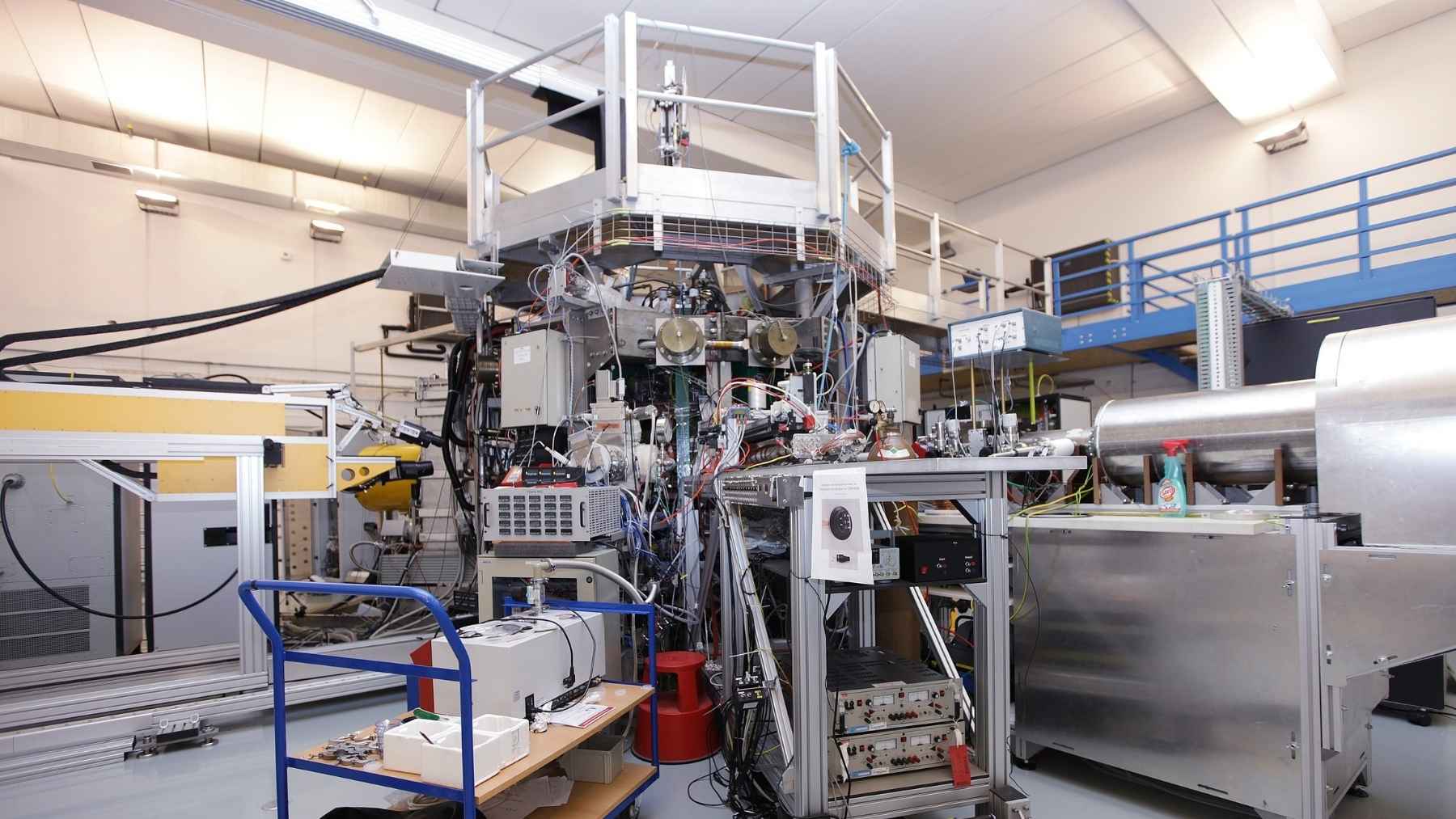
On September 7 the Institute of Plasma Physics of the Czech Academy of Sciences said a batch of magnetic sensors had reached Prague from the Princeton Plasma Physics Laboratory in New Jersey. They’re Mirnov coils, and they’re among the first pieces of hardware headed for the inside of the COMPASS Upgrade tokamak. IPP says they’ve already been through a stress test inside Wendelstein 7-X, where they took microwave beams with a wavelength of 2.1 millimeters, and that the shielding around them held up.
So what’s a Mirnov coil?
It’s a small loop of wire, and the physics is the same physics running the alternator in your car. Move a magnetic field near a loop of wire and you push a voltage through the loop. Put the loop close enough to a plasma and the plasma’s magnetic twitching shows up as a signal you can read.
IPP describes these particular coils as an early warning system. They pick up high-frequency fluctuations and flag instabilities that could wreck the discharge before it finishes, which matters because a tokamak has no window that shows you the plasma. You can’t look inside and see it. The control system figures out where the plasma is and what shape it’s in from what the magnetics report, and IPP says these measurements are vital for that reconstruction. A British machine at Culham has been chasing the same problem from a different angle, locating its plasma by reading the glow off its exhausts. Most machines do it with magnetics.
Why the test happened in Germany
Microwave heating in a fusion machine has to be tuned to the magnetic field, and the Max Planck Institute puts the rule of thumb at 28 gigahertz per tesla. Wendelstein 7-X runs a 2.5-tesla field and heats on the second harmonic, so its beams come out at 140 gigahertz. A 140-gigahertz wave is about 2.1 millimeters long, roughly a twelfth of an inch from one crest to the next. That’s the number in the Czech announcement.
Now run the same arithmetic on the Czech machine. COMPASS Upgrade is designed for 5 tesla, and its own gyrotrons are specified for dual-frequency operation between 105 and 140 gigahertz.
So the coils sat in front of beams in the same band they’ll have to work in once they’re installed. IPP doesn’t say that’s why Greifswald got the job, but it’s fairly hard to read those numbers any other way.
IPP doesn’t say when that test ran or how many coils went into it, and I couldn’t find either anywhere else. It’s also careful about what it claims. The test showed the shielding can handle the environment, and calibration and installation are both still ahead of these coils.
What they’re going to be sitting in
COMPASS Upgrade is small and nasty, which is the whole point of it.
Those numbers come from IPP’s own design table, and they’re targets rather than anything the machine has done, because the machine hasn’t done anything yet. That last number is what I’d lose sleep over if I were building a sensor for this thing. Ordinary electronics give up a long way below 932 degrees, and these coils don’t get a cool corner to hide in. They go inside the vessel, and the vessel is what gets hot.
The field and the current explain the rest. A 5-tesla machine pushing 2 million amps through a plasma cross-section with a 10.6-inch radius makes fast magnetic events, and something has to see them coming in time for the control system to do anything about it. Other groups are chasing high fields for the same reason, and a British magnet demo has already hit 11.8 tesla in testing.
The tokamak they’re for isn’t built yet
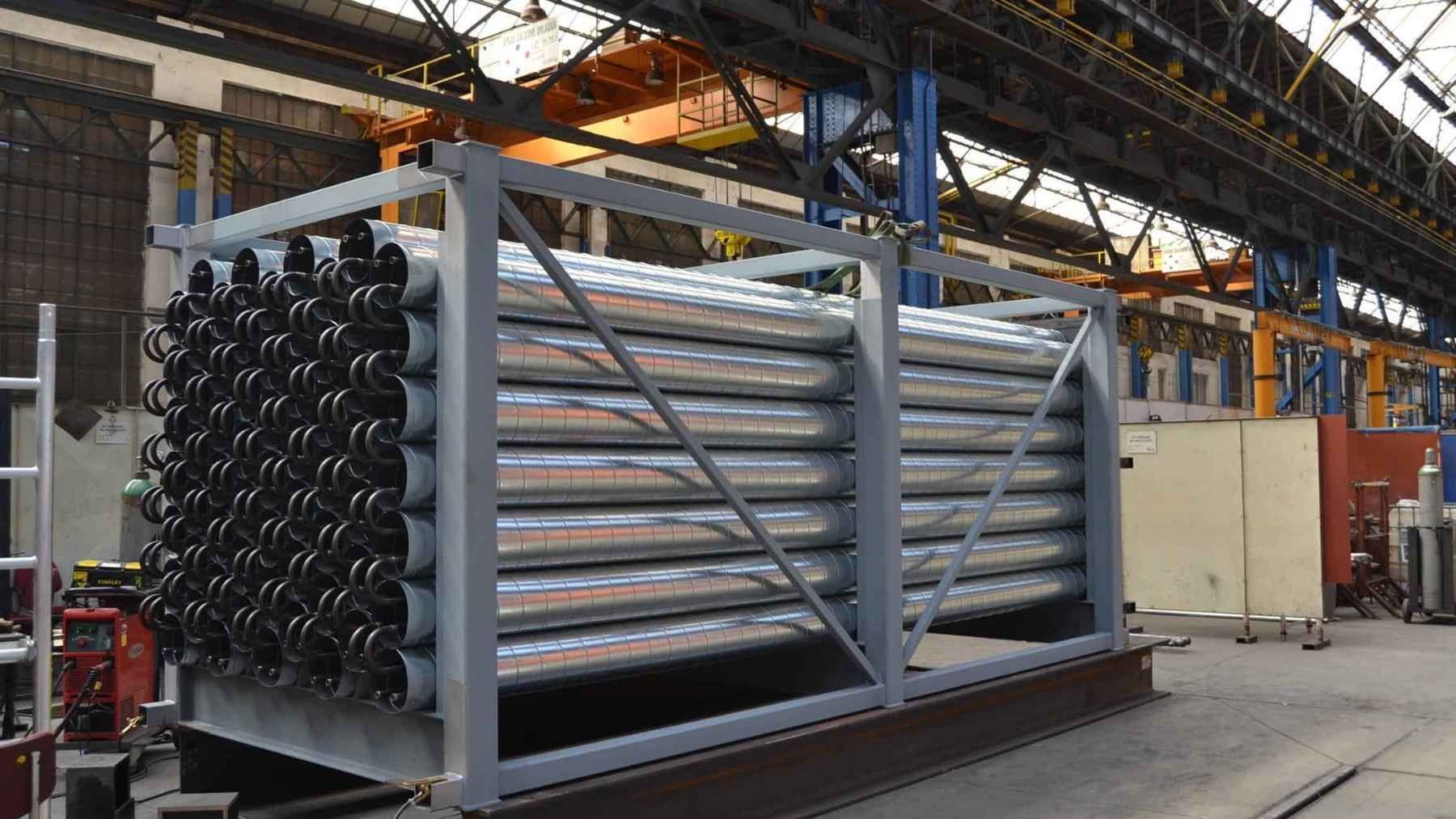
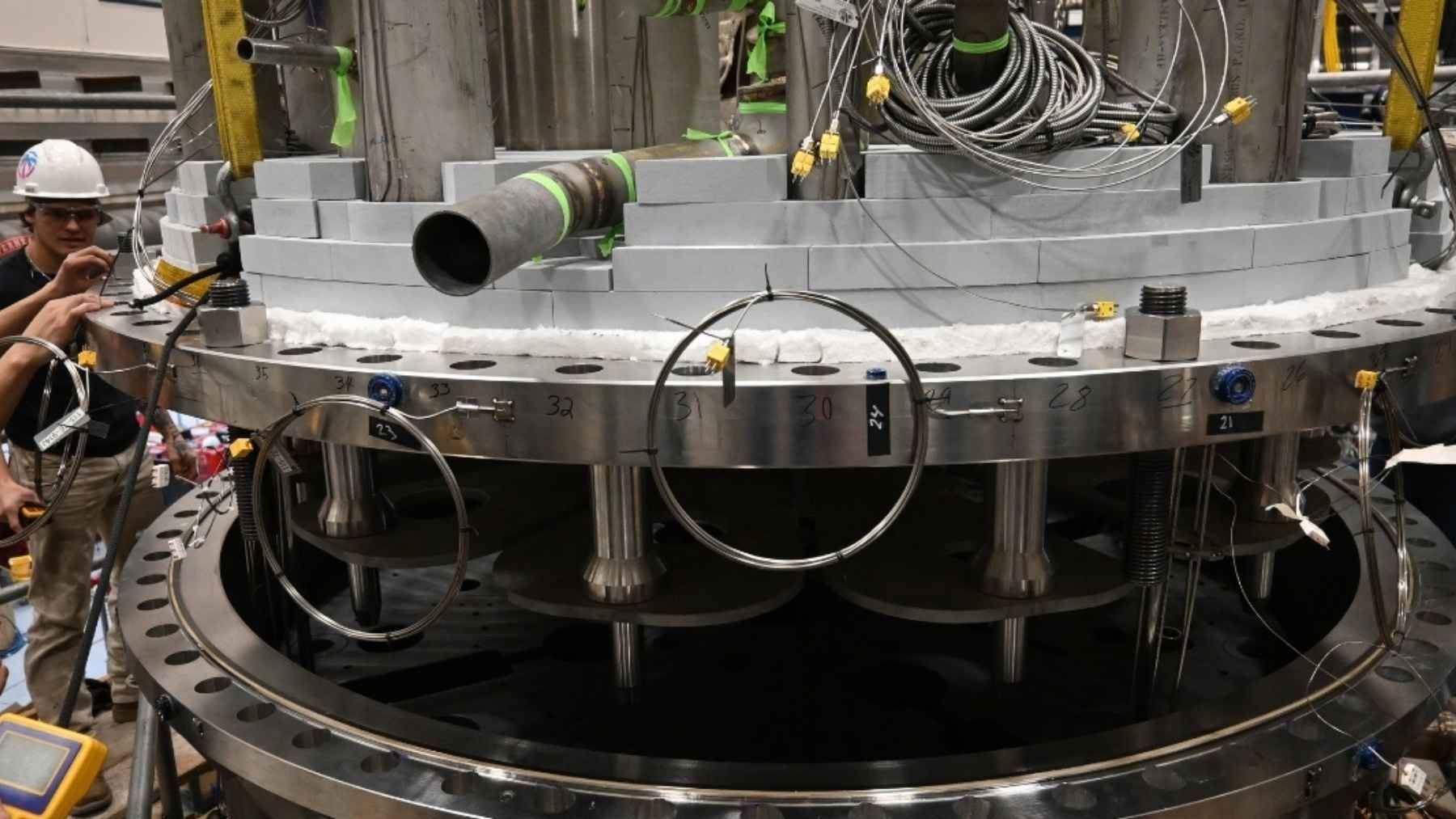
There’s no COMPASS Upgrade sitting in Prague waiting for these coils. The main steel skeleton for it, about 200 tons of AISI 316LN, has been built by Dal Ben in San Stino di Livenza in northern Italy, and IPP said in June that test assembly of the structure was underway at the Italian plant. So the delicate stuff that goes deep inside the machine has arrived before the frame that holds the machine up.
That’s less backwards than you’d think. In-vessel diagnostics are slow to design and slower to qualify, and no one wants to be finishing them while assembly crews stand around waiting. Getting the microwave question settled early strikes me as good sequencing, assuming the calibration goes the same way.
The work itself came out of an implementing agreement between the US Department of Energy and the Czech Academy of Sciences, under which Princeton proposed a project it named “COMPASS Upgrade collaboration – Mirnov sensor fabrication.” IPP dates the start of the collaboration to the summer of 2023 and calls this delivery its first fruit. Princeton’s own program page says the lab designed and is building a full set of in-vessel magnetic diagnostics for the facility, so this shipment probably isn’t the last one.
Calibration comes next, then installation. IPP says it takes delivery of the finished steel skeleton at the end of this year, and that final assembly starts in the experimental hall in Prague at the beginning of 2027.