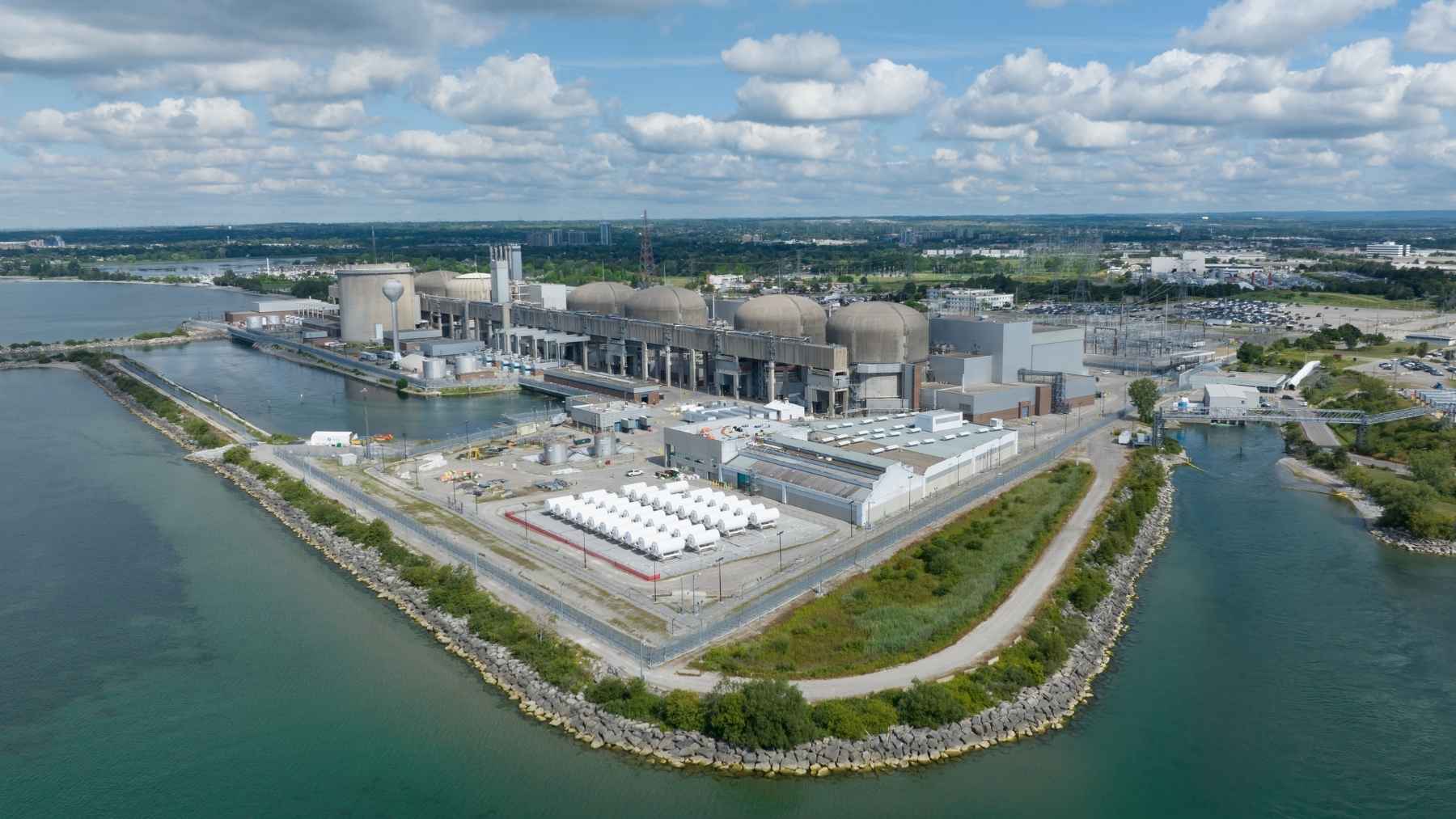

The old Oscar Mayer plant on the edge of Madison, Wisconsin, spent close to a century turning out hot dogs and bologna for the brand best known for the Wienermobile. The meat lines went quiet in 2017, and most of the campus has sat empty since, the kind of vacant industrial shell that usually gets flipped into apartments or a warehouse.
This one is turning into a fusion lab.
On July 15, a Madison company called Realta Fusion said it will move its headquarters and a new research site into more than 200,000 square feet of that old meatpacking campus, backed by up to $55 million in state and city money, with plans to grow from roughly 50 employees today to more than 600 on the site. The building it wants to raise there already has a name, The Realta Forge, and so does the machine going inside it. That one is called Hammir.
Realta isn’t planning to make power at the old plant. Hammir is a prototype, the kind of machine a fusion company builds before it tries to build anything you could plug into a grid. But it is a real machine with a genuinely unusual design, and the location has an irony that lands on its own: a company chasing the reaction that powers the Sun, setting up in the place that used to make America’s hot dogs.
What the state and city put on the table
Realta looked around for a while before landing here. It spent close to two years running a national search, weighing sites in Illinois, New Jersey, New Mexico and Tennessee, and ended up back in the city it started in.
What tipped it was money and location. The breakdown, laid out in Realta’s announcement, is an estimated $37.5 million in state sales and use tax exemptions, up to $15 million in performance-based credits from the Wisconsin Economic Development Corporation, and $2.8 million in tax increment financing from the city. That last piece is the first time in a decade Madison has handed a private company that kind of financing to create jobs.
The state cleared some ground ahead of time, too. In April, Governor Tony Evers signed Wisconsin Act 165, which the company describes as the first standalone state law in the country to exempt spending on fusion projects from sales tax. The WEDC credits are the largest the agency has offered a fusion company.
Dominick Bindl, Realta’s VP of technical development, ran the site search and called the result “the most impactful state-supported fusion deal ever done in the United States.”
The rest of the pull was the neighborhood. Realta spun out of the University of Wisconsin–Madison in 2022, and the school has already seeded three fusion companies, Realta among them. CEO Kieran Furlong told Wisconsin Public Radio the state had “all the jigsaw pieces,” with university research on one side and a heavy manufacturing base on the other.
The building itself carries bigger numbers than the incentives. Realta plans to spend around $67 million fixing up the part of the campus it will occupy, and the equipment going inside runs past $500 million on its own, according to figures the city presented. Apartments have been filling in the rest of the old plant for a couple of years now; Realta is taking the northern, industrial chunk.
Most fusion machines are donuts. This one isn’t.
Almost every fusion machine you read about is a variation on the same shape. A tokamak, like Japan’s building-sized JT-60SA, holds its plasma inside a donut-shaped ring of superconducting magnets. Stellarators twist that ring into something more complicated. The whole game is bending very hot plasma into a loop and keeping it there.
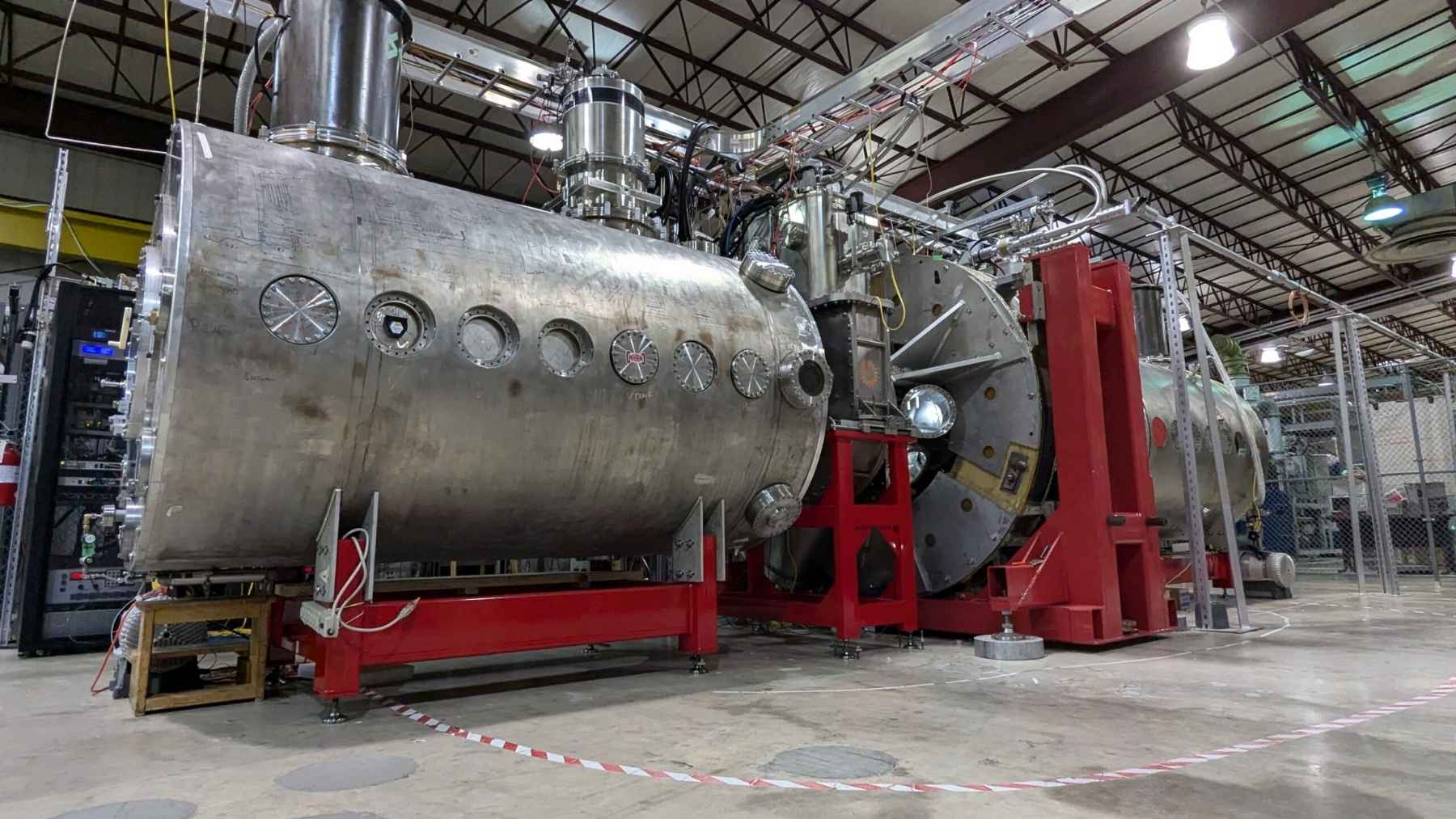
Hammir does something older and simpler. A magnetic mirror doesn’t bend the plasma into a ring at all. It traps it in a straight line, in a shape closer to two soda bottles joined at their bases, with a strong magnet at each end acting as a plug. Particles racing toward one end run into the rising magnetic field, slow down and get reflected back toward the middle, bouncing between the two ends.
The appeal is cost. In a mirror, only the end magnets have to be brutally strong. The magnets around the middle can be weaker and cheaper, which means you build a bigger reactor mostly by stretching the middle section, not by scaling up the hard, expensive parts. That is a very different bill of materials from a giant donut.
Its biggest weakness is now the sales pitch
There’s a reason the mirror isn’t the shape everyone uses. It leaks.
Those magnetic plugs at the ends never seal completely. Some particles are always moving at just the right angle to slip through the gap, down what physicists call the loss cone, and escape. The mirror was one of the leading fusion concepts in the United States until the 1980s, when the technology of the day couldn’t tame that leak and the field mostly moved on to tokamaks.
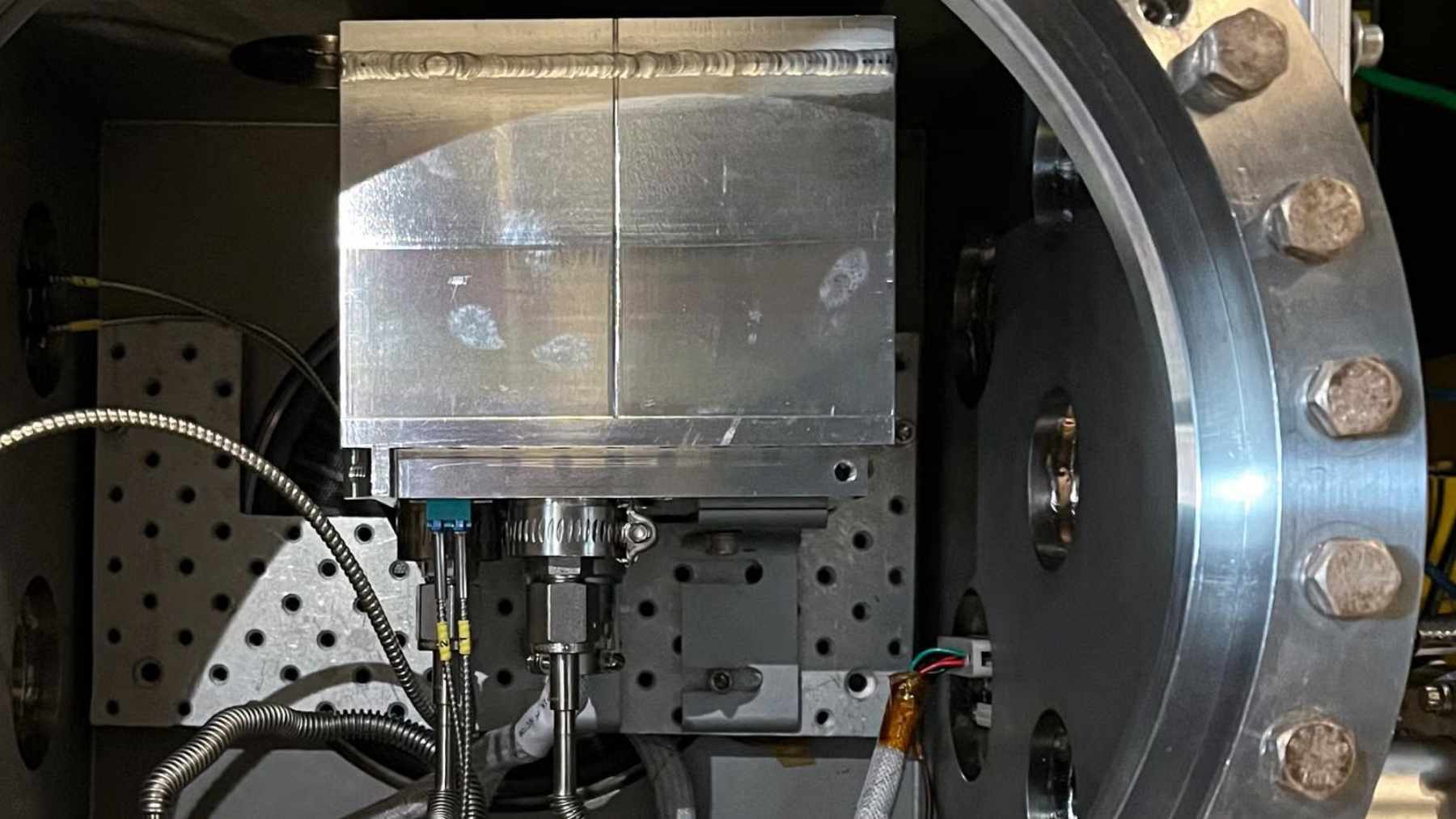
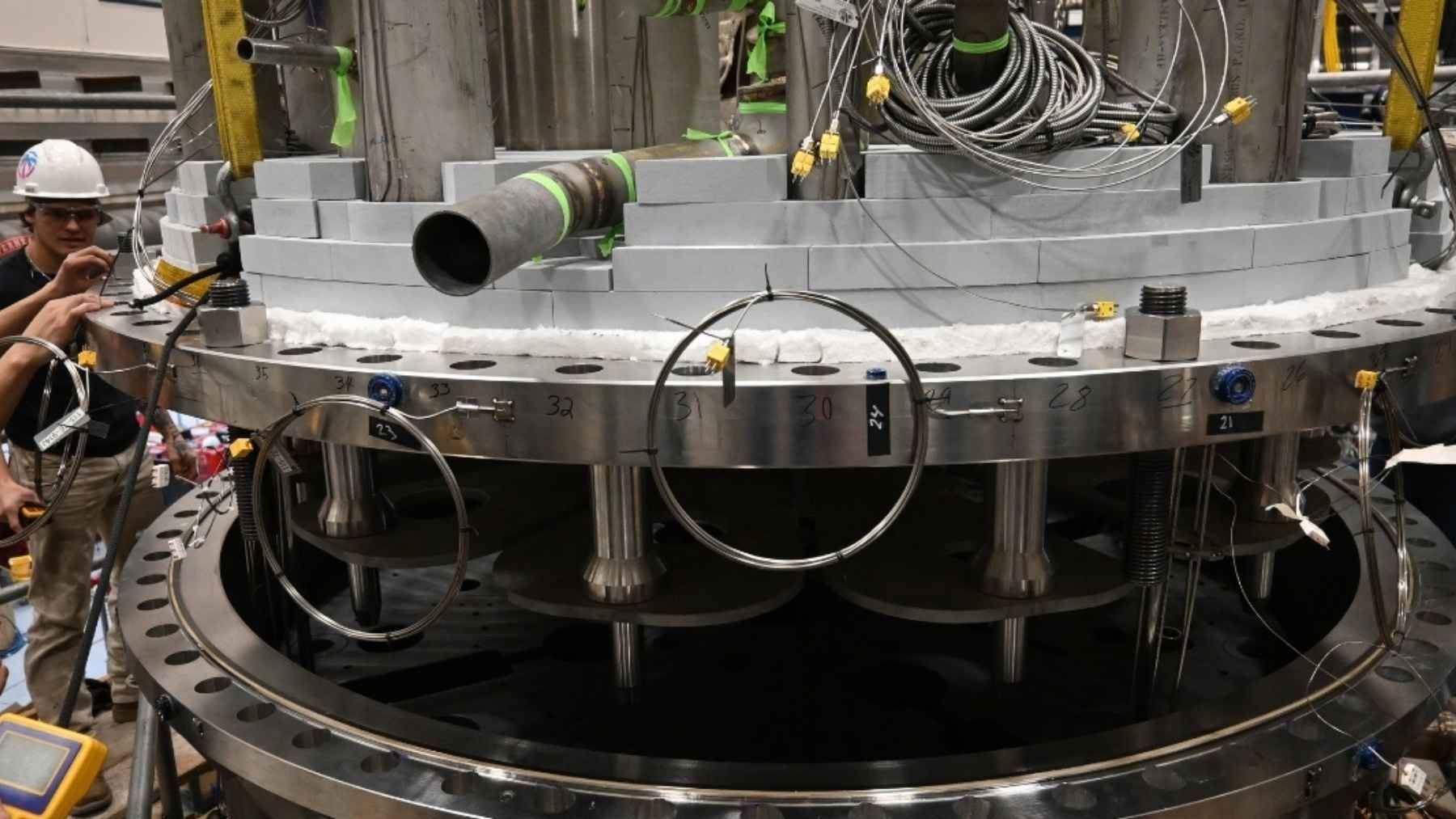
Two things changed. The first is magnets. Working with the university’s WHAM experiment, Realta ran high-temperature superconducting magnets up to 17 tesla in 2024, which it says is the strongest magnetic field ever put on a fusion plasma, and a stronger field narrows the gap the particles escape through. Those magnets are the expensive, hard-to-source heart of modern fusion, the same technology Britain’s national program is racing to build a domestic supply chain for.
The second change is that Realta stopped fighting the leak and decided to use it. The particles streaming out of the loss cone carry energy, and rather than let that go to waste, the company catches them and pulls electricity straight out of the stream. Earlier this year it ran that trick on WHAM and lit a lightbulb from the escaping particles, with no steam and no turbine involved, a demo reported by Nuclear Newswire that Realta bills as the first time a commercial fusion company has turned plasma energy directly into electricity.
That puts Realta in a small camp. A company like Helion, building a very different pulsed machine out in Washington State, is making a similar bet: skip the steam cycle that fusion has always assumed and recover electricity from the plasma itself. In a mirror, the leak ends up doing double duty. It carries junk out the ends to keep the plasma clean, and it doubles as the power tap.
The next machine is the hard part
WHAM, the machine at the university, is a simple mirror: a cylinder roughly 2 by 5 meters with a magnet at each end. Hammir is the next size up, and a more complicated one. It’s a tandem mirror, which adds a third magnetic section and uses high-pressure ends to plug a lower-pressure central cell, where most of the fusion is meant to happen.
If it works, Realta’s plan isn’t a giant central power station. It’s compact units in the 50-to-500-megawatt range, dropped next to the things that need a lot of steady power in one place: data centers, chemical plants, metal recycling, remote mines. That is the market nearly every fusion startup is now aiming at, and the projected power appetite of AI data centers is a big part of why the money has started showing up years before any of these machines can deliver a watt.
Realta has some of that money already. It’s backed by Khosla Ventures and Future Ventures, and it’s one of eight companies picked for the U.S. Department of Energy’s flagship fusion development program.
None of that changes the honest state of things. No fusion company anywhere has put a watt of fusion power onto a grid, and Realta’s own timeline has ground breaking on The Realta Forge before the end of 2026, with the hard physics of Hammir still ahead of it. What Wisconsin bought on July 15 is a headquarters, a few hundred jobs and a machine that still has to be built inside a plant that used to make hot dogs. The naming came first. The plasma comes later.