
- 2 MONTHS AGO · MILITARYThe Navy rewired a destroyer from 450 volts to 4,160, dropped in generator sets making 4 megawatts apiece and a bigger chilled-water plant to carry the heat away, and every bit of that exists to feed one radar that it says does the work of two ships
- 2 MONTHS AGO · MILITARYA 10-foot electric drone on eight wheels carries 2,200 pounds of a Marine squad’s water, ammunition and batteries, close to its own 2,500-pound weight, and the Marines are buying 12 more of them plus five kits that let it swim, where its load drops to 660 pounds
- 3 WEEKS AGO · MILITARYA 2,050-ton World War II destroyer just lost her fall tow to dry dock and will spend one more Buffalo winter stuck in a mud cradle nobody has dredged in 21 years, until an Army Corps permit lets tugboats pull her free and haul her to Erie for new steel down to the keel
- 2 WEEKS AGO · MILITARYA 2,200-ton destroyer that lost 32 sailors off Okinawa will be towed to the other side of her South Carolina pier, because every dry dock trip from the old berth means ripping out 60 feet of roadway and closing the museum for two weeks, and the move makes that a one-time job
- TODAY · THIS ARTICLEA 9,700-pound cache of primer explosive in 68 barrels that have sat more than 20 years at an Iowa ammunition plant, now too degraded to move after their water bath partly evaporated, has until Monday to be blown up in place before a forecast cold snap makes the material worse
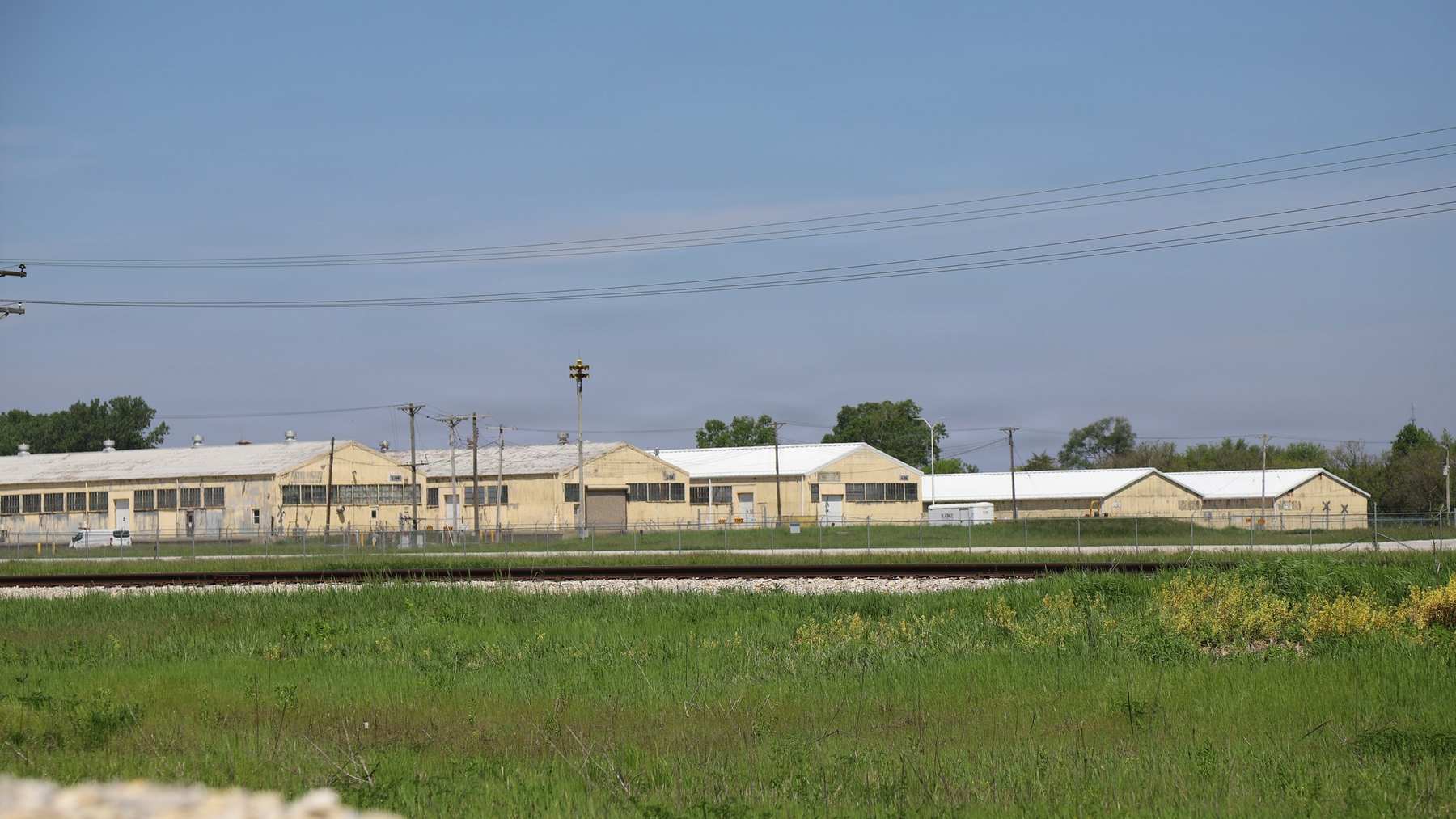
The Army was scheduled to set off two back-to-back blasts at an ammunition plant in southeast Iowa around noon today. Schools across the area had already called off Friday classes, and people living near Middletown City Park and Butterfly Park had been asked to clear out from 8 a.m. to 2 p.m. Then, late Thursday, the whole thing got pushed to Monday.
If you’re wondering why the Army didn’t just push it to next month, or next spring, you’re not alone. But this isn’t a job anyone can put off for long, and the reason is sitting inside 68 barrels at the Iowa Army Ammunition Plant.
Acting Army Secretary Adam R. Telle posted the delay on X Thursday evening. He told Army Materiel Command to hold off until Monday, November 23, and said Monday is as late as the Army can go before a forecast drop in temperature that could make the material even less stable. He didn’t give a time.
The delay also came after a wave of public concern, a call from Iowa Gov. Kim Reynolds, who says she asked Telle to postpone it, and an emergency motion from two environmental groups asking a federal appeals court to block the blasts. More on that in a bit.
So what is lead azide?
Explosives basically come in two flavors. The big, stable charges that do the real work in a shell are surprisingly hard to set off, which is kind of the point. TNT is the classic example. A primary explosive like lead azide is the opposite. A bit of friction, a sharp knock or a spark can set it off, and its whole job is to get the bigger charge going.
That makes it pretty useful in ammunition, and a pretty nasty thing to have lying around once it starts to degrade. The Middletown plant makes medium- and large-caliber munitions for the Department of Defense, and Army Sustainment Command spokesperson Justine Barati says this stockpile comes to 68 barrels and about 9,700 pounds (4.85 tons).
Why can’t the Army just move it?
You’d think the obvious fix would be to load the barrels onto a truck and haul them somewhere with a lot more empty land around it. The catch is how they’ve been stored.
According to Barati, the lead azide has spent more than 20 years in earth-covered containers, sitting under an ethanol-and-water bath. That bath is what keeps it stable. Wet lead azide is a lot harder to set off than dry crystals, so as long as the liquid stays topped up, the barrels are basically just heavy.
Then a routine check earlier this year found that some of that liquid had evaporated and the lead azide had crystallized. The plant shut down for more than two weeks in March for a safety review.
The EPA’s emergency permit spells out what that did. Recrystallizing has left the material more sensitive to friction and shock, and the agency says simply disturbing the containers could set it off by accident, a risk it calls unacceptable. Which means anything that involves picking the barrels up, including opening them to treat the contents chemically, is off the table as far as the Army’s concerned. I’ll admit that’s frankly not a sentence anyone wants to read about something stored near their town.
Plenty of hazardous drums can still travel, like the 30-gallon radioactive drum that rode to a New Mexico salt bed. These can’t. If anything, they’re closer to the detonation cord a bomb squad found in boreholes near a Colorado River dam, where the feds had to weigh pulling it out against setting it off.
Cold weather makes it worse
So why not just wait until spring?
Because the weather is part of the problem. The Army’s environmental review of the plan says the stockpile has been through enough temperature swings that some of the lead azide dissolved into the solution and came back out as needles and platelets. In that form, shock, friction, static electricity or heat can set it off. From the looks of things, every big swing grows a little more of the touchy stuff.
Officials told the Associated Press the risk climbs in cold weather, and Barati put it fairly bluntly before the delay was announced. “We’re really concerned that it will detonate on its own,” she told AP, in a story carried by MPR News.
Telle hasn’t said how cold it’s supposed to get, and I couldn’t find a temperature in the Army’s advisories or the EPA’s permit either. So I’m not going to guess. Monday is basically a weather deadline, and the Army’s picked it as its last window.
So how do you blow up 9,700 pounds of it?
In place, and about as gently as you can blow anything up. According to the Army’s public advisory and its update this week, the plan is two detonations, one right after the other, inside concrete magazines buried under earth. Sand barriers about two stories high surround those magazines, and the soil on top gets soaked ahead of time and kept wet as the charges go off, while water misters spray the air. Two stories of sand is a lot of sand.
All that water is there to keep the lead on Army property. Lead is a heavy metal, and Barati has said the Army expects most of it to stay put and bind to the concrete. But the Army’s own advisory admits the blasts will kick up a dust plume carrying some lead, and it could hang around for up to an hour depending on the wind.
Middletown has nearly 400 residents, according to Census figures cited by ABC News, and the Army sent advisories to communities as far as 100 miles away. The CDC says there’s no safe blood lead level for kids, so it’s pretty understandable that parents in the area aren’t thrilled. Once the dust settles, the Army wants people to wipe down things like windowsills and children’s play surfaces.
Monday doesn’t have a time yet
The groups behind the court challenge, the Iowa Environmental Council and the Iowa Chapter of the Sierra Club, are represented by Earthjustice. They’ve asked the 8th U.S. Circuit Court of Appeals to review the EPA’s November 13 permit and put it on hold, arguing that safer disposal options weren’t fully weighed. As of Friday morning, I couldn’t find any report of a ruling.
The Army hasn’t put out new public guidance for Monday either. The 8 a.m. to 2 p.m. evacuation window and the school closures were all set up for Friday, and Barati told ABC News the Army would keep updating its plume maps right up to the detonation. If you live near the plant, I’d keep an eye on those advisories this weekend.
Telle’s order puts both blasts on Monday, November 23, and they’ll happen right where the barrels already are, inside earth-covered magazines at the Iowa Army Ammunition Plant.
Credit: Dori Whipple / U.S. Army
 A German box that opens in under 30 seconds, throws a drone into the air and catches it again on a deck moving at 15 knots just passed its acceptance tests at sea and was handed to a navy that will run it from a crewless boat, watching over the cables and pipelines on the seabedMilitary · 2 hours ago
 A 324-foot covered barge with a roof that slides open was built to hide the giant claw that reached for a sunken Soviet submarine, later hid the Navy’s stealth ship while it was built and tested, and today works as a floating dry dock at a commercial shipyard on San Francisco BayMilitary · 18 hours ago
 A 41-foot drone boat ran the Strait of Hormuz with two Coast Guard cutters while an Iranian drone and a Revolutionary Guard attack boat watched it pass, and months later it went through again out in front of a destroyer carrying the region’s top American generalMilitary · 1 day ago