
- 3 MONTHS AGO · ENERGYA 50-megawatt nuclear station gets built inside a shipyard, sails to the Canadian coast as cargo on a heavy-lift ship and gets bolted to the shore before a single fuel pellet goes near it, and sails off to a factory to be taken apart when it dies
- 2 MONTHS AGO · ENERGYAn Oregon wave-power site opened seven miles off the coast with nearly 50 miles of cable buried under the seafloor and four berths rated at 5 megawatts each, not one machine is in the water, and the first one likely to go in would use one percent of what the cables can carry
- 2 MONTHS AGO · ENERGYA 500,000-pound rotor has to swing over three generators still making power to get back into a Kentucky dam, and the crew has a plan for if it falls; the machine it goes into was built in 1966 to last 30 years
- 3 WEEKS AGO · ENERGYA California hillside water battery is designed to hold 5 million gallons in its upper tank that only firefighters can touch and 80 megawatt-hours in roofed tanks instead of a dam, and the drill rig started boring the same day the utility cut power to 3,601 customers
- TODAY · THIS ARTICLEA 22-ton yellow Canadian machine called Iceberg is finally off the California coast making fresh water with no motor, no battery and nothing to plug into, and every gallon goes straight back into the Pacific about 15 feet from its brine outlet, because the pipe to shore was dropped
When we first wrote about this yellow buoy back in August, a few of you in the comments thought we’d mixed up Fort Bragg.
I swear, we hadn’t. This is Fort Bragg, the small city on California’s Mendocino coast, about 165 miles north of San Francisco, not the Army post in North Carolina. And back then, the machine everyone was arguing about was still parked on land.
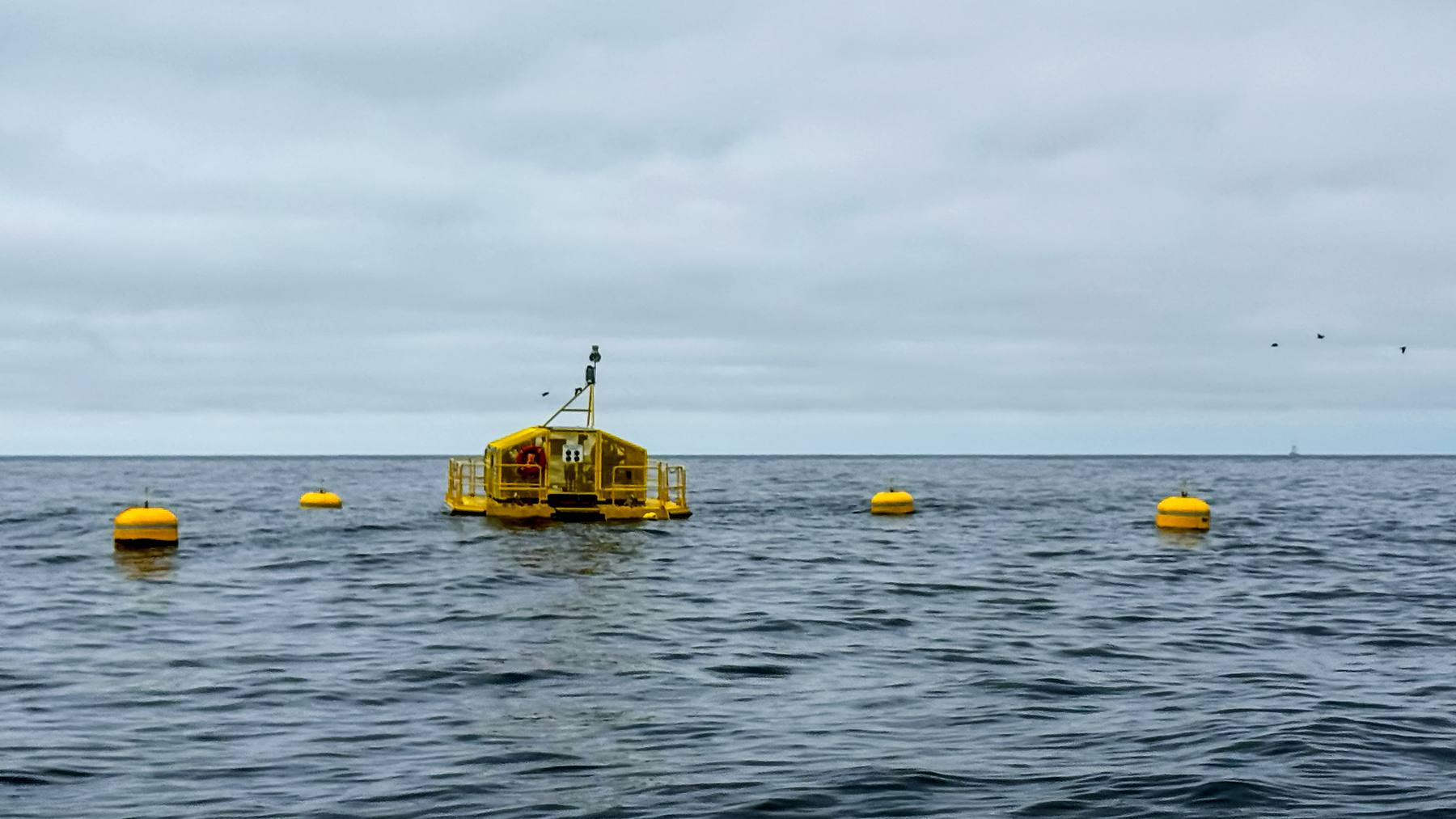
But that’s changed. The Iceberg, built by Quebec’s Oneka Technologies, went into the water on September 1. It’s a 22-ton float roughly 26 feet by 16 feet, moored about half a mile offshore in Mill Bay in 80 feet of water or more, and it runs without a motor or a battery (a small solar pack only powers the sensors). It’s been making fresh water this fall.
So, does it actually work?
From the looks of things, yeah, pretty well. There’s just one catch. Every drop it makes goes right back into the Pacific.
So where’s all that water going?
On September 18, Fort Bragg’s vice mayor, Marcia Rafanan, tasted the buoy’s water along with city manager Isaac Whippy and Oneka CEO Dragan Tutic, according to The Mendocino Voice. She later told the city council it tasted like well water, which she attributed to it coming out of a hose, but said it was fresh. That sip is about as close to a customer as the water has gotten.
The original plan had a pipe running from the buoy to the city’s wastewater treatment plant, where the water would be tested. In July, the city cut that pipe from the project through a permit amendment. Whippy told the paper the pipeline cost far more than the city expected, mostly because it had to survive the open ocean and then be pulled out again when the pilot ends. Oneka had already argued in an April memo that the work wasn’t worth it for a pilot this short.
“Water isn’t currently being delivered to shore,” Whippy said. Instead, everything the buoy produces is released back into the ocean about 15 feet from the outlet where it discharges brine.
If you’re new to this, the Iceberg is basically a reverse osmosis plant that runs on waves instead of electricity. Reverse osmosis means forcing seawater through a membrane so fine that the salt can’t follow, and on land that takes big electric pumps. Here, every wave lifts the buoy against its mooring line and drives a piston that does the pushing. What’s left over is brine, just seawater with extra salt. So right now the buoy is taking seawater apart and dropping both halves back into the same patch of ocean, which is frankly a pretty strange way to run a water project.
As for the worry one of you raised in August, that this thing just pumps more salt into the sea, the city’s project page says the brine gets back to near-normal salinity within 50 feet of the outlet. Oneka says its own modeling puts it closer to 10 feet. Measuring that in real life is one reason the pilot exists.
So how much water has it made?
If you know me, you know there’s always one specific number I find the most interesting. Well, this is the number I really wanted. Fort Bragg has to send the California Coastal Commission a monthly report on how much water the buoy made and what the lab tests showed, and the first one was due in October. I couldn’t find it published anywhere, and the Commission’s staff report only says the summaries get shared with regulators.
What we do have are Oneka’s own figures. In an October 8 release, the company said the buoy has turned out between 5,500 and 18,000 gallons a day in waves from 2.5 to 8 feet tall. It also claims output has run about 20% above what its virtual twin (basically a computer simulation of the buoy) predicted for the same seas. The pilot was designed around an average of 13,200 gallons a day. Those are the company’s numbers, though, so I’d take that 20% with a pinch of salt until the city’s reports show up.
The water itself averages about 100 parts per million of dissolved salts, according to Oneka. The EPA’s secondary standard is 500 ppm. Secondary standards are about things like taste and smell rather than safety, and they’re guidelines, not law. By that yardstick, it’s pretty fresh stuff, which lines up with the vice mayor’s well-water verdict.
So who’s paying for all this?
The California Department of Water Resources is funding the pilot with a state grant capped at $1.49 million. The buoy costs $745,000 installed, and when the pilot wraps up, Oneka buys it back from the city for $1. You read that right.
Here’s where the missing pipe gets a bit awkward. The last 20% of that $745,000 comes due on installation, startup and the first delivery of water to the city, according to The Mendocino Voice. The contract caps what Fort Bragg has to take at 401,500 gallons a month, which, if you run the math, is the 13,200-gallon daily average spread over a year and cut into 12 months. It also defines the 12-month operating period as the time the buoy spends producing and delivering water to the city. I’m not a contract lawyer, but with nothing reaching shore, it isn’t obvious when that clock started. The paper asked the state how much of the grant it’s paid out and what the new completion date is, and as of its September 30 story, DWR hadn’t answered.
When does it come out of the water?
Soon, if it isn’t out already. Under the amended permit, the buoy has to come out for the winter by November 30, can go back in on or after April 1, 2027, and has to be removed for good by November 30, 2027. On October 21, the State Lands Commission also extended the city’s lease on its slice of Mill Bay through December 31, 2027. In August, we reported that lease ran until August 21, 2027.
As of November 20, I couldn’t find anything from the city or Oneka saying the buoy has been towed back to Noyo Harbor yet. Back in September, Oneka hadn’t said when it would come out, either.
It isn’t the first machine we’ve covered that makes something useful and then throws it away. A 46-ton wave energy cylinder off the French coast was dumping all the power it made when we covered it, because there’s no cable to shore. And if you’d like the opposite approach to desalination, there’s a pod sitting on the seabed off Norway that lets deep-water pressure do the squeezing.
If the schedule holds, the Iceberg goes back into Mill Bay on or after April 1, 2027, for one more season before it has to leave for good on November 30, 2027.
Credit: The Mendocino Voice
 An 11-foot drone submarine weighing 1,653 pounds was sent 4,921 feet down under a jam of icebergs off Greenland on a 170-watt motor, and while it was down there a slab of ice 3,280 feet across let goIndustry · 3 months ago
 A 22-ton yellow Canadian machine called Iceberg is parked on land in California with no motor, no battery and nothing to plug into, built to sit offshore and turn 13,200 gallons of the Pacific into fresh water a dayEnergy · 4 months ago
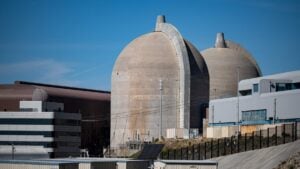 A 1,118-megawatt reactor on the California coast was once shut down by hand at 10:27 at night because salps, jellyfish-like animals 2 to 3 inches long, were packing its seawater screens, and with its twin down for refueling the whole 2,256-megawatt plant sat idle for more than two daysEnergy · 5 hours ago