
Every mechanic has delivered some version of the same bad news: the part is cheap, but getting to it isn’t. Somebody designed the thing without once thinking about the poor soul who’d have to reach in there later, so a $30 component turns into a $2,000 invoice and most of that is labor. It’s the difference between a machine designed to be built and a machine designed to be owned.
Fusion reactors have exactly that problem, except the components cost millions, the inside of the machine is radioactive, and you can’t exactly roll it onto a lift. On July 3, UK Fusion Energy published two European patent applications that add up to a bet on fixing it.
The idea is a tokamak built as a stack of rings you can pull apart and service one at a time, instead of the single enormous welded vessel that basically every large fusion machine has been built as until now. The plant it’s meant for is going on the site of a coal station in Nottinghamshire that burned its last fuel in 2023 after 57 years.
A tokamak that comes apart in rings
The two filings are EP4742271A1 and EP4742272A1, both published on May 13 and announced by the programme on July 3. The first covers a modular vessel assembly, the second a fluid sealing device to go with it. They’re the first innovations out of Britain’s STEP programme to reach the public through the patent system, and their status matters: these are published applications, not granted patents. UK Fusion Energy says so itself in the notes to editors, which is more candor than these announcements usually carry.
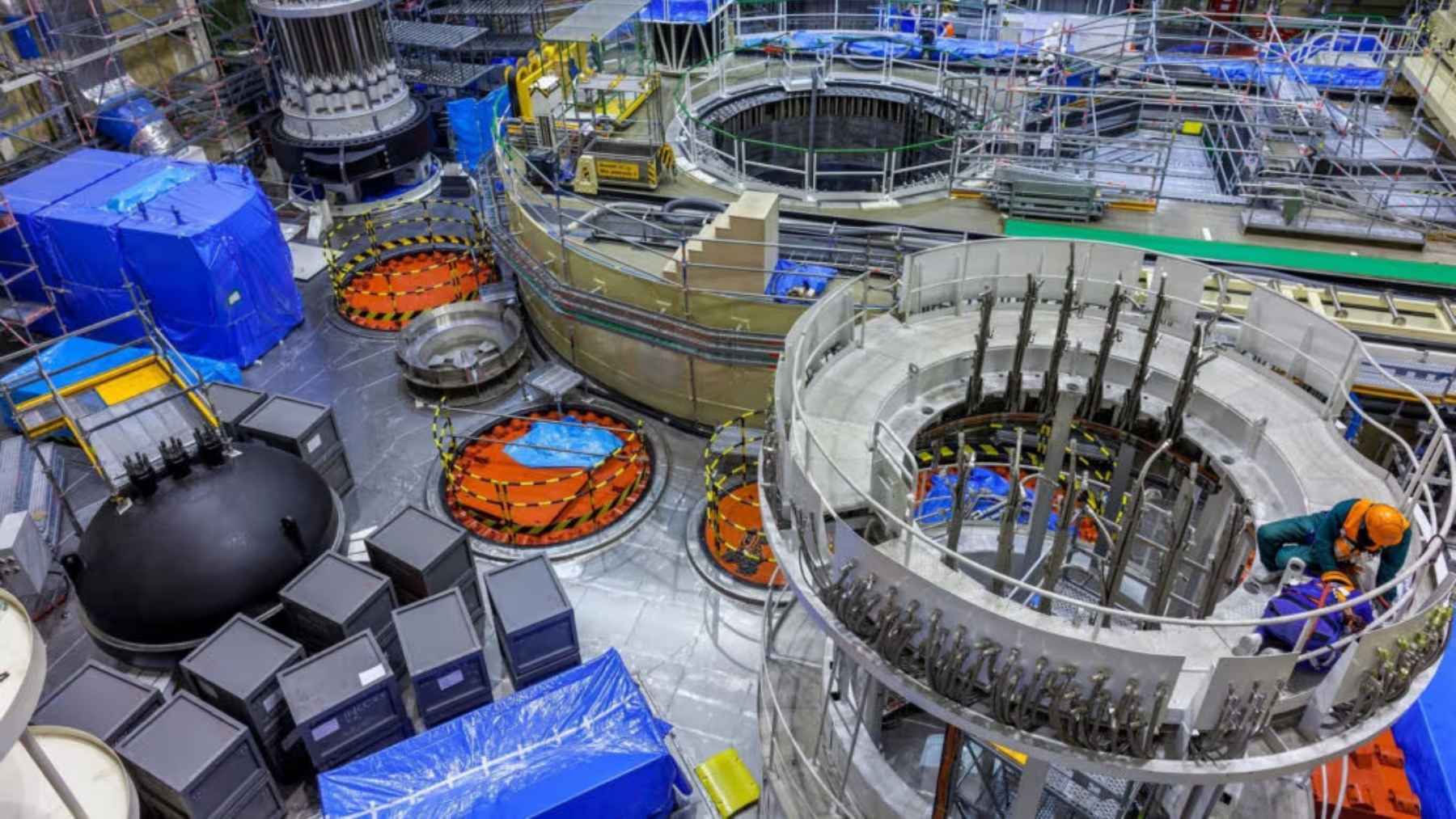
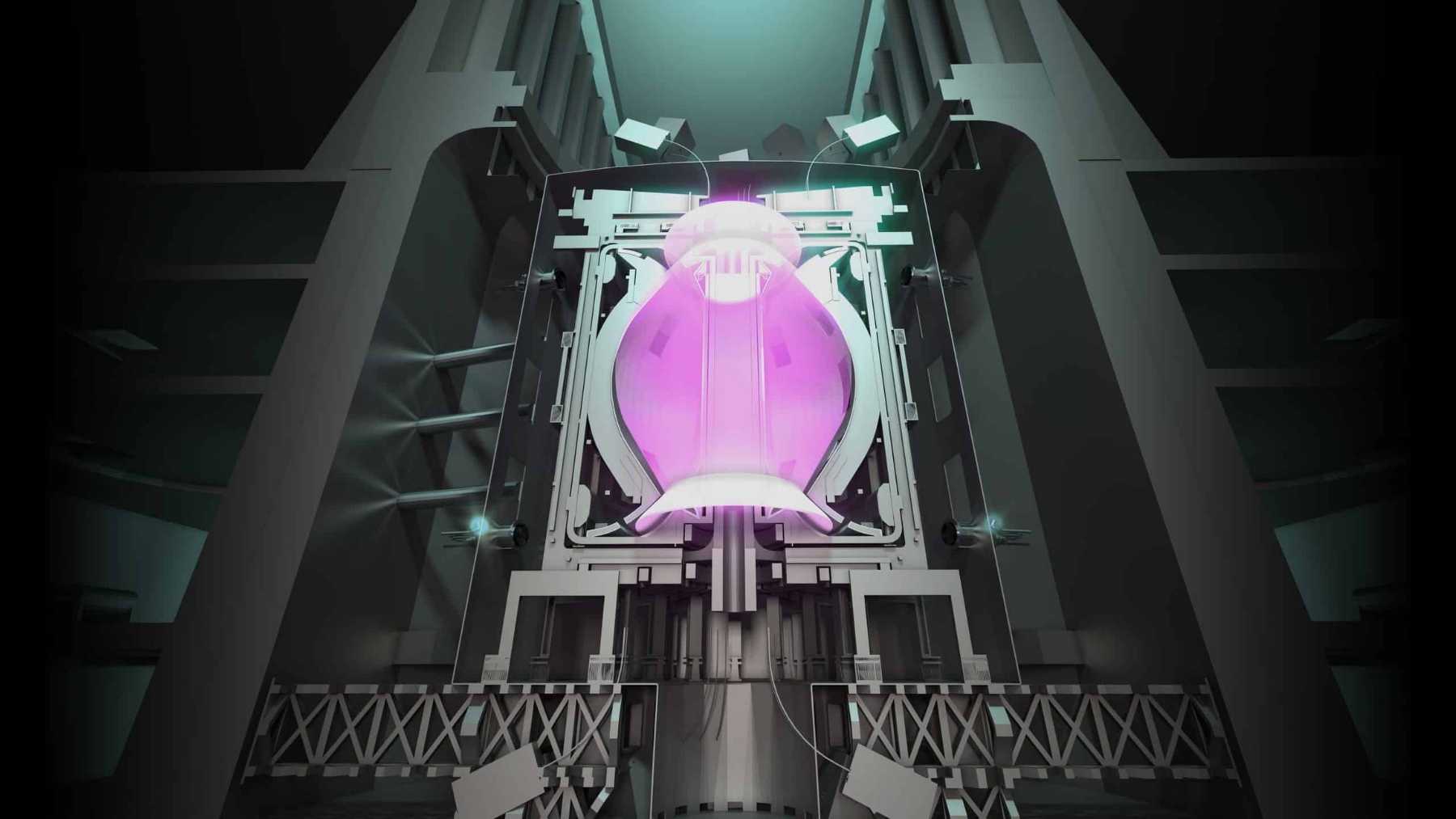
What they describe is a vacuum vessel divided into stacked annular modules. Each ring carries its own in-vessel systems, so sections can be assembled, removed, serviced and put back independently rather than as one monolithic can. The vacuum vessel is the chamber where the plasma lives, and it has one of the nastiest jobs in engineering: hold a hard vacuum while getting hammered by heat, electromagnetic forces and a constant neutron flux.
The conventional answer is to weld it into one enormous structure, which is superb at holding vacuum and miserable when something inside it needs replacing two decades in. Roel Verhoeven, an engineering manager at UK Fusion Energy, framed the challenge as designing systems that “must operate reliably while also remaining maintainable through their operational life.”
The seal is where modular designs usually die
Cutting a vacuum chamber into rings sounds obvious right up until the joints have to hold. That’s the second application, and it’s the harder half. A seal between neighboring modules has to keep vacuum integrity across multiple interfaces while absorbing the manufacturing tolerances and deformation you get in any large fabricated structure. Big steel things are never quite the shape the drawing claimed, and they change shape once you heat them. Multiply that by every interface in the stack and you see why nearly everyone else welds it shut and eats the maintenance bill.
The programme presents the vessel architecture and the seal as one engineering solution rather than two ideas, which is the right way to read it. A modular vessel that can’t hold vacuum is just an expensive sculpture. Whether it works is a question for the 2030s, and a published application describes an intention, not a thing that exists. But it tells you what the engineering team is worried about, and they’re worried about the repair bill on a machine nobody has built yet.
Megawatt Valley ran on coal for 57 years
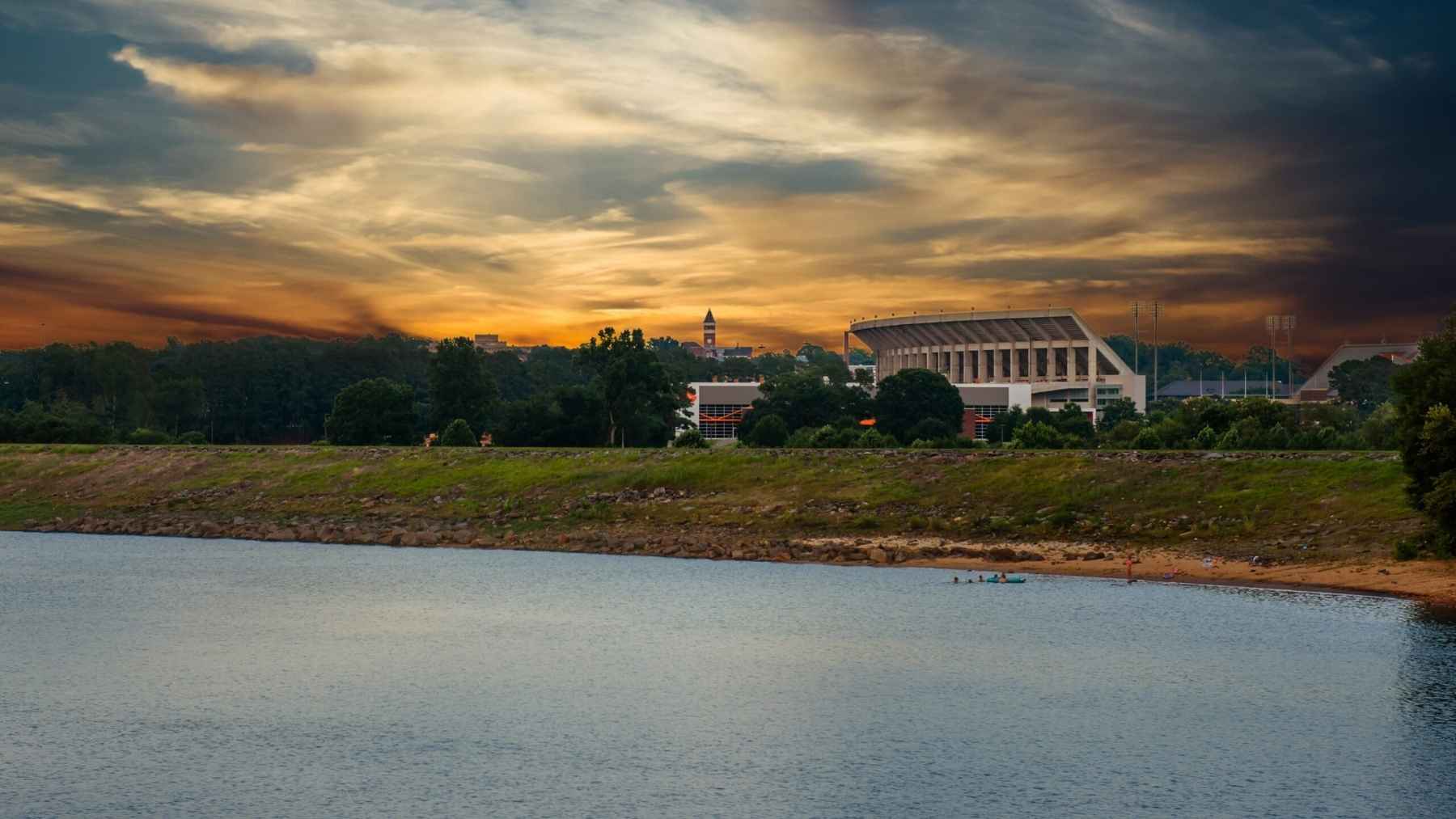
The site is West Burton, on the banks of the River Trent in north Nottinghamshire, and the nickname for this stretch of the valley isn’t a marketing invention. The UKAEA calls it Megawatt Valley, the locals coined “fossil to fusion” themselves, and the corridor has been feeding Britain’s grid for about six decades. West Burton A was commissioned in 1966, generated until March 2023, and was well enough regarded architecturally to win a Civic Trust Award in 1968, which is not a sentence you get to write about many coal plants. It beat four other shortlisted sites to host the fusion plant in October 2022, largely because heavy grid connections, cooling water and a workforce that knows how to run big plant are useful whatever you’re burning, or not burning.
The land is now changing hands. The UK Atomic Energy Authority completed the first phase of buying the site from EDF, with the first parcel transferred on March 23, roughly three and a half years ahead of schedule, and UK Fusion Energy has since opened a new project office there. A consortium called ILIOS, led by a Kier and Nuvia joint venture with AECOM, Turner & Townsend and architects AL_A, holds the £200 million (around $265 million) first-phase construction contract, with up to 8,000 onsite jobs expected at peak. Paul Methven, CEO of UK Fusion Energy, called the appointment “the moment we move from research to delivery.” Demolition of the old station runs to 2028 and serious construction isn’t expected until around 2030, so nobody is pouring a reactor foundation this year.
Here’s the part the press releases skip. Right next door on the same campus sits West Burton B, a 1.3 GW combined-cycle gas plant commissioned in 2013 and now owned by TotalEnergies, quietly supplying around 1.8 million homes today. The fusion plant’s goal is at least 100 megawatts of net power in 2040. Its gas neighbor is putting out roughly thirteen times that right now, by burning methane. That’s not an argument against fusion.
It’s just the honest scale of what “the site of the future” looks like in July 2026, and it’s the same reason Britain keeps commissioning factory-built gas blocks and small modular reactors that reach the grid a decade before any of this does. The country’s dead fossil real estate is being handed to whatever comes next, from fusion here to a floating hydrogen plant you tow to a cruise berth, but the lights tonight still run on the old stuff.
The supercomputer was supposed to be running by now
The other half of March’s announcement was Sunrise, a £45 million ($60 million) AI supercomputer funded by the Department for Energy Security and Net Zero and tied to a planned AI Growth Zone at the UKAEA’s Culham campus in Oxfordshire. It’s a 1.4-megawatt system running AMD silicon on Dell hardware, rated at up to 6.76 exaflops of AI-accelerated performance, and the government’s line is that it’ll be the most powerful AI supercomputer dedicated to fusion anywhere. One nice detail: officials declined to say exactly where in the Thames Valley the machine physically lives, citing security.
The job is to fail cheaply. Plasma turbulence, materials that survive a neutron beating, breeding enough tritium to keep the reaction fed: all of it is ruinously expensive to study by building hardware and watching it break. Sunrise is meant to run those experiments as simulations and digital twins first. Rob Akers, the UKAEA’s director for computing programmes, has compared the approach to Apollo: you learn fastest when you can break things virtually before committing to the real mission.
It was targeted to start operating in June. That’s now behind us, and no announcement has followed confirming it’s up. That could mean nothing at all, since supercomputers get commissioned quietly and press offices save the ribbon for later. It’s also the single most on-brand thing that could possibly happen to a fusion timeline, and it’s a decent calibration exercise before anyone takes the 2040 date at face value.
Nobody has run a sustained net gain anywhere
Generating more energy than you put in, continuously, at the scale of a working power station, has never been done by anyone. The closest thing to a landmark is the National Ignition Facility in California, which in December 2022 got a single laser shot to release more fusion energy than the lasers put on the target. Real result, genuinely historic, and also one burst lasting a fraction of a second that didn’t account for the grid power it took to charge the lasers. A physics milestone, not a power plant.
For a sense of the gap, the world’s largest fusion machine, ITER in southern France, has been under assembly since 2013 and was deliberately designed never to generate a single watt of electricity. It’s a physics experiment, and its 23,000-ton tokamak is exactly the kind of enormous welded structure the British filings are trying to get away from.
Britain’s STEP programme, short for Spherical Tokamak for Energy Production, wants the harder thing: fuse deuterium and tritium at over 150 million degrees Celsius (302 million Fahrenheit, roughly ten times the core of the Sun), catch the heat, spin a turbine, put power on the grid, and breed its own tritium along the way. First operations in 2040, with net energy officially promised “as soon as practicable” after that, which is the careful phrasing of people who know what they’re promising.
So the 2040 number is a bet with fourteen years of runway on a technology that has never once paid for itself. What changed this month is smaller and more interesting than a breakthrough. Two patent applications on how to unbolt a reactor aren’t going to power anything, and they might not survive contact with a real vessel. But you don’t design a machine to be taken apart and put back together unless you expect somebody to still be running it in thirty years. That’s not the paperwork of a science experiment. That’s the paperwork of a power station.