
If you’ve followed defense news for the past couple of years, you know the script by now. Taiwan looks at Ukraine, concludes it needs a lot of cheap autonomous hardware instead of a handful of expensive ships, and goes shopping. A lot of that shopping list flies. The part that moved this week swims.
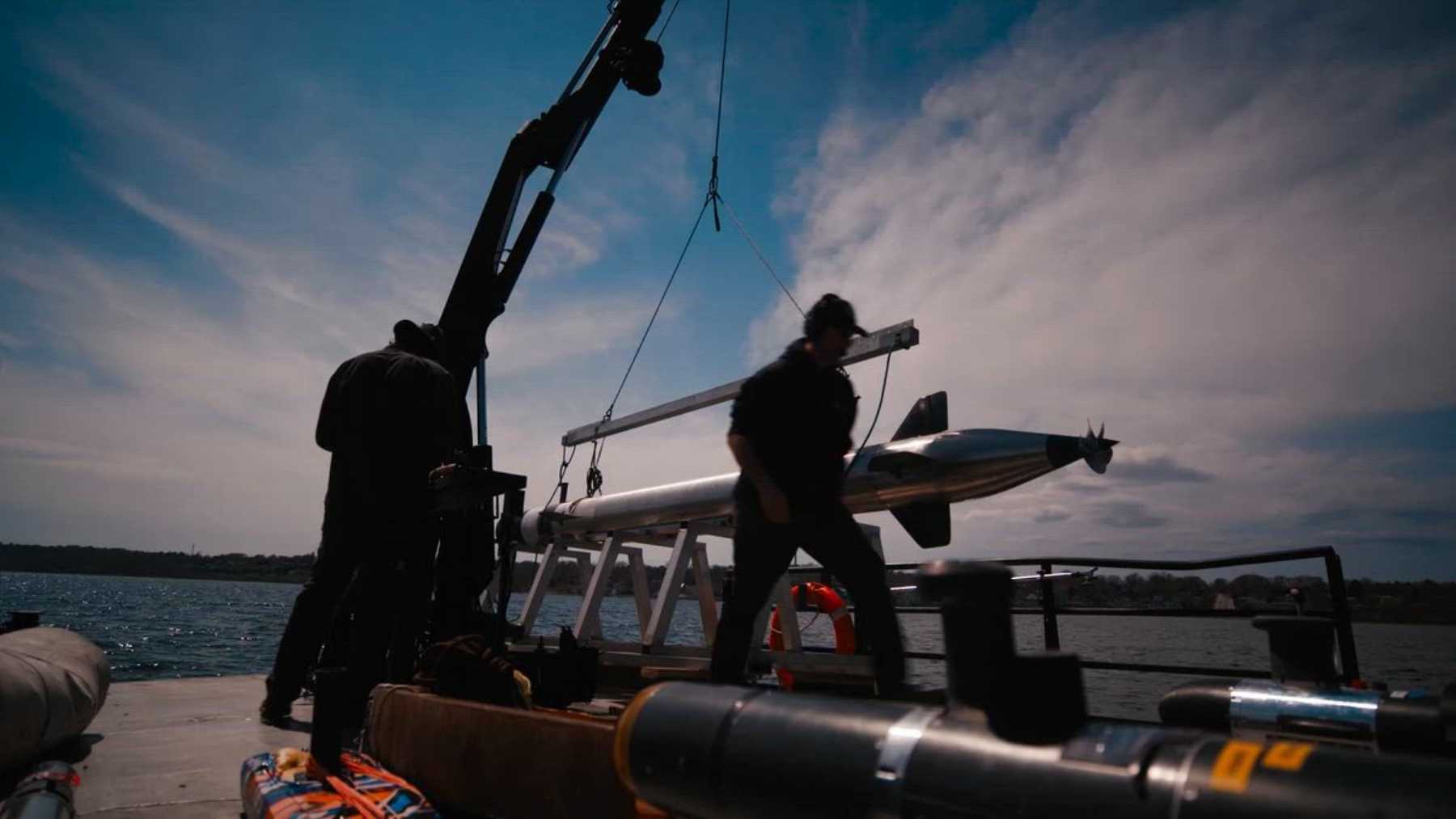
On August 11, Vatn Systems, a three-year-old startup out of Bristol, Rhode Island, announced a memorandum of understanding with the National Chung-Shan Institute of Science and Technology (NCSIST), the state institute that develops and builds weapons for Taiwan’s Ministry of National Defense. The machine at the center of it is the Skelmir S12, a torpedo-shaped underwater drone measuring 12.75 inches across.
That diameter is not a random number. It’s the NATO-standard size for lightweight torpedoes like the Mk 54, and the vehicle is designed to deploy from submarines, surface ships and aircraft. And Vatn builds these things in a Rhode Island plant rated for 2,000 hulls a year, in an industry that typically manages a couple hundred. Taiwan noticed.
The paperwork says explore, not buy
An MOU is not a contract, and nobody should read this one as a sale. There are no unit numbers in the deal, no delivery dates, and no purchase commitment. What the two sides agreed to is a framework for working together on three things: AI-enabled command-and-control systems, fielding autonomous underwater vehicles including the S12, and building supply chain and sustainment support based in Taiwan.
That last item is the one to sit up for. Defense deals with Taiwan usually mean hardware shipped across the Pacific. This one talks about maintaining, supplying and potentially assembling the vehicles on the island itself.
“Taiwan is one of many allies rethinking what undersea defense looks like,” Nelson Mills, Vatn’s co-founder and CEO, said in the release. He went further with the defense outlet Tectonic, which broke the story days before the formal announcement: “Vatn was really founded with the idea of defending Taiwan.” According to Mills, the company is setting up a Taiwanese subsidiary right now and expects to have actual operations running there soon.
NCSIST has done this dance before. Last September it signed with Anduril to co-produce that company’s underwater drone, following an earlier 2025 deal on the Barracuda-500 cruise missile, the island’s first co-production agreements with any foreign firm, per AFP reporting at the time. Anduril, whose Rhode Island torpedo plant we walked through recently, sits about an hour up the road from Vatn. Taiwan is now working the same New England corridor twice.
A 20-foot tube with three personalities
The S12 comes in three configurations, and Vatn’s own spec sheet is refreshingly specific about each one. The Endurance version is the long hauler: 240 inches long, which is a clean 20 feet, with a base vehicle weight under 900 pounds and a payload capacity of 200 pounds. It cruises at 3 to 4 knots and is rated for at least 200 nautical miles on a run, a figure the company flags as still in validation testing. At that cruise speed, 200 nautical miles works out to more than two days in the water.
The Fast version trims the hull to 172 inches and is rated for 25 knots or better, trading range for sprint. Then there’s the Kinetic version, which clears 30 knots, about 34.5 mph, underwater. Its job description is shorter runs, 10 to 80 nautical miles depending on variant, with a kinetic payload riding up front. Mills told Tectonic the pitch includes intercepting and defeating moving targets, plus faster sensor placement and more convincing decoy work.
All three run the same 12.75-inch architecture, top out at 200 pounds of payload, and are rated to 100 meters of depth, with 300-meter versions in development. The payload bay is the whole point of the design. Vatn’s menu runs from sensor packages and electronic warfare kit to decoys, cyber payloads and kinetic options, swapped in and out with no changes to the hull itself.
Navigation runs on the company’s in-house inertial system, built to keep working when GPS is jammed, spoofed or simply gone. The software side is swarm-native, built so that one person can run missions for a fleet numbering in the hundreds. If that diameter sounds familiar, it’s the same class as HII’s REMUS 620, the drone that parks itself inside a submarine’s 21-inch torpedo tube with four inches of clearance per side.
There’s a little brother too. The six-inch S6 just became the bones of SIGURD, the autonomous mine countermeasure system Vatn rolled out in July. The Taiwan agreement landed five weeks later, and the release makes a point of mentioning that timing.
Taiwan’s own drone submarine still runs on a cable
To get why NCSIST wants this, look at what the institute already built. Taiwan spent years and a reported NT$3.67 billion, around $116 million, on the Huilong, a roughly 100-ton unmanned submarine with two torpedo tubes. It got built, but it has to be operated through a fiber-optic line, with no onboard AI guidance at all. We went deep on that machine, and on the American drone NCSIST bought this summer to plug the autonomy gap its own lab publicly admitted.
So the pattern is consistent. Taiwan can build hulls, batteries and propulsion. What it keeps buying from America is the part where the vehicle thinks for itself. The S12 deal extends that logic from one imported vehicle to a potential family of them, plus the command software to run the fleet.
Geography does the rest of the arguing. The strait separating Taiwan from China narrows to roughly 80 miles, and it’s shallow, littoral water. Mills made exactly that case to Tectonic: the strait suits the S12’s specs almost perfectly, and in his framing, whoever holds the undersea layer ends up controlling the surface above it. A drone rated for 200 nautical miles at cruise can cross that water, do a job, and come back with margin. Tectonic reports that round trip is the mission profile the S12 side of this deal is built around.
China, for its part, has been building its own underwater machines at the other end of the size chart, including 148-foot drone submarines with intercontinental range. Nobody on either side of that strait thinks the water is empty.
The factory is the argument
Plenty of companies can build one impressive underwater drone. Vatn’s actual sales pitch is the building part. The company opened its Rhode Island facility in May 2025 rated to turn out as many as 2,000 vehicles a year, and its manufacturing director put the industry standard at about 200 annually at the time, per Marine Technology News. That 2,000 figure is capacity on paper, not shipped units, and it dates to the plant opening rather than to this week. It’s still the number the whole strategy leans on.
The money side backs it up. Vatn closed a $60 million Series A late last year, partnered with Palantir to digitize the production line, and agreed with South Korea’s Hanwha in December to jointly develop low-cost underwater drones for the US fleet, machines Reuters priced at around $75,000 each. And in a demo we covered in July, run alongside Lockheed Martin, Vatn launched drones from one uncrewed boat while a second struck and a third assessed the damage. The pace here is not subtle.
Taiwan fits that industrial story from the other direction. Mills told Tectonic that localizing production on the island is an open option, whether through Vatn’s new subsidiary or a local partner, and that Taiwanese manufacturing could eventually supply the Philippines, Indonesia, Thailand and Vietnam with regionally built vehicles. For a company promising thousands of hulls a year, an assembly base 80 miles from the customer’s problem beats one 8,000 miles away.
Mills calls this agreement step one, with concrete contracts and programs as the intended next move. Nothing about that timeline is guaranteed, and exploratory frameworks have died quietly before. But the pieces on the table are specific: a signed MOU, a subsidiary in formation, a fresh mine-hunting product, and a first S12 production run that was already sold to government customers back in 2025.
Eighty miles of water, a 20-foot drone rated to cross it twice, and a factory that wants to press 2,000 hulls a year. The paperwork so far says explore. The geography says hurry.