
If you’ve paid any attention to Navy news over the last few years, you’ve probably noticed the same complaint keeps coming up. The service can’t get its submarines through the shipyards fast enough. Boats wait in line for months, sometimes years, and plenty of the ones that do get in come out late.
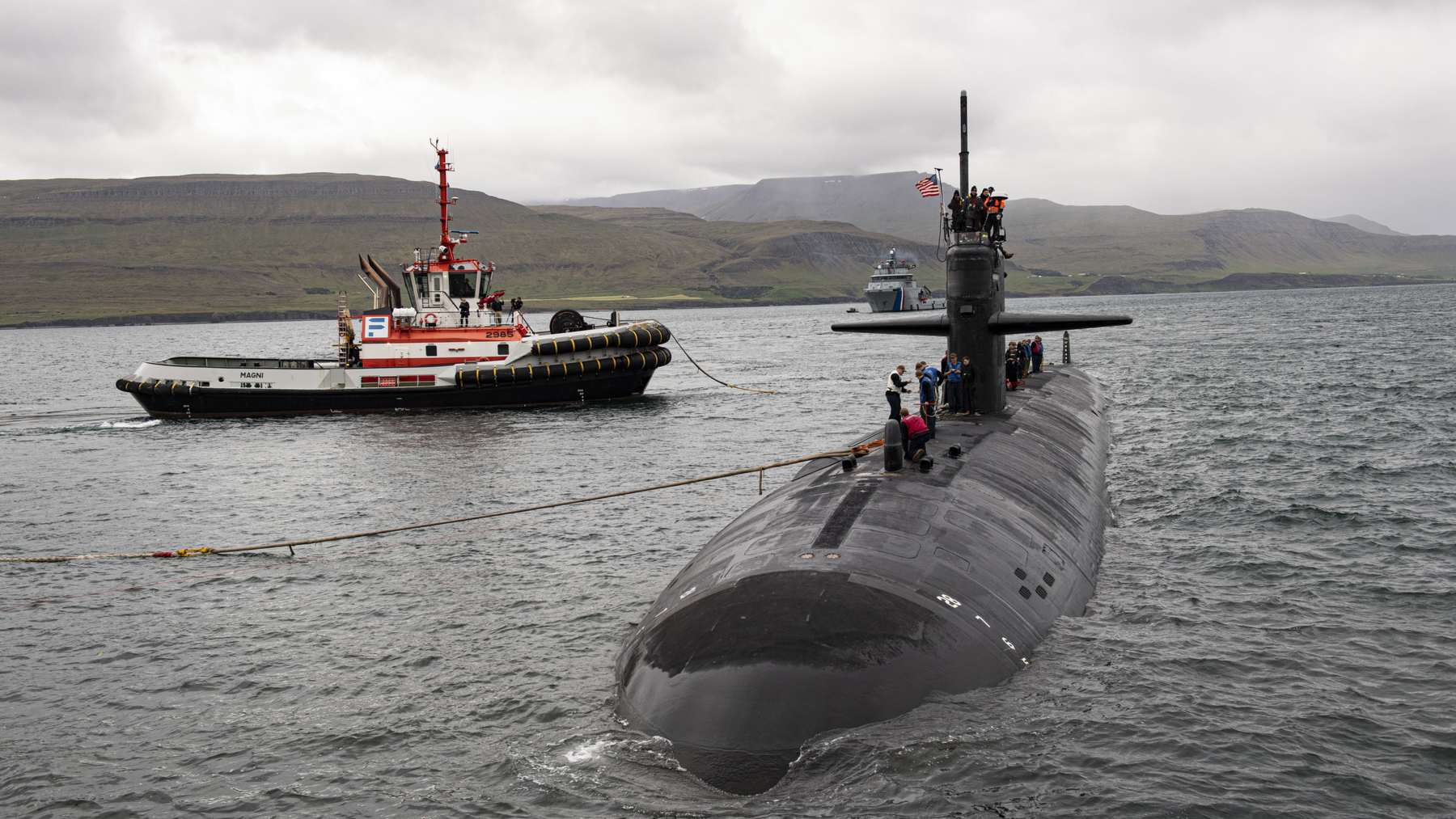
And if you’ve read more than a couple of those stories, there’s a decent chance you’ve run into USS Boise. She’s a Los Angeles-class nuclear attack submarine, about 360 feet long and roughly 6,900 tons submerged, and she fired some of the first Tomahawk missiles of the 2003 invasion of Iraq. For the last decade, though, she’s mostly been famous for sitting still.
Now the Navy has given up on her. Chief of Naval Operations Adm. Daryl Caudle called it a “tough but necessary decision” when the service announced on April 10 that Boise would be inactivated instead of finishing her overhaul. The money and the people tied to that job are going to new Virginia- and Columbia-class submarines and to getting more of the current fleet ready for duty, according to the Navy’s announcement.
So how does a 34-year-old submarine go from waiting on a routine overhaul to being written off?
Boise spent years waiting in line
Boise came home from her last deployment in January 2015, and her overhaul was on the schedule for fiscal 2016. That’s the big midlife job where a shipyard opens a submarine up, fixes or replaces a long list of systems, and sends her back out for another stretch of service.
The problem was the line she was standing in. The Navy’s public shipyards take submarines in a fixed order, with ballistic missile boats first, aircraft carriers second and attack submarines like Boise last, according to USNI News. If you’re at the back and the line isn’t moving, you just sit there.
And sitting there costs more than time. In 2017, Boise lost her dive certification. Basically, a submarine needs the Navy’s sign-off that its hull and critical systems can be trusted underwater, and as far as I understand it, that sign-off only holds while the maintenance keeps happening on schedule. When it doesn’t, the boat isn’t allowed to submerge anymore.
So for nine years, the Navy has owned an attack submarine that isn’t allowed to go underwater. That’s a pretty expensive thing to keep tied up.
The Navy eventually tried a workaround. It sent Boise to a private yard, HII’s Newport News Shipbuilding in Virginia, which happens to be where she was built in the first place. She was towed to Newport News in 2018, back to Naval Station Norfolk the following year as funding priorities shifted, and to Newport News again in 2020. That’s three tows. And she didn’t actually go into a dry dock until 2021, according to The War Zone.
If you’ve never seen one, a dry dock is basically a giant drained basin where a ship sits on blocks so workers can get at the hull from underneath. (We walked through what turned up under a World War II submarine in a Wisconsin dry dock this summer, if you’re curious.)
Even then, the full overhaul didn’t get going right away. The Pentagon announced the contract in February 2024, Navy Times and Inside Defense put it at about $1.2 billion, and the work was expected to wrap up in 2029. By The War Zone’s math, Boise would’ve spent more than a third of her career in port by then.
So how much did Boise actually cost?
This is where it gets a little messy.
USNI News added up the Pentagon’s contract announcements and put the Navy’s total investment in Boise at about $1.6 billion. But Navy Secretary John Phelan told Semafor the overhaul had cost almost $800 million so far, with only 22% of the scheduled work done, and that finishing it would’ve taken roughly another $1.9 billion.
My guess is both numbers are true in their own way. A contract award is basically the Navy agreeing to pay up to a certain amount for a job. It doesn’t mean every dollar has been spent. Phelan’s $800 million sounds a lot more like money that’s actually gone out the door.
I’d lean on his figure, since it comes from the Navy itself. But I can’t find a public breakdown that lines the two up, so take the gap with a grain of salt.
Phelan also gave Fox News the comparison that seems to have sealed it. According to him, Boise added up to 65% of what a brand-new Virginia-class submarine costs, and in return the Navy would get back about 20% of the service life a new boat delivers.
Put that way, it’s frankly not a hard call. If a shop offered to restore your 34-year-old car for two-thirds the price of a new one, and you’d only get a few more years out of it, you’d probably walk away too. Unless it’s a ’67 Mustang. Boise isn’t a ’67 Mustang.
Phelan was also pretty blunt about how the Navy got here. “We screwed up,” he told Semafor. That’s not a sentence you hear from a Navy Secretary very often, and I’d argue it tells you more than any amount of strategy language in a press release.
Why not just finish the job?
The Navy’s answer is people.
Building and fixing nuclear submarines takes a lot of skilled shipyard workers, and the Navy doesn’t have enough of them. Caudle’s pitch is that every worker freed up from a 34-year-old boat can go toward new subs or toward boats that can get back to sea sooner.
Bryan Clark, a naval analyst at the Hudson Institute, told USNI News it isn’t quite that simple. The people who repair submarines and the people who build them have different skill sets, so you can’t just walk a repair crew across the yard and have them start welding together a Virginia. Still, Clark agreed with the decision. “The juice isn’t worth the squeeze,” he said.
HII, for its part, said in April it doesn’t expect any impact on its workforce and will move the shipbuilders assigned to Boise onto other work at Newport News. Which means nobody’s losing a job over this, at least according to the company.
And the fleet could use the help. Attack submarine readiness was at 62% when officials briefed Congress in March, down from 67% a year earlier, and the Navy wants it at 80%, according to Inside Defense. Basically, more than a third of these boats aren’t ready to go when the Navy wants them. Boise was just the most extreme case.
Some of the money Boise frees up is headed for the Columbia class, the new ballistic missile submarines that’ll replace the Ohio boats. The Navy is already swapping 18,750-ton Ohio-class subs between coasts to get ready for them.
So what happens to Boise now?
Inactivation isn’t quite the same as sending a submarine to the scrapyard, but it’s the first step in that direction. For a nuclear boat, it means taking her out of service for good and removing the reactor fuel. Retired Los Angeles-class boats have historically ended up at Puget Sound Naval Shipyard in Bremerton, Washington, where the Navy takes its old nuclear submarines apart.
The Navy hasn’t said when Boise’s inactivation starts, where the work will happen, or whether she’ll make that trip to Washington at all. As of the April announcement, she was sitting in a dry dock at Newport News, and I haven’t been able to find anything since saying she’s moved.
She won’t be the last Los Angeles boat to go, either. The Navy commissioned 62 of them between 1976 and 1996, and The War Zone counted 23 still in service on April 10, the day the Navy pulled the plug on Boise.