
- 2 MONTHS AGO · ENERGYSwitzerland floated 1,400 solar panels on an Alpine reservoir at 5,940 feet, chained to weights on the bottom, because the lake belongs to a hydro plant that drains it every year, and for six months of every year the panels come down and sit on a gravel pad somebody dredged out of the lake to catch them
- 2 WEEKS AGO · ENERGYA 131-foot concrete dam, the only one in California rated unsatisfactory, will have its spillway cut 35 feet lower because its concrete is too deteriorated to repair, and until then a 36-inch pipe is what it relies on to drain the lake in a heavy storm
- 1 WEEK AGO · ENERGYA 950-megawatt dam on the Columbia River is getting 38 anchors drilled down through its spillway into bedrock and stretched tight, clamping together two layers of concrete that separated inside it and bringing the whole structure up to modern earthquake standards
- 1 DAY AGO · ENERGYA 135-foot concrete tower standing in an Orange County lake has had its four lowest gates buried in silt for more than 30 years, and the water behind the 93-year-old dam is now three weeks into a drop from 23 feet deep to 5 that clears the way for a new outlet set in bedrock
- TODAY · THIS ARTICLEA 170-foot concrete tower in a California reservoir has had 40 feet cut off its top, ring by concrete ring from a crane on a floating barge, because the dam beside it was built 33 feet lower than planned and left the tower that is the lake’s only safe drain too tall for an earthquake
Measure twice, cut once.
Repeat it with me: Measure twice, cut once.
It’s pretty good advice whether you’re working on a project car or a water tower. But it can’t do much when the thing you measured against shrinks after your part’s already been poured in concrete.
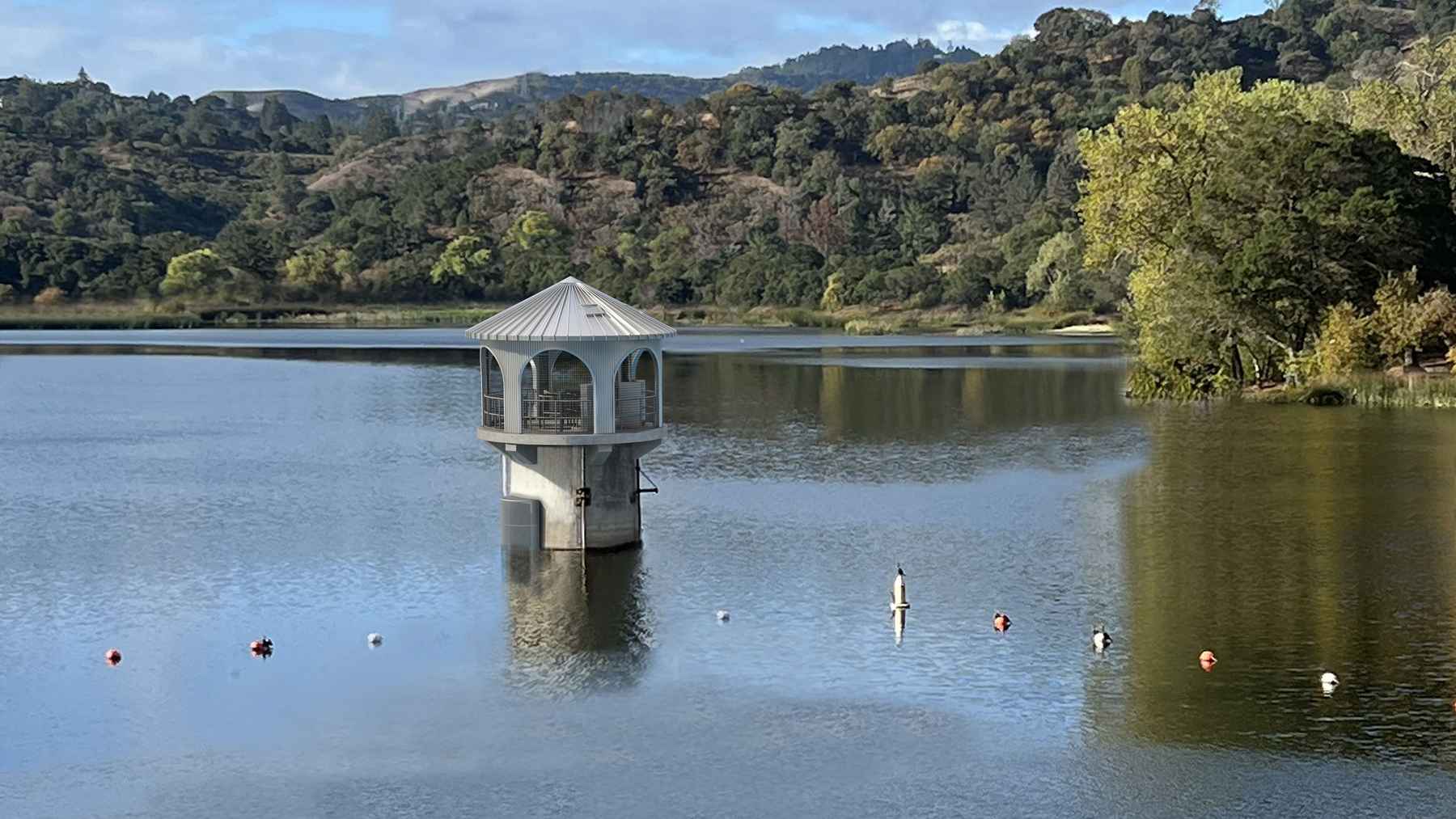
That’s basically what happened to Lafayette Reservoir’s outlet tower. The lake sits in Lafayette, California, a suburb east of Oakland, and the East Bay Municipal Utility District, or EBMUD, owns and operates it. The tower went up in 1929, built for a taller dam than today’s. According to a 2023 presentation EBMUD gave the Lafayette City Council, the original dam failed during construction, and the dam that eventually got finished came in 33 feet lower than planned. That left a 170-foot concrete tower standing in the water 40 feet taller than it needed to be.
If you’re wondering how a dam that’s 33 feet short leaves a tower 40 feet too tall, you’re not alone. EBMUD’s project page and that presentation give both numbers, and I couldn’t find a line in either that explains the 7-foot gap.
It took the better part of a century, but this summer EBMUD finally cut the tower down. And it did it without draining the lake, which meant floating a crane out to the tower on a barge and lifting the top off one concrete ring at a time.
The tower is the reservoir’s drain
At this point, you can probably tell the tower isn’t there for looks.
It’s the reservoir’s outlet and its spillway at the same time. A spillway is basically the overflow drain on your bathtub. When the water gets high enough, it goes down the tower and out through a big pipe under the dam, rather than finding its own way over the top. EBMUD says California’s Division of Safety of Dams (DSOD) treats the tower as a critical structure for exactly that reason, and that it’s “the only safe method to drain water from the reservoir.”
So what’s wrong with a little extra height?
Picture holding a broom upright by the end of the handle and giving it a shake. The longer the handle and the heavier the head, the harder the whole thing yanks at your wrist, and that’s pretty much what an earthquake does to a tall tower: more weight up high, more strain at the base. EBMUD’s seismic studies say the Lafayette tower could bend and break in a major earthquake. The 2023 presentation adds that a damaged tower likely couldn’t work as a spillway or an outlet anymore.
Which means the worry is losing the structure EBMUD relies on to control the water level, right when you’d most want it working. DSOD rates the risk downstream of the dam as extremely high, and EBMUD says a failure could send uncontrolled water toward Lafayette and Walnut Creek.
There’s a reason to take that seriously here. The Moraga Fault runs right under the reservoir, and EBMUD says its last major quake hit in 1956, at magnitude 5.2. It’s part of the larger Hayward Fault System, which EBMUD says can produce a magnitude 7.25 in the region. The tower was already standing for the 1956 quake, at 27 years old. It’s nearly 100 now, and EBMUD’s Christopher Tritto told CBS San Francisco that age and deterioration make a taller tower more likely to crack. I’d say that’s a pretty fair argument for not waiting around for the next big one.
So how do you shorten a tower in the middle of a lake?
The obvious move would be to drain the reservoir and work from the bottom. EBMUD said early on it wouldn’t need to, and its 2023 presentation lists lowering the reservoir as not required. The state had already capped how high EBMUD could fill it. So the crane came by water.
CBS reported that crews got going on Friday, July 10, with a crane parked on a floating barge pulling pieces off the top. The old operating house went first, the little building that’s sat on top of the tower for close to a century. Then came the stem itself. According to Bay Area Telegraph’s reading of EBMUD’s monthly status reports, crews cut it away as 13 concrete rings. Picture a really tall stack of concrete donuts being unstacked from a boat, one donut at a time. Frankly, I think the barge is the cleverest part of the whole job, since the lake doubles as a popular park and draining it would’ve been a much bigger mess.
EBMUD’s fourth monthly report said 10 of the 13 rings were gone by August 17. The last three were due out by Friday, August 21, and when Bay Area Telegraph went to look that day, the tower appeared to be at its new height. EBMUD’s November update to local stakeholders, which the Lafayette Chamber of Commerce republished, confirms it. EBMUD says the operating house came off this summer and the tower lost about 40 feet.
Good info so far, but EBMUD hasn’t published a new official height. You can do the subtraction yourself (170 minus 40 is 130 feet), but that’s my arithmetic (and I’m not a math nerd), not a number from the utility, and EBMUD’s own wording on the cut is approximate.
The tower isn’t finished yet
If you walk the loop around the reservoir, you’ve probably noticed the tower looks a bit bald right now. That’s temporary. EBMUD’s project page says the new top will be a metal operating house designed to look a lot like the old one, and the district’s customer newsletter described it back in March as lighter and more modern, but inspired by the original. Going lighter seems pretty sensible on a tower you’ve just spent a summer making less top-heavy.
It’s also a nice nod to locals who weren’t thrilled about losing a landmark, and at least one visitor CBS talked to on day one said it was kind of sad to watch it change.
EBMUD’s November update says crews are framing that house now and expect it done by the end of November. After that, tower work stops for the season once the year’s environmental work window shuts. Crews are due back in May 2027 to put in new slide gates underwater, plus the electric motors that open and close them, then finish the wiring, testing, and commissioning. Work on the outlet pipe under the dam carries on through the winter, and DSOD has also required an onshore valve system so EBMUD can respond faster in an emergency.
If you caught our piece on the 135-foot outlet tower in Orange County’s Irvine Lake, you’ll know these old towers can run into very different problems. That one has its lowest gates buried in silt. Lafayette’s trouble sat at the other end of the tower.
The whole job comes to $14 million, which EBMUD says its ratepayers are covering, so if you get a water bill from the district, you’re chipping in. DSOD has signed off on the plan.
EBMUD expects crews back on the Lafayette tower in May 2027, and it still has the full project down for completion in fall 2027.
 A 1,207-megawatt reactor in Washington state was shut down by hand at 2:49 in the morning after both pumps pushing water through its core tripped five minutes apart, all because one blown fuse knocked out the chillers cooling their drives, and it stayed off the grid for over five daysEnergy · 2 hours ago
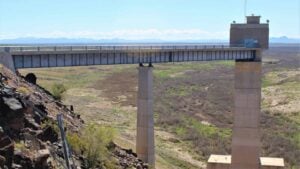 A 181-foot earthen dam in the Arizona desert was holding about 7 acre-feet of water on November 4 and 70,600 five days later, roughly 23 billion gallons of floodwater in a basin that sits dry nearly all the time, and it’s now letting it out at about 3,000 cubic feet a secondEnergy · 5 hours ago
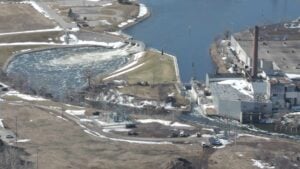 A 1.5-megawatt hydro plant dark since a 2023 fire was restarted after what its operator calls a year’s work done in seven days, as floodwater stood about 5 inches from the top of the Michigan dam beside it, and its turbine then passed about 2,500 cubic feet of water a secondEnergy · 6 hours ago