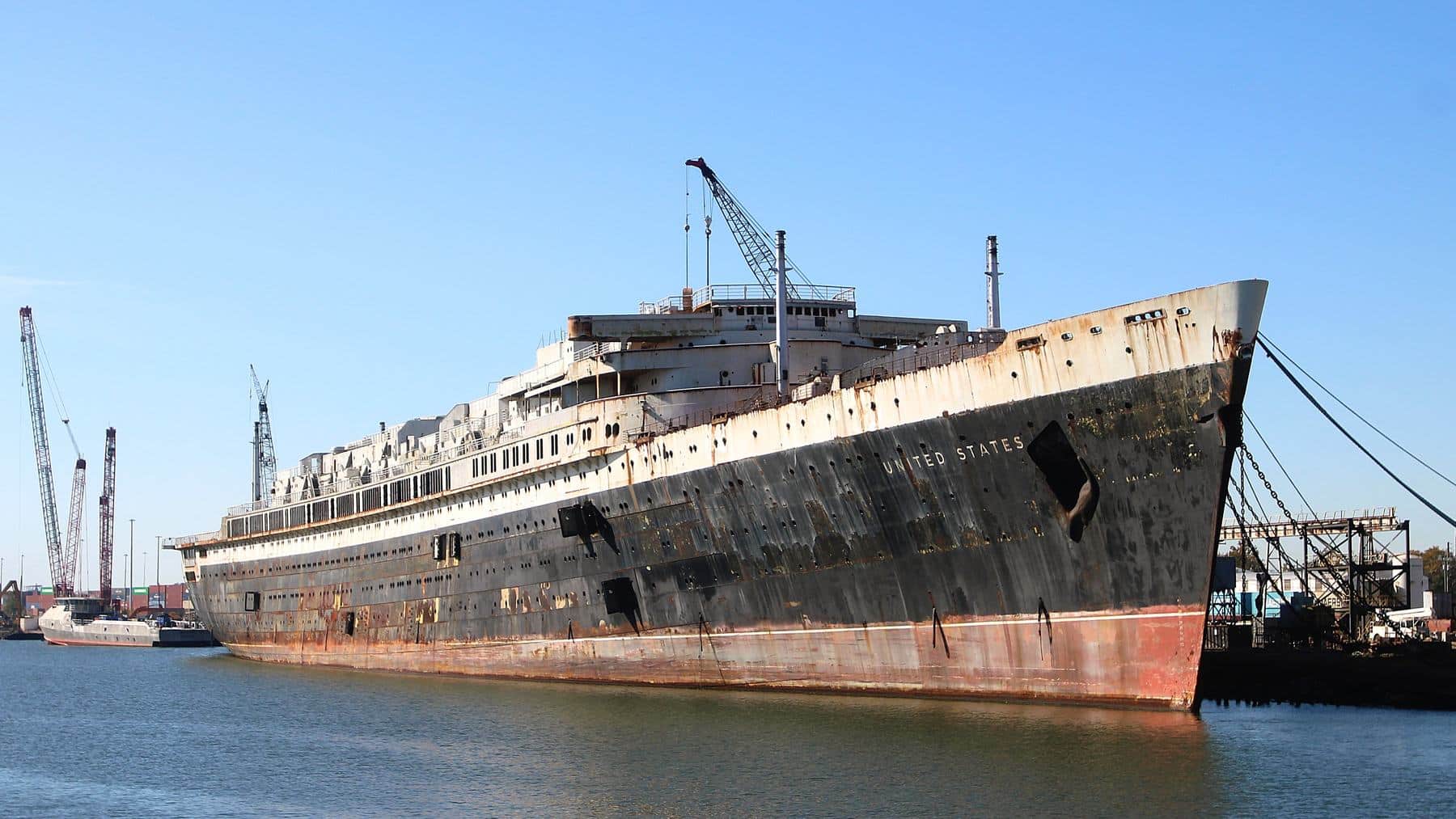

The SS United States was built around 240,000 horsepower and averaged about 41 mph on her record 1952 Atlantic run.
The Coast Guard's moving safety zone covers 100 yards around the liner and every tow vessel, with civil penalties up to $117,608.
Okaloosa County's plan permits no explosives: crews cut holes around the hull, and a naval architect's flooding model aims to land her upright.
The retired nuclear carrier Enterprise, 1,123 feet and about 94,000 tons, left Newport News under tow on Nov. 2, bound for Mobile.
Ask The Box:
No ocean liner has crossed the Atlantic faster than the SS United States did in July 1952, when Harry Truman was still in the White House. This week, if her last tow’s anything to go by, she’ll have trouble keeping up with a decent jogger.
Monday, Nov. 9, was the date the Coast Guard had on the books for her to leave Pier 4 on the Mobile River, and the 990-foot liner is now on her way out of Mobile, Alabama, behind tugboats. She isn’t coming back.
Okaloosa County, Florida, owns her, and the county’s Oct. 26 release has the sinking starting at 10 a.m. on Thursday, Nov. 12, about 22 nautical miles (roughly 25 miles) southwest of Destin-Fort Walton Beach, weather permitting. When we wrote about her long wait at the dock last month, the county had only named a week in November.
So why leave on Monday for a job on Thursday?
It isn’t much of a drive, at least on paper. I ran the county’s coordinates against a rough line down Mobile Bay and got somewhere around 105 miles. A county presentation from last December says her tow from Philadelphia averaged 6 mph, and at that pace you’d cover it in about 18 hours. I can’t find a published speed or arrival time for this trip, so that’s my math and not anybody’s schedule.
That same presentation lists three days at anchor on site. It’s almost a year old, so the details may have moved, but the Coast Guard also mentions workers on board at the sinking spot. My guess is the extra time goes to getting her anchored and ready, with a little room left over in case the Gulf doesn’t cooperate.
So what’s a dead-ship tow?
The Coast Guard’s paperwork calls this a “dead-ship tow,” and it’s about as bleak as it sounds. A dead ship has no engines running and no way to steer or stop herself. Everything she does from here on, she does because a tugboat made her do it.
That’s a pretty rough comedown for a ship built around 240,000 horsepower. She averaged about 41 mph on that 1952 run.
And before anyone writes in, yes, a catamaran ferry beat her time in 1990, and it had to stop for fuel to do it. That’s why the record you’ll see quoted is the one for ocean liners.
What’s leaving Mobile is 990 feet long and 101.5 feet wide. She was designed to displace 45,400 long tons (the 2,240-pound kind), which is basically her weight on paper. The county hasn’t published what she weighs now that her funnels, her radar mast and her fuel are gone. I’d love to know.
I can’t tell you how many tugs are on the job this week, either, since I haven’t seen a count from the county or the Coast Guard.
How close can you actually get?
If you’re thinking of taking your boat out for a look, read this first. The Coast Guard is enforcing a safety zone covering all the water within 100 yards of the liner and every vessel working the tow, and its marine safety bulletin puts the civil penalty at up to $117,608.
A moving zone is just what it sounds like. It’s a bubble that travels with the ship, so the off-limits water keeps changing as she goes. That’s a football field in every direction, minus the end zones, and frankly it’s a pretty expensive way to get a selfie.
The rule in the Federal Register runs from Nov. 6 through Nov. 16, which looks like some wiggle room for weather. Once she reaches the site, the ask gets bigger. The Coast Guard says boats that aren’t part of the job should keep a nautical mile or more between them and the ship until she’s on the bottom, and anyone who gets too close may be boarded.
Okaloosa County figures hundreds of boats could show up. Its December plan called for over 40 law enforcement boats holding a perimeter, so I wouldn’t count on the Gulf being a free-for-all.
So how deep is she going?
I’ve got to be upfront with you on this one, because two sets of numbers are floating around. The county’s FAQ puts the bottom at a proposed 180 feet and her upper deck about 55 feet down, and its tourism site has the same 180 feet with the top deck somewhere between 55 and 60. Stars and Stripes has twice put her in about 160 feet, with what’s left of her superstructure topping out at 75.
Those don’t fit together. With the first set, she’d stand about 125 feet off the sand. With the second, it’s about 85.
The county’s release gives exact coordinates and no depth at all, and I can’t find a county document with the 160 figure. So I’m going with the county’s published number, keeping in mind it’s labeled “proposed.” We should know for sure once divers get down there.
Why would you care about 20 feet? Well, if you dive, it’s kind of a big deal. A PADI Open Water card is generally good to 60 feet and an Advanced card to 100, so a deck at 55 feet is within reach for pretty much any certified diver, which is what the county’s been promising. A deck at 75 feet isn’t, at least not for a beginner sticking to those limits. And the sand at 180 feet is a job for technical divers either way.
There won’t be any explosions
If you’re tuning in hoping for a big bang, you’re going to be disappointed. The county’s presentation says no explosives are permitted. Instead, holes get cut around the hull, and a naval architect’s model plans how she floods, with the goal of landing her upright. So it’s basically a very carefully planned leak.
I can’t tell you how long it’ll take. The 10 a.m. start is when operations begin, and WUWF reports the county hasn’t said when she’ll actually go under. The Navy’s old carrier Oriskany is a decent warning about predictions: NBC News reported she went down off Pensacola Beach in about 37 minutes, roughly four hours faster than expected, though the Navy used explosives on that one. I wouldn’t set my watch by it.
Not everyone wants her on the bottom
Maritime Executive reports environmentalists are still protesting, arguing the primer put on her steel when she was built will go toxic as she breaks down underwater. The county’s answer is that the coating isn’t federally regulated for reef projects, and that it followed EPA and Maritime Administration guidance for preparing ships to be sunk. It also says it’s drained, cleaned and checked all 128 of her fuel and lubricant tanks.
I’m not a marine chemist, so I can’t settle that one for you.
What I can say is that it’s a pretty sad ending for the fastest liner ever built, though arguably a better one than the razor blade factory the county says she’d have been headed for otherwise. Okaloosa County has allocated $13 million to the whole project, paid for with tourism bed taxes and money from partners.
Meanwhile, the Enterprise is on her way to Mobile
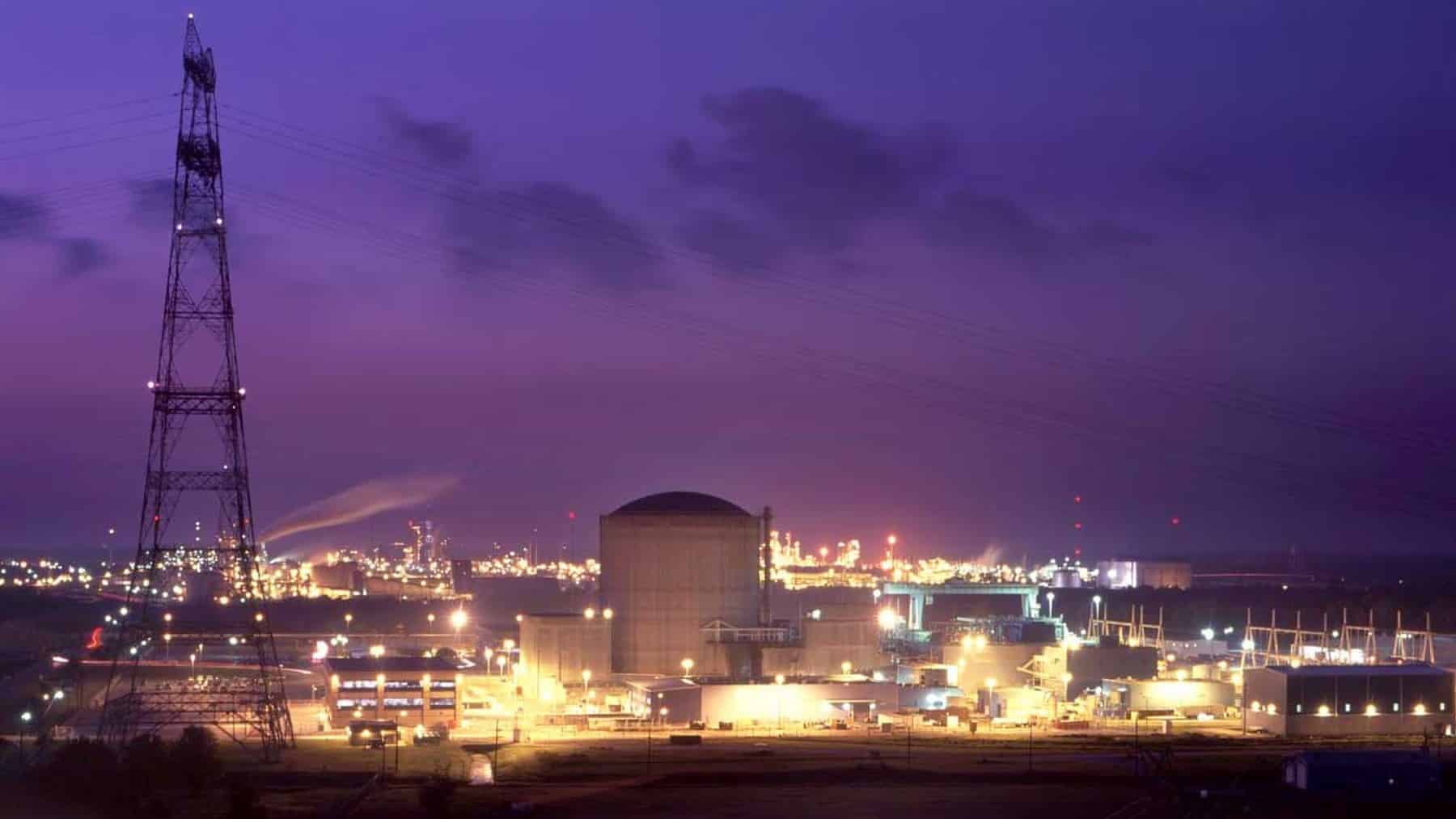
The waterfront she’s leaving has a new arrival coming. The Navy says the old nuclear carrier Enterprise left Newport News Shipbuilding under tow on Nov. 2, bound for Mobile, where she’ll be taken apart around her eight reactors. She’s 1,123 feet long and about 94,000 tons, so the city’s basically swapping one giant hulk for a bigger one.
The local partner on that job, Modern American Recycling and Radiological Services, is part of Modern American Recycling Services. And as far as I can tell, that’s the same outfit whose Pier 4 the liner is leaving.
So will the two of them pass each other? I’d love to say yes, but I can’t find a published arrival date for the carrier. Maritime Executive expects her around the time the liner leaves, and that’s as close as anyone’s come.
Okaloosa County’s Oct. 26 release has operations on the SS United States starting at 10 a.m. on Nov. 12, weather permitting, and it says the livestream link will go up on thessus.com before then.
 A nearly 23-foot tunnel boring machine just broke through into its first station under downtown Toronto after cutting about 4,265 feet and lining the tunnel with roughly 780 concrete rings, and its twin is due to punch through right beside it in DecemberIndustry · 2 days ago
 A 13,632-ton freighter lies broken in two 530 feet down in Lake Superior, 51 years after she sank in a November storm with all 29 men aboard, and federal scientists estimate up to 1,191 barrels of heavy fuel oil could still be inside a wreck with no reported leakIndustry · 4 days ago
 A 4,300-ton floating crane with a 330-foot boom and no way to move itself spent almost a year moored off West Seattle waiting on a contract, and tugboats just pulled it away from the waterfront to go lift close to 2,000 tons at a time around the Pacific NorthwestIndustry · 5 days ago