
- 3 MONTHS AGO · ENERGYIllinois wants to set a 45-megawatt reactor next to the coal boilers that have heated 150 campus buildings since 1941, with the fuel pellet doing the job of the containment dome and no emergency power on the list at all — first safety evaluation February 2027, and nobody has run one of these anywhere
- 1 MONTH AGO · ENERGYA 15-ton plug that moves fuel around a Maryland research reactor kept cracking the snap rings holding its bearings at a fraction of their rated load, a heated salt bath cracked two of three test rings, and they were the wrong steel, so screws hold the bearings now
- 1 MONTH AGO · ENERGYA 5-megawatt reactor sealed in a 1,000-ton steel vault on a Texas university campus got federal sign-off on its final safety analysis, one review away from permission to go critical, with the full-size core of a 20-megawatt reactor fueled for a quarter of the power
- 2 WEEKS AGO · ENERGYUsed control rod drives from an 842-megawatt reactor on Lake Ontario rode a truck about 750 miles to a shop in North Carolina, every reading on the package and the trailer passed, and the one spot over the limit was the driver’s cab, 2.2 millirem an hour against 2
- TODAY · THIS ARTICLEA 1.88-inch setup error on a Washington campus reactor sent a pulse rod out of its cylinder at 9.13 inches instead of 7.25, because the operator used the numbers for the wrong control rod, and the fuel peaked at about 1,598°F, some 72 degrees over the pulse limit but under the safety limit
Nuclear reactors are supposed to be boring. You don’t want to hear about them. Trust me.
In a power plant, operators move control rods in small steps, power changes over minutes or hours, and anything sudden usually ends up in a report to the Nuclear Regulatory Commission. That’s how a Florida reactor that had three control rods drop at full power landed in the NRC’s daily event log this summer.
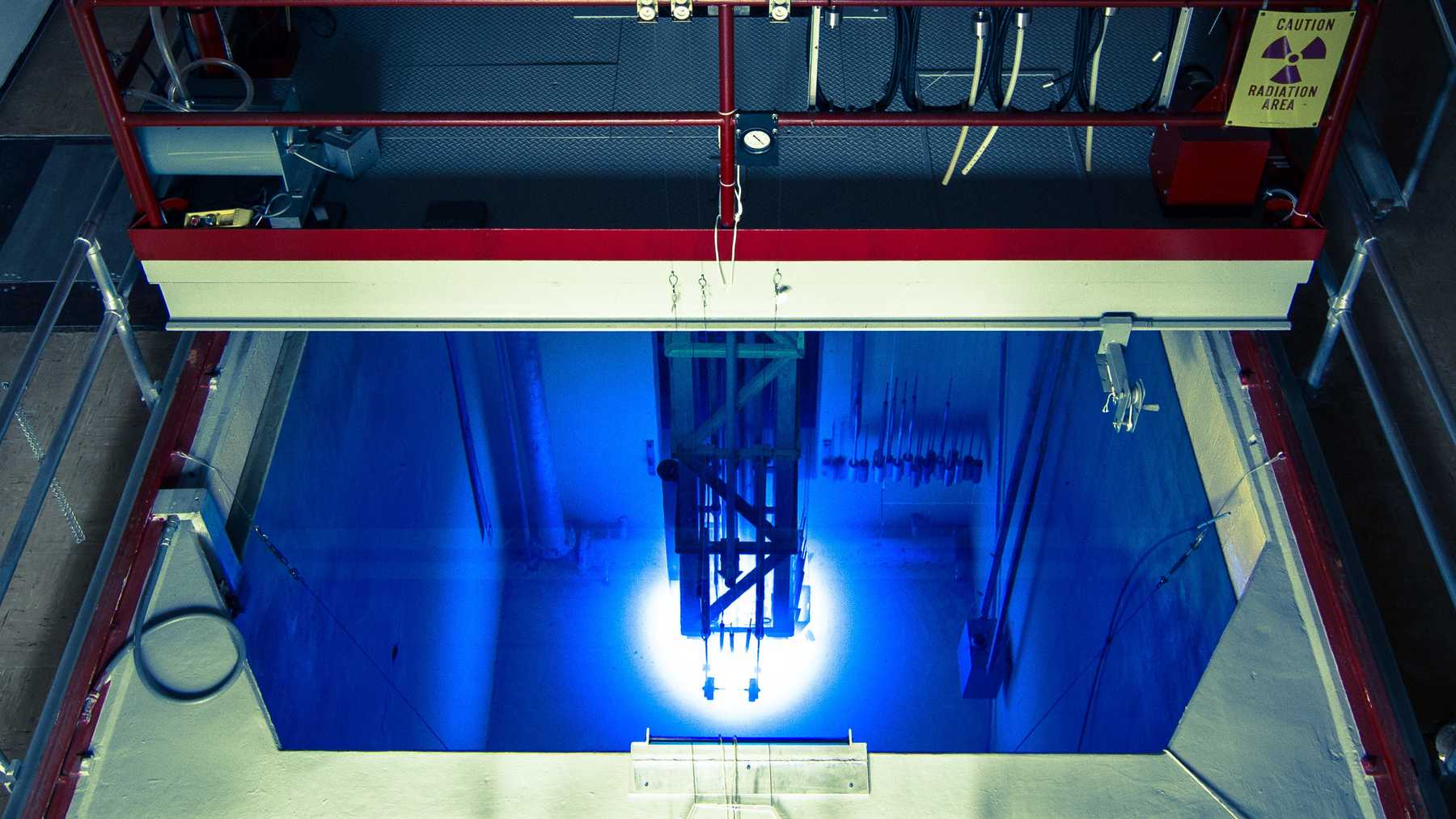
But a few university research reactors are built to do something sudden on purpose. They pulse, which basically means firing one rod out of the core so power spikes and falls back in an instant. Washington State University runs one of those reactors in Pullman, and on November 13, one pulse was bigger than planned.
According to the event report WSU filed with the NRC, a senior reactor operator set up a planned pulse using the wrong control rod numbers. The fuel got hotter than the reactor’s pulse rules allow. According to WSU’s initial calculations, it stayed below the safety limit, and that difference is pretty much the whole story.
So what is this reactor?
The reactor lives in WSU’s Nuclear Science Center, and it’s been running since March 1961. It started out with a 100-kilowatt core of plate-type fuel. By 1967, it had been upgraded to a 1-megawatt TRIGA that could pulse. TRIGA stands for Training, Research, Isotopes, General Atomics, which tells you who designed it and what it’s for.
It doesn’t make electricity, and WSU’s own reactor page is pretty blunt about that. The job is making neutrons for research, not feeding the grid. The reactor’s technical specifications cap steady operation at 1.0 megawatt of heat. Research reactors come in all sizes. A 100-watt test unit sitting in a concrete pit in Texas was just cleared to run, and WSU’s runs at 10,000 times that power.
The fuel is what makes pulsing possible. TRIGA fuel mixes uranium with zirconium hydride, and the hydrogen in it slows neutrons down. When that fuel heats up, it becomes less effective at keeping the chain reaction going. Because the hydrogen is locked inside the fuel, there’s no lag. The brake works as fast as the fuel heats. WSU credits the fuel with the reactor’s inherent safety. Since 2008, the core has run on two kinds of low-enriched uranium fuel, and each one has its own temperature limit, which comes up again in a minute.
What’s a pulse, exactly?
Before a pulse, a TRIGA typically idles at low power with a special rod, called the transient or pulse rod, still in the core. WSU’s specs say a pneumatic cylinder positions that rod. When the operator fires, air shoves the rod up and clear of the core, and the cylinder’s set height determines how far it goes. The farther it travels, the more reactivity you get, and the bigger the pulse.
Which is why 1.88 inches matters a lot more than it sounds like it should.
Then there’s the unit. Reactor physicists measure reactivity in “dollars,” and no, they’ve got nothing to do with money. A small share of the neutrons in a reactor show up late, a beat after fission, and those stragglers are what make a reactor controllable. One dollar is the reactivity equal to that late share, so anything above $1 lets power climb without waiting for them.
A pulse is meant to do exactly that, very briefly.
So how did 1.88 inches happen?
The senior operator was preparing a $1.85 pulse to gather data for a calculation the technical specifications require every year: the biggest pulse the reactor is allowed to fire. Basically, WSU has to pulse on a schedule and check that the fuel behaves the way its math says it will.
Each control rod has its own reactivity data, which tells you how much it’s worth at a given position. According to the report, the senior operator worked out the setting from control element 4’s numbers instead of control element 3’s. That put the cylinder at 9.13 inches when the correct setting was 7.25 inches. The pulse rod got fired from that height. WSU planned on $1.85 and estimates the pulse actually put in $2.50.
It’s a pretty human mistake, to be honest. Anyone who’s copied numbers from the wrong column knows the feeling. Most spreadsheets just don’t decide how hard a reactor kicks.
The pulse limit isn’t the safety limit
WSU’s specs contain two different temperature lines, and they do different jobs. The first is a limiting condition for operation, or LCO. Under section 3.1.2, a pulse can’t heat any fuel rod past 1,526°F (830°C). That’s an operating rule. Break it, and you’ve to report it to the NRC within 24 hours.
The second is the safety limit, and that’s what you’d actually worry about. Under NRC rules, safety limits protect the physical barriers that keep radioactive material contained. For WSU, that line sits at 1,832°F (1,000°C) for standard TRIGA fuel and 2,102°F (1,150°C) for the 30/20 low-enriched fuel.
So how close did it get? WSU estimates the fuel peaked at about 1,598°F (870°C). That’s about 72°F over the pulse limit and roughly 234°F under the lower of the two safety limits. “Initial calculations show that the safety limit was not exceeded,” the university told the NRC.
I’d pay attention to the word “initial” in there. It’s an estimate, and if you want WSU’s full math, that’s what the follow-up report is for. The event report is fairly dry about everything else. It doesn’t describe the fuel’s condition after the pulse. It also doesn’t give a peak power figure for the pulse or say how long it lasted, so I’m not going to guess at either.
What happens next?
According to the report, the reactor scrammed because of the pulse, meaning it went through a rapid shutdown with the control rods back in the core. It was still shut down when WSU called the NRC at 6:04 p.m. ET on November 13, about four hours after the 11:05 a.m. PST pulse.
WSU calls the pulse an apparent violation of its 3.1.2 limit. The NRC posted the event in its November 16 Event Notification Report, and I didn’t see an update in the November 17 edition. I checked.
WSU’s written follow-up is due within 10 days of the November 13 pulse, under section 6.7 of its technical specifications.
 A 170-foot concrete tower in a California reservoir has had 40 feet cut off its top, ring by concrete ring from a crane on a floating barge, because the dam beside it was built 33 feet lower than planned and left the tower that is the lake’s only safe drain too tall for an earthquakeEnergy · 3 hours ago
 A 1,207-megawatt reactor in Washington state was shut down by hand at 2:49 in the morning after both pumps pushing water through its core tripped five minutes apart, all because one blown fuse knocked out the chillers cooling their drives, and it stayed off the grid for over five daysEnergy · 5 hours ago
 A 181-foot earthen dam in the Arizona desert was holding about 7 acre-feet of water on November 4 and 70,600 five days later, roughly 23 billion gallons of floodwater in a basin that sits dry nearly all the time, and it’s now letting it out at about 3,000 cubic feet a secondEnergy · 8 hours ago