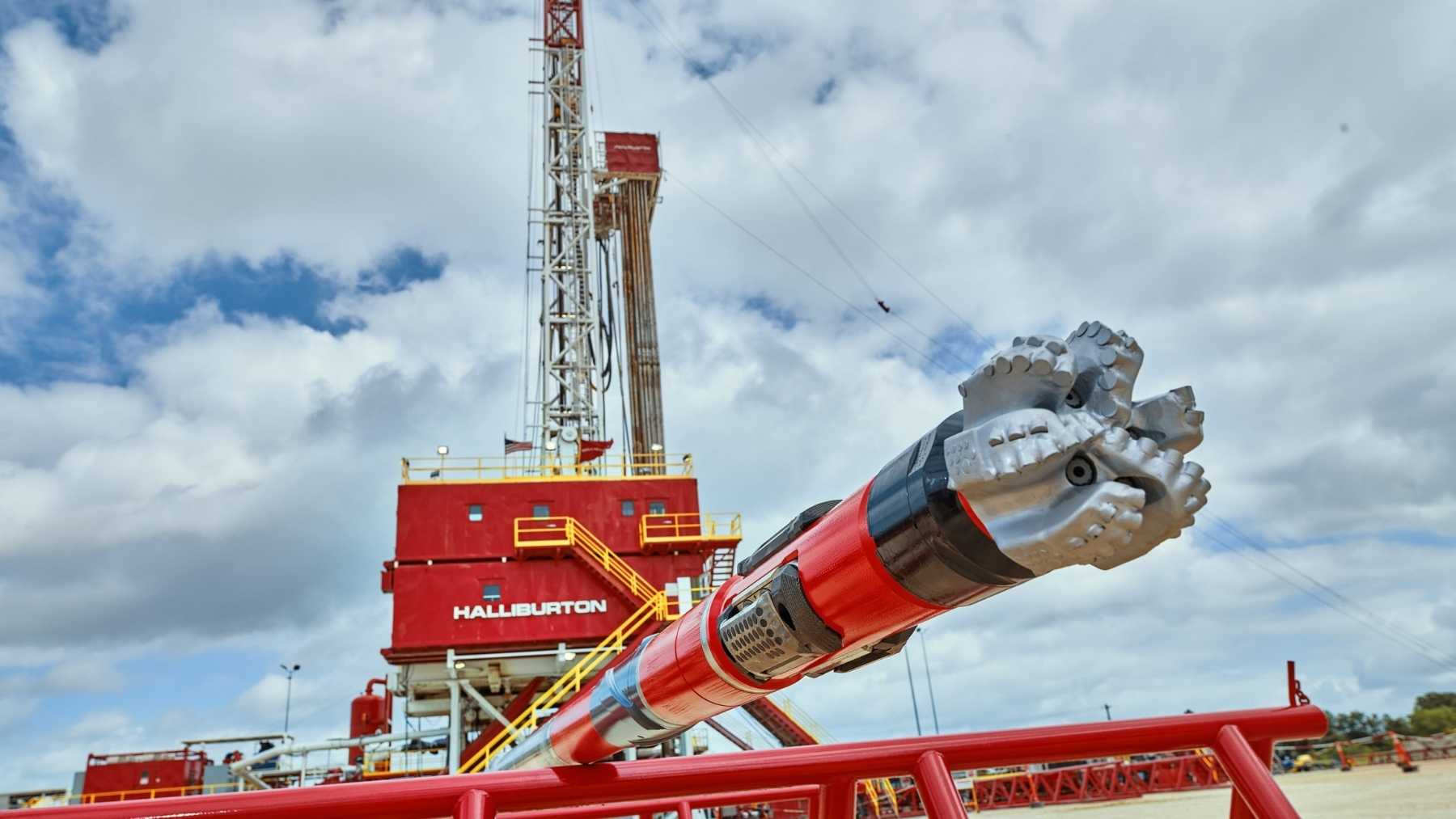

Horizontal drilling is the reason the United States stopped worrying quite so much about importing oil. You sink a hole a mile or two straight down, bend the bit until it is running sideways, and push the well out through a seam of rock nobody could have reached in 1995. Halliburton has been doing some version of that every working day for the better part of twenty years.
Now it is getting ready to drill one of those wells in central Texas and lower nuclear waste into it.
The site is the Deep Borehole Demonstration Center, and it sits at Halliburton’s Drilling Technology Facility outside Cameron, a town of about 5,300 in Milam County. Deep Isolation Nuclear broke ground there on January 28, 2026. Nothing radioactive goes anywhere near it. The entire point is to prove the mechanics work before anyone asks a regulator to approve the real version.
Jordan Blum of Fortune drove out to the pad this month and found a gravel road, a gate with a sign warning about cattle, a working oil rig, and a Halliburton hand in red coveralls telling visitors to watch for snakes and scorpions. That is the current state of America’s most advanced permanent nuclear waste project. A drilling rig in a cow pasture.
Twenty-two inches is the hard part
A production oil well tapers as it goes. Down near the bottom, where the hydrocarbons are, the hole is usually about eight inches across, because that is all the room oil needs to come up.
A nuclear waste canister needs considerably more. The well at Cameron has to run roughly 22 inches wide at depth, close to triple the usual, which means drilling with an oversized bit and then going back down with a tool called a hole opener to widen what you just cut. The name is not a euphemism. It opens the hole.
Then there is the bend. A common misconception, even inside the oil business, is that a vertical-then-horizontal well makes an L shape. It does not. The bit turns roughly four degrees every hundred feet, gradual enough that standing in any given section you would not know the pipe was curving at all.
Jason Foreman, Halliburton’s North America region manager, described the job to Fortune as a stack of individually routine problems arriving all at once: the depth, the deviation, the horizontal run, the hole diameter, and an abrasive formation to grind through. Any one of those is a Tuesday. All five together, he said, make a combination “that we’re not sure has been done before.”
The canister has to come back out
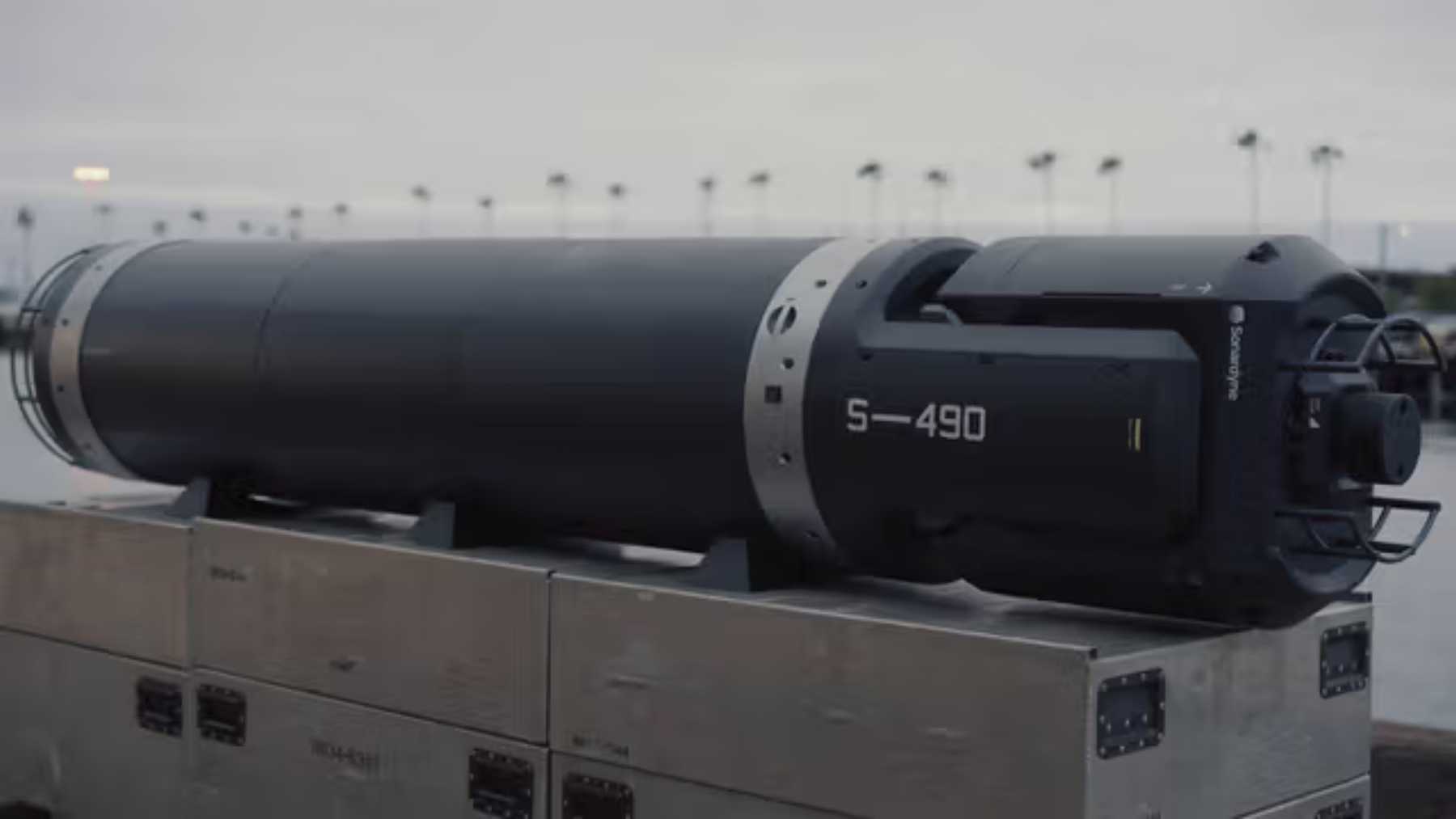
The object going down the hole is Deep Isolation’s Universal Canister System, developed over three years under an ARPA-E-funded program and then run through a separate corrosion-testing project to see how the materials hold up thousands of feet down. Fortune put the demonstration canisters at 15 feet and 5,000 pounds loaded. The published general specification is a little tighter, around 9 to 13 inches in diameter and roughly 14 feet long.
The dimensions matter less than the requirement attached to them. Deep Isolation has to show it can put a canister down a borehole and pull it back up with standard rig equipment, one at a time, on camera.
That is not how most disposal concepts work. Finland seals spent fuel in copper and clay and walks away from it. New Mexico’s WIPP, the only deep geologic repository currently open anywhere, lets the salt creep in and close the rooms by itself. Retrievability is the borehole pitch, and it is the thing the nuclear side finds hardest to believe.
Deep Isolation has done a small version once. In a 2019 field test it lowered a prototype canister about 2,000 feet vertically, pushed it more than 400 feet into a horizontal section, and got it back. Cameron is that test at full scale, with real hardware and real procedures.
Halliburton keeps calling it a well
Rod Baltzer, Deep Isolation’s president and CEO, has a theory about why nobody tried this sooner, and it is not a technology problem. Two industries were not talking to each other. Oilfield engineers had considered long steerable wells a solved problem for years. Nuclear engineers had no idea the capability existed, and were genuinely startled to learn you could put something down there and get it back.
Foreman’s version is the same story from the other side. Halliburton is in the energy business, nuclear is energy, and from where the company sits this is well construction. Which is either reassuring or slightly unnerving, depending on how you feel about “we do this every day” being applied to spent fuel.
The founding story runs through the same overlap. Liz Muller and her father Richard, a physicist, started Deep Isolation about a decade ago to drop waste canisters down oil-style boreholes. In 2024 she handed the CEO job to Baltzer and left to start Deep Fission, which is trying to put a live reactor down a hole in Kansas granite instead. Same drilling logic, opposite payload.
The budget is smaller than you would guess
Deep Isolation went public quietly. Its registration statement went effective on May 7, and the stock began quoting on the OTCQB Venture Market under the ticker DBHL on July 13. Fortune put the market capitalization at close to $300 million.
The operating numbers are those of a small company attempting one very large thing. Second-quarter results showed $1.3 million in revenue, $1.2 million in research and development, and a net loss of $3.0 million, against $19.4 million of cash at June 30.
The demonstration itself is budgeted at roughly $8.1 million this year and $7.4 million next. For scale, the exploratory tunnel at Yucca Mountain cost about $130 million in 1990s money, and the 860-ton machine that cut it is still parked outside the south portal, unsold.
Federal money is in play but not banked. ARPA-E selected Deep Isolation in April for its SCALEUP Ready program, which set aside up to $40 million across two projects, with up to $20 million earmarked here. As of the August 6 quarterly report the company was still in the contracting phase, and the funding only lands if an award is successfully negotiated. Westinghouse is lined up as launch customer, aiming to certify the canister with the NRC for spent fuel from its eVinci microreactor.
Separately, on July 23 the company was named sole industrial partner on three DOE Project GENESIS grants led by Lawrence Berkeley National Laboratory and the University of South Carolina, all of them aimed at using AI to screen and design repository sites.
None of this is legal yet
And now the catch. The Nuclear Waste Policy Act, as amended, specifies that the only site that may be considered for permanent disposal of commercial spent fuel is Yucca Mountain, Nevada. Not a borehole in Texas. Not anywhere else.
So Cameron can drill, emplace, retrieve and prove whatever it likes, and still cannot dispose of a single fuel assembly until Congress rewrites the statute. Meanwhile the pile grows: more than 95,000 metric tons of spent fuel sitting in pools and dry casks at roughly 80 sites across more than 30 states.
The policy machinery is moving, slowly. On July 28 the Energy Department named Utah, Tennessee, Oklahoma, Louisiana and Idaho as the five contenders for Nuclear Lifecycle Innovation Campuses, picked from 28 applications across 26 states, with Energy Secretary Chris Wright signing memorandums of understanding with all five. DOE’s pitch is up to $50 billion in capital investment and nearly 25,000 jobs tied to establishing a campus, and the scope explicitly includes final disposition of used fuel. Hosting agreements come later.
Baltzer is hedging geographically in the meantime. He told Fortune the first commercial Deep Isolation project may end up outside the United States entirely (the company is in active discussions with Bulgaria), and that wherever it lands, it is unlikely to be operating before the early 2030s.
Which puts Cameron in an odd spot. It is not a repository and it is not going to become one. It is a full-scale rehearsal of two or three physical operations that everything else depends on: cut a 22-inch hole a mile down and bend it sideways, drop a 5,000-pound tube into it, pull the tube back out.
If those work in front of regulators, the argument shifts from whether the engineering is plausible to whether Congress wants to allow it. If the tube gets stuck, the argument ends right there. That is a narrow question to hang a national waste strategy on, which is probably why the company holding the drill pipe is one that has spent twenty years being bored by exactly this kind of problem.