- 2 MONTHS AGO · ENERGYAn Oregon wave-power site opened seven miles off the coast with nearly 50 miles of cable buried under the seafloor and four berths rated at 5 megawatts each, not one machine is in the water, and the first one likely to go in would use one percent of what the cables can carry
- 1 MONTH AGO · ENERGYA 671-megawatt reactor on the Mississippi shut down for repairs the day before a winter bass tournament, the warm water it sends back to the river stopped with it, and 84 anglers found thousands of dead bass, walleye and pike where a shutdown three years earlier killed 230
- 1 MONTH AGO · ENERGYA fission reactor the size of a 20-foot shipping container went critical in Idaho 150 days after the project started, makes one megawatt, runs on the same 4.95 percent fuel every US plant already burns, and is now booked for a full-power run in 2027
- 1 WEEK AGO · ENERGYA 426-foot ship built to lay internet cable across oceans can now carry about 4,400 tons of power cable on two giant turntables, and it has started unspooling 311 miles of it across the seabed of a British wind farm to plug 197 turbines into two converter stations out at sea
- TODAY · THIS ARTICLEA 350-mile power cable buried along a railroad from northern Iowa to northern Illinois is planned to carry 2,100 megawatts at 525,000 volts, and sites are being scouted in Iowa for a nuclear plant of up to 1,000 megawatts that would send its power east through it
Building a long-distance power line in the US is a pretty miserable business. Most of them hang from towers on private land, which means a long line of landowners, county boards and lawyers who all get a say, and plenty of big lines have spent years stuck in that fight.
So the developers behind a project called the SOO Green HVDC Link went looking for a strip of land that already crossed two states, and they settled on a railroad.
The plan is to bury a 350-mile, 2,100-megawatt line from Mason City, Iowa, to Yorkville, Illinois, a little southwest of Chicago, mostly inside the right-of-way of the CPKC railroad (the former Canadian Pacific). It’s designed to run at 525 kilovolts, or 525,000 volts, and it’d link MISO, the grid operator for much of the Midwest, with PJM, which runs the grid from northern Illinois to the mid-Atlantic. ONE Nuclear’s announcement says the line could serve about 1.5 million Illinois homes.
And now a nuclear developer wants in. On November 19, ONE Nuclear Energy said it’s looking at Iowa sites for Project Northern Pike, a nuclear project of up to 1,000 megawatts, and that it has signed a letter of intent with SOO Green to explore sending that power east through the line. We’ll get to how solid that is (short version: it’s very early). But first, the cable.
So why direct current?
Almost everything on the US grid runs on alternating current, which cycles back and forth 60 times a second. That works fine on overhead wires. Bury an AC cable, though, and its insulation starts behaving a bit like a giant capacitor that has to be refilled on every cycle. Over a long enough run, that refilling eats up most of what the cable can carry. That’s why you don’t see many long AC lines underground.
Direct current flows one way, so the cable charges up once and that’s it. Which means you can push power hundreds of miles through a buried cable, and you lose less of it to heat along the way than you would with AC. It’s the same basic reason the 475-mile Viking Link between Britain and Denmark runs on DC.
The catch is that the grid on both ends runs on AC, and so does everything you plug in at home. So SOO Green needs a converter station at each end, one near Mason City and one in Yorkville. They’re basically buildings full of heavy-duty power electronics that turn AC into DC on the way in and back into AC on the way out. The line’s also designed to run both ways, east or west, depending on where the power’s needed.
It also isn’t one cable. Prysmian, the cable maker on the project, says the 350-mile route needs a pair of ±525 kV cables running the whole length, or 700 miles of cable in all. One sits at plus 525,000 volts and the other at minus 525,000 volts relative to ground, which is where that ± comes from. I’d love to tell you how much a mile of that cable weighs or how deep it’ll be buried, but I can’t find either figure on SOO Green’s or Prysmian’s published pages.
Why not just hang it from towers?
Apparently that was the original idea. According to a World Resources Institute case study, the developers first pitched Canadian Pacific on an overhead line along its tracks years ago, and the railroad turned them down. They came back with a buried design, and the two sides eventually signed a deal for it.
Going underground isn’t cheap. WRI cites studies that put underground HVDC at two to four times the cost of overhead HVDC. But it buys a lot. SOO Green says it has secured land rights for nearly the entire route, and the project isn’t using eminent domain, so nobody’s farm gets taken to make room for it. The developer also says that keeping the line underground protects it from extreme weather, which frankly sounds like a pretty useful feature in a part of the country that gets ice storms and derechos.
The route isn’t 100% rail, either. WRI says some short stretches in Illinois follow highways and local roads, and SOO Green’s project page says every mile of it will be either underground or underwater. Bellevue, Iowa, even asked for the line to stay out of the rail corridor inside the city, and it got rerouted.
WRI expects SOO Green to become the country’s longest underground HVDC line once it’s built. For comparison, New York’s Champlain Hudson Power Express runs 339 miles, but 193 of those are underwater.
What does 1,000 megawatts of firm power get you?
Iowa already makes a lot of electricity. It just doesn’t always show up when you want it. Wind supplies 62.84% of the state’s generation, according to the latest full-year Iowa Utilities Commission figure cited in ONE Nuclear’s release, and turbines only spin when the wind blows.
“Firm” power is the stuff a grid operator can count on around the clock regardless of the weather. A nuclear reactor is about as firm as it gets, since reactors typically run flat out for many months between refueling outages. And PJM is short on firm capacity right now. Its 2028/2029 capacity auction cleared at the $325-per-megawatt-day price cap and still came up 6,831 megawatts short of its reliability requirement, per the release.
So the logic goes like this. Build the reactor in Iowa, which has been courting nuclear lately with a governor’s task force, a sales tax exemption for nuclear plants and a federal loan of up to $1.9 billion for the Duane Arnold restart. Then ship the electricity to northern Illinois through a cable that’s already in the works. Up to 1,000 megawatts would fill a bit less than half of SOO Green’s 2,100 megawatts. Which means the line would still have plenty of room for wind and everything else.
The nuclear plant doesn’t have a site yet
So is anything actually signed?
Well, the letter of intent is. But it’s non-binding, and the release says it doesn’t reserve or allocate any capacity on SOO Green. It also doesn’t commit either company to anything further. ONE Nuclear says it’s still screening sites and hasn’t named a county or a town. It’s still evaluating reactor technology too, so I can’t tell you what kind of reactor this would be or how many of them we’re talking about. Before anyone pours concrete, the project needs an NRC license, interconnection and deliverability studies, buyers for the power and financing, and the company says it hasn’t signed a power purchase agreement.
Calling Northern Pike a “plant” is a bit generous at this stage. But ONE Nuclear’s chief investment officer, Coen Weddepohl, made a pretty fair point in the release: “Transmission is the gating item for any large nuclear project.” Lining up the cable before the reactor is arguably the smartest thing about this plan. It’s a little backwards from the usual order, but it’s probably the right one in a country where getting connected to the grid can hold up a power plant for years.
ONE Nuclear says first nuclear generation in Iowa is planned for the mid-2030s, after the line’s targeted start. SOO Green, for its part, says construction could begin as early as 2028, with commercial operation targeted for 2032.
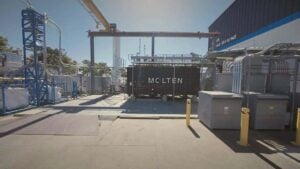 A 330-ton-a-year stream of battery-grade graphite can now come out of a single Oakland reactor that heats natural gas in a space with no oxygen so it can’t burn, splitting it into hydrogen and solid carbon, enough graphite for some 4,300 electric cars, on a third of the usual electricityEnergy · 2 hours ago
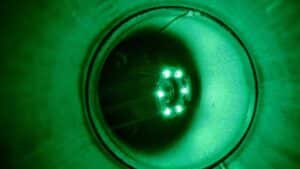 An 8-inch robot with six wheels and a bendy body is built to crawl through 2-inch pipes linking buried radioactive waste tanks, rounding 90-degree elbows where push cameras give out after about 10 feet, and in lab tests it went 197 feet and pulled more than eight times its own weightEnergy · 3 hours ago
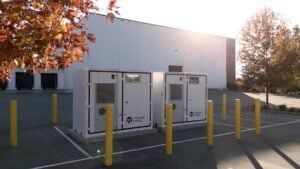 A 500-kilowatt-hour battery box under 10 feet long is built from packs too worn out for electric cars, and it is now the first system of its kind to clear the two safety certifications that let it go to work behind factories, hospitals and airports across North AmericaEnergy · 5 hours ago