- 2 MONTHS AGO · MILITARYWhile Britain introduced its first drone submarine as a demonstrator that would not perform operational duties, the 39-foot boat fired a heavyweight torpedo in UK waters 16 months later, the first launched from an uncrewed submarine by Britain or the US
- 2 MONTHS AGO · MILITARYA 115-pound underwater drone runs like a torpedo on two tail thrusters and spins a third pointing straight down to stop and hover over anything shaped like a mine, and the Spanish Navy launches the 5.2-foot machine from small boats so a diver doesn’t have to go down first
- 3 WEEKS AGO · MILITARYA 17,500-ton British missile submarine sat in an English shipyard for 89 months getting a new reactor core to replace one meant to last her whole life, longer than the 83 months it took to build her, while her three sisters got through theirs in about 42
- 1 WEEK AGO · MILITARYA 6,900-ton nuclear attack submarine at Norfolk pushed a 19-pound underwater drone out of a flooded 21-inch torpedo tube so sailors could run underwater inspections from inside the boat, using a 3D-printed resin housing instead of a temporary alteration that costs 200 times as much
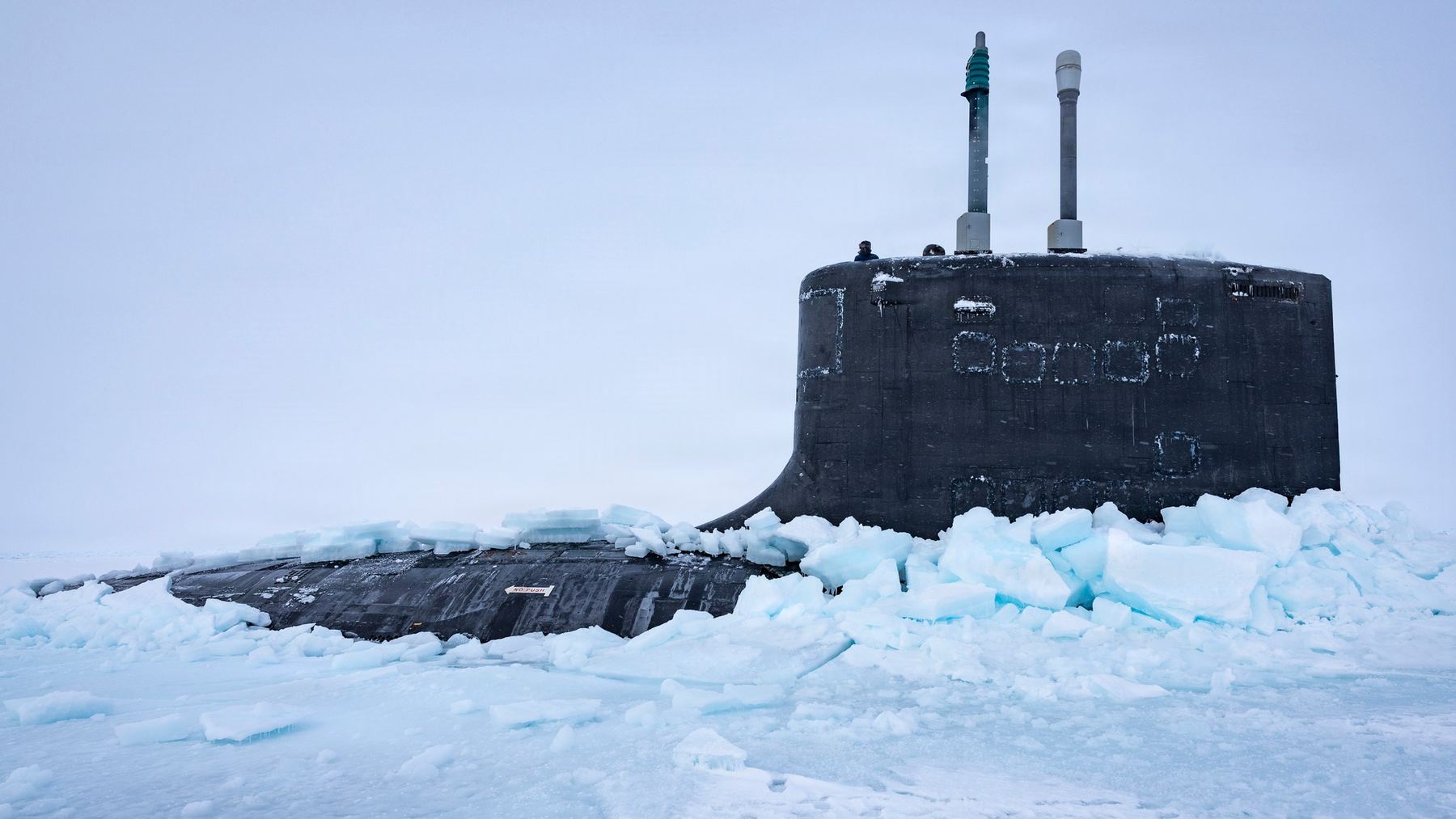
- TODAY · THIS ARTICLEA 43-foot-wide nuclear attack submarine, about 9 feet fatter than the boats it is meant to replace, is being drawn as a mothership that launches, catches and recharges its own underwater drones without tying up its torpedo tubes, and each one could cost about $9 billion
Most American attack submarines at sea right now are built around a round hole 21 inches across. That’s the torpedo tube. A Virginia-class boat has four of them, and anything it wants to send out underwater, from a heavyweight torpedo to a small drone, has to fit through one.
Pushing a drone out of that tube is fairly simple. Getting it back in is a lot harder, because the drone has to find the tube and steer itself inside while the submarine is still moving. Vice Adm. Bill Houston, who ran the Navy’s submarine force a few years back, put it pretty bluntly at the time: launching was easy, and recovery was the critical part.
So for its next attack submarine, the Navy apparently wants to stop threading drones through a 21-inch hole and make the whole boat wider instead.
So what is SSN(X)?
SSN(X) is the working name for the class that’s supposed to follow the Virginia boats (think of the X as a blank the Navy fills in later). It doesn’t exist yet. There isn’t even a final design, so what you’re about to read is a list of requirements, not a spec sheet.
Rear Adm. Andrew Miller, who heads submarine requirements for the Navy, laid those requirements out at the Naval Submarine League’s annual conference in Arlington, Virginia, on November 12, as USNI News reported. He said the new boat needs a clean-sheet design because you can’t backfit a Virginia with the extra room, electrical capacity and hull margins the Navy now wants. He also described the change of job as a shift “from a standalone hunter-killer to a capital mothership.”
The wish list has five items, starting with higher flank speed and tactical control speed. Flank speed is the boat’s flat-out maximum. Tactical speed is, as far as I understand it, how fast the sub can go while staying quiet enough to keep listening to what’s around it. Then you’ve got better availability (more time at sea, less time stuck at the pier), more firepower, better stealth and survivability, and built-in hosting and control for robotic and autonomous systems.
That last item is why the boat has to get wider.
Why does a drone carrier need a fatter hull?
According to Defence Industry Europe, which reported on the same conference, dedicated gear to launch and recover drones is expected to need a hull about 43 feet in diameter. That’s close to the Navy’s Columbia-class ballistic missile submarines, and about 9 feet wider than the roughly 34-foot Virginia hull.
If you’re wondering why width matters so much, think of a submarine’s pressure hull as one long steel tube. The reactor, the crew, the weapons and now the drones all have to fit inside that circle. You can’t really add width halfway down the boat, so a wider sub is pretty much a new sub. And recovering a drone takes a surprising amount of hardware. Army Recognition’s breakdown includes a docking interface, machinery inside the hull to move the drone around, power and data hookups, and enough space for the crew to work on it between missions. The sub also has to line up a returning drone’s position, speed and angle without surfacing.
In a July 29 announcement covered by USNI News, the Navy said it wants payloads for future attack boats that can go out and come back while the sub is underway, swap data securely with the host submarine, and be recharged and maintained while they’re aboard. So you’re basically looking at a small hangar inside the hull, with a dock, a way to haul the drone in, a charging plug and a data link.
Defence Industry Europe says the point of all that dedicated gear is to leave the torpedo tubes for weapons. That’s a little confusing, because Miller himself, according to USNI, talked about launching uncrewed systems directly from torpedo tubes. My guess is the boat ends up doing both, with small drones still going out the tubes and bigger, reusable ones getting their own space. But the Navy hasn’t published a drawing, so I’d take that with a grain of salt.
So why not just stretch a Virginia again? Well, the Navy already did. Block V boats get the Virginia Payload Module, an extra 84-foot hull section with four large tubes. Those tubes hold 28 Tomahawk cells between them, which takes the boat’s vertical launch capacity from 12 missiles to 40.
Making a submarine longer is one thing, but making it wider is arguably why Miller wants a clean sheet. The Navy also wants capabilities closer to its three Seawolf-class boats. The original Seawolf design displaces 9,138 tons and carries eight 26-inch torpedo tubes, and those subs are frankly the closest thing the fleet has to what SSN(X) is supposed to be, minus the drone hangar.
It’s going to be big, and it won’t be cheap
The Congressional Budget Office’s analysis has SSN(X) at around 10,000 tons submerged, against about 7,800 tons for an original Virginia. USNI News, citing that CBO work, puts the average cost at about $9 billion a hull.
The Congressional Research Service says a Virginia with the payload module runs north of $4 billion apiece when the Navy buys two a year. It also lists an earlier SSN(X) estimate of $8.7 billion from CBO against $7.1 billion from the Navy, both in 2024 dollars.
That’s a pretty steep price for a boat that’s also being sold as cheaper to own. Miller wants SSN(X) to spend less time in repair, and Defence Industry Europe reports he wants it a lot cheaper to run and maintain than a Virginia. Maybe it’ll claw some of that back over decades of service. I wouldn’t bet the farm on it.
So when does it show up?
Not soon. The Navy wrapped up its own analysis of alternatives last November. That’s a study that lines up different design options and compares what each one costs and delivers. The Pentagon’s cost office, known as CAPE, approved the requirements in March.
Next up is Milestone A. It’s the Pentagon’s formal go-ahead to start early development work, and it isn’t a contract to build anything. The latest fleet plan doesn’t have anyone building one until the early 2040s, which is later than earlier plans that had the first boat bought in the mid-2030s.
There’s also plenty the Navy hasn’t said. We don’t know how many drones each boat should carry, how big they’ll be, or whether 43 feet is the final number.
Meanwhile, the drones are moving faster. There’s a Rhode Island plant built to turn out up to 200 drone submarines a year, and we’ve covered a seabed listening drone that picked up submarine drones coming through a channel. SSN(X) is basically the Navy’s plan for a crewed boat that can carry, catch and recharge that kind of hardware on its own.
According to USNI News, the Navy is hoping to get Milestone A for SSN(X) by the end of the year. If it does, the 43-foot hull moves from a conference talk to a formal development program, with the first steel still penciled in for the early 2040s.
 An 8.8-ton drone submarine that fits inside a shipping container runs on hydrogen fuel cells adapted from space launches, can cover 3,100 miles or stay out 45 days, and five NATO allies have bought it while the navy back home has about 20 drones for 151,000 miles of coastMilitary · 5 hours ago
 A 20-foot German drone submarine just came off a production line for the first time with its tail planes rebuilt into an X, two propellers turning against each other and dive planes on its motor pods, and the first hulls go to European governments before the year is outMilitary · 22 hours ago
 A 27,100-ton aircraft carrier once moved just 15 feet when six tugboats pulled on her with 30,000 horsepower after 24 years at a Manhattan pier, because her four 16-foot propellers had dug into the river mud, and freeing her took three weeks of dredging nearly 40,000 cubic yardsMilitary · 1 day ago