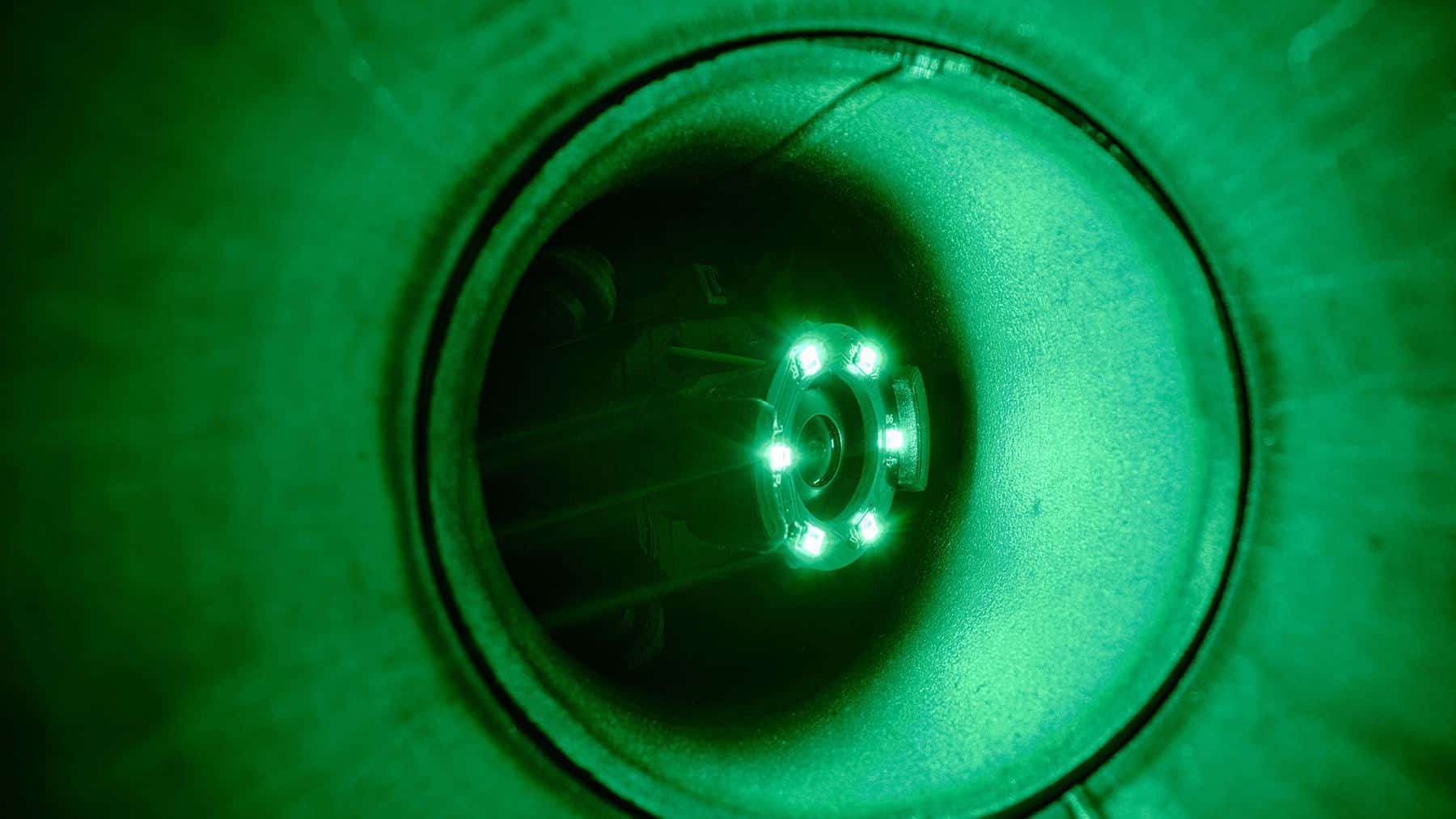
- 3 MONTHS AGO · ENERGYWhile a 4.6-ton robot arm goes in through a 22-inch hole at Fukushima for a few grams, crews at Hanford just lifted a 50-foot, 10-ton pump out of a radioactive waste tank, drilled holes in it on the way up to drain the liquid inside, and did in one day what they rehearsed for two years
- 2 MONTHS AGO · ENERGYThree 24,000-pound nuclear waste filters in Washington state are catching radioactive cesium again after a six-month pause caused by the tank they drain into, which holds about a million gallons, roughly four times what the glass furnace downstream has taken from it
- 2 WEEKS AGO · ENERGYA plant built to pull 99.9% of the radioactivity out of nuclear tank waste is getting its ground cleared beside a Washington tank farm, where old utilities are being torn out and moved, and once it’s running, Hanford can pretreat 3.6 million gallons a year, three times what it handles now
- 1 WEEK AGO · ENERGYA 44-acre nuclear dump in Pennsylvania where a fuel plant buried its waste in 10 trenches has sent off its first truckloads of contaminated soil, dug a little at a time inside buildings built over the trenches, bagged into steel containers and driven 60 miles to a train bound for Utah
- TODAY · THIS ARTICLEAn 8-inch robot with six wheels and a bendy body is built to crawl through 2-inch pipes linking buried radioactive waste tanks, rounding 90-degree elbows where push cameras give out after about 10 feet, and in lab tests it went 197 feet and pulled more than eight times its own weight
Plumbers have had a pretty good trick for years. When a drain backs up, someone feeds a camera on a long flexible rod down the line, watches a little screen and finds whatever’s causing the clog. It’s cheap, it’s simple and it works in most houses.
It doesn’t work at the Hanford Site in Washington state. The Department of Energy is cleaning up what’s left of a nuclear production complex there, and that includes radioactive waste sitting in underground tanks. A network of buried pipes moves the waste from one tank to another, and those pipes are decades old, double-walled, hundreds of feet long and as narrow as 2 inches inside.
Someone has to confirm they’re still in good shape. According to Sandia National Laboratories, the usual push cameras could only cover roughly 10 feet per run, and they couldn’t get around a tight 90-degree bend.
So why not dig the pipes up and look?
Because Sandia says digging them up isn’t realistic and costs too much, and it wouldn’t tell you whether a pipe is corroding from the inside anyway. You’d be staring at the outside of a double-walled pipe and guessing.
Steve Buerger, a mechanical engineer at Sandia, led the team that spent more than two years building something to go in instead. It’s called SPIINE, short for Self-Propelled Interior Inspector for Non-destructive-testing Examination (the acronym is doing some heavy lifting there). It measures 2 inches by 8 inches, rolls on six wheels and carries a high-resolution camera with its own dimmable LED lights. You drive it with a regular video game controller.
The team’s paper puts the robot’s weight at about 7 ounces. Sandia has apparently been building tiny robots long enough to lend nine of them to the Smithsonian, so this isn’t the lab’s first attempt at going small.
So how do you turn a corner inside a 2-inch pipe?
Sandia’s answer is pretty simple once you see it. SPIINE doesn’t really steer through an elbow. Its body is built around flexible springs that bend along several axes, so when the robot hits a curve, the pipe wall pushes it into the turn and the body gives. Buerger’s team basically lets the pipe do the steering.
According to the peer-reviewed paper in the journal Robotics, SPIINE gets through 90-degree elbows with a radius as tight as 3 inches without anyone actively steering it or correcting its orientation. The researchers ran it through an elbow going forward and in reverse, starting from eight different roll positions around the full circle. So it doesn’t much matter if the robot shows up at a bend slightly sideways.
The wheels matter too. Each of the six gets its own motor, and the treads are soft silicone rubber over 3D-printed hubs made of carbon-filled nylon. Sandia says the team tried a lot of compounds before it found one that grips pipe walls the way it wanted.
That grip pays off. Inside straight steel pipe, the robot generated 3.7 pounds of pull force, which the paper says is 8.4 times the robot’s own weight. Frankly, that’s the figure I’d care about most if I were running this project. A pipe inspection robot isn’t much use if it can’t drag its own cable and a sensor along behind it.
The cable is a bigger headache than the robot
SPIINE isn’t wireless. A single cable carries power and data to the robot and back, and it takes the mechanical load as well. That’s where things get tricky.
There’s a bit of physics called the capstan effect. Wrap a rope around a post and it gets a lot harder to drag, and every extra wrap makes it worse. A cable snaking through a pipe with several 90-degree bends behaves the same way, so each elbow piles on friction until a small robot at the front can’t pull anymore.
Sandia’s fix is to put propulsion at several points along the cable instead of only at the nose, and the design lets you chain multiple robots or drive modules together in a line. The team believes that solves the problem. It’s a fairly reasonable bet based on the lab results, but a real Hanford pipe will be the actual test.
The lab work so far looks encouraging, at least. The paper says the team confirmed that power and video both made it through 350 feet of tether. In an endurance run, SPIINE went down through a steel elbow, along 100 feet of PVC pipe, through a second elbow and about 18 inches straight up, then drove back. That round trip came to roughly 197 feet, and the robot drew somewhere between 2 and 3.5 watts on the stretches the team measured.
It averaged about 2.5 feet a minute. No one’s in a hurry inside a waste pipe, though. The authors are also upfront that the PVC run was mostly a test of endurance and communications, not proof of how well those wheels grip steel over that kind of distance.
Hanford is still the next stop
Hanford sits on the Columbia River and dates back to the Manhattan Project. It was home to the first full-scale reactor anywhere built to make plutonium, and these days it’s a decommissioned complex the DOE is working to clean up. The SPIINE work was funded by the DOE’s Office of Environmental Management.
SPIINE hasn’t been inside a Hanford pipe yet. Sandia says testing at the lab has gone well and the next step is a real-world trial at the site, which could turn up problems the lab didn’t. I couldn’t find a date for that trial in Sandia’s announcement or in the paper.
“Our initial target is just being able to get eyes in the pipe,” said Daniel McArthur, a member of the Sandia team, in the lab’s announcement. After that, the goal is to inspect for corrosion, cracks and other damage.
That second job needs a sensor. SPIINE can tow either an ultrasonic probe or an electromagnetic field probe that checks how thick the pipe wall still is. An ultrasonic probe basically sends sound into the metal and times the echo, and a wall that’s thinner than it should be usually means corrosion. The catch is that conventional ultrasonic sensors don’t fit around those 90-degree elbows, so Sandia is working on microscale versions that do.
The team’s to-do list also includes a way to clean the camera lens, or the grimy pipe wall in front of it, and a backup system that can get the robot out if it jams or breaks down. I’d probably want that last one sorted first, because a stuck robot in a radioactive waste line is a pretty expensive cork. The paper adds that the current prototype keeps its electronics on a separate trolley, and the team plans to move them into the drive body in later versions.
Hanford isn’t the only DOE site sending small machines where people can’t go. In Idaho, a caged inspection drone mapped concrete vaults full of radioactive granules so engineers could plan robotic welding and cutting.
The Sandia team published SPIINE’s design in Robotics on October 22, and the lab’s in-house news site named a field test at Hanford as the robot’s next job on November 19.
 A 500-kilowatt-hour battery box under 10 feet long is built from packs too worn out for electric cars, and it is now the first system of its kind to clear the two safety certifications that let it go to work behind factories, hospitals and airports across North AmericaEnergy · 2 hours ago
 A 22-ton yellow Canadian machine called Iceberg is finally off the California coast making fresh water with no motor, no battery and nothing to plug into, and every gallon goes straight back into the Pacific about 15 feet from its brine outlet, because the pipe to shore was droppedEnergy · 17 hours ago
 A 480-foot concrete dam in North Carolina, the tallest in the eastern United States, has been swelling for decades, enough to crack itself where it curves, so about every five years the federal utility that owns it saws a slot through it with diamond wire to give it roomEnergy · 19 hours ago