
- 2 MONTHS AGO · ENERGYTwo heat exchangers 74 feet tall and 470 tons each had to go into an Ohio reactor building with no door big enough for them, so crews cut a hole through the shield building and the steel containment, slid the old pair out and the new pair in, and welded the wall shut behind them
- 2 MONTHS AGO · ENERGYA milling machine that drills holes for the steel biscuits bridging a fusion reactor’s seams took the tight bends of its D-shaped practice rails without a hitch, while the trolley for the X-ray head and the plate positioner both came back needing changes
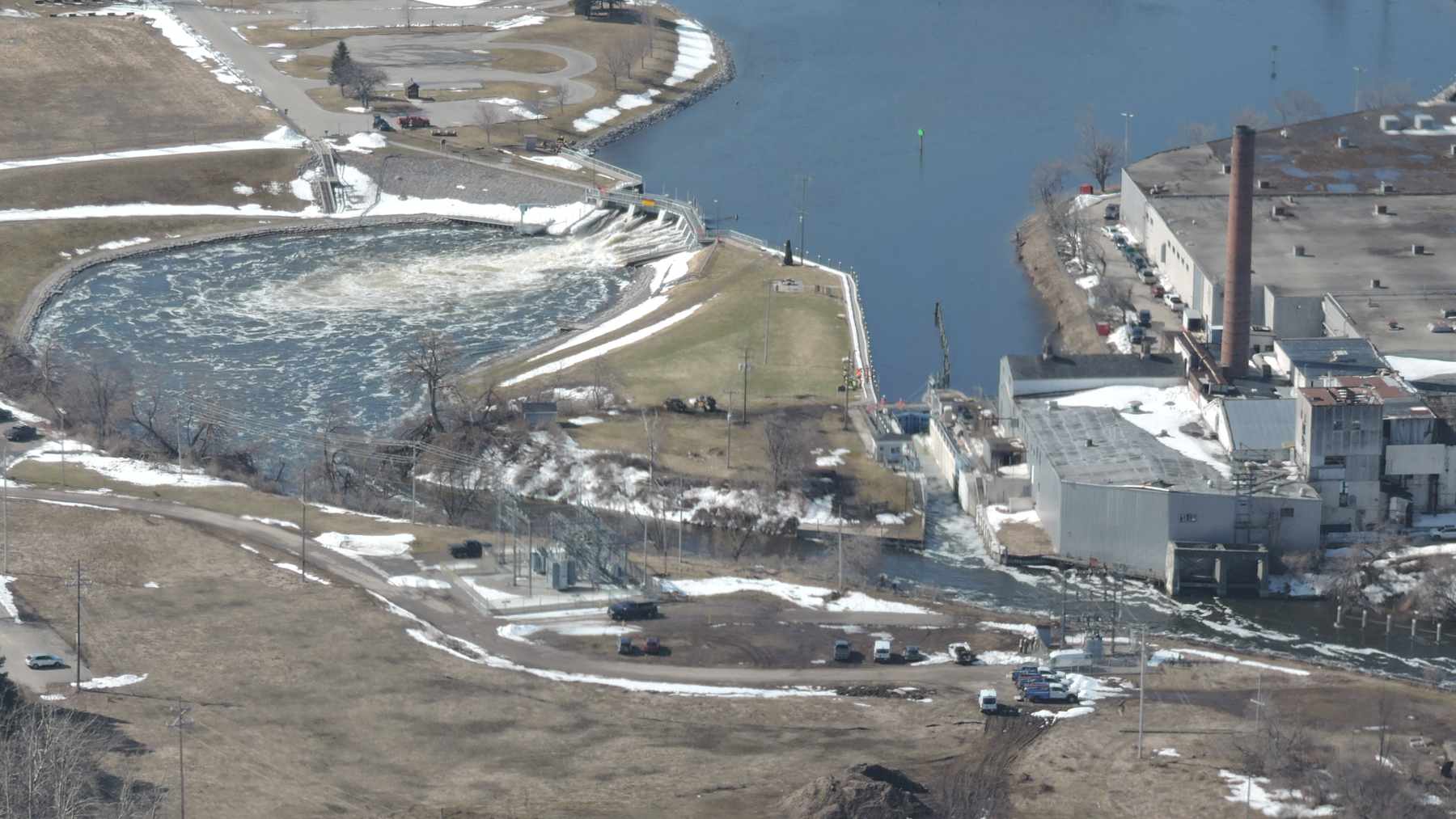
- 2 MONTHS AGO · ENERGYA tunnel borer cut 510 feet through hard rock from a sealed shaft 100 feet deep and came out through the bottom of an Oklahoma lake, leaving the 6-foot steel intake that now feeds a 70-mile water system whose 10.5-million-gallon-a-day plant was completed in August
- 1 MONTH AGO · ENERGYA 12-foot bundle of 216 fuel rods leaning 30 degrees inside the first American reactor brought back from retirement will be laid flat in a 49,000-pound steel canister and hoisted out of the water by the crane that lifts the reactor head, a move no plant has made before
- TODAY · THIS ARTICLEA 908-megawatt Ohio reactor once ran with a football-sized hole eaten through more than 6 inches of its steel lid by leaking boric acid, leaving a stainless liner three-eighths of an inch thick to hold back 2,155 psi, and its replacement lid came from a plant that never opened
If you’ve ever lived somewhere with hard water, you know the white crust that builds up around a dripping faucet. Nuclear plants have their own version. In a pressurized water reactor, that crust is boric acid, and when someone spots it on top of a reactor vessel, it usually ends with a report to the federal government.
That’s what happened in Tennessee last week. At 1:41 a.m. on November 13, during a refueling outage at Watts Bar Unit 2, inspectors found boric acid at penetration 22, one of the openings where a control rod drive mechanism passes through the reactor’s lid. The plant told the NRC the leakage didn’t meet the acceptance criteria in Section XI of the ASME code (basically the rulebook for inspecting this kind of equipment) and said there was no impact on the health and safety of the public or plant workers. The report doesn’t say how much acid they found or how long it had been building up.
Two days later, the plant took it back. According to the NRC event notification report, the leak was actually coming from a plug above penetration 22, and the water had run down the housing and collected around it. Inspectors apparently couldn’t get a good look at the leak path the first time around. Once they could, the acceptance criteria were met.
So why does a little white crust get a call to the NRC at all?
Boric acid and steel don’t get along
The water inside a pressurized water reactor has boron dissolved in it, which helps control the nuclear reaction. When some of that water leaks onto a hot surface and boils off, it leaves boric acid behind, and boric acid is pretty good at eating carbon steel. The reactor vessel head is a thick steel dome bolted to the top of the vessel, with a thin stainless steel lining on the inside. It’s also full of holes.
Those holes are for the control rods. If you read our piece on the Florida reactor that dropped three control rods, you know those rods are what fall into the core to shut it down. Each rod’s drive needs its own nozzle through the head, and every nozzle is a place where hot, pressurized water can find a crack.
What they found in Ohio
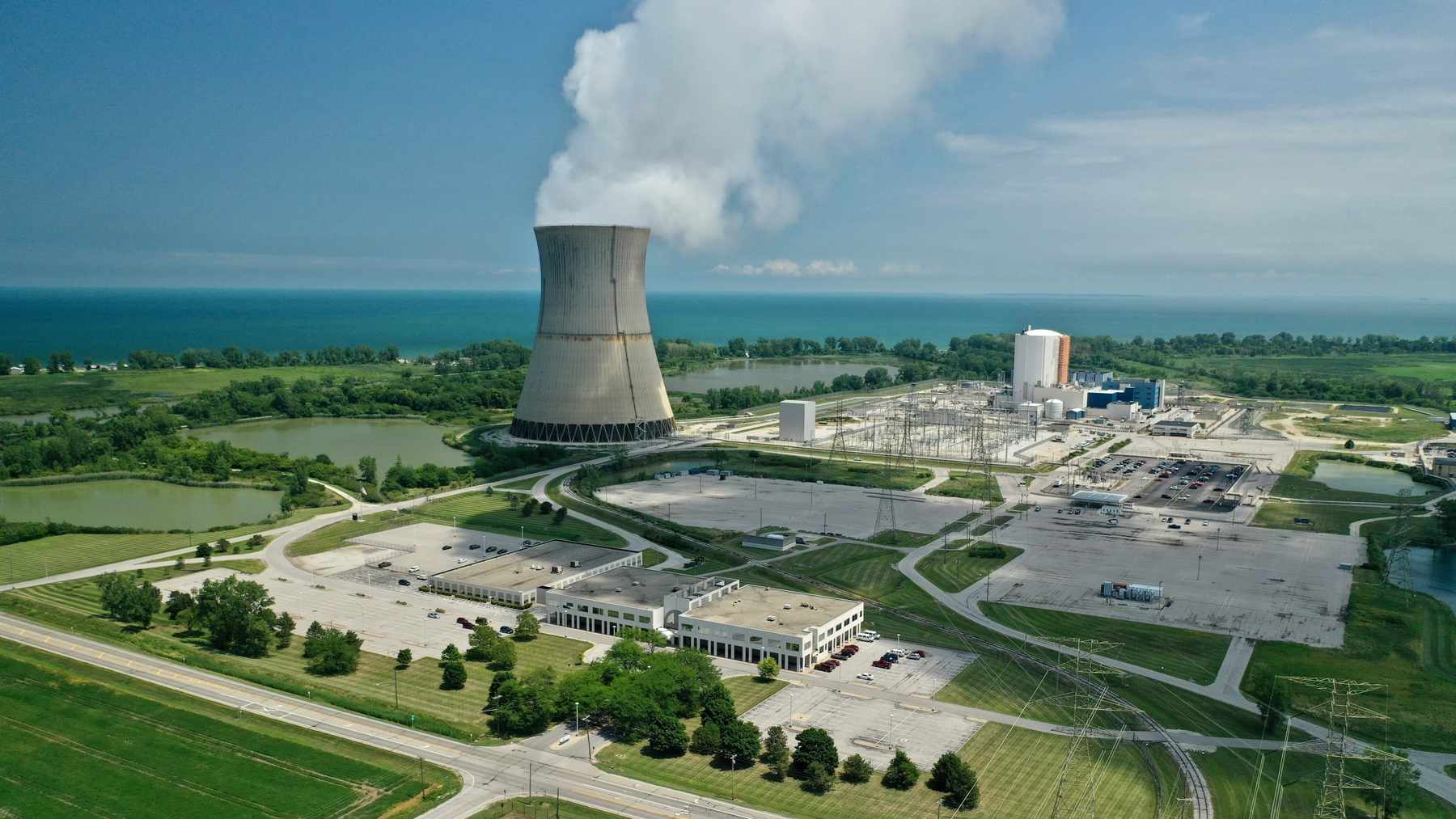
Davis-Besse sits on the shore of Lake Erie near Oak Harbor, Ohio, and it’s the same plant behind our piece on its 470-ton steam generators. On February 16, 2002, it shut down for a refueling outage, and inspectors went over the control rod nozzles because the NRC had told plants like it to watch for cracking. They found it. Three nozzles near the center of the head had cracked and were leaking. Then, in early March, workers repairing nozzle 3 found something a lot worse.
Boric acid from those cracks had eaten a cavity into the head right next to the nozzle. The NRC’s Davis-Besse fact sheet calls it a “football-sized hole,” and the agency’s inspection team report puts it at roughly 5 to 7 inches long and 4 to 5 inches wide. The steel head was 6.63 inches thick, and the acid had gone all the way through it. Pretty much the only thing left was the stainless steel lining, which is nominally three-eighths of an inch thick.
That lining was never supposed to hold anything back. It’s there to protect the steel from corrosion, and the NRC’s inspection team said the cladding wasn’t considered part of the pressure boundary. FirstEnergy, which ran the plant back then, said the liner held full pressure, 2,155 pounds per square inch, during normal operation and through the shutdown for refueling. I couldn’t find that pressure figure in the NRC documents I went through, so treat it as the company’s number.
How close did it get? NRC researchers later modeled the cladding, and in one of their crack scenarios they put the pressure needed to break it at a median of about 3,000 psi, against the 2,155 psi it was holding. Frankly, that’s not a lot of headroom. Their estimates moved around quite a bit depending on how they modeled the cracks, though, and a shorter, shallower crack gave them much higher numbers. So I wouldn’t treat any single figure as gospel.
Two years down and a lid from Michigan
The NRC kept Davis-Besse shut down until March 2004. FirstEnergy did file a plan to repair the old head in April 2002, but in June it asked the NRC to stop reviewing it and went with a replacement instead. Funnily enough, the company had already ordered a brand-new head in the fall of 2001, months before anyone found the hole, and that one wasn’t due until spring 2004. That’s a pretty unlucky bit of timing.
So FirstEnergy bought a head no one had ever used. It came from Midland Unit 2 in Michigan, a plant with a similar design that was canceled before it ever operated. An NRC meeting summary from June 2002 says the head was readily available and wasn’t contaminated, which makes sense when there was never a running reactor under it. Framatome bought it as-is from Consumers Power, Midland’s owner, and sold it to FirstEnergy.
The penalties came later. In April 2005, the NRC proposed $5.45 million in civil penalties against FirstEnergy’s nuclear operating company, and the agency’s fact sheet describes the fine as its largest ever. The company also paid another $28 million under a settlement with the Justice Department.
The Michigan lid had problems of its own
You’d think a lid that had never seen a day of service would last a good while. It made it about six years. During a refueling outage that started February 28, 2010, inspectors found cracked nozzles again, and the plant ended up modifying 24 of the head’s 69 nozzles. The plant’s report to the NRC that year listed both stress corrosion cracking and pressure boundary leakage. In plain English, a nozzle that’s under stress and sitting in hot reactor water for years can slowly crack, and one of those cracks had let water through. Plant engineers blamed high temperatures in the head for speeding up the cracking.
Rather than run with more frequent inspections, FirstEnergy moved its next head replacement up from 2014 to 2011, according to World Nuclear News. The new head was built in France by Areva, with nozzles made from a material that’s less prone to cracking. Which means the lid sitting on Davis-Besse today is the reactor’s third.
Davis-Besse is still running. Vistra operates it now, and the NRC renewed its license on December 8, 2015, clearing it to run through April 22, 2037. Watts Bar Unit 2 closed out its own boric acid report with the retraction filed on November 15, which says the plant met the ASME acceptance criteria after all.
Credit: 13abc.com
 A 92-turbine wind farm on the South Dakota prairie had more than 20 of its machines wrecked and nearly 300-foot steel towers folded in half by a 131-mph gust in June, and early on an October Monday firefighters drove 10 miles south of Highmore to a turbine burning with nobody insideEnergy · 15 hours ago
 A 427-foot ferry carrying more than 275 tons of batteries just started hauling up to 2,100 passengers and 225 cars nearly 35 miles across the River Plate, on a charge that lasts about 90 minutes and a roughly 40-minute top-up at the dock before it turns around on eight electric waterjetsElectric Vehicles (EVs) · 16 hours ago
 A 400-ton generator at a South Dakota dam was taken apart for the first time in 70 years, its 275-ton rotor lifted out by two cranes working as one, and the first new turbine runner has now rolled into the powerhouse to take each unit up to 52 megawattsEnergy · 19 hours ago