
Drilling gets slower the deeper you go. That is not a rule anybody picked, it is just what the rock does once the hole runs hot enough to cook downhole electronics and hard enough to round off a bit in a few hundred feet. Every foot below about 10,000 costs more time than the foot above it.
Which is why the well Fervo Energy just finished in southwest Utah is worth a second look. It went deeper, hotter and considerably longer sideways than the design before it, and the clock did not move.
The well is called Sawtooth 7. Fervo announced it on July 8: 19,448 feet of measured depth, a 7,500-foot horizontal lateral, rock at 460 degrees Fahrenheit, and 21 days from spud to total depth.
Twenty-one days is exactly what Fervo’s fastest previous well took. That one was shallower, ran cooler, and had a lateral two-thirds as long.
The part that gets lost in the announcement is what the hole is actually for. Sawtooth 7 is not feeding the power plant that switches on this year. That plant is already drilled. This well belongs to the 400 megawatts that shows up in 2028.
The well got harder in three directions at once
Fervo has now run three well designs, and the company numbers them like software releases. The 1.0 design drilled its first commercial horizontal well at Project Red in Nevada back in 2022: 11,220 feet, a 3,250-foot lateral, 5-inch casing, rock at 350 degrees. It took 70 days.
The 2.0 design went into Cape Station Phase I. Laterals stretched to 5,000 feet, casing went up to 7 inches, and the target rock ran 400 degrees. In February 2024 Fervo said one of those wells hit total depth in 21 days.
The 3.0 design is what the rigs are running now on Phase II. Laterals at 7,500 feet, casing at 8 5/8 inches, rock at 460 degrees. Sawtooth 7 is the ninth well drilled to that spec, and it matched the 21-day mark on a hole that is longer, hotter and fatter than anything the company had drilled before.
Run the arithmetic yourself. Project Red covered 11,220 feet in 70 days, roughly 160 feet a day. Sawtooth 7 covered 19,448 feet in 21, roughly 926. Fervo puts the drilling rate improvement against its first Cape Station well at 143%.
The plant switching on this fall is already finished underground
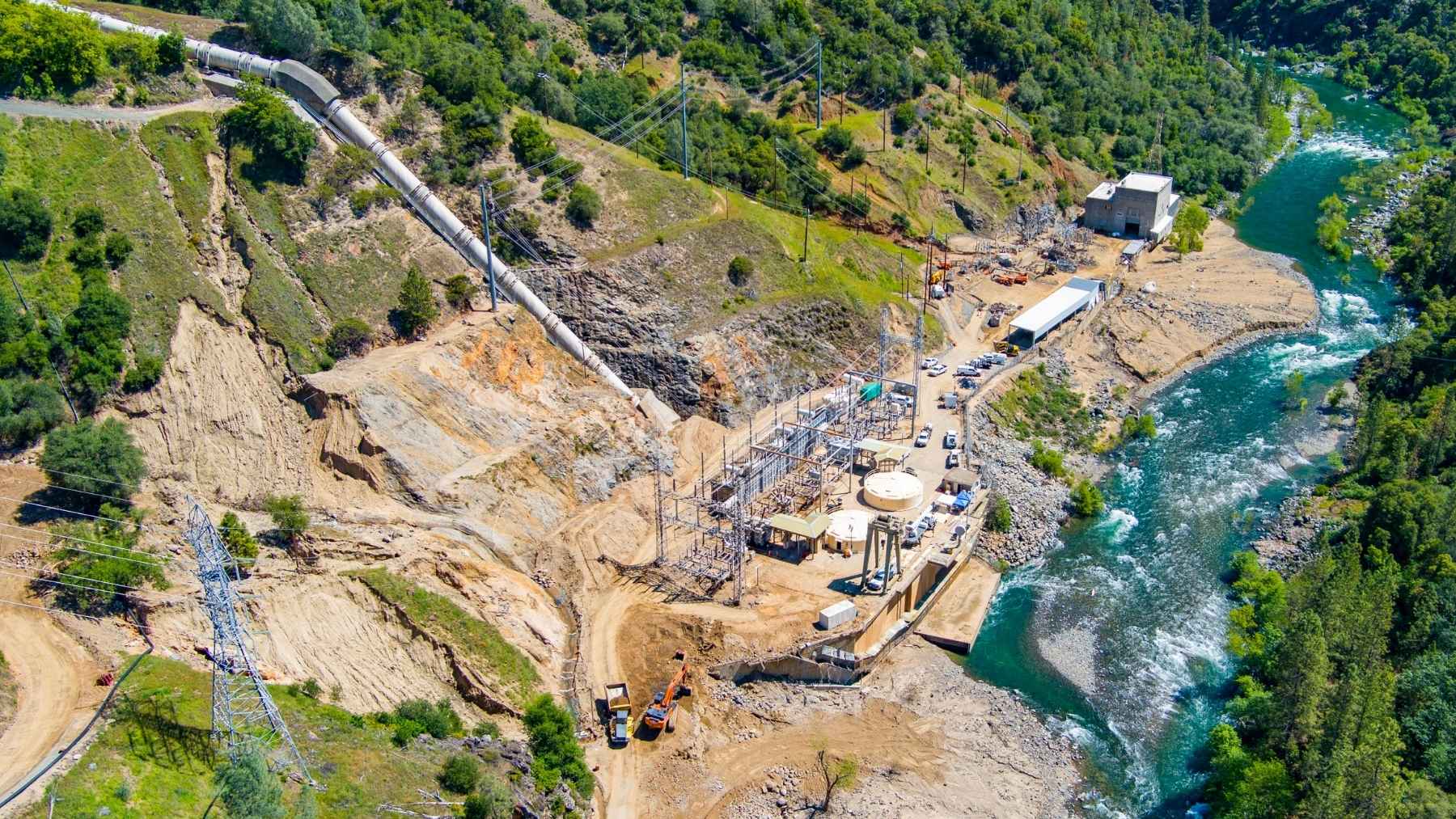
Cape Station Phase I sits in Beaver County, about 12 miles northeast of Milford. It is roughly 100 megawatts built as three 33-megawatt blocks, and Fervo calls each block a GeoBlock.
In its first-quarter results, the company said every initial Phase I well has been drilled, stimulated and completed. The subsurface program for that phase is closed. The first GeoBlock reached mechanical completion in the first quarter and is in commissioning now, with commercial operation expected in the fourth quarter of this year and the other two blocks following in the first quarter of 2027.
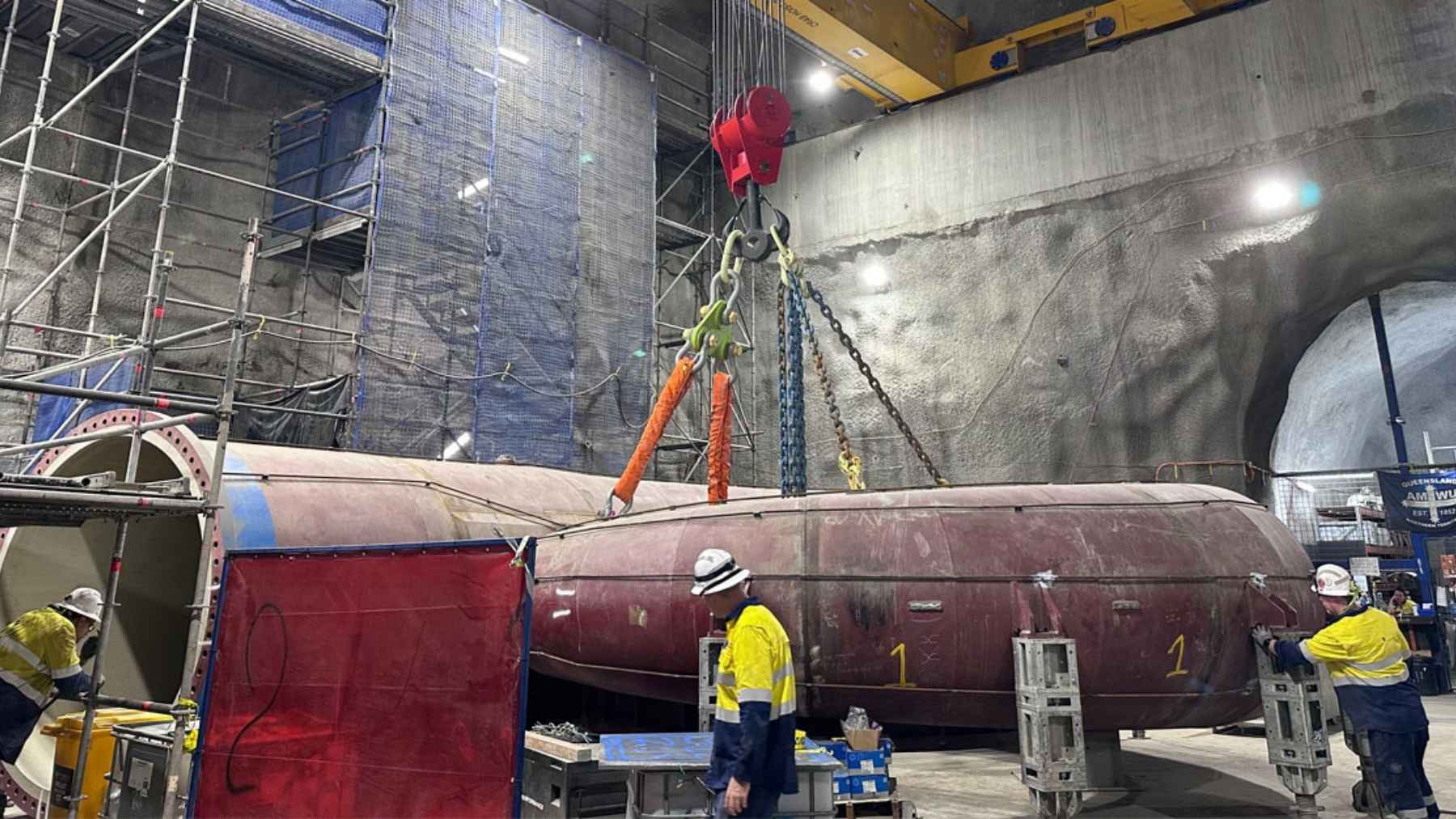
So the rigs left. Two Helmerich & Payne rigs are working Phase II instead, and Fervo says the first four Generation 3.0 wells on the opening pad are drilled and waiting on completion. Structural steel is going up for the air-cooled condensers on GeoBlock 4, the first block of the 400-megawatt phase.
We covered the production side of this project in June, when a single Cape Station well cleared 10 megawatts on a 30-day flow test. Sawtooth 7 is the other half of that equation. Flow rate tells you what a well produces. Drilling days tell you what it costs.
Longer laterals and fatter casing are how you get more megawatts per hole
An enhanced geothermal well is a heat exchanger you build out of cracked rock. Water goes down, moves through the fracture network, picks up heat, and comes back up a second well to run a turbine. There is no natural reservoir down there. The reservoir is whatever the frac job made.
That makes lateral length the number that moves everything else. A 7,500-foot horizontal section touches half again as much fractured rock as a 5,000-foot one, so there is more surface area handing heat to the water.
Casing diameter matters for a duller reason: friction. Push hot water through 8 5/8-inch pipe instead of 7-inch and you lose less pressure moving it, which means you can move more of it. And 460-degree rock puts more energy into every pound of water than 400-degree rock does.
Stack those three and Fervo expects the 3.0 wells to produce substantially more power apiece than the Phase I wells did. The company is also getting quicker at the stimulation half of the job. During the first quarter it fracked six wells simultaneously off a single pad, its largest zipper completion so far.
The temperature ladder is the one to watch over the next few years. Fervo has climbed 350 degrees to 400 to 460 across three designs, and the rung above that is already scouted. At Blanford, a prospect north of Cape Station, the company drilled an observation well called Cottonwood that hit 555 degrees at 11,200 feet, the hottest hole it has logged. Nothing is being built there yet.
$5,500 a kilowatt is the number that decides this
All of the drilling talk comes down to installed cost per kilowatt, and Fervo has put a figure on it. In the July announcement, CEO and co-founder Tim Latimer said Phase II is tracking toward $5,500 per kilowatt and that the company remains “firmly committed to our goal of achieving $3,000 per kilowatt.” Trade outlet Drilling Contractor carried the same two figures in its writeup of the well.
That target is the whole pitch. Geothermal runs around the clock and does not care about weather, which is exactly what a data center wants and exactly what solar and wind cannot sell on their own. Get the build cost low enough and firm clean power stops being a premium product.
Fervo says it has 658 megawatts under contracted power purchase agreements. It also signed a geothermal framework agreement with Google in March covering up to 3 gigawatts through 2033. That second one needs a caveat attached: Fervo’s own risk disclosures list the framework agreement among its non-binding arrangements, which makes it a development structure rather than 3 gigawatts of signed offtake.
Other people are chasing the same rock with different tools. Mazama Energy has been drilling into an Oregon volcano at 100 feet an hour looking for hotter ground, and in Britain a crew went 3.3 miles into Cornish granite to reach water that was already circulating. Fervo’s version is the least exotic of the three, which is kind of the point. It is a shale playbook aimed at heat.
The drilling is proven. The power is not.
Nine wells into the 3.0 design, 21 days reads like a process rather than a lucky run. That is a real engineering result and it is the strongest thing Fervo has.
It also does not answer the question the contracts care about. A hole drilled fast still has to be stimulated, completed, tied into a plant and run at temperature for years without the reservoir cooling off or the flow dropping. None of that shows up in a spud-to-total-depth number.
The financials are blunt about how early this is. Fervo booked $61,000 of revenue in the first quarter of 2026 against a $31.8 million net loss, spent $172.8 million in capital expenditures over those three months, and expects roughly $1.2 billion more between the second quarter of this year and the first quarter of 2027. The $2.2 billion the company raised in its May IPO is what pays for that.
Second-quarter numbers land on August 12. The drilling section will look excellent. The revenue line will not, and it will not until a turbine in Beaver County starts turning.