
Every plan for burying nuclear waste is a plan about barriers. Finland is sealing spent fuel inside copper canisters packed in clay. Sweden and France are working on versions of the same idea. The engineering question is always how to build a container that outlasts every human institution that might be around to check on it.
The United States runs the only deep geologic repository on the planet currently open for business, and it does not seal anything at all. It lets the rock do it.
That repository is the Waste Isolation Pilot Plant, about 26 miles southeast of Carlsbad, New Mexico. Its disposal rooms sit 2,150 feet down in a salt bed roughly 2,000 feet thick, left behind by an inland sea around 250 million years ago. The salt flows. Slowly and constantly, it squeezes every opening shut, and in the end it will swallow the drums whole with no canister, no seal and nobody minding it.
That is the entire design. It is also, this summer, a decent part of why nothing went into the ground there for nearly two months.
The machine opening the new ground has nobody sitting on it
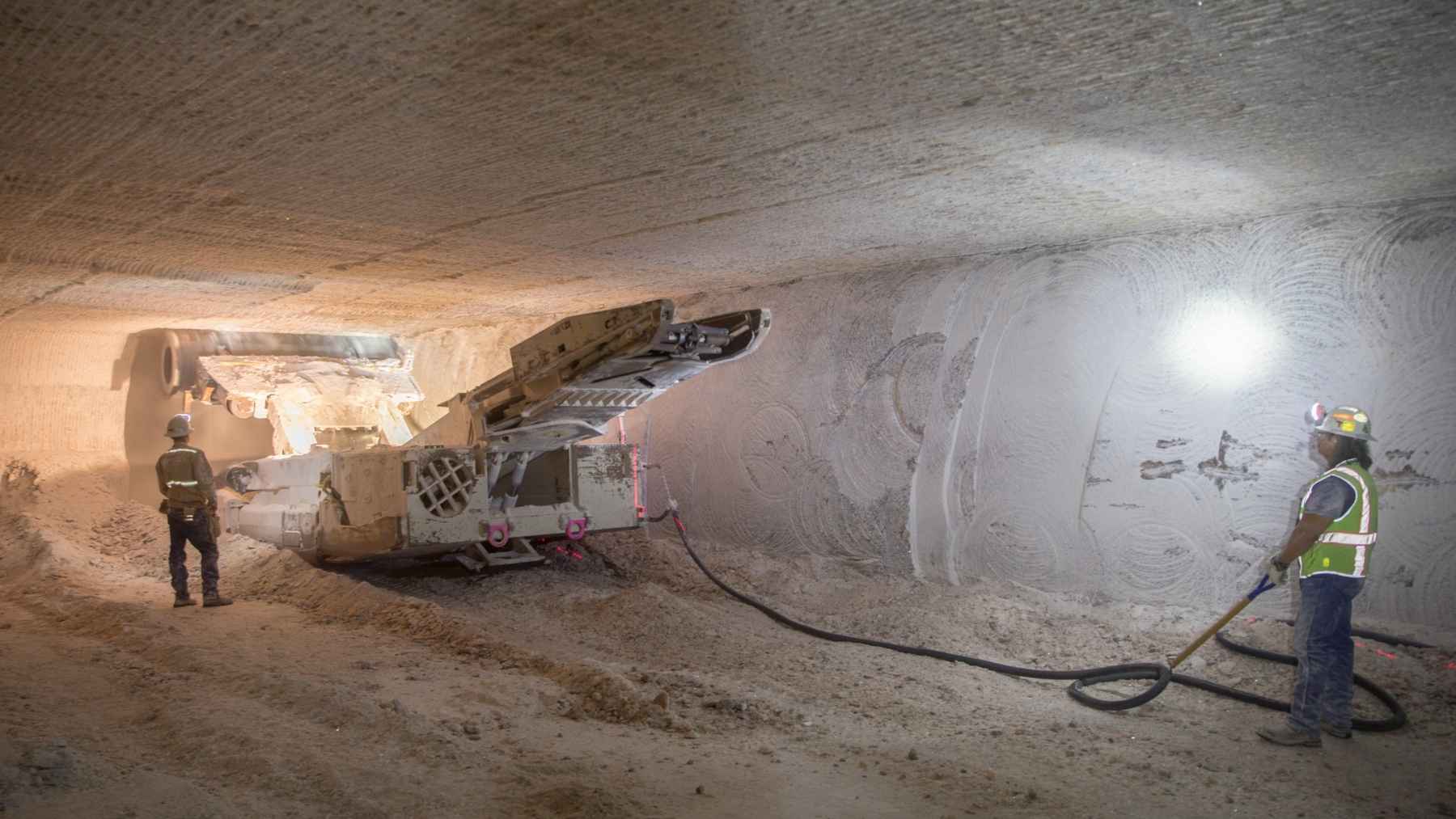
Crews at WIPP are cutting a disposal area called Panel 11, the first new panel started at the site in a decade. The tool doing the cutting is a continuous miner, a multi-ton machine with a rotating drum on the front that can be raised and lowered into the face.
Nobody rides it. An operator stands behind the cutting head and runs the thing by remote control, and according to the Department of Energy’s Office of Environmental Management, it has the capacity to generate 10 tons of salt a minute. Gathering arms sweep the cut salt onto a belt, which feeds a haul truck or a hoist that lifts it 2,150 feet up to a tailings pile in the desert.
A panel is seven rooms. Each one runs 300 feet long and 33 feet wide, roughly the length of a football field. DOE puts a single panel at about 120,000 tons of salt removed, although Panel 8 ended up past 157,000 tons once crews finished lowering its floors.
Panel 11 sits at the end of new pathways cut nearly half a mile west of the existing mine, tied into a new air intake shaft. The mining is also deliberately late. WIPP does not cut a panel until it is close to needing one, because ground opened too early closes again before anyone can use it. Rooms get cut slightly oversized for the same reason.
The rock closes the hole for free, and it does not stop at the hole
Salt at that depth creeps about 2 to 4 inches a year, a figure the American Nuclear Society’s Radwaste Solutions cited when the EPA signed off on the new panels. Once a full panel is closed, that movement is the containment. No engineered barrier is doing the long-term work.
While the mine is still alive, the same behavior is a straightforward hazard. Every drift a worker walks down is being slowly crushed, so crews bolt the roof more or less continuously, driving steel bolts as long as 14 feet from one salt layer into the next and hanging wire mesh on the walls to catch whatever breaks loose.
You can see what it looks like when the salt wins. WIPP has a steel-framed bin underground called the salt pocket, which holds mined salt before the hoist takes it up. It extends 55 feet below the surface, and the walls around it creep inward, so the whole thing has to be recut to its original diameter every so often.
By 2025 the pressure had done more than narrow it. Frame members sheared, deflected and snapped, according to a Defense Nuclear Facilities Safety Board review, and crews relocated the manually operated electrical controls to a station outside the pocket so nobody would be working under falling steel. The salt bucket could no longer line up for loading, and WIPP lost normal salt removal.
The repair ran $15 million and finished in September 2025. Only then could mining restart in Panel 11, since a mine with nowhere to put the spoil is a mine that is not cutting.
Two months with nothing going underground, and one holdup was an owl
In May, the air intake shaft hoist went out of service with worn bearings. About a month later crews found what Ryan Flynn, deputy program manager for site contractor Salado Isolation Mining Contractors, called a major issue with the motor on the salt hoist, needing a full refurbishment and replacement. Flynn told a DOE community forum near Carlsbad on August 5 that the motor was just over 100 years old.
With both primary hoists down, WIPP moved to bring the utility shaft hoist in as emergency egress and backup. That got delayed twice. First a great horned owl, a federally protected bird, built a nest on the hoist structure. Then a power distribution failure hit the site, which WIPP believes came from a lightning-induced surge.
Waste burial and mining both stopped. The first transuranic waste shipment to arrive afterward rolled in from Los Alamos on July 16, the first from any generator site since May 26. Flynn told the forum the site is back to full operations.
Nothing about that hardware is young. The waste hoist had its motor core swapped out during a separate outage running January 5 to March 13 this year. That hoist works six head ropes, three tail ropes and a 53-ton counterweight, carries up to 75 people and 45 tons at a time, and went in during the early 1980s. The replacement core was bought at the same time as the original, roughly 45 years ago, and sat in storage on site until somebody finally needed it.
Panel 11 exists because a drum blew its lid in 2014
February 2014 handed WIPP two unrelated underground events. On the 5th, a salt haul truck caught fire. On the 14th, a waste drum in Panel 7, Room 7 breached and released radioactive material, and the drum had been improperly processed at Los Alamos National Laboratory. Room 7 was closed. The EPA determined the release did not pose a public health or environmental hazard.
The site did not resume burying waste until December 2016. Waste already sitting in surface storage went down in January 2017, and shipments resumed in April 2017. Peer-reviewed work on the accident puts the number of people exposed at 22 and the cost to the United States above a billion dollars.
Panels 11 and 12 are the accounting entry for all of that. EPA approved them last year as replacement panels, and its letter to the Carlsbad Field Office describes them as restoring disposal capacity lost primarily to the 2014 incident and other operational issues. The Federal Register notice went out August 19, 2025.
Capacity is a hard ceiling here rather than a talking point. The Land Withdrawal Act caps WIPP at 6.2 million cubic feet, and Flynn put the repository at roughly 46% full, with about 5% of what remains earmarked for New Mexico’s own generator sites.
Germany tried the same rock and is spending billions taking it back
Salt is not a guaranteed answer. Germany put around 126,000 drums of low and intermediate-level waste into a former potash and rock salt mine called Asse II between 1967 and 1978, and the mine started taking on brine in 1988. German law now demands every drum come back out, and the remote-controlled excavator built to do it is parked on the surface waiting for a shaft wide enough to lower it down.
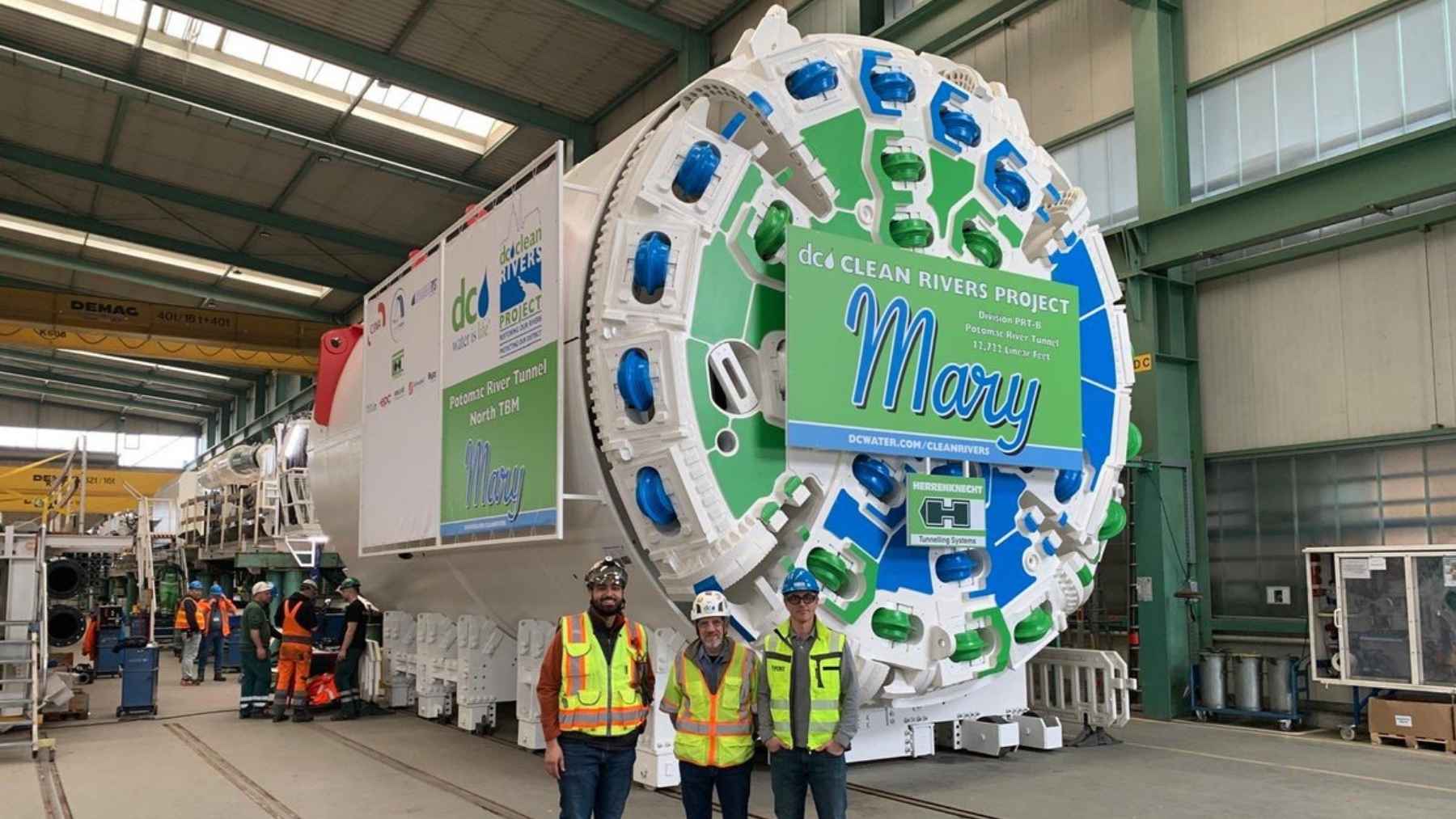
Finland went the opposite direction, wrapping spent fuel in copper and clay at a repository designed to need zero human attention once it is sealed. The United States also sank years and a lot of concrete into Yucca Mountain, where the boring machine that cut the exploratory tunnel is still sitting outside the south portal.
WIPP is the odd one out. It is not a stack of engineered barriers with rock around them. It is the rock, and the barriers are temporary scaffolding you bolt in so people can work down there long enough to fill it.
What happens next is mostly paperwork
Panel 11 is not opening soon regardless. DOE and the New Mexico Environment Department are still negotiating a Class 3 permit modification covering construction and operation of Panels 11 and 12, and state documents put the start of disposal in Panel 11 at around spring 2028. New Mexico separately wants fixed allocation targets written into the permit, forcing Los Alamos legacy waste to a majority share of disposal volume from 2027, and no public hearing has been scheduled yet.
The hardware calendar is firmer. Flynn said no further outages are planned this year, but WIPP expects to shut down for about six months beginning in April 2027 to modernize the waste hoist control system and reinforce the waste shaft.
The salt, meanwhile, keeps taking its two to four inches off everything down there. That part does not go to mediation.