- 2 MONTHS AGO · ENERGYA 1,014-megawatt nuclear plant on the Finnish coast is pulling the casings and internals out of all eight of its low-pressure turbines during an outage that keeps one reactor running, and the rebuild adds 38 megawatts while the reactors make exactly the same heat
- 2 MONTHS AGO · ENERGYA 78-foot, 12-axle railcar built to haul spent nuclear fuel is getting a refurbished rail line in Idaho for its first cask, and fully loaded it puts about 355 tons on the rails yet sits lighter on each axle than the flatcar beside it, which carries 98 tons of welded steel
- 1 DAY AGO · ENERGYA 1,930-ton German boring machine was once 16 feet under one of Europe’s busiest freight railroads when the tracks above her sank 1.6 feet, so about 525 feet of tunnel was pumped full of concrete with her still inside and the main line stayed shut for 51 days
- 3 HOURS AGO · ENERGYA 350-mile power cable buried along a railroad from northern Iowa to northern Illinois is planned to carry 2,100 megawatts at 525,000 volts, and sites are being scouted in Iowa for a nuclear plant of up to 1,000 megawatts that would send its power east through it
- TODAY · THIS ARTICLEA 650,000-ton haul in 9,000 carloads has already been moved by railcars that carry their own batteries and roll along the rails with no locomotive pulling them, and the same self-propelled cars are now headed to a Texas Gulf Coast plant to shuffle freight cars around its tracks
If you’ve ever sat at a railroad crossing waiting for a freight train to clear, you already know how the whole system works. The locomotives up front do all the pulling. Everything behind them is basically a steel box on wheels that can brake but can’t go anywhere on its own.
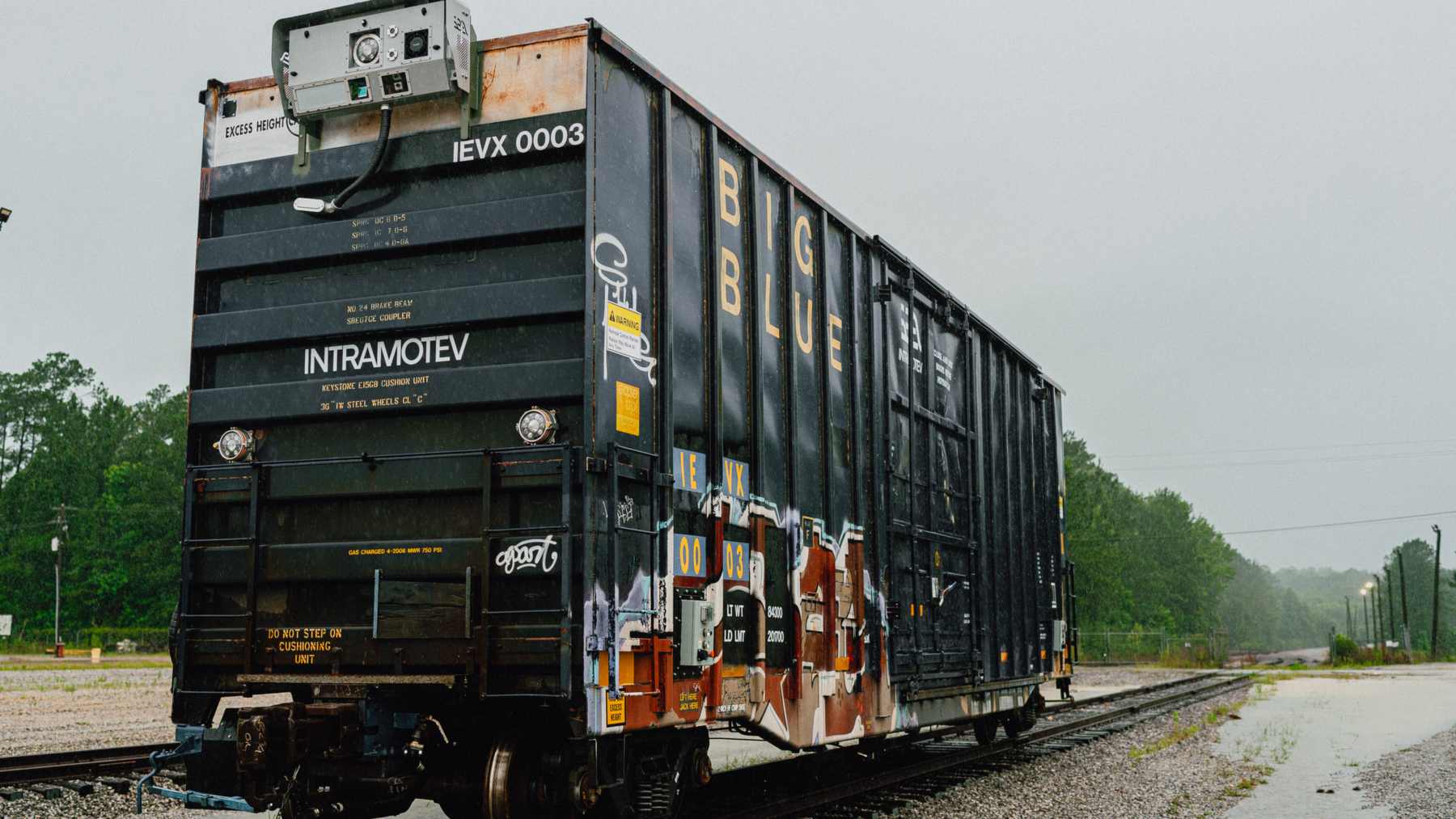
A St. Louis company called Intramotev has spent the last few years trying to change that. It retrofits ordinary freight cars with batteries and electric motors, so each car can roll down the track under its own power with no locomotive attached. The company calls the system TugVolt, and on November 20 it announced a new deal with Watco, one of the bigger short line railroad operators in North America.
Watco is sending TugVolts to an industrial facility in Seadrift, Texas. According to Trains, the town sits on the Gulf Coast close to Victoria, roughly 60 miles up the coast from Corpus Christi. Once they’re there, the cars will be switching railcars inside the plant.
So what’s switching, anyway?
Switching is railroad-speak for shuffling cars around a yard or a plant. You pull an empty car out of a loading spot, shove a full one onto the track that leads back out to the main line, and line everything up in the right order for the next train. It’s arguably the least glamorous job on any railroad. It usually involves a small locomotive, a crew on the ground and a whole lot of back-and-forth. Intramotev wants to take the locomotive out of that picture. Instead of a switch engine coming over to fetch cars, one of the battery cars couples up to the others and moves them itself.
Intramotev hasn’t published a weight or a length for the TugVolt, which I’d have liked to see. What it does give is pulling power. In a technical overview it presented late last year, the company says the current version can pull up to 10 fully loaded cars on flat track, at 286,000 pounds apiece. That’s the standard maximum for most North American freight cars, so you’re looking at roughly 1,430 tons behind one battery car. Intramotev says a version that can handle 25 cars is in development.
So who’s actually driving it?
It depends on where you look.
Intramotev calls the TugVolt autonomous, and the company says there are three ways to run it. It can follow routes that were programmed ahead of time, someone can drive it remotely from a tablet, or it can be coupled into a regular train like any other car.
At Watco’s Wood River terminal in Illinois, though, it’s more hands-on than “autonomous” suggests. Watco describes the unit there as a boxcar converted into an electric, remote-controlled switcher, and a Watco employee runs it from outside the switching zone. Watco says keeping that person away from the moving cars cuts down on safety risks. Frankly, that sounds like the smarter way to start. It’s pretty hard to get caught between two couplers when you’re standing well clear of the track.
Wood River is just north of St. Louis on the Illinois side, and the TugVolt there moves soda ash, the stuff that ends up in glass and detergent. It’s in revenue service, which means it’s hauling real customer freight rather than running demos for visitors. Aaron Jensen, Watco’s senior vice president of operations solutions and support, said in the announcement that Wood River showed “TugVolt can deliver safe, reliable car handling.”
Intramotev’s cars are already busy elsewhere
Intramotev says its cars have hauled more than 650,000 tons of material in commercial service, spread across 9,000 carloads. That’s the company’s own running total. It covers every place TugVolts are working right now: Missouri, Illinois, Michigan and Austria. In Michigan, they’ve been hauling limestone at a mine in the Upper Peninsula, and the Austrian deal is with the country’s national railroad.
I can’t tell you how much of that tonnage came from Wood River and how much came from Michigan. Intramotev doesn’t break it down by site.
Then there’s the Army. In June, Intramotev says, Army Reserve soldiers learned to run a TugVolt at Camp Shelby in Mississippi and used it to switch Department of Defense railcars, shuttling them from one spur to another with no locomotive. A spur, if you’re wondering, is just a short side track that branches off toward a loading area.
There’s a lot we don’t know about Seadrift yet
Intramotev and Watco haven’t said how many TugVolts are headed to Texas, when they’ll start work, or which plant they’ll be working in. That’s a bit frustrating if you’re trying to picture the operation, but plenty of rail deals get announced this way.
Watco isn’t new to Seadrift, either. A few years back, its employee magazine reported that Watco had taken over rail operations at a Seadrift site with 35 miles of track, four locomotives and three trackmobiles (small machines that run on road tires or rail wheels and push cars around). I couldn’t confirm whether that’s the same plant getting the TugVolts, so don’t assume it is.
Either way, a plant switching job seems like a pretty sensible place to put self-propelled railcars like these. The distances are short, the tracks usually belong to the plant, and there’s no mainline traffic to work around. We’ve covered battery locomotives taking over from diesels underground and driverless trains in Australia, but both of those still put a locomotive at the front. Intramotev’s idea is that the freight car becomes the locomotive.
Watco runs more than 45 railroads over more than 7,100 miles of track, and as of Intramotev’s November 20 announcement, Seadrift is the second spot on that network where freight cars are set to move other freight cars on battery power.
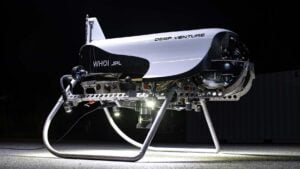 A 36,000-foot-rated underwater robot modeled on a deep-sea fish can land on the seafloor, take samples and map it in 3D, is light enough for a small team to launch from an ordinary research ship, and already went about 19,700 feet down off Bermuda ahead of a crewed diveEnergy · 2 hours ago
 A 330-ton-a-year stream of battery-grade graphite can now come out of a single Oakland reactor that heats natural gas in a space with no oxygen so it can’t burn, splitting it into hydrogen and solid carbon, enough graphite for some 4,300 electric cars, on a third of the usual electricityEnergy · 4 hours ago
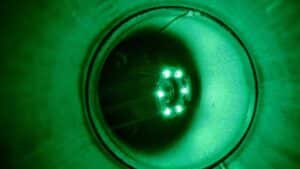 An 8-inch robot with six wheels and a bendy body is built to crawl through 2-inch pipes linking buried radioactive waste tanks, rounding 90-degree elbows where push cameras give out after about 10 feet, and in lab tests it went 197 feet and pulled more than eight times its own weightEnergy · 6 hours ago