
Germany switched off its last three reactors back in April 2023, and people are still arguing about whether that was a good idea. The arguing is the part that makes headlines. The part that doesn’t is the hardware, because a shut-down nuclear plant is not an empty shell with the lights off — it’s a building holding some of the largest machinery ever installed anywhere, and all of it has to physically go somewhere.
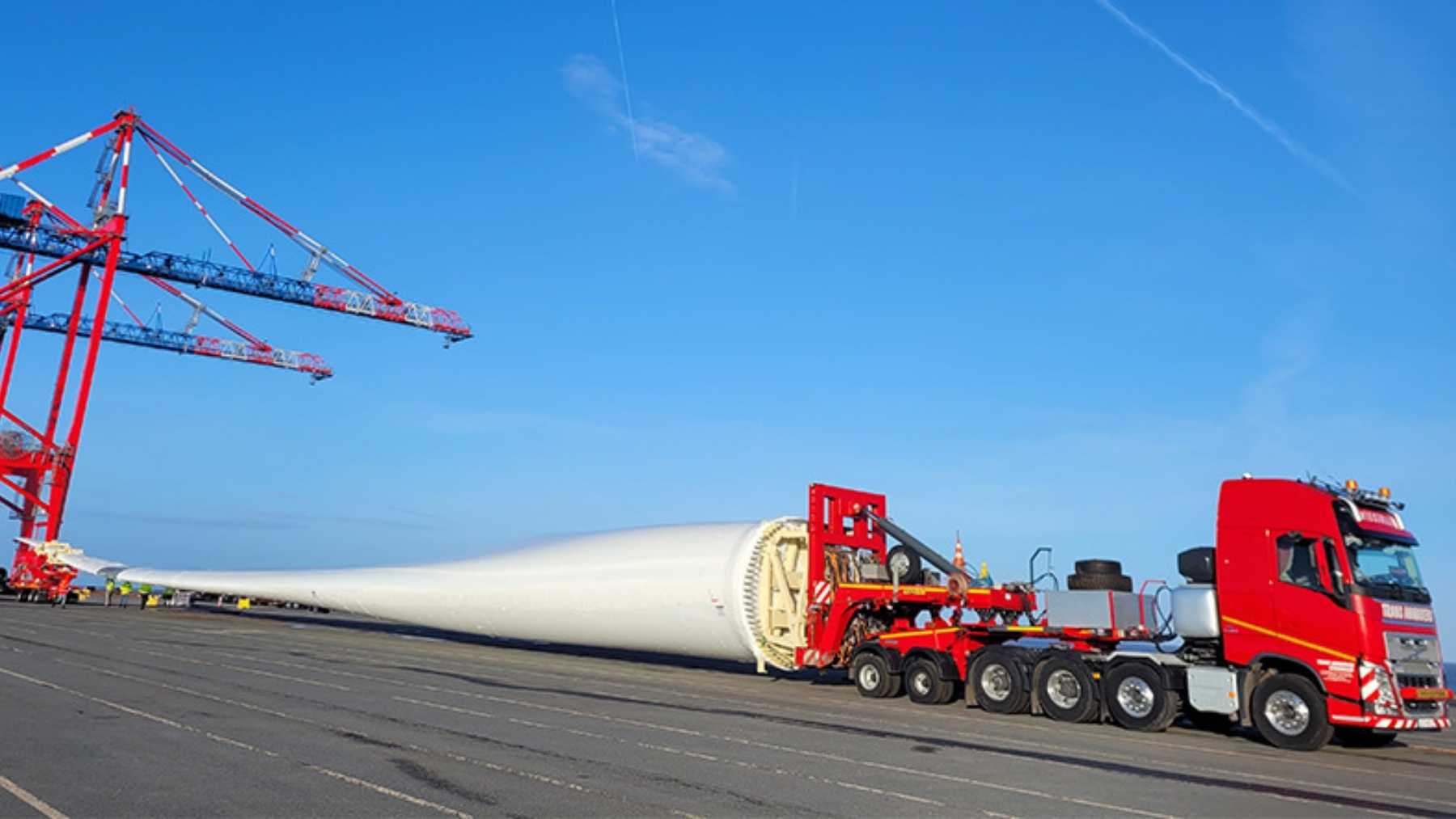
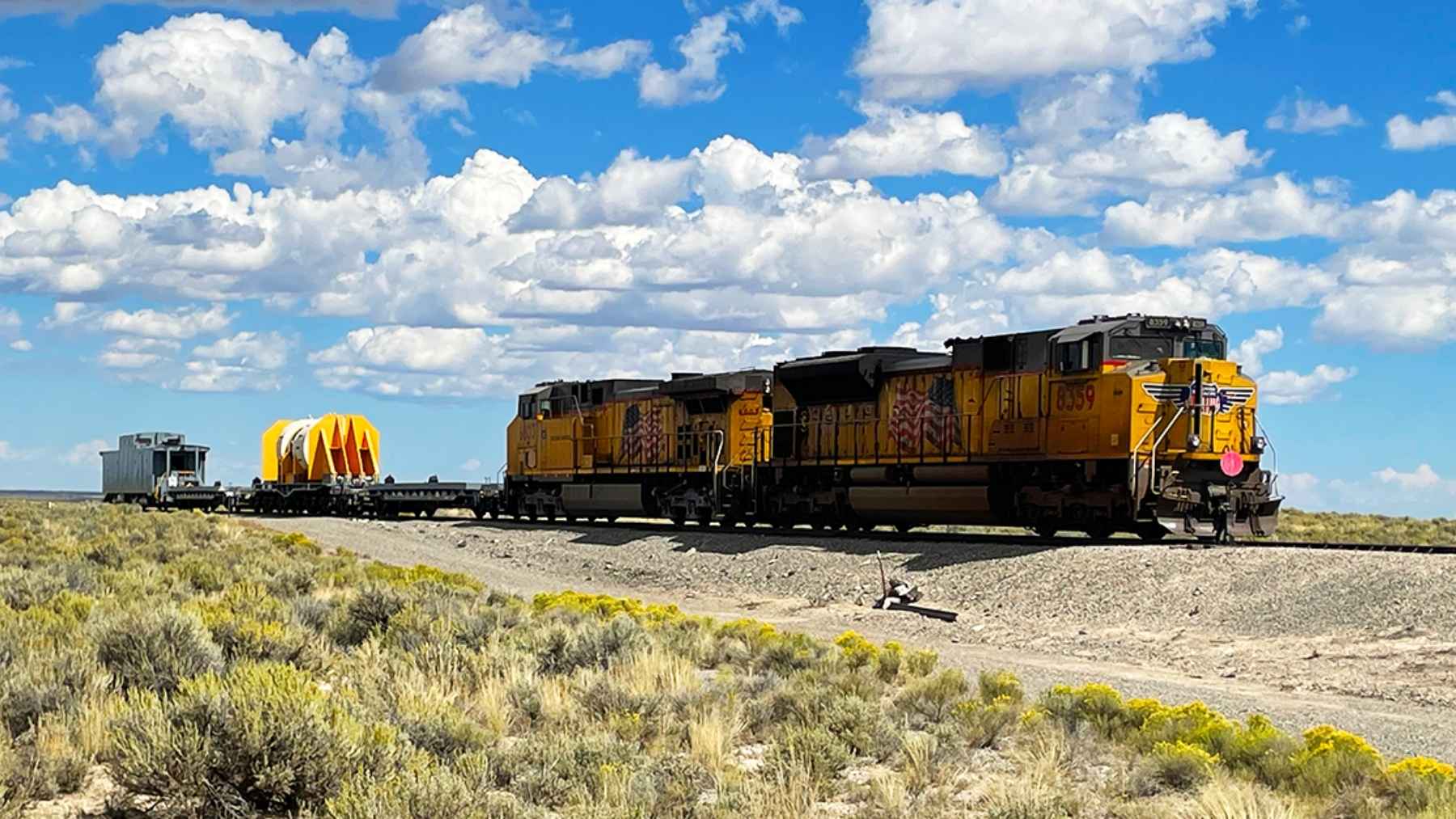
For four of the biggest pieces Germany had, that somewhere turned out to be a smelter on Sweden’s Baltic coast. In January, Cyclife announced the arrival of four steam generators from the Unterweser nuclear plant at its facility outside Nyköping. Each one is 66 feet (20 meters) long and weighs about 330 U.S. tons (300 metric tons). Together they made a single shipment of 1,200 metric tons, roughly 1,323 U.S. tons of retired reactor steel.
These four are not getting refurbished, and they are not going into storage. They are getting cut apart, decontaminated and melted down, and most of the metal will leave Sweden as ordinary steel ingots. They are also only the first batch: PreussenElektra, the German utility decommissioning the plant, has 16 of these things booked for the same one-way trip.
Four generators went out on one 1,200-ton shipment
A steam generator is the heat exchanger of a pressurized water reactor. Water that has been through the core runs through thousands of tubes inside it and boils a separate, clean loop of water, and that second loop of steam is what actually spins the turbine. They run for decades, and they come out mildly radioactive on the inside.
Unterweser, on the Weser river in Lower Saxony, was a 1,410-megawatt single-unit plant that ran from 1978 until March 2011, when Germany pulled the operating licenses of seven reactors in the weeks after Fukushima. It went out near the top of its game: according to its operator, no single-unit plant anywhere had generated more electricity by the time it shut down, 305 billion kilowatt-hours in total.
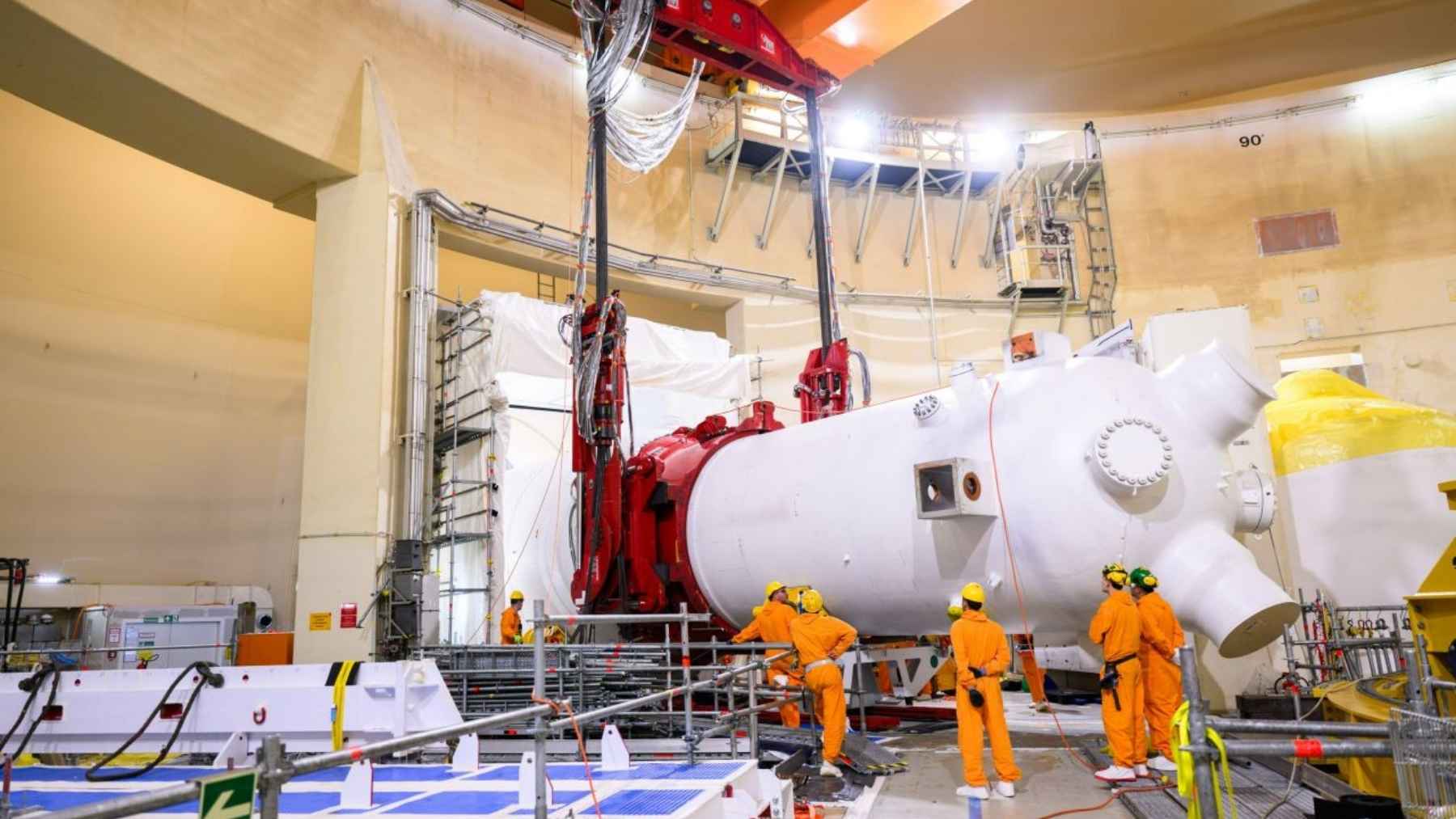
Getting the generators out was its own multi-year project. The four came out of the reactor building between mid-May and mid-June 2025, whole, one at a time, after nearly two years of planning and structural modifications, with Framatome and heavy-lift specialist Mammoet handling the extraction. All four were out in four weeks, on schedule, per World Nuclear News.
The receiving site sits in the Studsvik industrial park outside Nyköping and has its own roll-on/roll-off harbor, because you do not unload a 300-metric-ton heat exchanger with a dockside crane and good intentions. Cyclife says the four-at-once delivery was a first at this scale for the company.
So what does Sweden actually do with them?
The short version: cut, clean, melt, sell. The Studsvik facility handles components up to 400 metric tons and almost 100 feet long, slices them up, blasts contaminated surfaces where needed, and feeds the metal into a furnace with capacity for up to 5,000 metric tons a year. What comes out the other end are ingots.
Cyclife’s own numbers for the site put the average recycling rate around 95 percent across the 40,000 metric tons of metal it has processed so far. Ingots that measure clean enough are released from regulatory control and sold on to conventional industry. The fraction that stays radioactive gets packaged and shipped back to Germany, because under the contract the waste remains PreussenElektra’s problem.
Depending on how you feel about where recycled steel ends up, that free-release step is either the circular economy working exactly as designed or a mildly strange thing to learn on a Sunday. Sweden has been doing it for decades. The site has handled more than 30 large components from Swedish, German, French and British plants, and a second treatment line built there is, in the words of Cyclife Sweden managing director Delphine Servot, “doubling our treatment capacity here in Sweden.”
North America already tried this exact trip
If you live around the Great Lakes, this story might ring a bell. Back in 2009, Bruce Power, operator of the big nuclear station on Lake Huron in Ontario, signed a deal with this same Swedish operation, then called Studsvik, to ship 16 of its own retired steam generators across the Lakes, down the St. Lawrence and over the Atlantic for recycling. EDF bought the Swedish business in 2016 and renamed it Cyclife.
It did not go well. Mayors on both sides of the border, U.S. senators, First Nations and environmental groups lined up against the plan, mostly over one number: about 40 million people drink from the Great Lakes. Canada’s regulator eventually signed off on a transport license anyway, but Bruce Power kept postponing the voyage, and CBC reported the whole thing was scrapped for good.
The German generators reached a Swedish dock in one winter. The Canadian ones never left Ontario.
The next four are heavier and already out of the building
Unterweser was the pilot. The next plant in line is Grafenrheinfeld in Bavaria, and its generators are bigger: about 402 U.S. tons (365 metric tons) each, same 66-foot length. The first one came off its mounts inside the reactor building on January 20 and had to be lifted, tilted and rotated several times on the way out, a sequence project manager Burghard Lindner said demanded “utmost precision and impressive engineering,” per a separate World Nuclear News report. The plan was to have all four staged outside by the end of February, with the shipment to Nyköping set for spring 2027.
Grafenrheinfeld itself has been dead since 2015. Over its life it generated 333 terawatt-hours, enough to power all of Bavaria for almost four years, and its two 469-foot cooling towers were blown up in August 2024. The 55,000 metric tons of concrete rubble went into the towers’ own collection basins to clear space for the rest of the demolition.
Zoom out and the schedule runs long: 16 generators in total from four plants (Unterweser, Grafenrheinfeld, Grohnde and Brokdorf) under the contract PreussenElektra awarded in 2021, a program the utility expects to take more than a decade. So the score so far reads four delivered, four staged in Bavaria, eight still bolted inside their buildings, and one furnace on the Baltic working through the pile.
The odd part is that Europe is running this movie in both directions at once. France is forging four brand-new 510-ton steam generators for a reactor that does not exist yet, and Britain lowered a 551-ton reactor vessel into place with the largest crane on Earth in June. Same class of component, opposite ends of the life cycle.
Germany does have one other proven use for a dead reactor. The SNR-300 at Kalkar, a plant that was finished and never switched on, became an amusement park with a swing ride inside the cooling tower. That trick only works if your reactor never went critical. Unterweser ran for more than three decades, so its steel gets the furnace instead of the fairground.