
Belgium passed a law back in 2003 that said every nuclear reactor in the country had to be switched off by 2025. For the better part of two decades that was simply the plan, and it’s one the country mostly kept to, shutting down five of its seven reactors between 2022 and 2025. Then Russia invaded Ukraine, European gas prices went haywire, and the two youngest reactors got a ten-year reprieve. One of them just came back from the longest stay in the shop it has ever had.
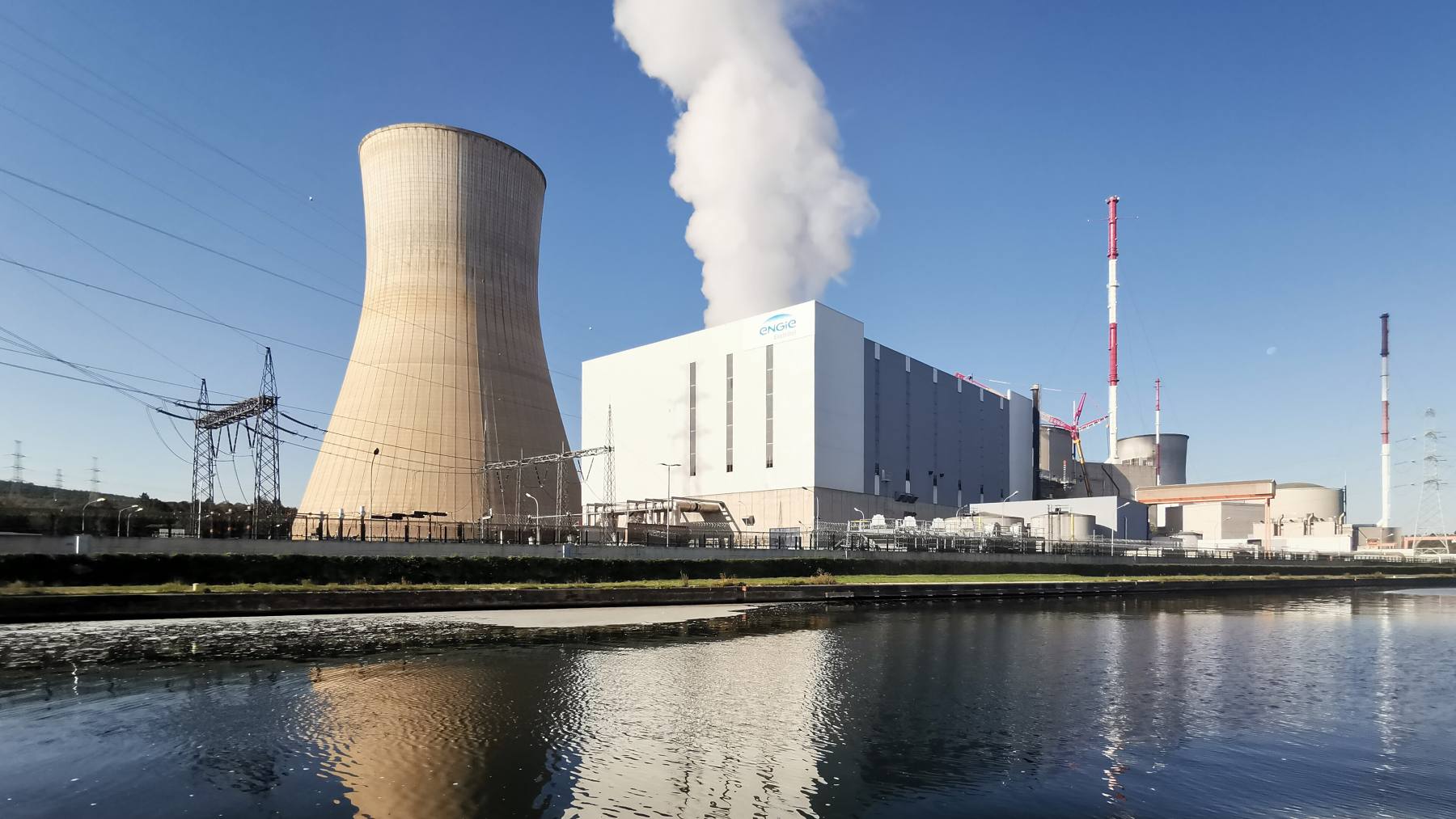
Tihange 3, a roughly 1,000-megawatt pressurized water reactor on the Meuse River near the town of Huy, reconnected to the Belgian grid at 5:30 p.m. on Wednesday, October 14, according to L’Avenir, the regional paper that covers the plant. It had been dark since April 4. That’s just over seven months, and Rosana Buttiglione, the site’s technical director, told the paper the Tihange site had never gone through an overhaul that long.
For context, a normal refueling outage at this plant runs six to eight weeks and involves about 4,000 separate tasks. This one involved 7,000.
Engie, the French utility that operates the plant, had told the market the restart would happen on October 19, so the reactor actually came back five days early. RTBF, Belgium’s French-language public broadcaster, reported on October 17 that the unit wasn’t at full power yet. Cedric Osterrieth, who runs Engie’s nuclear business unit, said the plant would ramp up gradually toward its rated output of about one gigawatt.
So what takes seven months?
Mostly, it’s proving a 41-year-old machine can safely run until 2035, which is frankly a big ask of any machine that old. The reactor first started up in 1985, and the Belgian regulator, the FANC, signed off on a long-term operation plan that spreads the required upgrades across three years of extended outages. Buttiglione put the count at 45 separate life-extension projects inside this year’s 7,000 tasks.
The headline job was a pressure test of the reactor’s inner containment. If you haven’t run into that term, the containment is the thick reinforced-concrete building wrapped around the reactor vessel, and its entire purpose is to hold whatever might come out if something inside goes badly wrong. To test it, you pump the building up well past its normal operating pressure and check that it holds. Buttiglione said a test of that scale hadn’t been done since the reactor first started up.
Why now? Because the plant was supposed to be scrap by now, and a reactor that’s been granted ten extra years has to show its most important safety structure is still as tight as it was on day one. I’d argue that’s the single most interesting line item in the whole outage, and it’s a bit of a shame Engie hasn’t published the test pressure or how long the building sat under load.
Two more jobs stand out. Workers replaced 40 percent of an internal structure inside the cooling tower, the big concrete hyperboloid you see in every photo of the plant. L’Avenir doesn’t say which structure or how much it weighs, so I can’t give you the tonnage I’d normally want here. The turbine’s governor, the system that regulates how much steam reaches the turbine and keeps the generator spinning at grid frequency, got swapped for a new one.
And that’s before you get to the ordinary stuff: refueling, instrument checks, valve work, the hundreds of small inspections that fill any outage.
1,500 to 2,000 people on one reactor
That’s the headcount L’Avenir reports for the seven months, split between Engie’s own staff and 165 outside companies covering instrumentation, electrical, mechanical, radiation protection and control room work. Buttiglione called it “a human success as much as a technical one,” and said people worked nights, weekends and right through the summer months.
If 2,000 people sounds like a lot for one reactor, it’s actually pretty normal for this kind of job. EDF, across the border in France, has about 2,500 people and 200 partner companies on the first full inspection of its Flamanville 3 reactor, which runs to 20,000 tasks over roughly a year. Tihange’s outage is smaller, but it’s the same routine: shut the machine down, swarm it, bring it back before the cold weather.
Engie launched a hiring drive for 200 technicians across the Tihange and Doel sites after the extension deal was signed, which tells you something about how much of this work it expects to repeat.
This was year two of three
Most of the coverage skips this bit, I think. The 2026 outage wasn’t the first long-term-operation shutdown at Tihange 3. The reactor had already gone dark in April of last year for a shorter overhaul and came back on July 10, 2025, according to Engie’s own press office. The FANC’s long-term operation file spreads the remaining upgrades over a three-year action plan.
So the schedule looks like this. A seven-month outage in 2026 with 45 projects, which just ended. Another seven-month outage in 2027, and Buttiglione says that one is already in preparation with about 60 projects on the list. A third in 2028 along the same lines. Each one is timed to put the reactor back on the grid in the fall, because Belgian winters are when the country’s electricity demand peaks and its wind and solar fleet produces the least.
You could reasonably ask whether a reactor that spends seven months a year offline for three years running is worth the trouble. I’ve wondered that too. The Belgian grid operator’s answer, which pushed the government into this in the first place, is that the country risked supply shortfalls in the winters of 2025-2026 and 2026-2027 without nuclear power, and nothing else could fill the gap in time. Tihange 3 and its twin at the Doel plant near Antwerp, Doel 4, together put about 2,000 megawatts on the grid when both run.
Doel 4’s the open question right now. RTBF reported it was scheduled to reconnect on October 21. Engie’s earlier notice to the market had said November 1. I haven’t been able to confirm it’s back on the grid, so treat that one as pending.
The two reactors don’t belong to Engie alone anymore
Since November 2025, Tihange 3 and Doel 4 have sat inside a joint venture called BE-NUC, owned half by the Belgian state and half by Engie, with Engie still running the plants and carrying the safety responsibility. The extension deal, which Belgium calls the Phoenix agreement, also shifted long-term responsibility for the country’s nuclear waste to the state.
That arrangement may be about to get bigger. The Belgian government and Engie have been negotiating since April over the state possibly buying Engie’s entire nuclear business, all seven reactors across both sites, and whether any of the shut-down units could be brought back. Decommissioning work at Tihange 1 and Tihange 2, which closed in September 2025 and January 2023, is paused while those talks run.
Osterrieth told L’Avenir the two sides had just extended their window for reaching a memorandum of understanding to November 4, 2026, after missing an October 1 target they’d set themselves.
Image Credit: commons.wikimedia.org