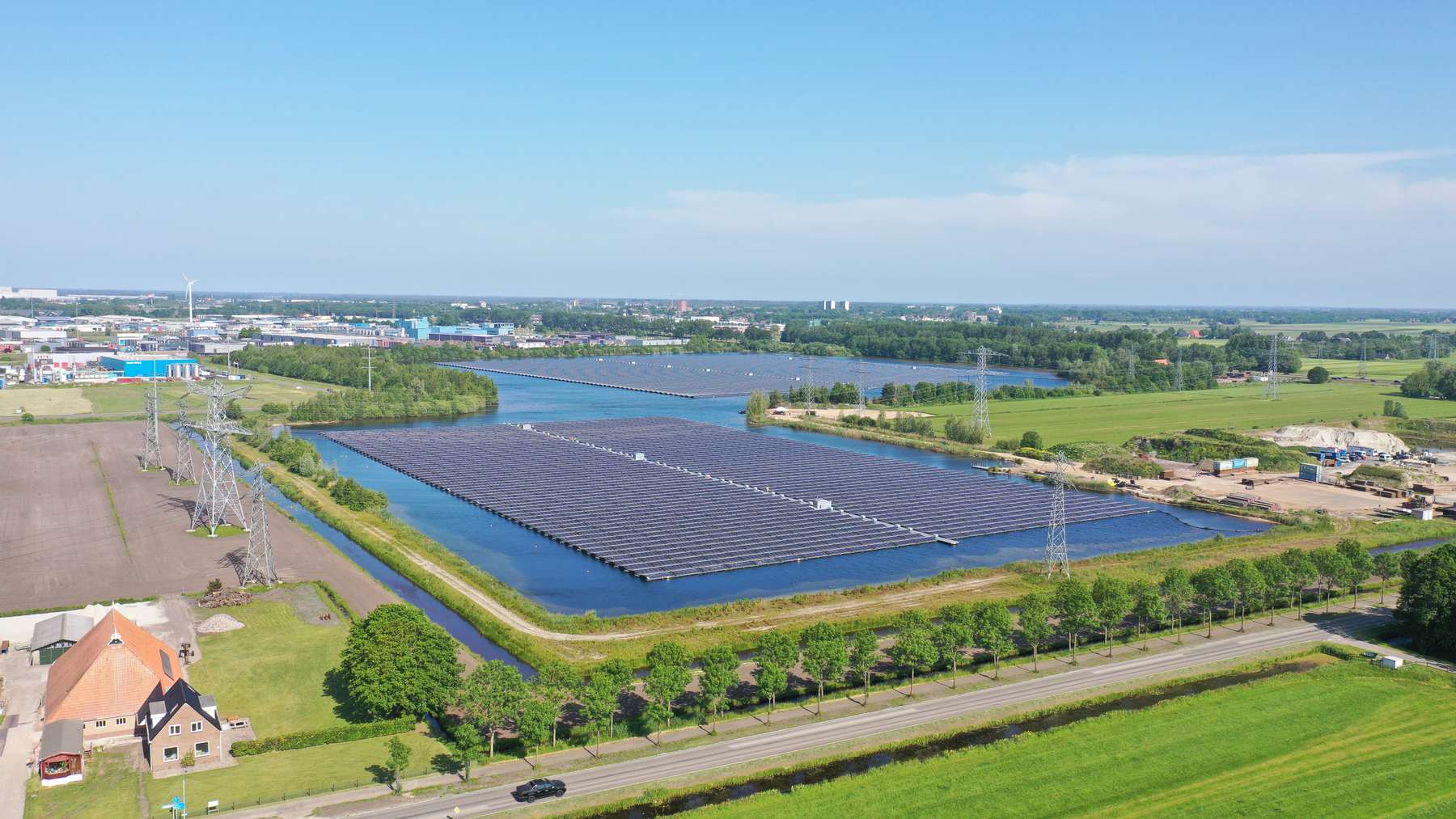

- 2 MONTHS AGO · ENERGYA 427-foot ship built to haul carbon dioxide as a liquid at 31 below zero docks twice a week at Europe’s largest fertilizer plant, loads almost 2 million gallons from its seven tanks, and sails it to Norway to be pumped 8,530 feet under the North Sea
- 2 MONTHS AGO · ENERGYA 6.8-foot battery that is a sealed hydrogen tank with electrodes inside just entered mass production, using the chemistry that ran the Hubble telescope’s first batteries for 19 years at a dozen charge cycles a day — and each tube is built to last 30,000 cycles on the ground
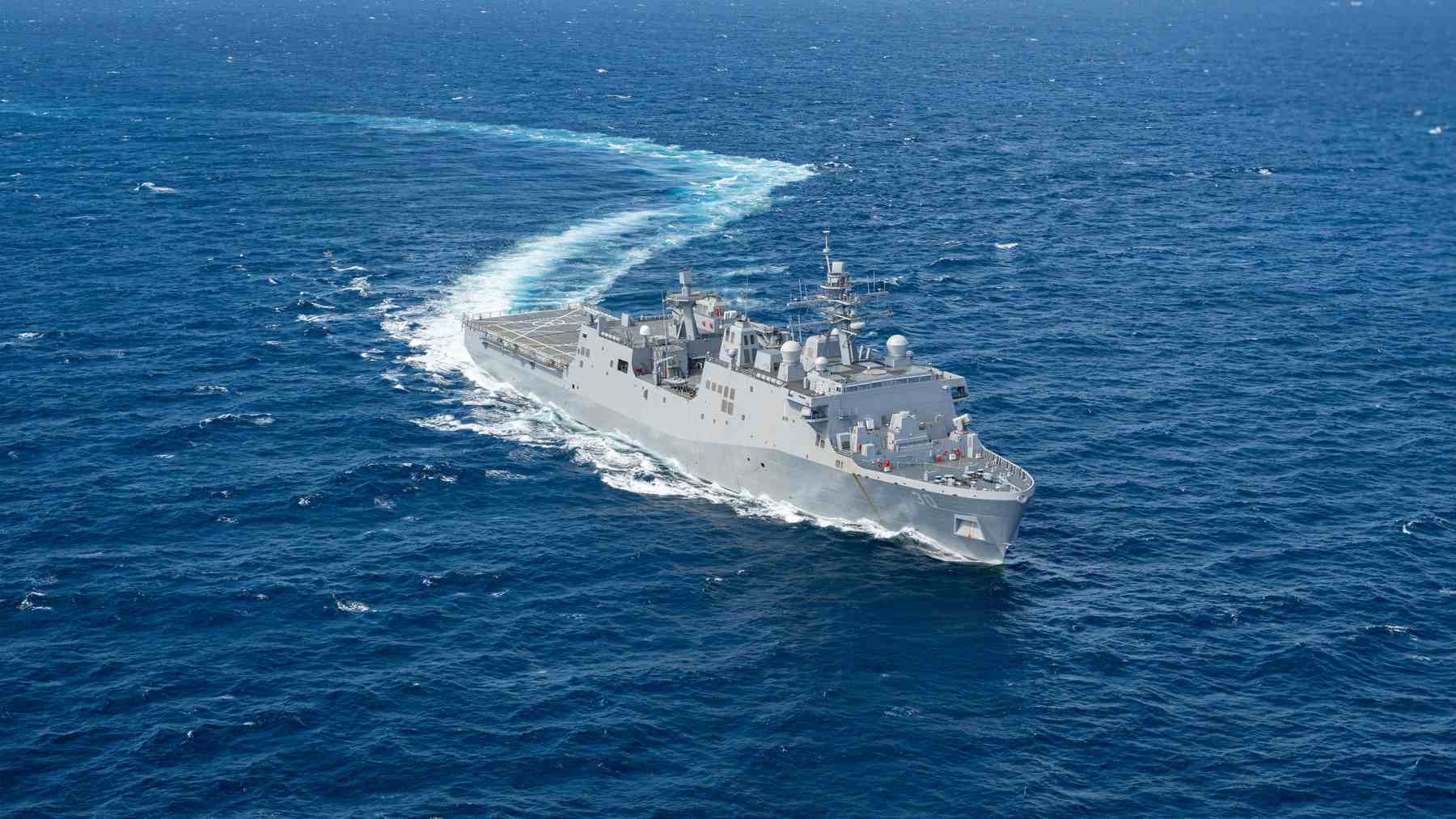
- 1 MONTH AGO · ENERGYA 1,764-ton Italian submarine started coming together from its hull sections at a Mediterranean yard, built around a lithium iron phosphate battery, the chemistry in cheaper EVs, that holds almost twice the energy of the lead-acid cells subs have relied on for over a century
- 2 WEEKS AGO · ENERGYAn 11,000-volt ship connector packed into its own container just passed factory tests with outside inspectors watching, and it’s built to reel in a high-voltage cable from an offshore wind turbine, lock it in and let a service vessel charge its batteries without heading back to port
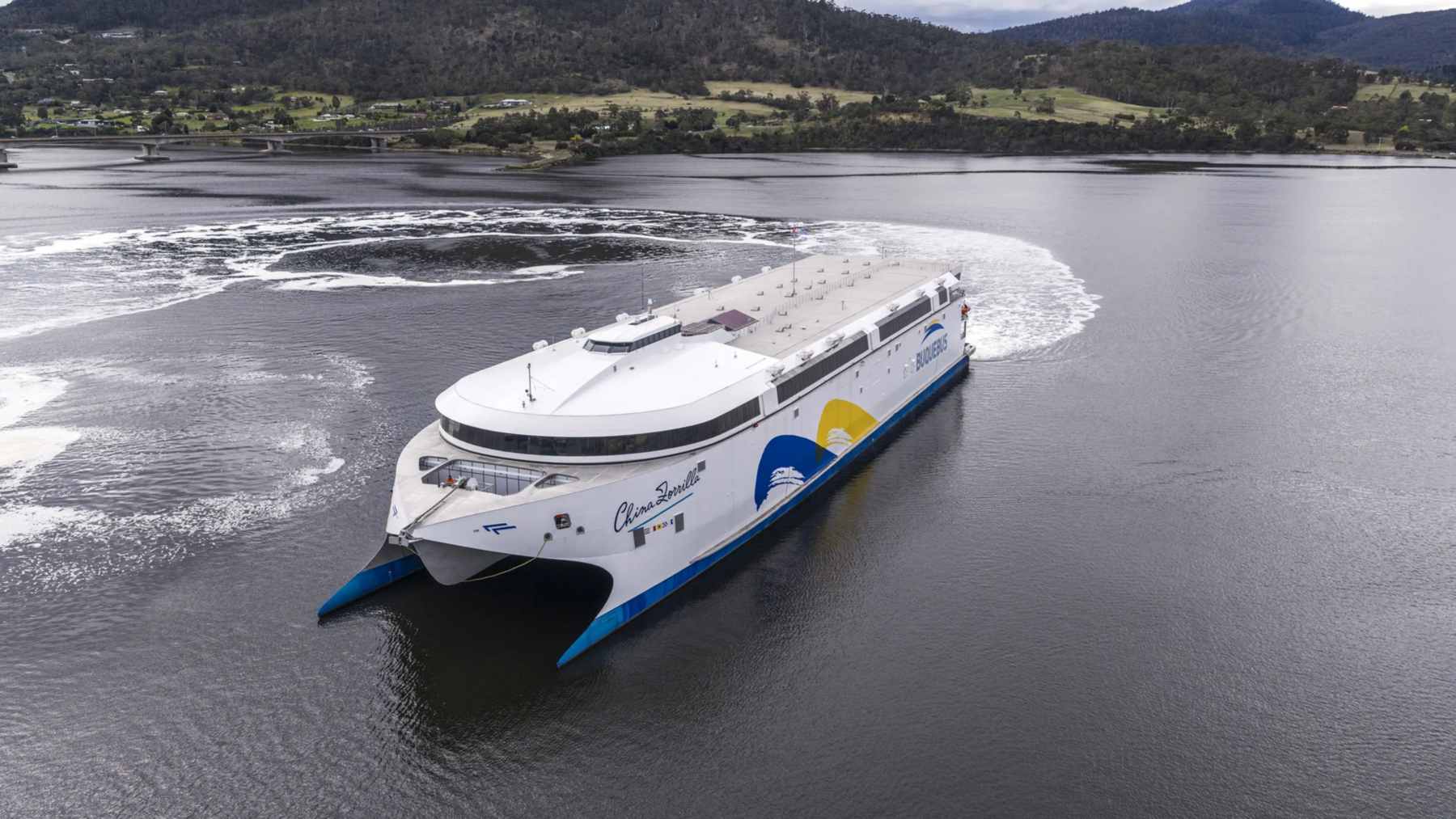
- TODAY · THIS ARTICLEA 427-foot ferry carrying more than 275 tons of batteries just started hauling up to 2,100 passengers and 225 cars nearly 35 miles across the River Plate, on a charge that lasts about 90 minutes and a roughly 40-minute top-up at the dock before it turns around on eight electric waterjets
Most of us plug our phones in overnight and don’t think about the battery again until the next evening. If you drive an EV, you probably do something similar with your car, and a road trip is about the only time you end up sitting around waiting on a plug.
Now try running something that has to plug in after every single trip. That’s just how life works for the ferry Buquebus started running across the River Plate last month.
The ship is called China Zorrilla, and before anyone gets the wrong idea, the name has nothing to do with the country. China was the nickname of the Uruguayan actress Concepción Zorrilla. The ferry itself was built at Incat’s yard in Tasmania, Australia, according to The Maritime Executive.
There was a ceremony in Buenos Aires on October 21, 2026, and the ferry made its first commercial crossing to Colonia, Uruguay, the next day. gCaptain reported on October 26 that it was in commercial service.
We covered this ship back in June, when it was still waiting in Tasmania for a ride to South America, so I won’t run through the whole spec sheet again. The short version is that it’s a 427-foot aluminum catamaran, it’s 103 feet wide according to Baird Maritime’s vessel review, and it carries more than 275 short tons of batteries once you convert gCaptain’s metric figure. gCaptain calls it the world’s largest battery-electric ship, and Baird and The Maritime Executive say pretty much the same thing.
So how far does one charge get you?
Not much farther than Colonia, apparently. Interesting Engineering says the ship is built to run for about 90 minutes on a charge. The crossing from Buenos Aires is about 30 nautical miles, or nearly 35 of the miles on your odometer, and it takes roughly 90 minutes.
Which means the battery and the route are basically sized for each other. The ferry plugs in at the dock after every run.
How long does that stop take? Reports put it at around 40 minutes, according to Interesting Engineering. I’d treat that number with a bit of caution, though, because it comes from press reports rather than from Incat or Buquebus, and I couldn’t confirm which terminal handles the longer top-up.
The plug itself is pretty serious hardware. A Norwegian company called Zinus is supplying an automated charging tower rated at 16,000 amps of direct current. If that means nothing to you, think of the DC fast chargers at highway rest stops. They feed power straight into the battery in the same form it’s stored, which skips the slower converter your car uses on a home charger. This tower does the same trick at ship scale.
Colonia got two high-power chargers, Interesting Engineering says, backed by electrical work with UTE, Uruguay’s state-owned utility. The Buenos Aires terminal draws its power from the local grid company, Edesur. gCaptain also describes dedicated high-power charging on both banks of the river.
It was supposed to burn natural gas
Funnily enough, this ship wasn’t designed to be electric at all.
Incat’s 2019 design used four dual-fuel engines burning liquefied natural gas, each rated at 8,800 kilowatts, and that version was good for about 37 knots flat out. Then in January 2023, with the ship already being built, Buquebus and Incat went public with a plan to drop the gas and go fully battery-electric. Swapping the whole powertrain on a half-built ship is a pretty gutsy call. I’d guess most shipyards would rather you didn’t change your mind like that halfway through.
So what pushes it now? Eight waterjets, each driven by an electric motor reportedly rated at about 2.4 megawatts, for roughly 19 megawatts in total. The gas version would’ve had about 35.
If you’ve never looked under a fast ferry, a waterjet is basically a big pump. It pulls water in under the hull and fires it out the back, and the ship steers by aiming that jet instead of swinging a rudder behind a propeller.
Less power apparently doesn’t mean slow. The ferry’s expected to cruise at around 25 knots, and it reportedly hit 29 knots in trials with about 661 short tons on board. I’d call that a fairly convincing answer to anyone who assumed a battery ship had to be a slow one.
What’s actually inside those battery rooms?
The batteries come from Norwegian supplier Corvus Energy. There are 5,016 Dolphin NextGen modules, split into 12 banks of 418 and spread across four separate battery rooms. Together they store more than 40 megawatt-hours, per gCaptain.
If you’ve followed EV battery fires at all, you’re probably wondering about thermal runaway. That’s when a lithium-ion cell overheats badly enough that it keeps heating itself up, and it can spread to the cells around it like a row of dominoes.
Corvus says it isolates every cell, and its CTO, Lars Ole Valøen, told IEEE Spectrum that a cell going into runaway won’t spread to the ones next to it, Interesting Engineering reports. That’s a big promise. I’d like to see it hold up over a few years of daily crossings, but it’s arguably the right problem to design around when you’re putting up to 2,100 people on top of the batteries.
So how did it get from Tasmania to Uruguay?
It didn’t sail there. The ferry was loaded onto Boskalis’ heavy-lift ship Black Marlin in Tasmania in July for a 40-day trip east, across the Pacific and through the Strait of Magellan, according to The Maritime Executive.
At Nueva Palmira, Uruguay, the Black Marlin waited for decent weather. Then it took on ballast water until its deck sat low enough in the water for the ferry to float off.
Incat’s managing director, Craig Clifford, rode the first commercial trip, and gCaptain says he found the difference from a conventional ferry obvious right away, with the usual engine noise and vibration mostly gone. “This ship proves that large, high-capacity commercial vessels can operate on electric power,” Incat chairman Robert Clifford said in the same report. That’s a shipbuilder talking about its own ship, of course, so take it for what it’s worth.
Is this where big batteries are headed?
Batteries have been creeping into heavy machines for a while now, from the battery locomotives Glencore runs deep under Ontario to ferries like this one. And Incat isn’t stopping at one. gCaptain says the yard is building three 423-foot battery-electric ferries for Danish operator Molslinjen.
But the River Plate ferry is the one already carrying paying passengers, starting with its first commercial crossing on October 22, 2026.
 The Tesla Cybercab Has Already Crashed 8 Times, And That’s With Them Driving Slow AF. Now, Tesla Is Selling Them To The PublicElectric Vehicles (EVs) · 1 hour ago
 As EVs Obsess Over Screens, Slate Decided to Sell a “Screenless GPS.” It Has Already Sold OutElectric Vehicles (EVs) · 2 days agoA 3,113-pound two-seater with no steering wheel, no pedals and no mirrors has turned up by the dozen in a Dallas parking lot, with a loaded double-deck car hauler parked nearby, more than three weeks after its maker promised the city rides in it this monthElectric Vehicles (EVs) · 2 days ago