
Shutting down a nuclear plant is a long, loud, expensive business. The cooling towers come down in a controlled blast, the reactor gets cut into pieces over a decade or more, and somebody spends a fortune making the site safe again. There is a plant on the Lower Rhine that skipped every part of that, for one reason: nothing radioactive was ever put inside it.
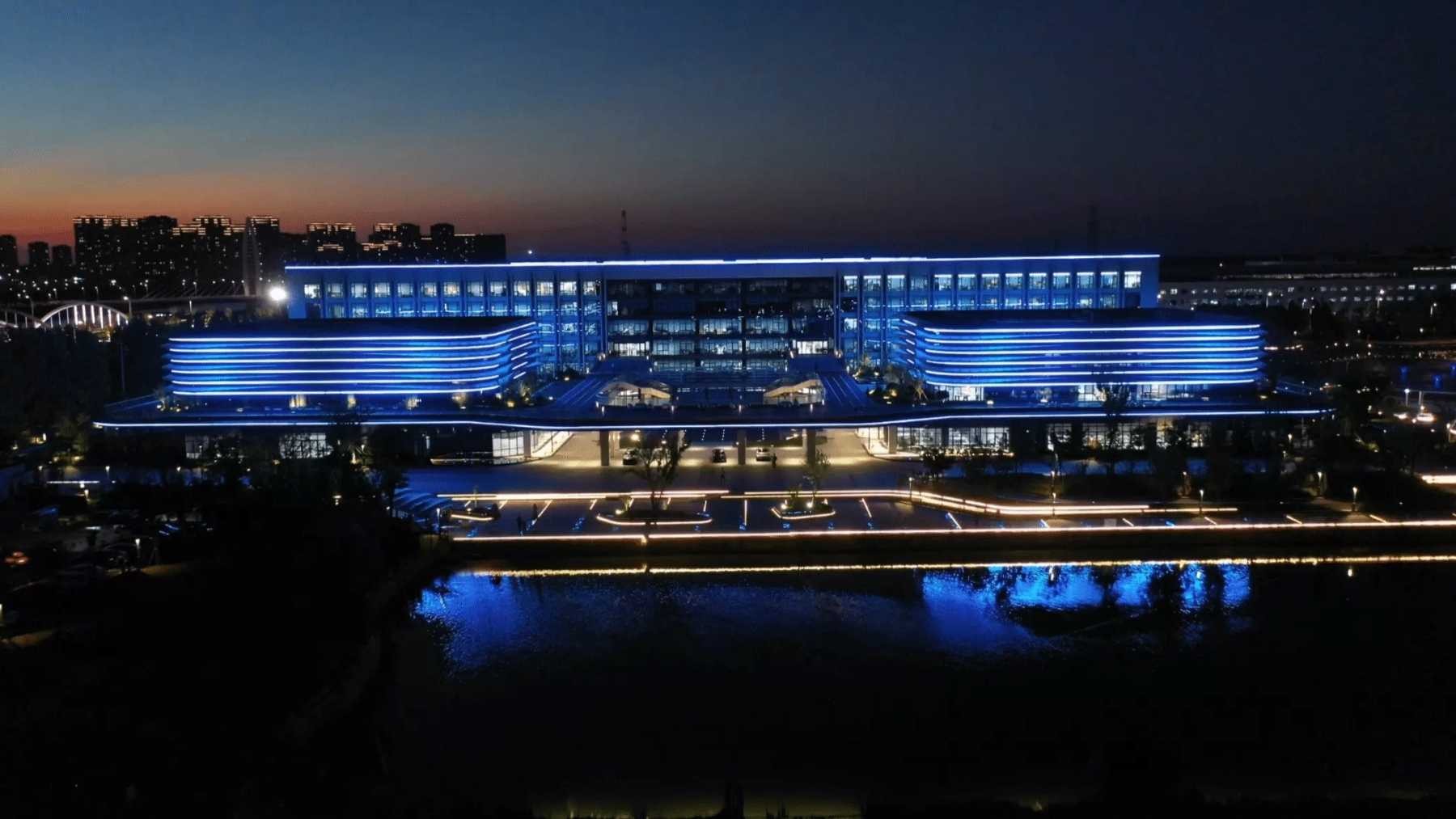
The SNR-300 at Kalkar, in North Rhine-Westphalia near the Dutch border, was structurally finished in 1985 and never received a single fuel assembly. West Germany, Belgium and the Netherlands had spent about 7 billion marks getting it to that point. The site covers roughly 74 acres (30 hectares) and its tallest structures reach 305 feet (93 meters), according to the heritage record kept by the Landschaftsverband Rheinland, the regional authority for the Rhineland.
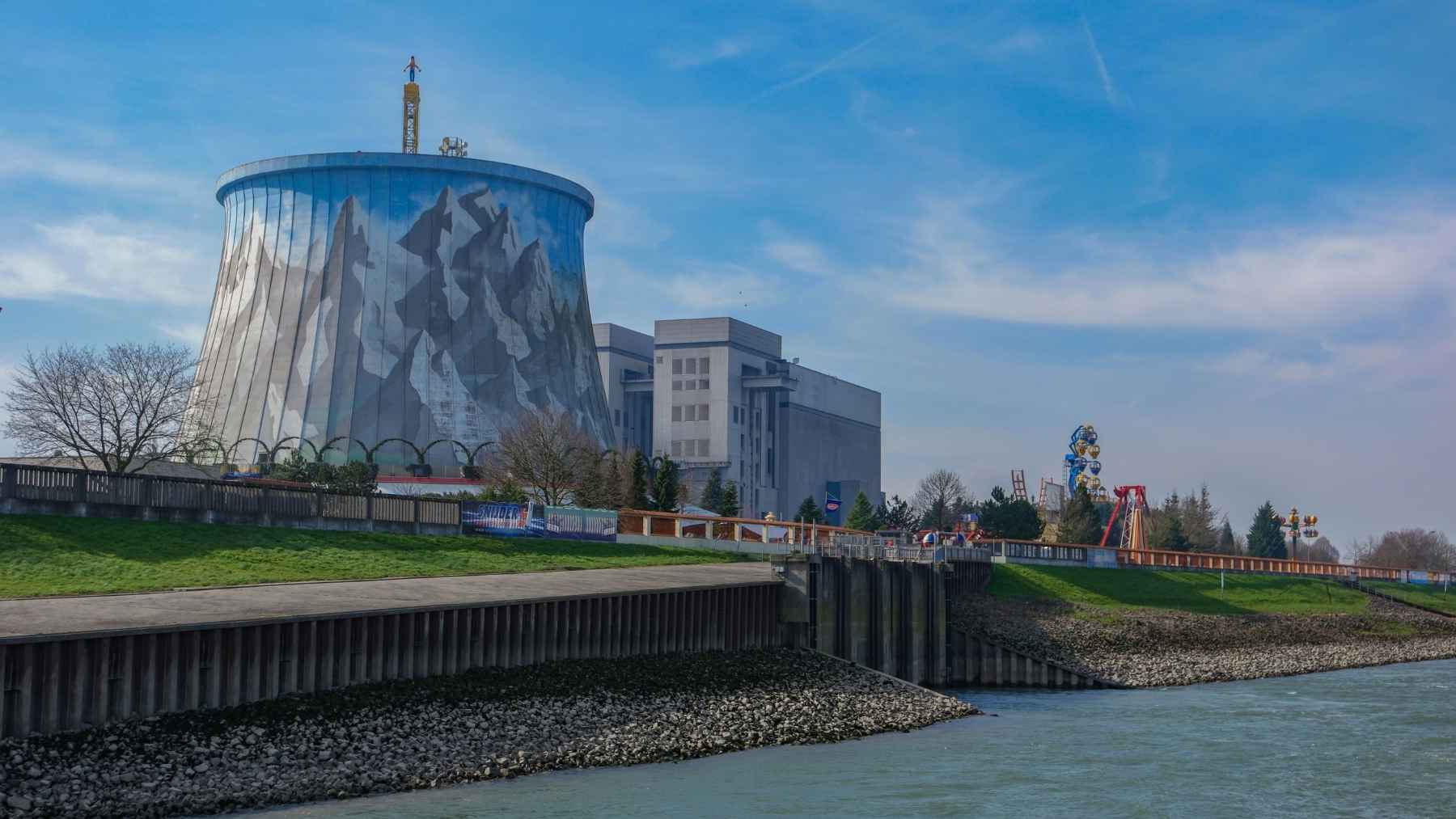
Today there is a 190-foot free-fall tower inside the cooling tower, a climbing wall up the outside, and a new themed area called Himalaya that opened on July 1.
That would be a decent piece of trivia and nothing more, except that in April an American company started building a reactor of almost exactly the same size, cooled by exactly the same metal, in southwestern Wyoming.
A breeder was supposed to make more fuel than it burned
West Germany had very little uranium of its own, and the whole point of Kalkar was to stop that from mattering. A fast reactor runs on unmoderated neutrons, which lets it convert uranium-238 into fissile plutonium-239 faster than it consumes fuel. Get that working at scale and your uranium reserves stretch for centuries instead of decades.
The machine was ordered from Interatom, a Siemens subsidiary, and ground was broken in April 1973. It was rated at 327 megawatts gross. A second unit, SNR-2, was drawn up at 2,000 megawatts gross, which would have made it the largest reactor on Earth. It was never built.
The money went the way these things usually go, only faster. In 1969 the reactor was offered at a fixed price of 500 million marks. By 1972 the figure was 1.7 billion. The final bill was around 7 billion, roughly 3.6 billion euros in straight conversion, and about fourteen times what was agreed at the start.
The sodium was already in the pipes
Here is the part that separates Kalkar from the legend around it. “Never switched on” does not mean the plant was an empty shell. From 1985 liquid sodium circulated through the cooling loops, and electric heating elements had to keep it warm so it would not solidify in the pipework. Sodium is a solid at room temperature and melts at 208 degrees Fahrenheit.
Holding a finished reactor in that condition cost 105 million marks a year, more than 53 million euros. The plant was, by the state’s own description, ready to operate. The fuel just never went in.
Sodium is a genuinely good coolant for this job. It carries heat superbly, it boils far above the reactor’s operating temperature, and the primary loop is not pressurized, so the steam explosion that light-water designs are built to survive is not on the menu. The trade is that sodium burns in air, reacts violently with water, and cannot be put out with a hose.
North Rhine-Westphalia refused to sign, and then Chernobyl happened
Licensing was a state matter, and the state had changed its mind while the concrete was curing. North Rhine-Westphalia swung against nuclear power at the end of the 1970s, and its social affairs minister, Friedhelm Farthmann, withheld the permission needed to load fuel into the core on the grounds that the risks were not acceptable. Bonn could have forced the issue by directive under German atomic law and chose not to, because that meant owning the consequences alone.
The utilities were losing interest anyway. Electricity demand had grown more slowly than forecast, and uranium turned out to be more plentiful than the planners of the 1960s feared, which removed the entire argument for breeding your own plutonium in a hurry.
Chernobyl on April 26, 1986 settled the public mood. Federal research minister Heinz Riesenhuber announced the end of the project on March 21, 1991, eighteen years after the first concrete was poured.
Nobody demolished it because demolition was the expensive option
Tearing the plant down was priced at 75 million euros, so it stayed up. The operators sold off what they could, starting with brand new machinery that had never been run. The building itself was advertised in a newspaper ad.
The first reactor core, built by Nukem and Alkem and enriched to about 35 percent plutonium, sat in state custody at Hanau until 2005. The plutonium then went to the La Hague reprocessing plant in France and was worked into MOX fuel for ordinary power reactors, which is the only part of Kalkar that ever generated electricity for anybody.
In 1995 a Dutch scrap dealer named Hennie van der Most bought the site and the buildings, reportedly for about 2.5 million euros. Because no fuel had ever been loaded, none of it was contaminated. That is the whole reason a nuclear plant could be sold to a private buyer and filled with children.
The park kept the machine and built the rides around it
The cooling tower now holds the Vertical Swing, a 190-foot free-fall tower, with the climbing wall outside restricted to over-16s on the high section. Former staff of the Schneller Brüter Kalkar company built a museum inside the old emergency diesel building using original parts, and the park’s own attraction list files it between the ball pit and a carousel called Clown Around.
Ownership changed on August 1, 2022, when van der Most sold the resort to DeFabrique Holding of Utrecht, which employs up to 320 people there. The 2026 season runs to November 1, there are more than 30 attractions, and a day ticket at the gate is 36.50 euros for anyone over 1.30 meters tall.
Germany has handled its other dead reactors less gently. The 525-foot cooling towers at Gundremmingen in Bavaria were dropped with explosives in front of a crowd, and the site is now earmarked for a commercial fusion plant.
Wyoming is pouring concrete on the same coolant
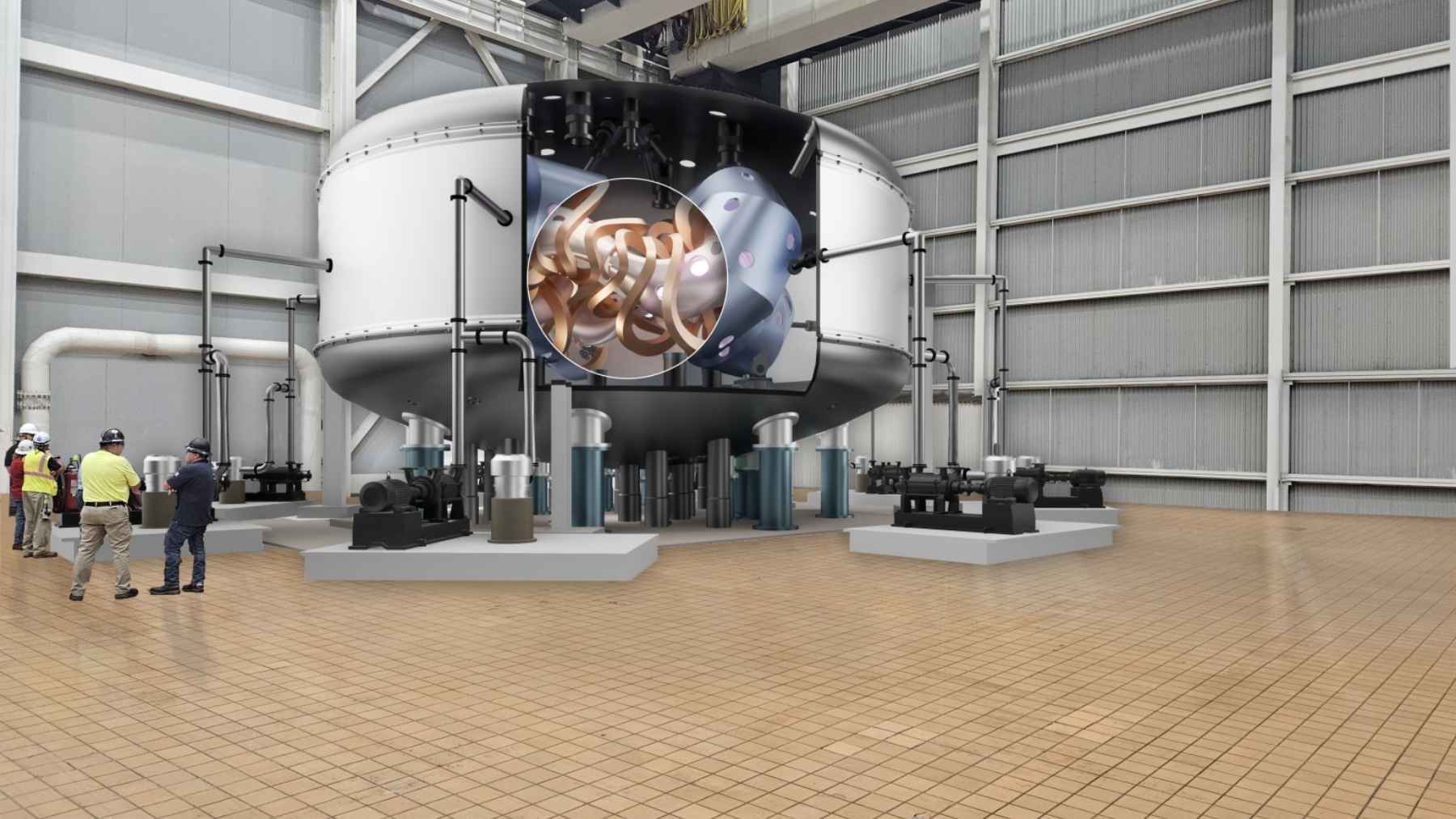
TerraPower’s Natrium plant at Kemmerer, next to a retiring coal station, is a 345-megawatt sodium fast reactor paired with molten salt storage that can push output to 500 megawatts on demand. The Nuclear Regulatory Commission approved the construction permit in early March, and the Department of Energy called it the first construction permit ever issued for a commercial non-light-water power reactor in the United States.
Construction started in April, with Bechtel as the engineering and construction partner, around 1,600 workers on site and completion targeted for 2030, according to the American Nuclear Society’s Nuclear Newswire. “This is the moment our industry has been working toward for a generation,” TerraPower chief executive Chris Levesque said as the work began.
Sodium fast reactors are not a dead technology elsewhere either. China is finishing a pair of 600-megawatt fast reactors on an island off Fujian, built to make more plutonium than they burn, which is the exact thing Kalkar was designed to prove and never got to try.
The useful detail for anyone watching Kemmerer is what a construction permit is not. TerraPower still needs a separate operating license from the NRC before that reactor is allowed to hold fuel, and those are two different pieces of paper signed at two different times. Kalkar collected every piece of paper except the last one, kept its sodium warm for six years waiting, and now charges 8 euros for parking.
 billfortune DRIVER1 month ago