
- 3 MONTHS AGO · ENERGYA Belgian ship crosses the North Sea at 11.5 knots, drives four 426-foot steel legs into the seabed, then climbs its own legs until the hull is clear of the water and stops being a ship, because no crane on a rolling deck can thread a 351-foot blade onto a hub 500 feet up
- 1 MONTH AGO · ENERGYA 19,000-ton oil platform deck was lifted off its eight legs in seconds by a 1,253-foot ship that slid beams under it and jacked it 13 feet into the air, ending 42 years of pumping in the North Sea, and the ship has since been upgraded to pick up 66,100 tons in one go
- 4 WEEKS AGO · ENERGYTwo drilling rigs bored 31 miles of hole under a Bavarian town, two shafts 13,894 feet deep and twelve 2.2-mile side tunnels through 338-degree rock, in 27 months against 107 days planned, and the loop makes 2 megawatts of the 8.2 it was built for, so the rigs went home
- 1 WEEK AGO · ENERGYBoulders weighing up to 4,400 pounds just went over the side of an activist ship onto the seabed off England’s east coast, and they’re spread across about 45 square miles of a protected porpoise habitat to keep out the heavy nets bottom trawlers drag across the sea floor
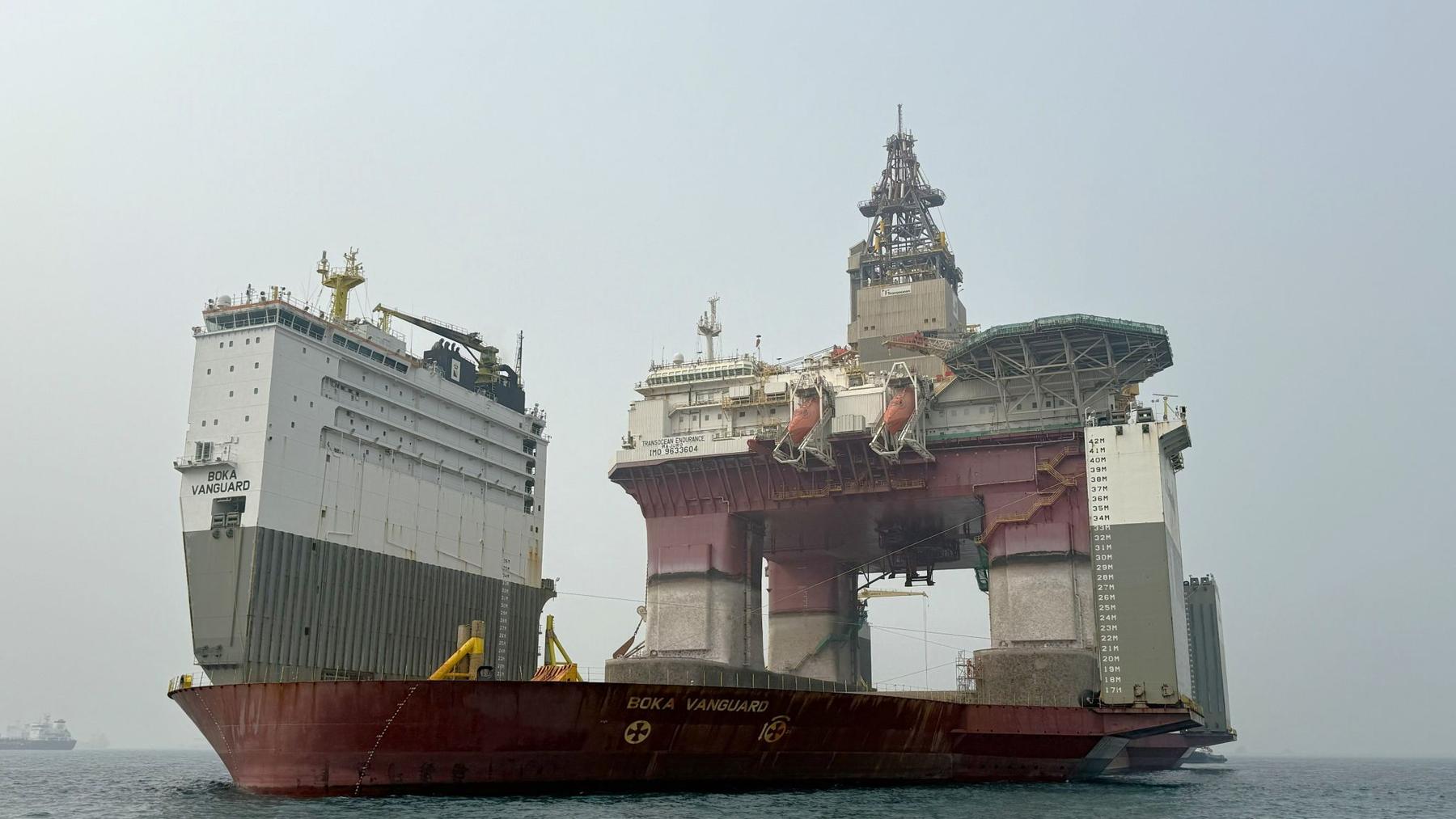
- TODAY · THIS ARTICLEA 45,000-ton semi-submersible drilling rig built to work in 1,640 feet of water and drill as deep as 27,887 feet was floated onto the sunken deck of a 902-foot carrier and now hangs about 28 feet past each side of it on the voyage to a two-year job off Norway
When you picture an offshore drilling rig, you probably picture a steel tower planted on the seabed somewhere in the Gulf. Plenty of them aren’t planted on anything, though. Some float, and the floating kind can be moved from one ocean to another when the work dries up in one spot and picks up somewhere else.
That’s what’s happening with the Transocean Endurance, a semi-submersible drilling rig that’s spent the last few years working off Australia and is now headed back to Norway. It’s making the trip as cargo, on the deck of a Dutch heavy transport ship called the BOKA Vanguard.
And it doesn’t fit.
I mean that pretty literally. Boskalis, the company that owns the ship, says the rig is about 318 feet wide and 381 feet long, while the ship’s deck is a little more than 262 feet across after Boskalis widened it. The ship itself is about 902 feet long. So the rig hangs out past both sides of the hull, and there’s no way to tuck it back in until it gets to Norway. Boskalis loaded it in Singapore, and the update went out on DredgeWire on November 11.
Boskalis also lists the rig at 41,000 tons, without saying which tons it means. That’s a bit of a headache for an American reader, because a US ton (a short ton) is 2,000 pounds, while a metric ton is about 2,205. European companies usually work in metric, and if that’s what Boskalis means here, the rig weighs roughly 45,000 short tons. That’s the number I’m going with, but you should know the source never spells out the unit.
So how do you load something wider than the ship?
You sink the ship. Sort of.
A semi-submersible heavy transport ship floods its own ballast tanks until its long, flat cargo deck drops below the surface, with just a few structures left poking out of the water. The cargo gets floated in over that sunken deck, and then the ship pumps the water back out and rises until the load is sitting high and dry on top of it.
Which means the ship never has to lift anything. We’ve covered offshore steel moving before, like the 19,000-ton platform deck a 1,253-foot ship pulled off its legs in the North Sea, and that ship really did pick its load up. The BOKA Vanguard goes underneath instead.
The overhang is a different matter, and frankly it’s the most eye-catching thing about this whole load. Boskalis says it was built into the transport engineering and the seafastening from the start. Seafastening is basically the steel bracing welded between the cargo and the deck, so nothing shifts once the ship starts rolling in open water. You can’t really skip it on a trip like this.
I did some quick math. About 318 feet of rig on a deck that’s a little over 262 feet wide leaves around 56 feet of rig with no deck underneath it. If the rig sits dead center, that’s up to about 28 feet hanging over each side. That’s my calculation, not a figure Boskalis published, and since the deck is slightly wider than 262 feet, the real overhang on each side is probably a touch smaller.
What kind of rig is this?
The Endurance is a GVA 4000 NCS, and the NCS part stands for Norwegian Continental Shelf, which tells you where it was designed to live. According to OE Digital, it was delivered in 2015, it’s rated for water up to 1,640 feet deep, and it can drill wells as deep as 27,887 feet.
If you’re wondering how a rig works in 1,640 feet of water without standing on the bottom, it doesn’t stand on anything. A semi-submersible floats on big pontoons that ride below the waves, with columns holding the drilling deck up above them, and it’s kept in place while it drills. Sitting that low makes it a lot steadier in rough seas than a regular hull would be. That’s handy off Norway in the middle of winter.
Equinor calls rigs like this one Cat D rigs. Equinor ordered them in the first place, they were designed with Norwegian winters in mind, and the company says they’d stayed on the Norwegian shelf from the day they left the yard. The Endurance is the exception, since it’s spent the past few years off Australia.
So this trip is a bit of a homecoming. Rune Nedregaard, Equinor’s senior vice president for Wells, called the three rigs in its new deal “three strong workhorses that we know well,” according to Offshore Magazine. Calling a 45,000-ton floating rig a workhorse is arguably underselling it, but I’d say Equinor’s earned the right to pick the nickname.
The Endurance is going back to work off Norway
The deal Nedregaard was talking about covers the Endurance and two sister rigs, the Transocean Enabler and the Transocean Encourage. When Equinor and Transocean announced it over the summer, it was a conditional agreement that still needed license approvals. That’s changed. In an October 9 filing, Transocean said Equinor had given its final approval in late September, so it’s a firm deal now.
Under that deal, the Endurance gets two years of work, starting in the second quarter of 2027. The Enabler and the Encourage don’t start their new programs until early 2028, so the Endurance is first in line.
What will it actually drill? We don’t know yet. Equinor’s procurement chief, Jannicke Nilsson, described the three rigs as flexible enough for subsea projects and for wells meant to squeeze more out of existing fields. But Offshore Magazine reported in July that the exact work scope still had to be confirmed, and I haven’t seen anything since that pins it down for the Endurance.
So when does it get there? Boskalis hasn’t said when the BOKA Vanguard left Singapore or how long the voyage will take, which is pretty normal for these updates. I wouldn’t expect a ship with a rig hanging off both sides to be in much of a hurry, and with the job starting in the spring, it presumably has a few months of slack.
Big offshore gear tends to need help getting around, anyway. A 4,300-ton floating crane with a 330-foot boom spent almost a year off West Seattle before tugboats hauled it away to its next job. The Endurance at least gets to ride.
If everything goes to plan, Transocean expects the Endurance to start its two-year program for Equinor in the second quarter of 2027, once it’s off the BOKA Vanguard and back in Norwegian water.
 A 1.88-inch setup error on a Washington campus reactor sent a pulse rod out of its cylinder at 9.13 inches instead of 7.25, because the operator used the numbers for the wrong control rod, and the fuel peaked at about 1,598°F, some 72 degrees over the pulse limit but under the safety limitEnergy · 20 hours ago
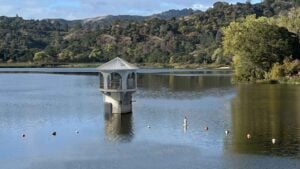 A 170-foot concrete tower in a California reservoir has had 40 feet cut off its top, ring by concrete ring from a crane on a floating barge, because the dam beside it was built 33 feet lower than planned and left the tower that is the lake’s only safe drain too tall for an earthquakeEnergy · 23 hours ago
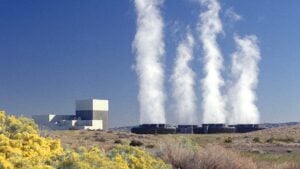 A 1,207-megawatt reactor in Washington state was shut down by hand at 2:49 in the morning after both pumps pushing water through its core tripped five minutes apart, all because one blown fuse knocked out the chillers cooling their drives, and it stayed off the grid for over five daysEnergy · 1 day ago