
- 2 MONTHS AGO · INDUSTRYA sealed German cutting head with nobody inside and no reverse met what its contractor counts as more than 2,000 boulders under a Canadian city, up to 15 crowding its face at once. It ground every one against a cone crusher into gravel small enough for a pipe and holed through 5,600 feet later
- 2 MONTHS AGO · INDUSTRYA 1,764-ton tunnel borer was taken apart after a 1.2-mile dig, hauled across an Italian river on a temporary steel bridge and rebuilt on the far side, where its 41-foot cutting head has started a second tunnel with 18 motors supplying 6.3 megawatts
- 4 WEEKS AGO · INDUSTRYA 600,000-pound drill rig bored 2,204 feet under the Illinois River through limestone that tests up to 25,000 psi, was taken apart and hauled across the river to drag a 30-inch reamer back through the hole in one pass instead of three, and a 20-inch gas line followed it
- 5 DAYS AGO · INDUSTRYA 215-foot rocket that will weigh almost 2 million pounds once fueled is due to lift more than 50,000 pounds of satellites on Friday, a new record for its builder, with 40 of them riding under a 70-foot fairing when a 29-minute window opens at 12:54 p.m. from a Florida pad
- TODAY · THIS ARTICLEA nearly 10-million-pound drilling rig that once bored a record 6.7-mile well in Alaska was taken apart and hauled off the tundra after one of its six modules tipped over on a gravel road, and almost 10 months later the investigation into why is still open
Say “oil rig” and you probably picture a steel platform standing in the ocean, with a helipad on top and a crew that looks permanently cold. But a lot of American drilling happens on dry land, and a land rig has to deal with something most people never think about.
It has to commute.
That’s how a rig nicknamed “The Beast” ended up in pieces on Alaska’s North Slope this year. Doyon Rig 26 weighs nearly 10 million pounds, according to the Anchorage Daily News, and it’s said to be North America’s biggest mobile land rig. ConocoPhillips ordered it in 2016, and Doyon Drilling owns and runs it on the oil company’s behalf. Honestly, it’s hard to argue with the nickname.
In 2022, The Beast drilled a horizontal well that reached 6.7 miles, which ADN reports as an Alaska record for drilling distance. If you’re not up on oilfield jargon, a horizontal well goes straight down first and then bends and runs sideways through the rock. Basically, it lets a rig reach oil that sits a long way from the spot where it’s actually parked.
So why does a rig travel in pieces?
You can’t haul nearly 10 million pounds down a gravel road in one go, or at least I wouldn’t want to be the guy trying. So The Beast is split into six modules, and crews move them individually. For a sense of scale, the horizontal drilling rig we covered boring a gas line under the Illinois River weighs 600,000 pounds, against nearly 10 million for The Beast.
The modular setup had a bit of a rough start, too. On the rig’s first trip in 2020, one module ended up partly off the edge of a main gravel road west of Prudhoe Bay. That one didn’t injure anyone or spill anything, according to ADN.
One module went over in January
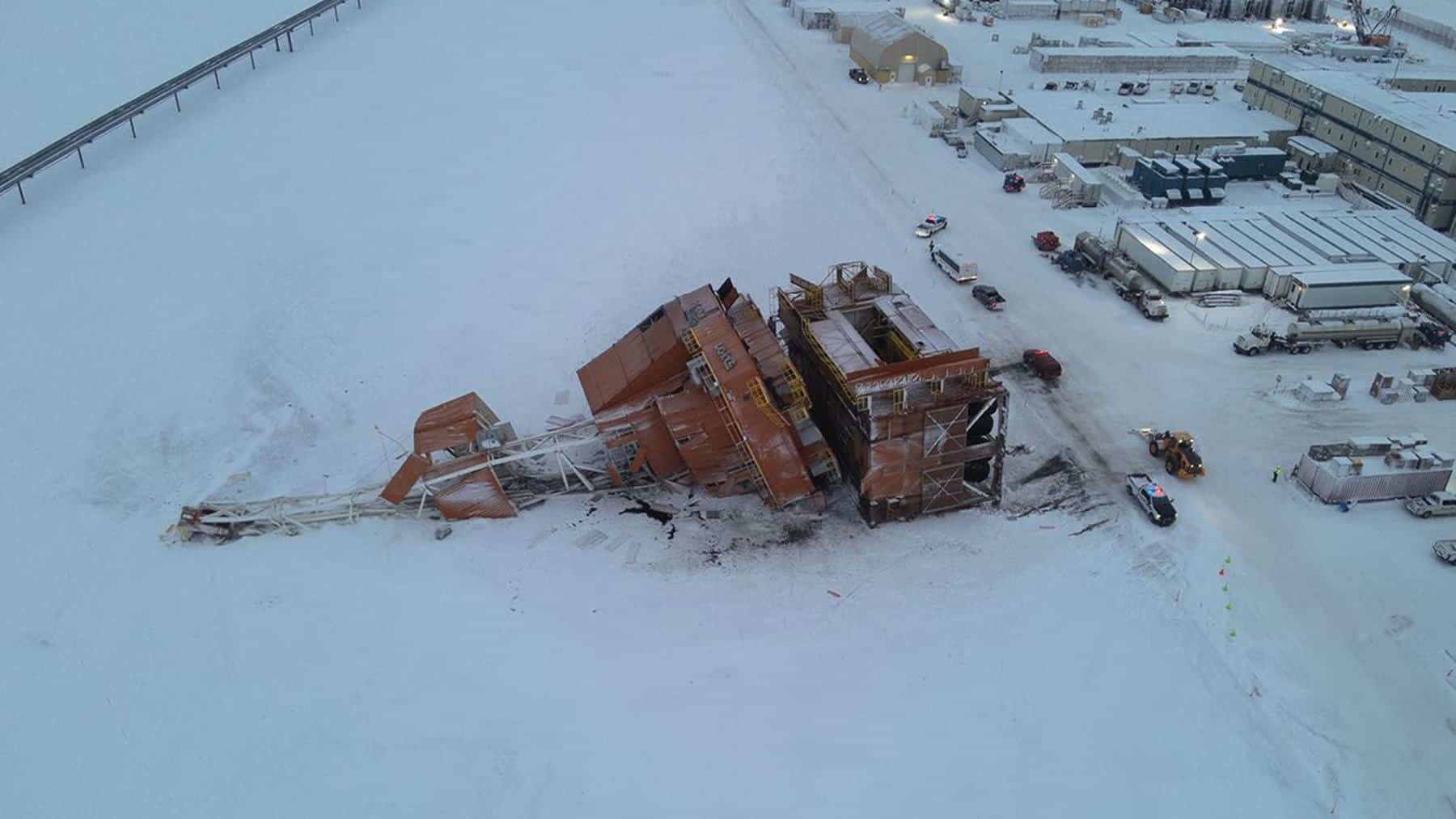
The second incident was a lot worse. Late on Friday afternoon, January 23, crews were moving The Beast on a gravel road about 6.5 miles northwest of Nuiqsut when the module they were hauling tipped over onto the tundra. Alaska’s Department of Environmental Conservation logs it at 4:40 p.m. There was a small fire as well, which was contained. Eight people were treated and released at local clinics, two who’d been on the rig and six initial responders, and none of the injuries were reported as serious.
Andrew Honea, president and general manager of Doyon Drilling, said two days later that crews were “moving one of six modules of the rig” when it happened. That’s an important detail, because some of the early headlines made it sound like the whole machine went over. It didn’t. I couldn’t find a published weight for that single module, though, so I can’t tell you how much of The Beast actually ended up on its side.
Doyon also hasn’t said what made the module go over, and I’m not going to guess.
The rig was headed for the National Petroleum Reserve-Alaska, where ConocoPhillips had an exploration season lined up, ADN reports. The oil company said it would bring in a substitute rig.
The location wasn’t exactly ideal for a fuel spill. The DEC’s first situation report, as reported by Alaska’s News Source, put the site under 500 feet from a tributary of the Nechelik Channel of the Colville River. The closest gas infrastructure sat about 50 feet away, and the report says it wasn’t affected. The spill area also falls within critical habitat for polar bears.
The spill estimate moved around
Doyon’s spill figures changed a couple of times, so bear with me. A tank check roughly 30 minutes before the incident showed about 4,000 gallons of diesel on board, according to the Alaska DEC’s response page. You might also see 8,400 gallons floating around. That’s the most diesel the rig’s spill plan says it can carry, and it isn’t what came out.
Doyon’s first estimate, on January 28, was about 4,000 gallons of diesel and 600 gallons of hydraulic oil. Then on March 6, Doyon added another 135 gallons of hydraulic oil from a damaged tank, which had stayed inside the structure. That pushed the total estimate to 4,735 gallons.
So how did crews end up recovering about 5,565 gallons of product by April 29?
Doyon puts the gap down to changes in the product’s density and leftover water, and it says there wasn’t any additional release. Basically, what crews pull off the tundra isn’t clean fuel, so the recovered volume can come out higher than the spill estimate.
The Beast left the tundra in sections
The response ran in three phases. Phase 1 covered containment, the first round of cleanup and a plan for moving the rig, and it wrapped up by February 12. Doyon says about 1,325 feet of shore seal boom split the damaged tundra into two areas. If you’ve never seen one, it’s basically a long barrier that sits against the ground and keeps oil from spreading.
Phase 2 was taking the rig apart. ADN reported in February that crews would start with the crown, the very top of the rig. By March 6, according to Doyon, sections 1 through 4 were gone and the work had moved on to the substructure, the heavy base the rig stands on, which Doyon calls section 5. Two small fires started on March 21 and 22 while crews were shearing and welding metal, and nobody was hurt. Doyon reported the rig 100% removed as of March 31. Frankly, clearing that substructure off the tundra in under four weeks after the first four sections left is pretty quick work for a machine this size.
Crews decontaminated the parts on site and then sent them off to be cleaned and recycled somewhere else. Doyon’s updates don’t name the facility. Heavy equipment was out on or before April 28.
So what’s left out there?
Not much, from the looks of things. The Unified Command, which is the joint team that typically brings the company and the government agencies involved under one roof during a spill, stood down on October 21. Doyon published its final statement on November 3, and you can read the full timeline on Doyon’s incident hub.
Soil and water sampling turned up a single patch, under an acre, where contamination is still above Alaska’s cleanup levels. The statement says that spot isn’t a risk to the waterways nearby, and Doyon Drilling will keep working on that patch under DEC oversight. Considering how close the site sits to the river and those gas lines, I’d say that’s a better result than it could’ve been.
The current plan runs from winter 2026 into spring 2027. Crews will put more containment boom out ahead of spring breakup (that’s when the snow and ice melt and water starts moving across the tundra), pull the old boom once the ground thaws, and check the site daily once standing water shows up.
Doyon’s November 3 statement says an independent, third-party investigation into what happened is still underway, almost 10 months after The Beast’s module went over near Nuiqsut.
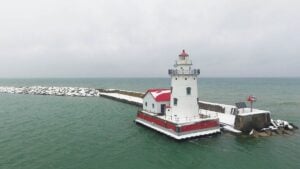 A 98-foot steam tug that blew apart 152 years ago when its boiler exploded, killing all five of its crew and a sailor on a schooner some 300 feet away, has been found 225 feet down in Lake Huron off Harbor Beach, Michigan, its bow and stern intact and the middle of the hull simply goneIndustry · 2 hours ago
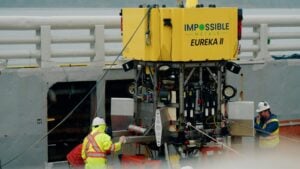 An American seabed drone went more than 13,000 feet down in the Pacific, deeper than the Titanic, and picked potato-sized metal nodules off the seafloor one at a time, skipping any with life on them, then floated about a pound back up with no pipe to its shipIndustry · 2 days ago
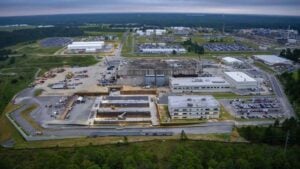 A 400,000-square-foot nuclear building left unfinished in South Carolina has been stripped of its ducts, piping, tanks and gloveboxes to be rebuilt as a factory for at least 50 plutonium cores a year, and a structure first due a decade ago now won’t be done for another 12 yearsIndustry · 2 days ago