
Big nuclear plants have a reputation, and it isn’t a flattering one. They run years late, blow past their budgets, and somehow never seem to get any cheaper no matter how many a country builds.
The whole point of building two at the same time is to break that pattern. Make every expensive mistake once, on the first reactor, then run off a copy and let the savings stack up.
Britain is now the clearest test of that idea anywhere in the West. It’s building two giant nuclear plants at once, the first time it’s done that in a generation, and the second one is a deliberate photocopy of the first.
That second plant is Sizewell C, on the Suffolk coast. It’s fully funded, it’s two years into construction, and the same 550-ton steel its sister plant just bolted into place is already being forged for it in France.
The plan is to build it once, then run off a copy
Britain has two of these plants going right now. The first is Hinkley Point C, in Somerset, where a pair of reactors are deep into construction. The second is Sizewell C, a couple hundred miles away on the east coast, sitting right next to the old Sizewell B.
Here’s the trick: Sizewell isn’t a new design. It’s the same plant as Hinkley, almost part for part. Same European Pressurized Reactor, same layout, same suppliers, the same teams expected to shift across as Hinkley winds down.
EDF, the French state energy company building both, calls this approach “Build and Repeat.” The pitch is simple. The first plant is where you swallow the cost of every first-time mistake. The second one is supposed to be boring, and boring is cheaper.
It’s also why the reactor next door matters. Sizewell B came online back in the mid-1990s, and Britain hasn’t finished a nuclear plant since. Hinkley is the first in a generation. Sizewell is the second, and the entire bet rides on it being a faithful copy.
Both are big machines by any measure. Each plant runs two reactors rated at 3.2 gigawatts combined, enough for roughly six million homes, with a working life of about 60 years.
Hinkley just handed the copy plan its best proof yet
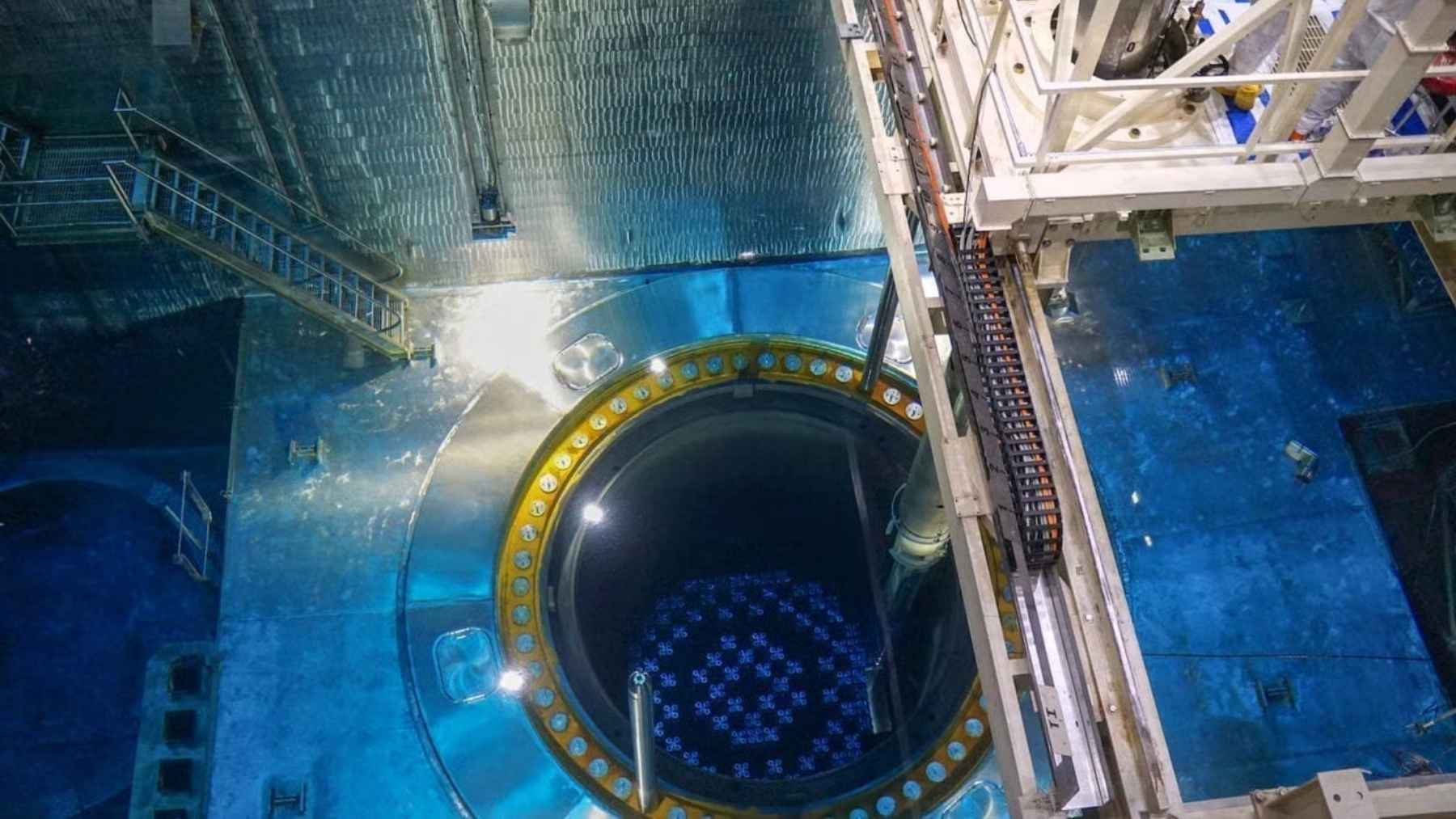
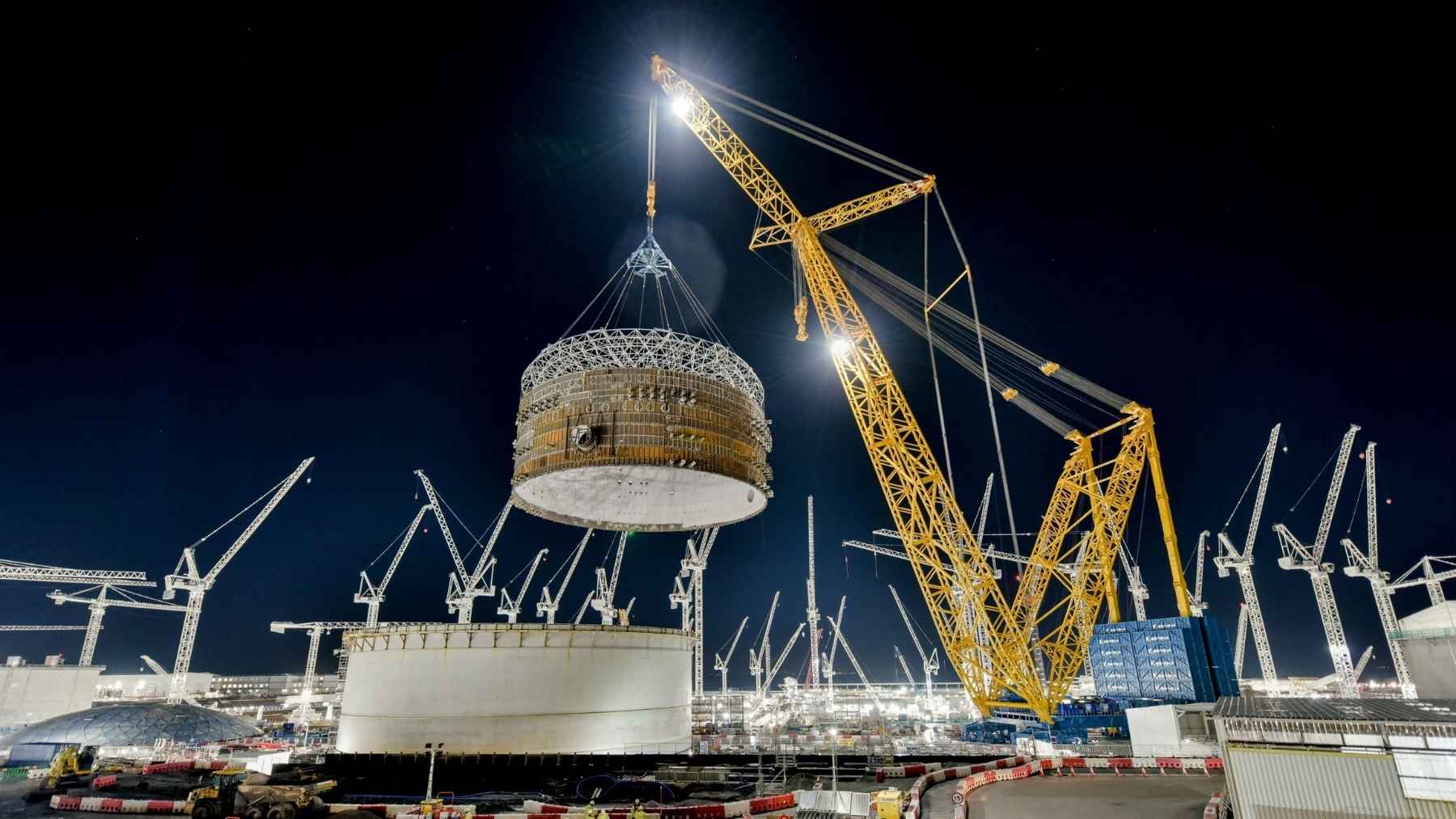
On June 1, the world’s largest land-based crane lowered a 551-ton steel cylinder into Hinkley’s second reactor building. That cylinder is the reactor pressure vessel (the thick steel heart where the fission actually happens), and it settled onto its mount with about 40 millimeters of clearance on each side.
The crane is a Sarens SGC-250 nicknamed Big Carl, rated to lift around 5,000 metric tons. The full lift was a feat on its own. What matters for Sizewell is what it represents.
This was Hinkley’s second vessel, not its first. And EDF says the second reactor is being built 20 to 30 percent faster than the first, with the same crews repeating an identical design. At the equivalent stage, Unit 2 already had three big heat exchangers installed where Unit 1 had none.
Then EDF said the quiet part out loud. Those gains, the company told World Nuclear News, “will benefit Sizewell C from the start.”
Sizewell’s giant parts are already glowing in a furnace
That’s not just talk about know-how. The physical hardware is moving too.
Each of Sizewell’s two reactors needs the same class of parts Hinkley is bolting down: a reactor pressure vessel in the 550-ton range, plus steam generators not far behind. You can’t order those off a shelf. Only a handful of forges on the planet can squeeze a steel ingot that big.
Framatome, the EDF-controlled outfit that forged Hinkley’s vessels, is already making Sizewell’s. According to Nuclear Engineering International, forging of Sizewell’s heavy components is underway at its French plants in Le Creusot, Saint-Marcel and Chalon. France is forging its own giant steam generators for a separate batch of reactors at the same time.
The strategy is to get as much of this done off the construction site as possible. At a Public Accounts Committee hearing on June 16, Sizewell C chief executive Nigel Cann told MPs he wants to “modularise as much as possible” before the first foundations go in, pulling welding and assembly into factories so the on-site work moves fast.
He pointed to a one-million-square-foot warehouse in Orwell already standing by for equipment, and 11 kilometers of new rail running material straight onto the site. Cann told the committee he expects two trains a day by the end of June and four a day by the end of the year.
It’s supposed to land about 20% cheaper than the first one
Sizewell C is fully funded, which took a while. The government signed off on the final investment decision in July 2025, and the project reached financial close that November, locking in a roughly £38 billion budget.
The money side is a genuine first. Sizewell is the first nuclear plant anywhere financed on Britain’s Regulated Asset Base model, where consumers chip in through their electricity bills during construction instead of waiting for the plant to switch on. The UK government holds the biggest stake at about 45 percent, alongside Canada’s La Caisse, Centrica and EDF.
It also signed up its fuel early, with a supply deal through Urenco and a long-term fuel fabrication contract with Framatome.
All of which feeds the headline number: Sizewell’s baseline build cost is pegged about 20 percent below the cheapest estimate for Hinkley, on the strength of the shared supply chain and lessons already paid for.
Two years into construction, there are roughly 2,000 people on site on a normal day, double the count from a year earlier. The project has handed out close to £1 billion in local contracts, promised 70 percent of its build value to UK firms, and committed to 1,500 apprenticeships. It aims to ship 60 percent of construction materials by rail and sea to keep trucks off local roads.
Where the copy bet could still go wrong
None of this makes it a sure thing. Hinkley itself is the cautionary tale, running years late and far over its original budget, and a copy that inherits the design also inherits the risk of repeating it.
In May, the National Audit Office dug into how Sizewell is financed and was blunt about the trade-offs. The model leans risk onto taxpayers and bill-payers, and it found private investors stand to earn returns the report called “high,” up to around 13 percent. Households are already paying, a few pounds a month now, rising as the build goes on.
MPs noticed. At the June hearing, members pressed Cann and energy officials on how openly they’ll flag cost overruns before they balloon, with one warning the committee not to get blindsided “some way down the line.” Asked whether he’s confident Sizewell lands on time at its £40.5 billion regulatory cost, Cann answered with a single word: “Absolutely.” He also admitted there’s work to do to get there.
It isn’t universally loved on the ground, either. Campaign group Stop Sizewell C is still pushing for the full business case to be published, and the site sits next to the RSPB’s Minsmere reserve on a stretch of coast that has been eroding fast.
The next few years are the actual test
So Britain has talked itself into the same gamble twice over, on purpose. The whole case for Sizewell is that the second time is easier, that a near-identical plant, fed by parts already in production and crews who have done it once, skips the worst of the pain.
The forgings coming out of those French plants are the first real read on whether that holds. If the copy lands faster and cheaper than the original, “build it twice” stops being a slogan and starts being a plan. If it doesn’t, Britain just signed up to overrun two mega-plants instead of one.