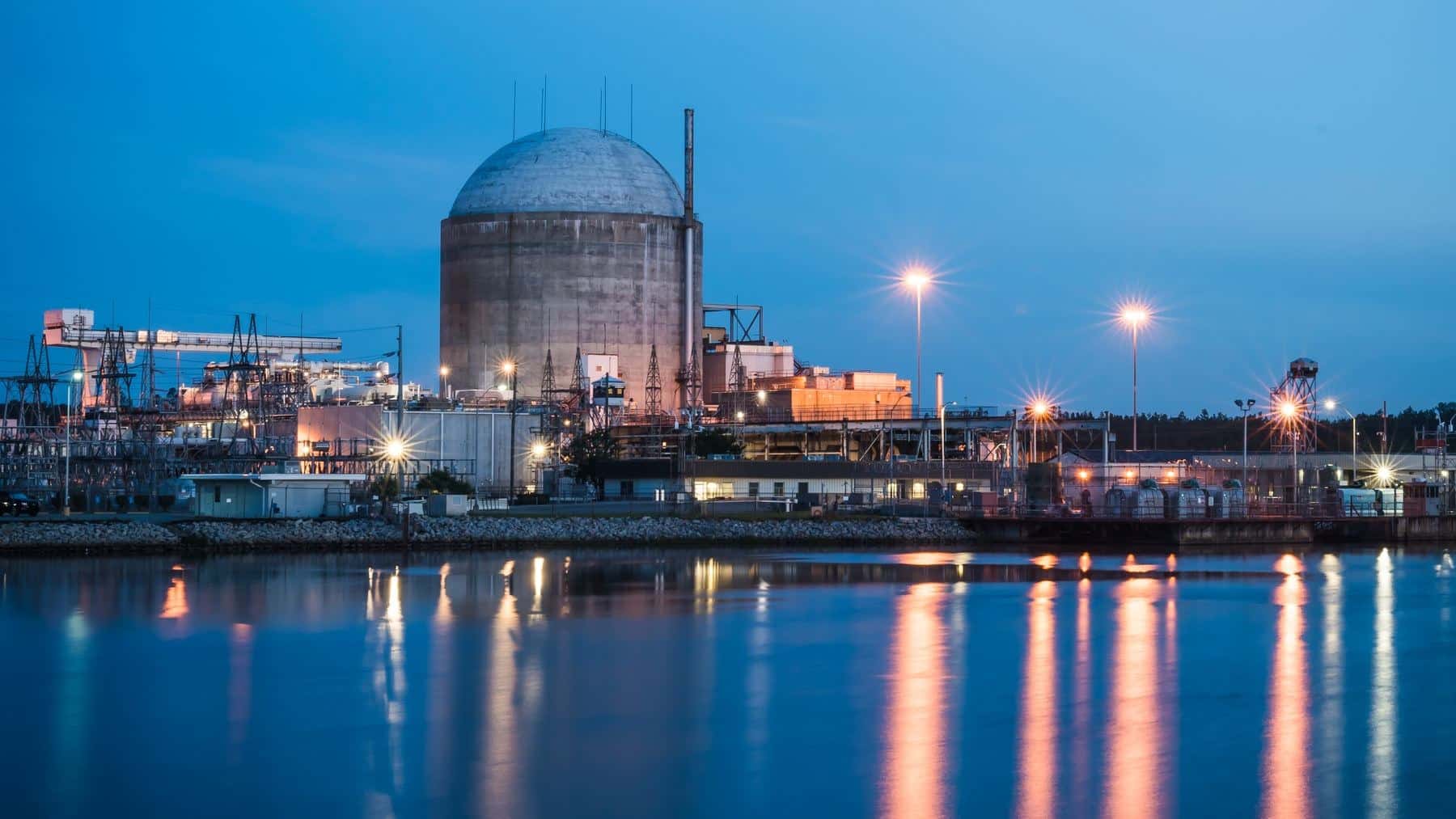

If you see the words “nuclear plant” and “emergency” in the same headline, you’re probably bracing for something pretty bad. I get it. But the emergency declared at Duke Energy’s Robinson Nuclear Plant in South Carolina on Saturday, November 7, was on the bottom rung of a four-rung ladder, and what pushed the plant onto it was basically a stopwatch.
Fire alarms went off at the plant near Hartsville at 2:48 p.m. local time, according to the event report Duke filed with the Nuclear Regulatory Commission. The fire was on the insulation of reactor coolant pump “B”. Operators secured the pump, which in plant-speak basically means they shut it off, and the plant’s own fire brigade showed up.
The brigade put the fire out with a fire extinguisher at 3:15 p.m.
That’s 27 minutes from the first alarm to the fire being out. And at a nuclear plant, a fire that’s still going after 15 minutes isn’t just a fire anymore. It’s an emergency declaration, whether anyone likes it or not.
So what is a reactor coolant pump?
If you strip away the uranium and the concrete, a reactor like Robinson is a very expensive way to boil water. The fuel in the core heats water that’s kept under so much pressure it can’t boil. That hot water then travels through big heat exchangers called steam generators, where it boils a separate supply of water into the steam that spins the turbine.
The reactor coolant pumps do the pushing. They’re pretty huge electric pumps that keep that pressurized water moving in a loop between the core and the steam generators, carrying heat away from the fuel. Robinson is a Westinghouse three-loop design, according to the NRC, so it has three of those loops and three of those pumps. Pump “B” is one of them.
The pump casing holds the same hot water as the rest of the loop, so it’s wrapped in insulation. That insulation is what burned. The 759-megawatt plant (that’s Duke’s figure) has just the one reactor, which the NRC cleared in April to keep running through 2050. I couldn’t find a published weight or size for its coolant pumps, though, so I’m not going to guess.
What started the fire? I can’t tell you. The NRC report doesn’t give a cause, and I couldn’t find a public statement from Duke about the fire either. We also don’t know whether pump “B” or its motor took any damage, how long it’ll be out of service, or whether the NRC plans to send inspectors beyond the resident inspector who’s already assigned to the plant.
There’s a 15-minute rule for fires at nuclear plants
Every US nuclear plant has to keep a list of emergency action levels. It’s basically a rulebook of specific conditions that automatically put the plant into one emergency class or another, so no one’s left making a judgment call in the middle of a bad afternoon.
Robinson’s rulebook includes one numbered HU4.1. The NRC report cites it directly, saying the plant declared an Unusual Event at 3:00 p.m. “due to a fire not extinguished within 15 minutes.”
If you’re doing the math, that’s only 12 minutes after the alarms. The report doesn’t say when the plant started its 15-minute clock, and that’s not something I can work out from what’s been published.
Frankly, I think a rule that blunt is a good thing. No one has to argue about whether a fire is serious enough while it’s still burning. You hit 15 minutes, you declare, and you let the regulators decide later whether it was a big deal.
An Unusual Event is the mildest emergency there is
The NRC has four emergency classes, and the Unusual Event is the lowest. Above it sit Alert, Site Area Emergency and General Emergency, in that order. The agency describes it as something that might chip away at plant safety, and it doesn’t expect a radioactive release that would need a response outside the plant at that level unless things deteriorate further.
Which means, as nuclear emergencies go, this is pretty much the kind that mostly generates phone calls. And there were plenty of those. State and local authorities and the NRC’s resident inspector were notified, and word also went out to a string of federal offices, including FEMA and CISA, according to the report.
Reactor coolant pumps sit inside containment, the thick concrete-and-steel building wrapped around the reactor, which is why the report bothers to mention it. Duke told the NRC that primary containment was set, and that neither the pressure nor the temperature inside it moved in any noticeable way. The plant also posted a reflash watch, which is exactly what it sounds like: someone stays put and makes sure the fire doesn’t come back.
The plant called off the Unusual Event at 3:47 p.m. American Buildout, a trade site that covered the fire on Monday, says no injuries were reported. The NRC report doesn’t mention any.
Why didn’t the reactor scram?
If you’ve been following our nuclear coverage, you’ve probably seen the word “scram” a lot. It’s the emergency shutdown where control rods drop into the core and stop the chain reaction within seconds. It’s what happened at Arkansas Nuclear One earlier this month, when a lightning strike knocked out every coolant pump on Unit 2 while it was running.
Robinson didn’t scram, and the reason is pretty simple. There was nothing to shut down.
The NRC report lists Unit 2 at 0% power in hot standby both before and after the fire, and it says the reactor wasn’t critical. Hot standby basically means the reactor isn’t making any power, but the plant isn’t cold either. So the fire didn’t trip anything. The reactor was already parked when the alarms went off.
That’s also a slightly different picture from the last time we wrote about Robinson. On October 29, we covered an ultrasound inspection that found a flaw in a pipe elbow near one of the pressurizer’s safety valves, while the unit was offline with its fuel out of the core. Neither Duke nor the NRC has publicly said whether that elbow has been dealt with, so I’m not going to guess what the plant was working on when the pump insulation caught fire.
It’s the second fire at a US plant this year
American Buildout, citing NRC records, counts Robinson’s as the second reported fire at a commercial nuclear plant in the US this year. The first was at DTE’s Fermi 2 in Michigan on May 18.
I pulled the NRC report on Fermi, and it’s almost the mirror image of Robinson’s. That fire was on the isophase bus ducts below the main generator, which are big enclosed electrical conductors that carry power away from it. The reactor was running at 84% power, operators manually scrammed it at 6:07 p.m., and the crew confirmed the fire was out at 6:10 p.m. That’s well inside 15 minutes, and Fermi’s report went in as a non-emergency notification.
So at Fermi, a fire that was out three minutes after the scram still ended with a reactor coming off the grid. Robinson had one that lasted long enough to trigger an emergency declaration, and the reactor didn’t have to do a thing. That arguably makes Fermi’s day the more dramatic of the two, even though Robinson’s is the one with “emergency” in the paperwork.
So if you live near Hartsville and you’re wondering whether the plant’s back on, the short answer is not yet. The NRC’s November 9 power reactor status report still had Robinson 2 at 0% power.