
West Potomac Park is one of the most scenic tourist spots in Washington. It’s the stretch of green holding the Lincoln Memorial, the cherry trees, and the paddle boats on the Tidal Basin. But it’s also the spot DC Water picked to launch one of the biggest tunneling machines ever put to work under the city, and that pick came with a catch. The shaft they could dig there wasn’t big enough to take the machine in one piece.
So they built her at the bottom of the hole instead.
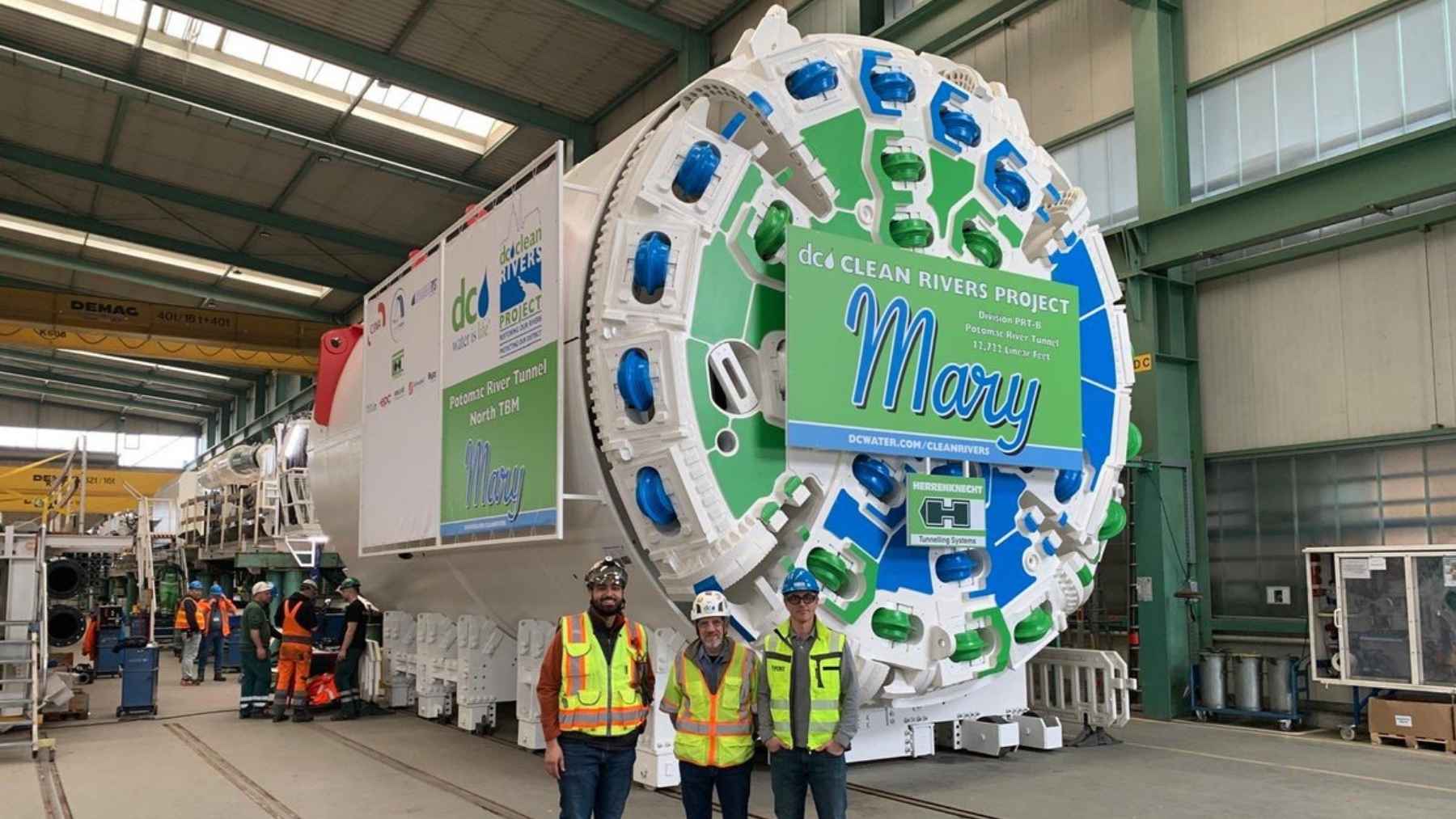
Her name is Mary, and she’s the definition of “you never know what people are doing in their own home.” Well, under your home. She’s a Herrenknecht machine with a 21-foot cutterhead, 1,200 tons of steel stretched across 700 feet of shields, motors, and trailing support cars. She’s digging the Potomac River Tunnel for DC Water, an $819 million project that starts under West Potomac Park. On August 27th, the utility reported that the final section had been lowered into the shaft and connected, according to Tunnel Business Magazine. Mary is now, officially, all there.
At this point, you may be picturing a giant drill. Well, you’re about a tenth right. You’ve probably heard of the cutterhead, but it’s basically just the front door. This part rides the back-up train: gantry after gantry of power gear, hydraulics, ventilation, and the equipment that grabs precast concrete segments and builds the tunnel wall as she moves, thanks to a drill bolted to the front.
So why assemble a 700-foot machine underground?
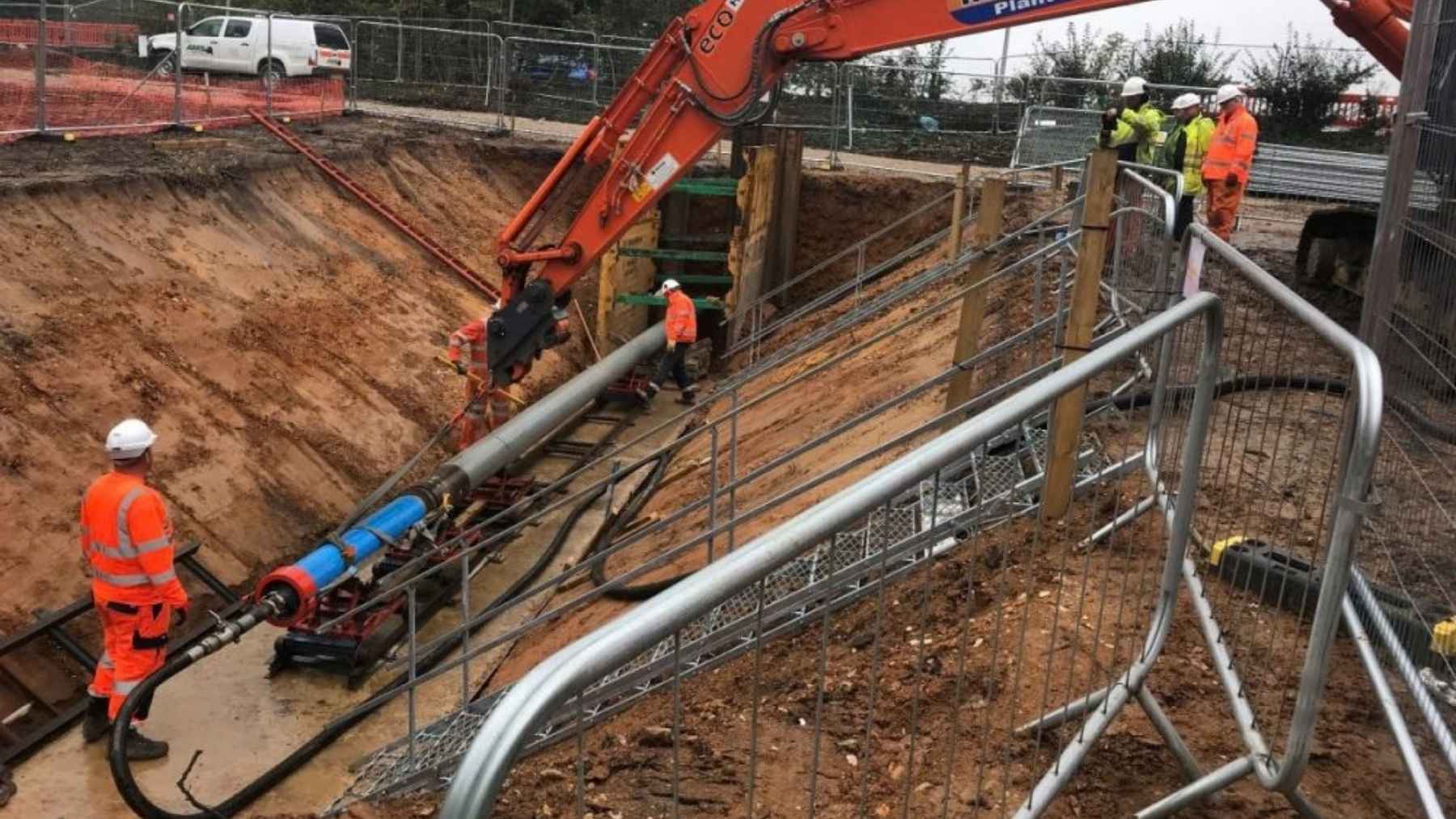
Normally, you’d lower a tunnel boring machine into its launch shaft in a handful of very large pieces, bolt her together at the bottom, and send her off. West Potomac Park didn’t allow for that. Because of Mary’s size and the cramped launch site, the complete machine couldn’t go down the shaft whole, so the team assembled her progressively underground, as The Tunnelling Journal reported. Each gantry, around 30 tons, came down by crane, got hauled into the tunnel, and was hooked to the one ahead of it.
Mary didn’t sit still for the process, either. She made her first cutterhead turn back in April with only her front end attached, and the rest of her showed up behind her, one crane lift at a time, while she dug the opening stretch. The hole she went down is about 100 feet deep.
So why not just dig a bigger hole?
As I previously mentioned, this is a beautiful, scenic park. Full of tourists. DC Water hasn’t itemized the constraints, but you can read them off a map. The launch site is a sliver of parkland pinched between the river and the monuments, and nobody hands over more of that ground for a wider shaft. Assembling her down the hole can’t have been the fastest way to do it, but it meant the park above stayed a park.
She digs 350 feet, then parks for more than two months
The ground right beside the Potomac is the soft stuff: clay and river-laid soil, wet and happy to squeeze into any opening you cut through it. That’s why Mary launched as a slurry machine. A slurry TBM pumps pressurized fluid against the face she’s cutting, holding the ground up so it can’t collapse into the machine while she works.
Most of her 2.4-mile route north to Georgetown University is a different animal. It’s hard bedrock, and hard rock doesn’t need holding up so much as it needs breaking. However, Mary was configured primarily for that rock, which leaves her a muddy opening act to get through first. The plan, per The Tunneling Journal, is to dig about 350 feet past the assembly point, stop, and spend more than two months converting from soft-ground to hard-rock tunneling. The whole changeover occurs while the machine remains underground.
Parking a machine you just spent months putting together sounds like a defeat at first. But it’s been baked into the schedule from the start, likely because it’s smarter than the alternative. That alternative is a compromise machine that’s mediocre in both kinds of ground for 2.4 miles. Two-plus months of standing still is a pretty reasonable price for the right teeth.
Why Washington is spending $819 million on a sewer pipe
Washington, like many older American cities, routes sewage and stormwater through the same pipes. On a dry day, all of it flows to the treatment plant. And nobody thinks about it. In a hard rain, the pipes fill past capacity, and the overflow goes where gravity sends it, which is the river.
RiDC Water’s own accounting claims there’s about 650 million gallons of raw stormwater-and-sewage mix reaching the Potomac in a typical year. This is spread across roughly 74 overflow events. That’s why they need the tunnel: a 5.5-mile storage pipe, 105 feet down at the stretch visitors have toured, catches the surge during storms instead of letting it hit the river. DC Water expects the finished system to cut overflow volume by 93% and drop those 74 events a year to four.
Mary’s 2.4 miles are only the northern half of the job. Her sister machine, Emily, takes the southern 3.1 miles, heading for Joint Base Anacostia-Bolling, where the new pipe ties into the Anacostia River Tunnel that’s already in service, and between the two of them, the tunnel runs its full 5.5 miles. We’re talking about one of the largest infrastructure projects the District has going, and most of it will never be seen by anyone who isn’t paid to be down there.
Emily just got a bottle of tap water to the face
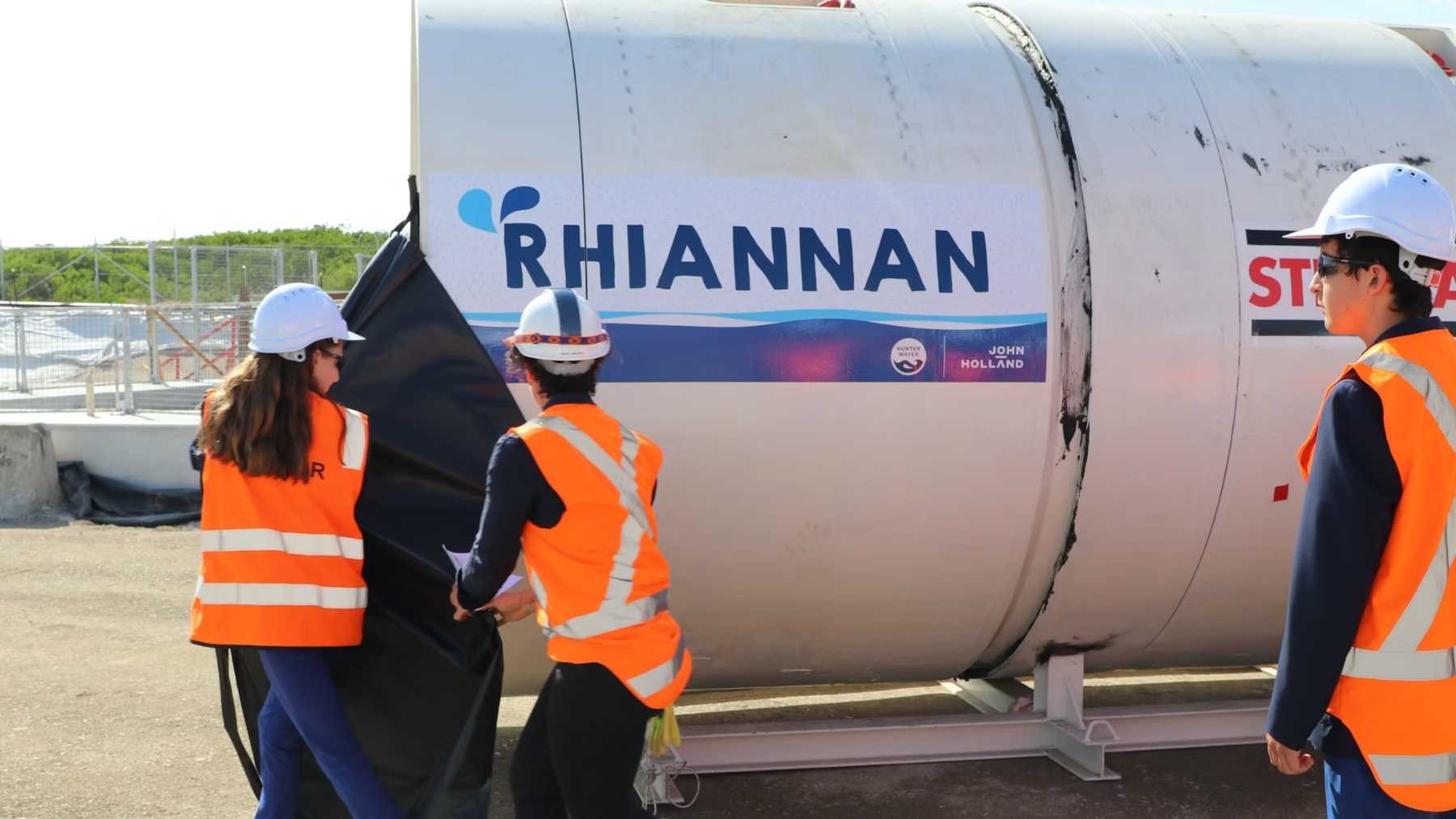
On September 19th, DC Water christened Emily at the site. Interim General Manager Matthew T. Brown did the honors with a bottle of the city’s own tap water, smashed against her front end, which strikes me as the most on-brand champagne substitute in the history of christenings. The ceremony rolled into a Community Day, with residents and families heading about 105 feet down to walk the tunnel. Brown said the event was about “giving our community a chance to see the remarkable work happening beneath the city.”
Emily hasn’t started digging yet. Crews will soon lower her underground, DC Water says, and the utility hasn’t published a date for her first push. She was built for the softer ground on the southern run, so she skips the two-month conversion her sister signed up for.
If you’re wondering where these quaint and antiquated names came from, both machines honor Mary and Emily Edmonson, sisters who fled slavery down the Potomac in 1848 and went on to become icons of the abolitionist cause. That’s a pretty good pair of names to put on machines spending the next few years working under that exact river.
Before any of the ribbon-cutting, Mary had about 350 feet of soft ground left in front of her, then her two-month stop to trade river teeth for rock. DC Water expects the finished tunnel to go into service in 2030.