- 2 MONTHS AGO · ENERGYNearly 12,000 solar panels raised 10 to 13 feet over a blueberry field went live in eastern Germany, set high enough for farm machinery to pass underneath, and before the first post went in, ordnance crews pulled hand grenades out of the soil the bushes now grow in
- 1 MONTH AGO · ENERGYA 4,800-ton platform was installed off England and Wales to send carbon dioxide down into three emptied gas fields through a pipeline that carried natural gas the other way, and its first phase can store nearly 5 million tons a year, what close to a million gas cars put out
- 1 WEEK AGO · ENERGYA 426-foot ship built to lay internet cable across oceans can now carry about 4,400 tons of power cable on two giant turntables, and it has started unspooling 311 miles of it across the seabed of a British wind farm to plug 197 turbines into two converter stations out at sea
- 22 HOURS AGO · ENERGYA 350-mile power cable buried along a railroad from northern Iowa to northern Illinois is planned to carry 2,100 megawatts at 525,000 volts, and sites are being scouted in Iowa for a nuclear plant of up to 1,000 megawatts that would send its power east through it
- TODAY · THIS ARTICLEA 30-megawatt hydrogen plant fed by a wind farm in eastern Germany has made its first batch, and instead of trucks it will send the output through a 15-mile pipeline that used to carry natural gas toward a refinery, where a buyer plans to take about 3,300 tons of it
If you’ve ever driven past one of those little “Call Before You Dig” markers on a country road, you already know there’s a lot of natural gas pipe buried out there. People in the hydrogen business have been eyeing that pipe for years, because laying a brand-new line takes forever and costs a fortune. Now a group of German energy companies is actually putting some of it to work.
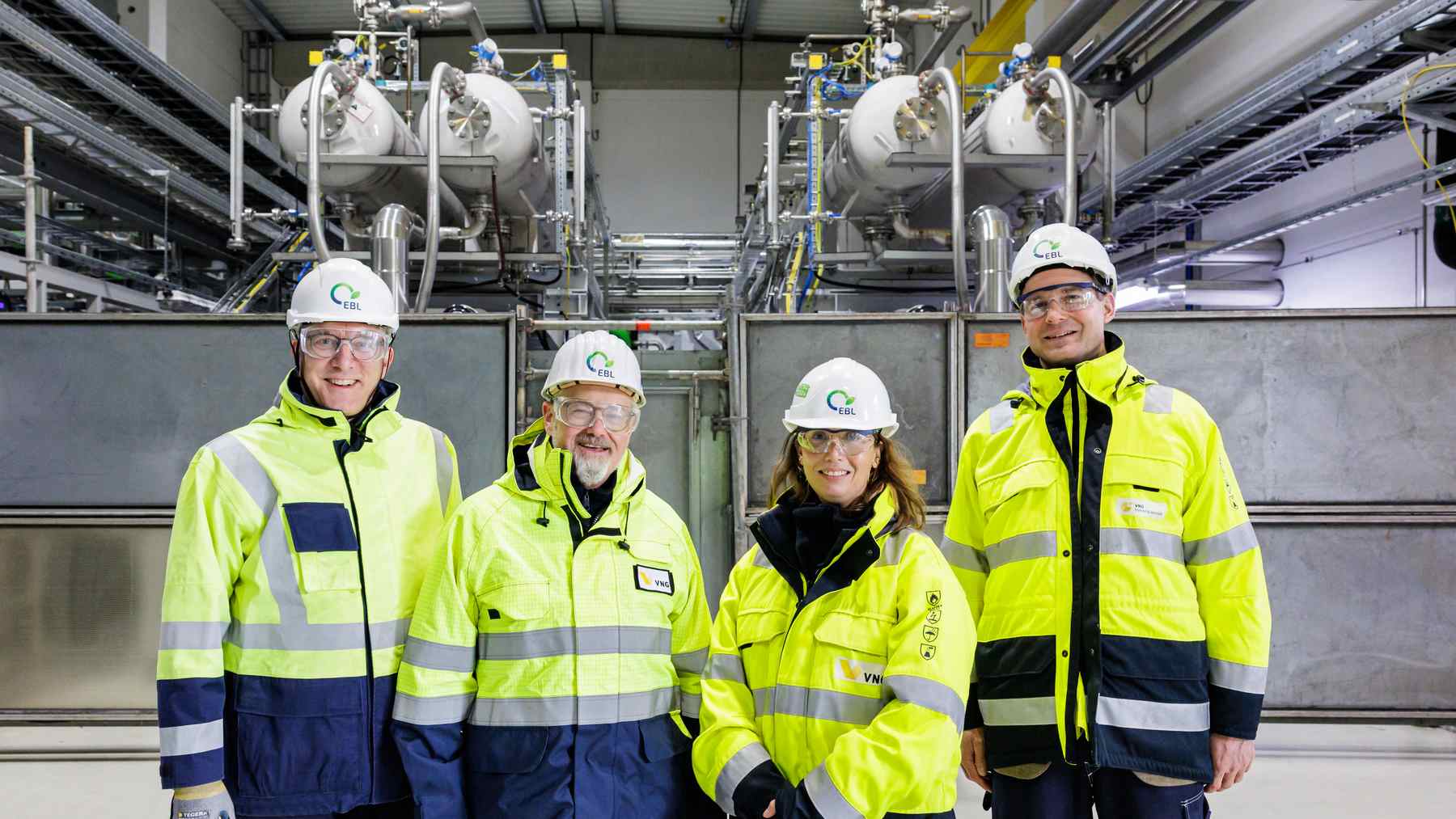
The project is called Energiepark Bad Lauchstädt, and it sits in Saxony-Anhalt, not far from Leipzig. On November 10, Uniper and VNG, the two companies behind its electrolysis plant, announced that the 30-megawatt electrolyzer had made green hydrogen for the first time. Uniper’s announcement bills Bad Lauchstädt as the first project to run the whole green hydrogen supply chain, start to finish, at industrial size. Basically, that’s making hydrogen with wind power, storing it, shipping it and selling it to industry, all in one setup.
That milestone took a while to reach. German news agency dpa reports the plant has been making hydrogen in trial runs since early October, so the November announcement was more of an official debut. VNG was also expecting first deliveries before the end of last year, and German engineering site ingenieur.de puts first production almost a year behind the original plan. Frankly, that’s pretty normal for a plant like this, but it’s still a bit of a wait.
So what does an electrolyzer do?
An electrolyzer is pretty much a fuel cell running in reverse. You push electricity through water, and the water splits into hydrogen and oxygen, which bubble off at two separate electrodes.
This one’s an alkaline unit, which means the water’s mixed with a caustic solution (think industrial-strength lye) that helps carry the current, while a thin separator keeps the two gases apart. It’s also pressurized, so the hydrogen leaves the stacks already squeezed. That’s handy if you’re about to push it into a pipeline, because you need less compressor work on the way out.
Sunfire, the German company that supplied the electrolyzer, built it as three 10-megawatt modules with two stacks each. A stack is the pile of cells where the splitting happens, so the plant runs six of them.
Can you really put hydrogen in an old gas pipe?
You’d think a pipe that’s carried natural gas for decades could carry anything. Hydrogen’s a pickier passenger, though. Its molecules are tiny, so they can slip through seals, valves and fittings that hold natural gas just fine. Hydrogen can also work its way into some steels and make them brittle, which engineers call hydrogen embrittlement. That’s a real worry in a high-pressure line, where the pressure goes up and down and small cracks can grow. Then there’s compression, since hydrogen carries a lot less energy per cubic foot than natural gas, so you’ve got to move a lot more of it.
So why not just truck it?
You could. A lot of hydrogen gets around in tube trailers, which are basically big racks of pressurized cylinders on a semi. But a refinery uses hydrogen around the clock, and a pipe doesn’t need a driver, a fuel stop or a parking spot at the gate.
ONTRAS, the regional pipeline operator, picked a line of roughly 15.5 miles that runs from the energy park to TotalEnergies’ refinery in Leuna. According to VNG, ONTRAS checked the condition of the line, upgraded it in several places, disconnected it from the natural gas grid and filled it with hydrogen before it got the official go-ahead to carry the stuff. Gunar Schmidt, ONTRAS’s managing director for operations and safety, pointed out at the time that the pipe was built in the 1980s.
VNG doesn’t spell out which upgrades those were, and I wish it did, because that’s exactly the kind of detail other pipeline owners would want to read. The line has carried hydrogen since April of last year, though. So the old pipe was ready long before the brand-new plant was, which is pretty funny when you think about it.
Most of the hydrogen stories we cover are about making the stuff, like a German rig that turns sunlight straight into hydrogen or a Saskatchewan well chasing natural hydrogen underground. Moving it is the less glamorous half, and it’s arguably the half that matters more here.
Wind doesn’t keep a schedule
Then you have the wind problem. An electrolyzer is happiest on steady power, and a wind farm can drop from full output to almost nothing in an afternoon. Ramping stacks up and down all day can wear on them, and expensive hardware sitting idle on a calm day doesn’t make anyone money.
The partners’ fix appears to be overbuilding the wind side. The wind farm hooked up to the plant is rated at around 50 megawatts, compared with 30 megawatts of electrolysis. Ingenieur.de reports that the extra capacity is there so the electrolyzer can run at full output for more hours of the year.
I’d guess the partners will learn more about running alkaline stacks on gusty power over the next year than a lab could teach them in five. That’s the whole point of a project like this.
Uniper puts the total investment at €210 million (about $234 million at the European Central Bank’s November 11 reference rate of $1.1127 per euro). €44 million of that (about $49 million) comes from Germany’s federal economy ministry through its “Reallabor der Energiewende” program, which roughly translates to “real-world laboratories of the energy transition.” That’s a lot of money for 30 megawatts. But it’s a test bed, so judging it on cost per megawatt is probably a bit unfair.
The project’s also supposed to cover storage, and VNG’s gas storage subsidiary is one of the partners. Uniper’s release doesn’t say where this hydrogen will be stored, though, and as far as I can tell that piece of the chain isn’t hooked up yet.
So who’s buying the hydrogen?
Uniper’s release doesn’t name the anchor customer. It does say TotalEnergies’ Leuna refinery is where the hydrogen will eventually go to work, and that’s where the pipeline ends, so you can probably connect the dots. Konstantin von Oldenburg, managing director of VNG Handel & Vertrieb, says that customer plans to buy roughly 3,300 tons next year and put it to industrial use.
Refineries go through a lot of hydrogen, mostly to pull sulfur out of diesel and other fuels. A lot of that hydrogen comes from natural gas, which releases carbon dioxide along the way. I couldn’t find a figure for how much hydrogen Leuna uses in a year, so I can’t tell you what share those 3,300 tons would cover.
Holger Kreetz, Uniper’s chief operating officer, said in the company’s release that “the key now is to ensure that the entire process chain operates reliably.” That sounds like corporate understatement, but he’s basically right. Making hydrogen once is a milestone. Making it every day, on wind power, through a pipe from the 1980s, is the real test.
Uniper and VNG expect the whole system to be fully up and running in 2027, which is also when the hydrogen is supposed to start going to industrial use.
 A 7.9-foot concrete pedestal cast in a factory and topped with a 3-foot-square rubber pad is how a small reactor plans to ride out earthquakes, and depending on the ground, one plant could stand on as many as 594 of them set between its foundation and the reactor buildingEnergy · 3 hours ago
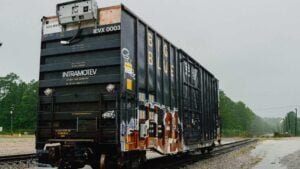 A 650,000-ton haul in 9,000 carloads has already been moved by railcars that carry their own batteries and roll along the rails with no locomotive pulling them, and the same self-propelled cars are now headed to a Texas Gulf Coast plant to shuffle freight cars around its tracksEnergy · 20 hours ago
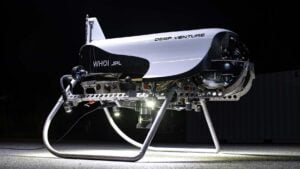 A 36,000-foot-rated underwater robot modeled on a deep-sea fish can land on the seafloor, take samples and map it in 3D, is light enough for a small team to launch from an ordinary research ship, and already went about 19,700 feet down off Bermuda ahead of a crewed diveEnergy · 21 hours ago