
If you’re someone with the luxury of commuting to work, you know things can get even more exciting when you’re stuck behind a truck with a “wide load” sign. If the truck bed has a prefab home, you can expect pilot cars, banners, and an en entire convoy doing 45 miles per hour, leaving traffic at a standstill. It’s a big to-do for a heavy load that’s about 50 tons.
Imagine the chaos on an American highway if that heavy load weighed 1,764 tons. Well, maybe don’t bother imagining that, unless you just want to make yourself mad. Instead, listen to how something like this was handled in Italy.
A rail project in Italy with a 1,764-ton machine faced a similar dilemma over the summer, requiring the machine to be taken apart, a private road built, and even a steel bridge dropped over a river along the way.
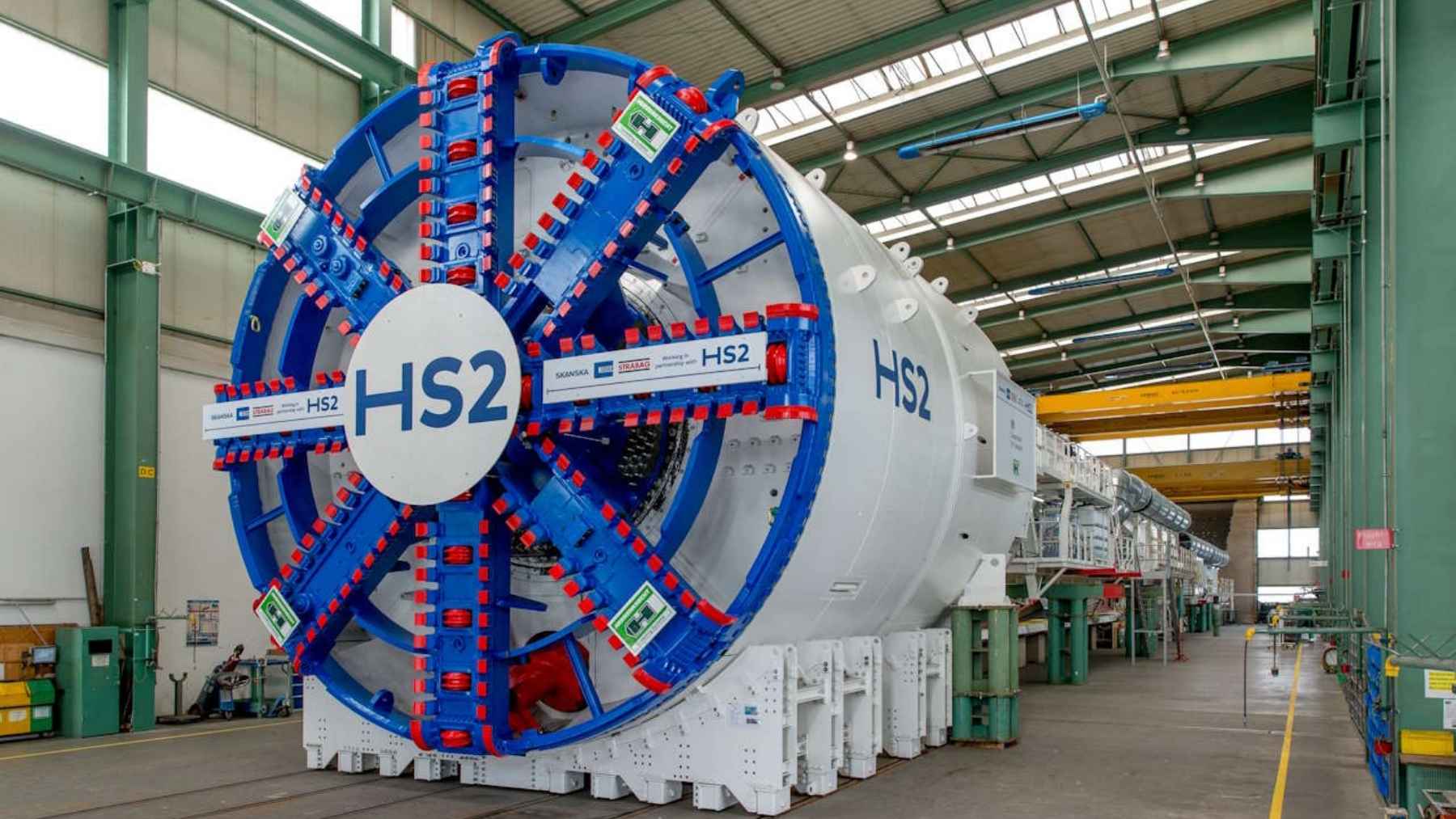
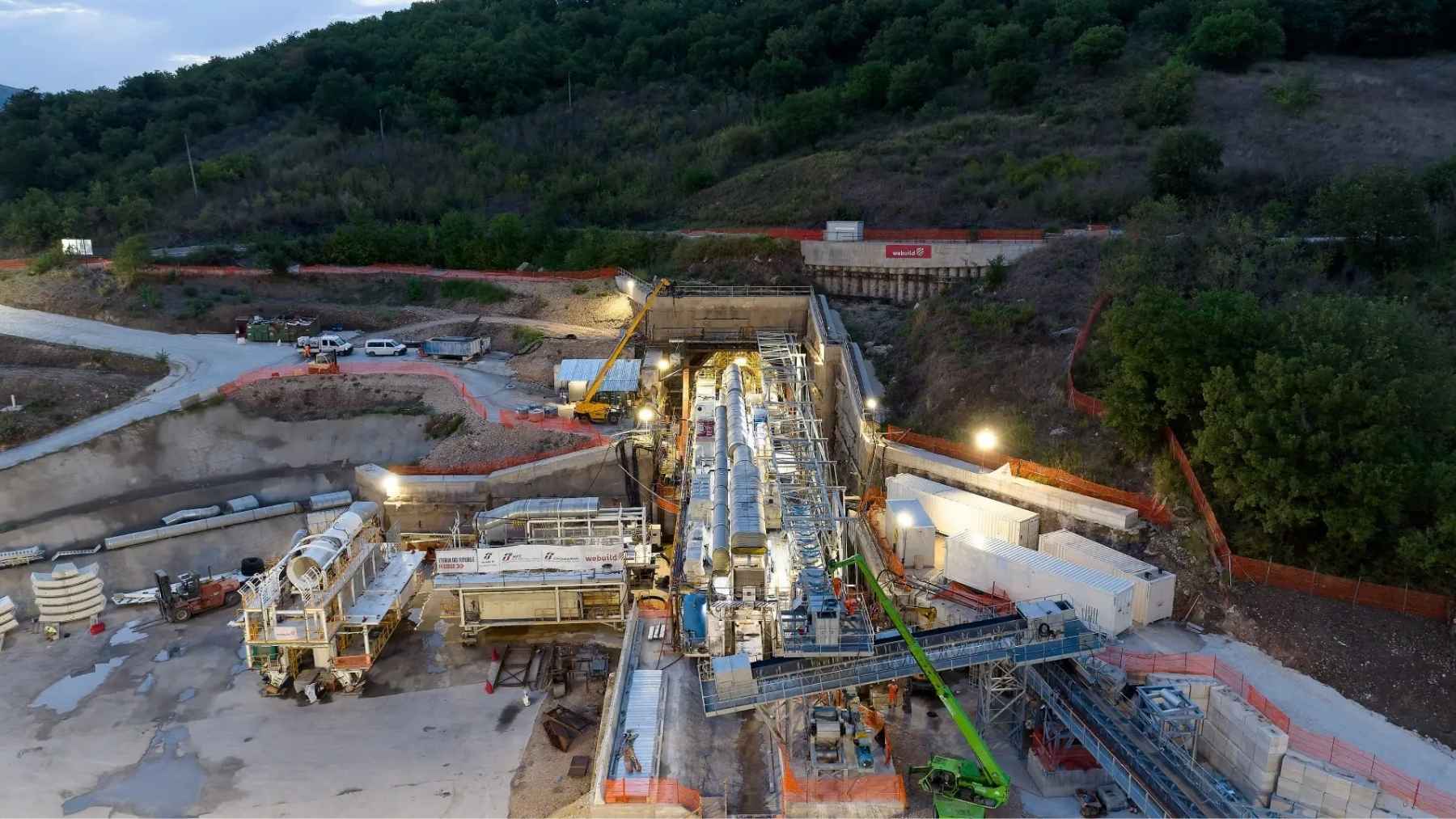
The machine is a tunnel boring machine named Aurora, and it’s been digging the tunnels for the new high-speed rail line between Naples and Bari. On September 25th, it started its second tunnel, near a hill village called Melito Irpino. The digging is somehow the least dramatic thing the machine has done this year.
So what exactly is Aurora?
I think it’s safe to say that a lot of us are new to tunneling. It’s not the most common weekend hobby. Tunneling is the process by which the TBM digs and finishes a tunnel simultaneously. The rotating head up front grinds away the ground, and the body behind it lines the fresh bore with precast concrete segments as it inches forward. The pace isn’t quick, but the hole comes out finished.
Every one of these machines is a descendant of the cast-iron shield that dug the first tunnel under the Thames two centuries ago; just like everything else on the road, they’ve just gotten bigger and a lot less reliant on humans.
Aurora’s a big one even by TBM standards. Webuild, the contractor building this stretch for Italy’s state railway group FS, puts the cutting head at 41 feet across and the total weight at 1,600 metric tons, which works out to 1,764 US tons. FS Italiane measures the machine at about 344 feet long, including the five support gantries it drags behind, while Webuild rounds it to 330 feet for the machine alone. Either way, it’s longer than a football field.
Power comes from 18 electric motors making a combined 6.3 megawatts. In car terms, that’s roughly 8,400 horsepower, or about 470 per motor, so every one of those 18 motors is putting out what’s basically modern Corvette power. And we thought Elon Musk’s four-motor Roadster claim was insane.
Aurora’s first assignment was the Grottaminarda tunnel, a 1.2-mile-long bore that it completed in 2024, per Webuild. The next tunnel on the line sits on the opposite side of the Ufita River valley, but a TBM can’t exactly drive itself over there.
Above ground, one of these machines has about as much road mobility as a grain silo, and it only ever advances by chewing through whatever’s in front of it. The crews also ended up building their own bridge for the crossing, which tells you what they thought of the existing options.
But what about Aurora? You can’t exactly leave her behind.
So how do you move it?
Something that big had to be broken down into sections, a job on its own when Aurora is larger than a football field. Each section was hauled across the valley between June 4th and June 8th, according to the Italian rail outlet Ferrovie.info. The sections rode on self-propelled modular transporters, which are basically remote-controlled, all-wheel flatbeds. An operator walks alongside, steering the whole platform, and the deck stays level while the ground does whatever it wants.
But even the rig was a beast in its own right. Webuild’s project page says the rig used here had 44 axles, and the route was a temporary, reinforced-concrete road laid just for the move, with a roughly 92-foot-long steel bridge dropped across the Ufita riverbed. FS Engineering, the firm supervising construction, says the total load came to about 1,800 metric tons once the support gear’s counted. Call it close to 2,000 US tons crossing a river in the space of five days.
How long was that temporary road? Depends who you ask. Webuild’s project page describes roughly 2,130 feet of concrete track, while FS Engineering called it a 1,640-foot route. I can’t tell you which measurement covers what, and I’d guess the two are slicing the haul route differently. Either way, making a bridge just for Aurora is dedication. I think this is the new “if he doesn’t build me a bridge, I don’t want him” mantra single women will be saying on TikTok. I mean, if he wanted to, he would.
On the far side, the entire machine was reassembled next to the new portal, and excavation officially kicked off on September 25th. Because this is rural Italy, the local parish priest came out and blessed the machine before it started digging, reported Il Mattino. This source also notes the section has been slowed over the years by landslides. Whether a 1,764-ton tunnel borer needs a blessing is above my pay grade. But with a project this insane, it probably doesn’t hurt.
The second tunnel is more than twice as long as the first
The Melito tunnel runs about 2.7 miles, against the 1.2 miles Aurora dug at Grottaminarda, and the planned route takes the machine as deep as 427 feet below the surface. It’s a single tube carrying both tracks, so trains run in both directions through the same bore rather than each direction having its own tunnel. That design saves you an entire second tunnel, at the price of needing a much wider hole. Hence the 41-foot head.
As it advances, Aurora will line the bore behind it with more than 22,200 precast concrete segments, and Webuild says more than 140 people will keep the machine running around the clock, seven days a week. TBMs haven’t been short of headlines this year either. Another one chewed a mastodon loose from a Virginia harbor bed, so a machine that’s merely crossing a river in pieces is having a fairly quiet summer by comparison.
The tunnel is one piece of the new Naples-Bari high-speed line, which crosses the southern Apennines. Tunnels do most of the work around these parts: nearly 70% of Aurora’s section runs underground, which is the kind of ratio you get when the geography won’t cooperate. A second machine (yes, there’s another!), Futura, finished the 4-mile Rocchetta tunnel in May after 18 months of digging, and the Naples-Cancello stretch of the same line opened to trains in July 2026.
Melito’s the last tunnel left to dig on this section, and Webuild says Aurora’s crew of more than 140 will now keep it grinding until the machine comes out the other side. I believe in you, Aurora. You’re the new girl boss.