
When it rains hard enough in Washington, the sewers under the capital do exactly what a 19th-century design built them to do. They fill past capacity, and the overflow runs straight into the Potomac. In an average year that works out to roughly 650 million gallons of stormwater mixed with raw sewage, according to DC Water, the utility that runs the pipes.
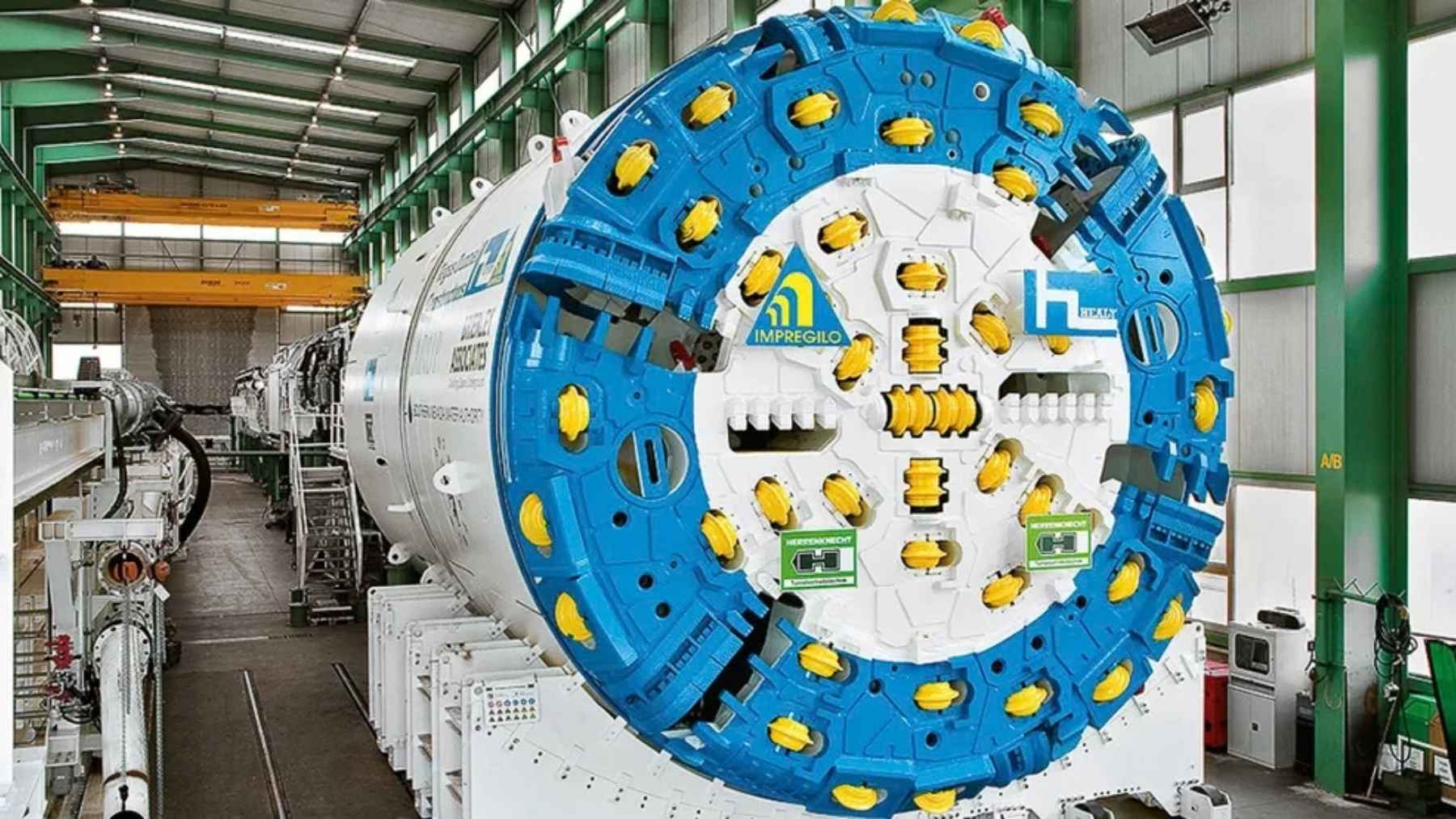
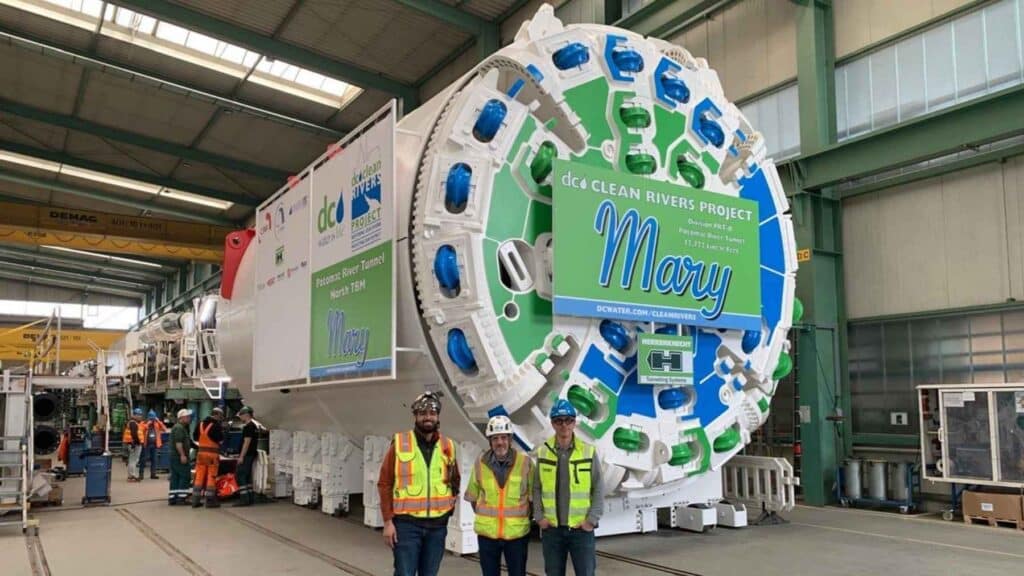
The fix isn’t a new law or another task force. It’s a 1,200-ton German machine named Mary, and on April 10 she started grinding her way north under the river.
Mary is one of two tunnel boring machines built for an $819 million job called the Potomac River Tunnel. Her run covers about 2.4 miles, from West Potomac Park up to the edge of Georgetown University, cutting through the hard bedrock under that part of the District. Her sister machine, Emily, reached Washington in late May and will head the opposite direction once crews finish putting her back together. Between them they carve a 5.5-mile tunnel with one job: keep the river from swallowing what the city’s sewers can’t hold.
Mary is a 1,200-ton machine built underground in pieces
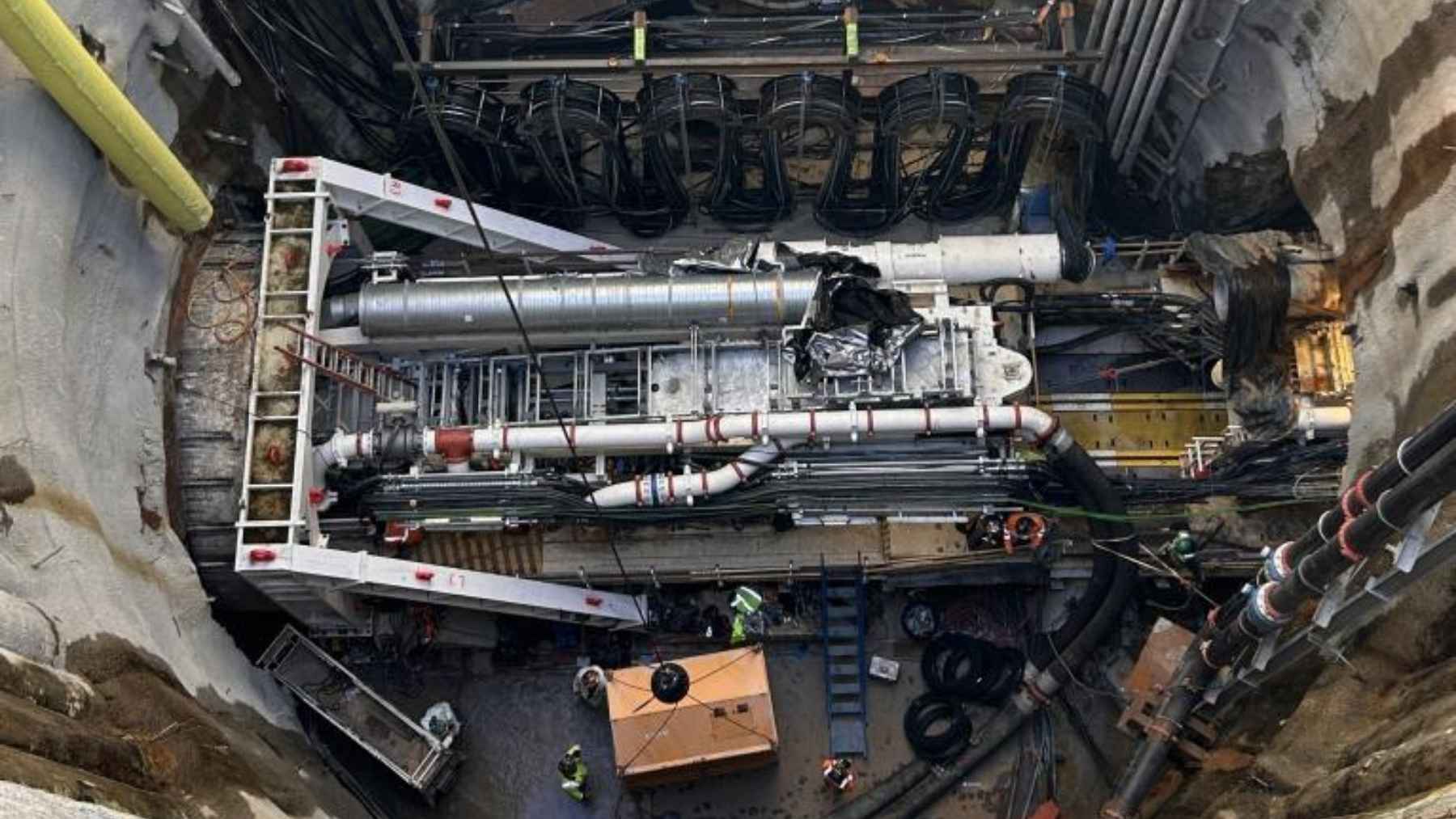
You don’t lower a machine like Mary into the ground in one go. Fully assembled she runs about 700 feet long, so crews built her in stages inside a starter tunnel roughly 100 feet below the surface, dropping the big components one at a time and joining them together down there.
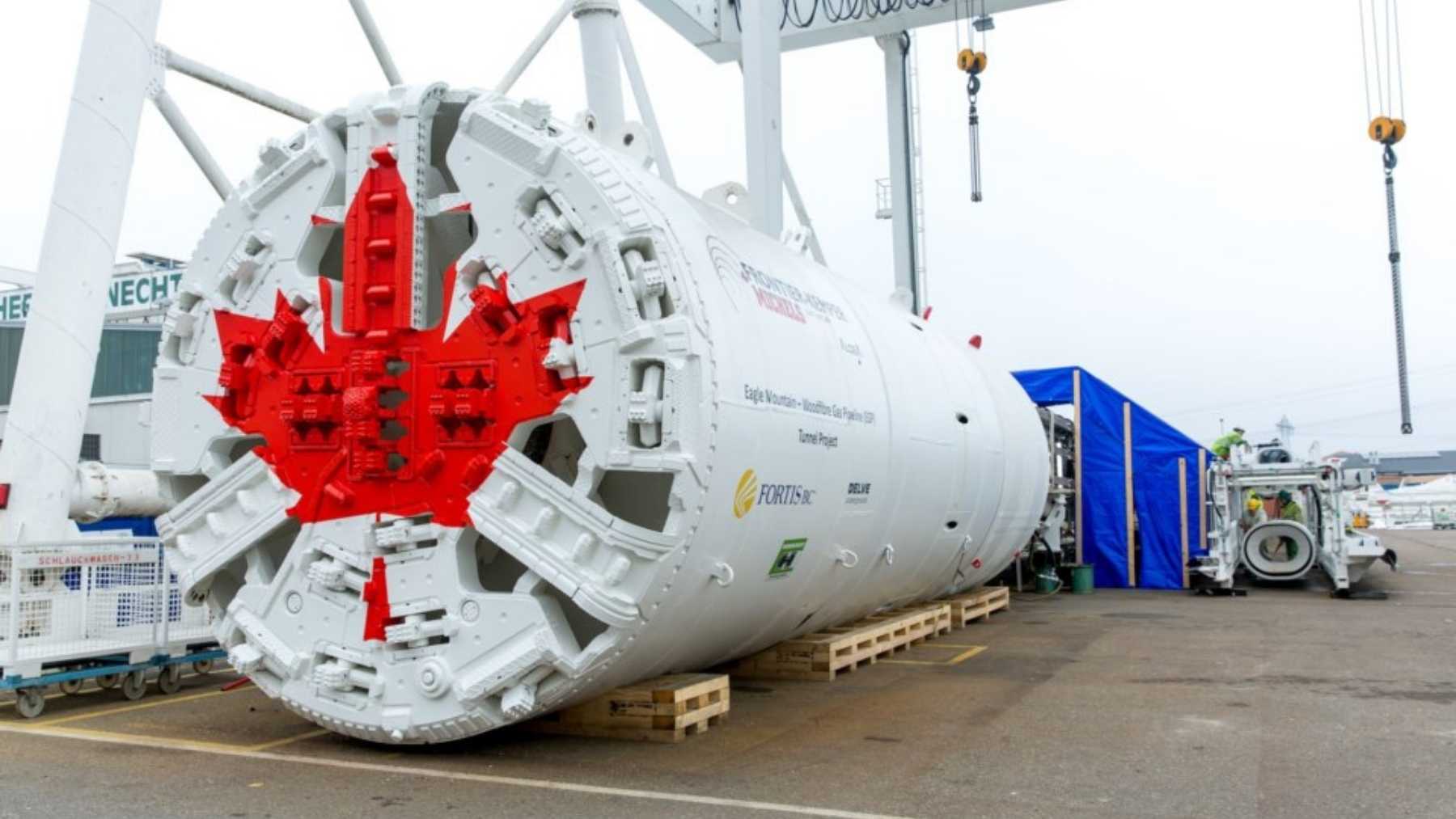
The front end does the actual work. Her cutterhead, a 21-foot drill-like disc weighing about 105 tons, spins against the rock face and shaves it away. Behind it, hydraulic jacks push the whole machine forward off a ring of precast concrete, and as Mary creeps ahead, crews build the tunnel wall behind her ring by ring. DC Water described the launch moment plainly: with the first turn of the cutterhead underground, “the machine pushed forward to begin tunneling.”
She was built by Herrenknecht, the German firm that also bored the earlier tunnels in DC Water’s Clean Rivers program. Mary is a serious piece of hardware, but she sits on the modest end of what these machines get. The 5,000-ton machine China ran under the Yangtze this year has a cutter head 54 feet across, and while most borers dig sideways, China even built a 500-ton machine that drills straight down. Mary’s assignment is narrower: one direction, one river, one very specific patch of bedrock.
The whole tunnel exists because of a legal deadline
Most of Washington runs on a combined sewer system, a single set of pipes carrying household sewage and street runoff together. It was a step up when it went in during the 19th century, the same setup cities like London and Berlin used at the time. The trouble is it can’t handle the volume anymore, so heavy rain forces the mix out into the river before it ever reaches a treatment plant.
The tunnel is DC Water’s way of catching that overflow. It stores the combined flow underground during a storm, then feeds it to the Blue Plains treatment plant once there’s room, instead of letting it hit the Potomac. DC Water expects it to cut overflow volume by about 93% and drop the number of overflow events in an average year from roughly 74 down to four.
None of this is optional. The work is tied to a 2005 federal consent decree between DC Water, the District of Columbia, the EPA, and the Justice Department, later amended in 2016, with a completion deadline in 2030. The Potomac tunnel is one of the last big pieces of a roughly $3.1 billion Clean Rivers effort, the same program credited with bringing the Anacostia River back from a similar state.
Emily just landed, and she’s built for softer ground
Emily took the long way to Washington. She was built and factory tested in Germany, then taken apart, shipped across the Atlantic, and hauled up from the Port of Baltimore for reassembly at the West Potomac Park site, which doubles as the launch point for both machines. According to DC Water, she rolled in early one morning in late May.
Once she’s back together, Emily digs the other half, about 3.1 miles south toward Joint Base Anacostia-Bolling, where the Potomac tunnel ties into the existing Anacostia River Tunnel. She isn’t a copy of Mary. The ground on the southern stretch is softer and more mixed, including the material under the river itself, so Emily is engineered to handle that and hold the surrounding earth in place as she moves.
That’s the reason for two machines instead of one. The geology changes along the route, and a borer tuned for hard rock behaves nothing like one built for soft, waterlogged dirt. Not every big tunnel even uses a boring machine. Norway is blasting a tunnel for ships straight through a coastal mountain the old-fashioned way, no cutterhead in sight. The right tool depends entirely on what’s in the way.
The machines are named after two sisters who tried to escape on this river
Mary and Emily aren’t random names. They come from Mary and Emily Edmonson, sisters who in 1848 boarded a schooner called the Pearl on the Potomac in one of the most famous escape attempts from slavery in the country’s history. The attempt failed and the sisters were sold south, but both were later freed and went on to become figures in the abolitionist movement.
DC Water leaned into that history. Before Mary started digging, Mayor Muriel Bowser blessed the machine with a bottle of DC tap water, a nod to an old mining custom of blessing a borer before it goes underground. It’s a small ceremony for a machine about to spend a couple of years chewing rock under a national landmark.
For all the ceremony, this is a slow story from here. Mary won’t break through for a while, Emily hasn’t turned her cutterhead yet, and the clean-river payoff DC Water is promising doesn’t land until 2030. What’s actually happening right now is narrower and more literal than any of that. A machine named after a woman who once tried to escape up this river is grinding north under it, one concrete ring at a time, while the argument about everything above ground carries on without her.