
Holtec has been promising a date for Palisades for about two years now. First, it was the end of last year, then early this year, then “when the plant is ready.” And on September 1st, the company told WMUK it was aiming for early next year and was on track for its contract.
Then it stopped giving dates altogether.
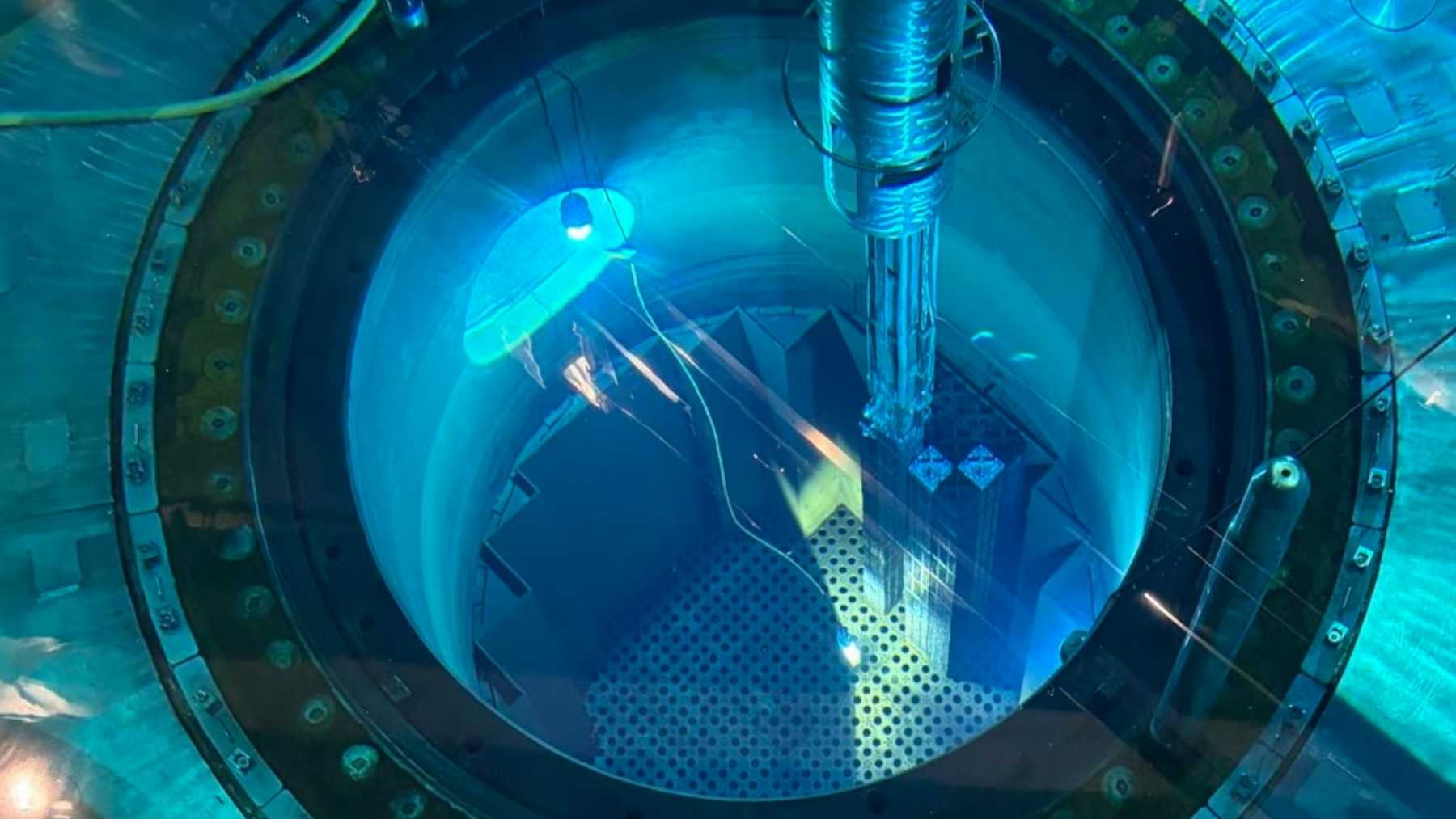
The reason? One 12-foot bundle of fuel rods that’s been leaning inside the reactor since August 30th. And five weeks later, it’s still leaning, because the tool to lift it out doesn’t exist yet.
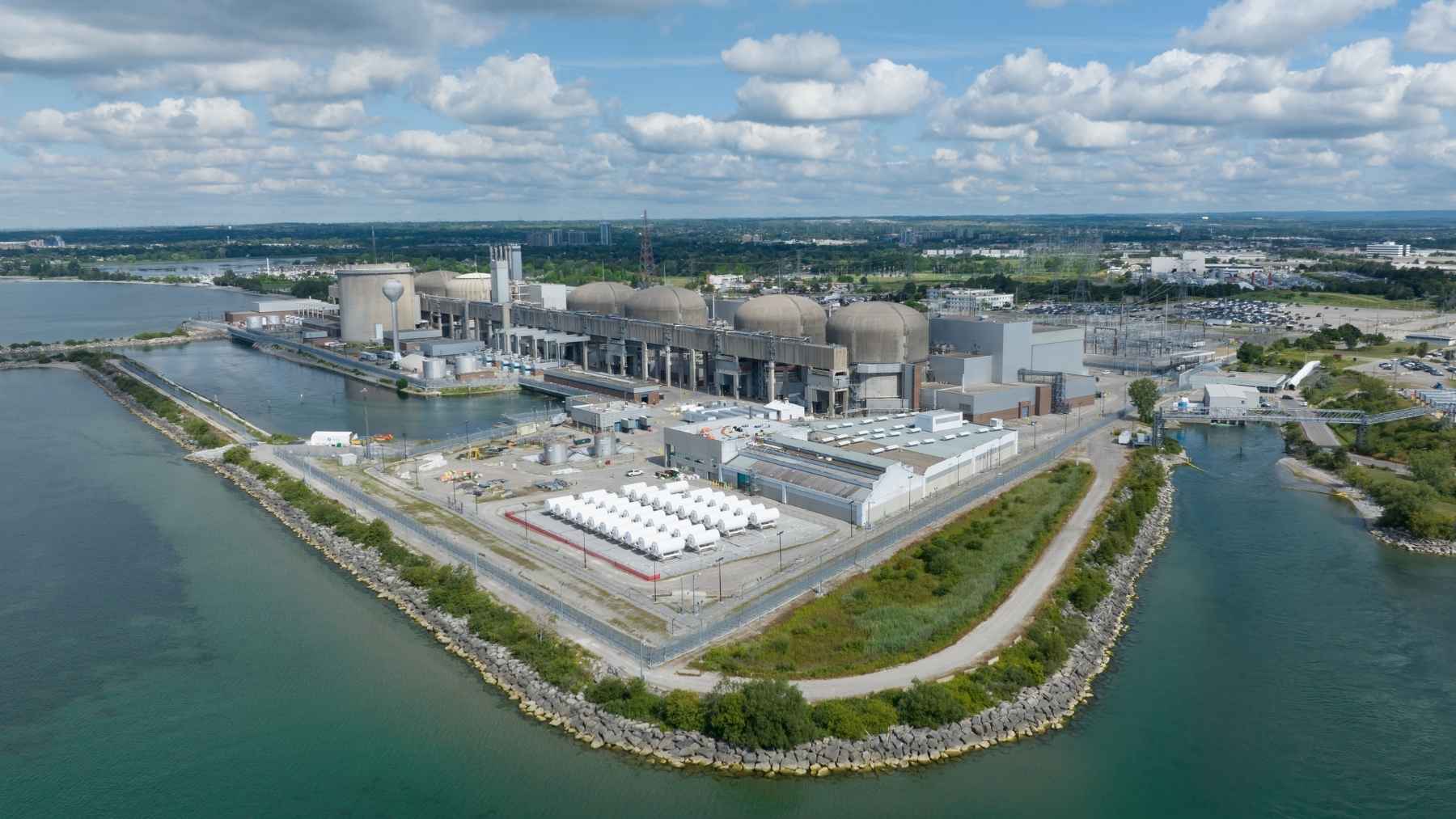
If you missed the first round of this, we covered it when Holtec confirmed the tilt on September 21st. The short version: Palisades, an 800-megawatt plant on the eastern shore of Lake Michigan that’s trying to become the first retired American reactor to come back online, started putting fuel back into its core on August 30th. Eight of the 204 assemblies were in the vessel by the next day. One of them, a partially used bundle from the plant’s last runs, tilted over after the loading machine had set it down and let go.
Loading stopped, and it hasn’t started again.
So what’s actually changed in two weeks?
Mostly, the people who weren’t talking have started talking. But you still won’t get a date out of any of them.
The Nuclear Regulatory Commission has now addressed it at least four times: to The National, to WWMT in Kalamazoo, to the Detroit Free Press, and to Exchange Monitor. Viktoria Mitlyng, the NRC’s senior public affairs officer for Region III, keeps landing on the same two points: the assembly was “tipped (not dropped),” and that tipping one doesn’t meet the threshold requiring a plant to file an event report with the NRC. The agency says it’s reviewing what happened, that its inspectors have watched every bit of fuel handling at Palisades from the start. And that whatever they find goes into a public inspection report.
That reporting threshold confuses a lot of people, so let me explain it the way I understand it. A nuclear plant must formally report to the regulator within hours of events such as a reactor trip or a release of radioactivity. A fuel bundle that’s seated in its slot and then leans over, with no release and nobody hurt, isn’t on that list. Holtec told the NRC anyway; the NRC agreed it didn’t need a formal report, which is why you heard about it on Reddit before you heard about it from either of them. I’d argue the rule was written with a plant that’s been running for decades in mind rather than one trying to come back from the dead.
But the rule is the rule.
Holtec, meanwhile, is talking, but only up to a point. Nick Culp, the company’s communications manager, told WWMT the assembly stays in the vessel until it’s retrieved, that the cause is still being evaluated, and the company won’t speculate while that’s going on, and that fuel loading resumes once the bundle has been dealt with. Asked about the restart, the answer was that Holtec has no timeline. Nuclear Engineering International put it more bluntly on September 28th: the restart was delayed indefinitely.
Alan Blind, who used to run engineering at Palisades, isn’t buying that this is a minor thing. “In my 40-year career, I never experienced anything like that,” he told the station, and he pointed out that a fuel assembly has all kinds of features designed specifically so it can’t tilt.
Why can’t they just pick it back up?
I keep coming back to this question because it sounds simple on paper. The brand-new fuel handling machine Holtec installed over the summer is right there, a bridge crane parked above the flooded reactor pit. Drive it over, grab the bundle, lift.
Apparently not. Holtec’s own progress report says the company’s in-house engineering group has designed a retrieval rig for the assembly and is building it now, as well as something to store the bundle in once it’s back in the spent fuel pool. If you read between the lines, that tells you two things. The standard grapple, which is built to lock onto the top of a bundle standing straight up in its slot, apparently isn’t the right tool for one that’s leaning. And the bundle probably won’t go back into a normal rack position in the pool, since Holtec is building storage equipment specifically for it.
I want to be careful here, because Holtec hasn’t said how far the thing is leaning, what it’s resting against, or what condition the 216 rods inside it are in. It also hasn’t said what the storage equipment is. My reading is a container of some kind for fuel that needs a closer look, which is standard practice in the industry, but that’s my reading and not the company’s statement.
Then there’s the paperwork. Holtec is preparing a License Amendment Request to the NRC that outlines how it plans to release the bundle. Think of the plant’s operating license as a rulebook the NRC signed off on, and the plant can only do jobs that are in the book. Fishing a used fuel assembly out of a core with a tool that didn’t exist a month ago isn’t in the book, so you ask for the book to be changed and wait for the answer.
How long does that take?
Frankly, it depends, and anyone who tells you otherwise is guessing. The NRC has moved unusually fast on this project, and it just cleared a 300-megawatt reactor for construction four months ahead of its own schedule, so the agency can hurry when it wants to. But this is a new procedure, with new tooling, on used fuel, in a reactor nobody has ever restarted.
I wouldn’t bet on a two-week turnaround if I were short on money.
Everything else is still moving
The leaning bundle hasn’t stopped work on the rest of the plant. On September 11, Palisades got hooked back up to its 345-kilovolt switchyard, the yard of breakers and transformers that will carry its electricity out to the high-voltage lines ITC runs, and Holtec says it’s still testing that connection. Everything on the restart checklist that doesn’t need the fuel in place keeps going in parallel. Once the core is full and the vessel head is bolted back down, the plant moves to Mode 5, which is cold shutdown. From there, it has to climb four more modes before it makes any power.
Holtec has a lot riding on that date.
The Department of Energy closed a loan guarantee of up to $1.52 billion for this restart and had paid out $491 million of it across six installments as of the last disbursement it has announced. Michigan put in $300 million of its own. And the power purchase agreement with Wolverine and Hoosier, the two rural co-ops that have signed up for every megawatt-hour the plant will make, comes due in March 2027.
Then there’s the stock market. Holtec was days away from pricing an IPO on Nasdaq that was expected to raise between $750 million and $900 million when it postponed the offering on September 16th… and withdrew the filing entirely on September 25th. The company blamed market conditions, its CEO pointed at investors souring on the AI data-center trade, and two other nuclear IPOs this year trading well under their offering prices pretty much backs that up. So I’m not going to tell you the bundle killed the IPO. I will tell you, however, that the S-1 Holtec filed with the SEC says, in plain language, that the company will begin generating revenue from Palisades in 2026.
That filing was still live when the bundle tipped, and the postponement came five days before Holtec’s first public statement about it.
We’ll know more when the License Amendment Request lands on the NRC’s docket, because at that point the retrieval plan becomes a public document and so does the regulator’s review of it. Finally, some talking. But until then, the last official word on the bundle is Holtec’s September 21st progress report, which says fuel loading at Palisades stays paused until the assembly is dealt with, and Nick Culp’s answer to WWMT on the restart date was that there isn’t one.