
Restarting a dead nuclear plant gets pitched as the cheap way to add power to the grid, and you can see why. The reactor’s already built. The site’s already licensed, and nobody has to spend ten years fighting over where to put it.
Which makes it strange that the Energy Department just wrote its biggest check yet for one of these jobs and handed it to the smallest reactor on the list. It closed a loan of up to $1.9 billion on September 8 for Duane Arnold, a 615-megawatt boiling water unit near Palo, Iowa. The two other restarts the same office has financed are both bigger machines, and both of them got less.
So why is the small one the expensive one?
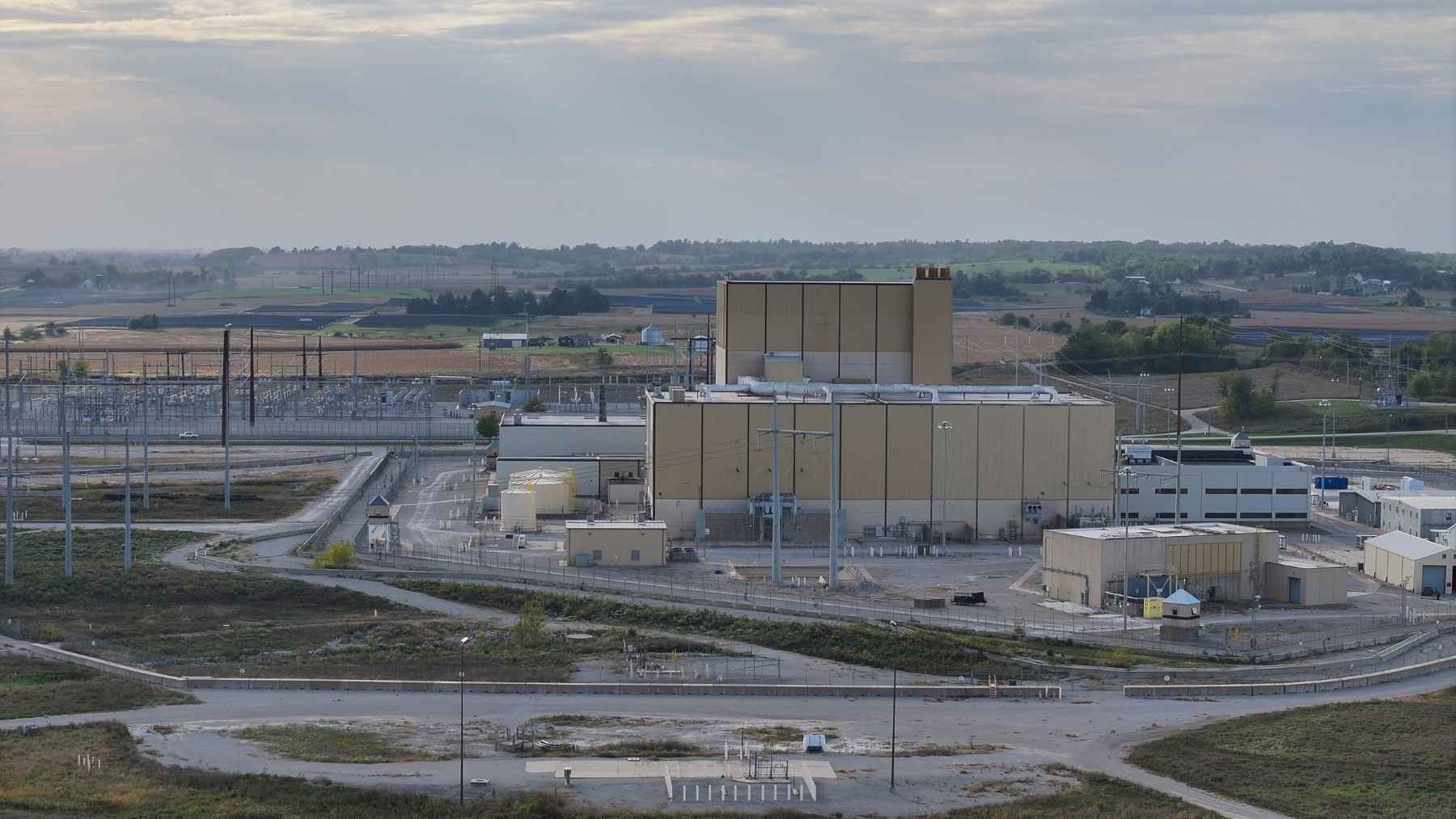
Because more of Duane Arnold is gone than you’d guess from the road. The mechanical draft cooling towers came down. So did the generator output transformer and the transmission lines that carried the power off site, along with the training and administrative buildings. Most of the major systems were drained and de-energized, and the fuel went into dry casks on site by April 2022, according to the Nuclear Regulatory Commission. The power block itself is still standing, which is the good news, because that’s where the real money would have gone.
Those cooling towers matter more than they sound like they should. They don’t cool anything nuclear, and the safety systems that do are a separate setup. Their job is to dump the leftover heat out of the steam once it’s been through the turbine, so it condenses back into water and the cycle starts again. Without them there’s nothing to condense the steam, and the plant can’t run.
The smallest reactor pulled the biggest check
I divided each loan by the capacity it’s chasing. Iowa works out at about $3,090 per kilowatt, against roughly $1,890 for Palisades and about $1,200 for Crane. Those are loans and not project costs, and the government is covering a different slice of each job, so it isn’t a price tag. It does tell you which of the three needed the most help.
The deal came in an unusual shape too. A conditional commitment is the government saying it’ll lend you the money once you meet a list of conditions, and financial close is the point where the paperwork is signed and the cash can move. Those normally land months apart. Duane Arnold got both on the same day, which the office says it has now done four times.
The money is settled. The paperwork isn’t
Deputy Energy Secretary James Danly flew out to Linn County on September 8 to announce the loan and called it the last piece of financing the plant needs. NextEra won’t say what the whole restart costs, only that it runs into several billion, so I can’t tell you what share the loan covers. The funding question looks closed either way.
Does that mean the restart’s approved? No. Permission runs on its own track. The NRC published a draft environmental assessment and a finding of no significant impact last month, and the licensing actions that actually decide this are bundled together and due before January 2028. The plant’s license expires in early 2034 and nobody’s extended it. Come back in 2029 and you’ve got about five years left to run on something you just spent billions rebuilding. NextEra’s chasing a 20-year renewal and it’ll probably get one.
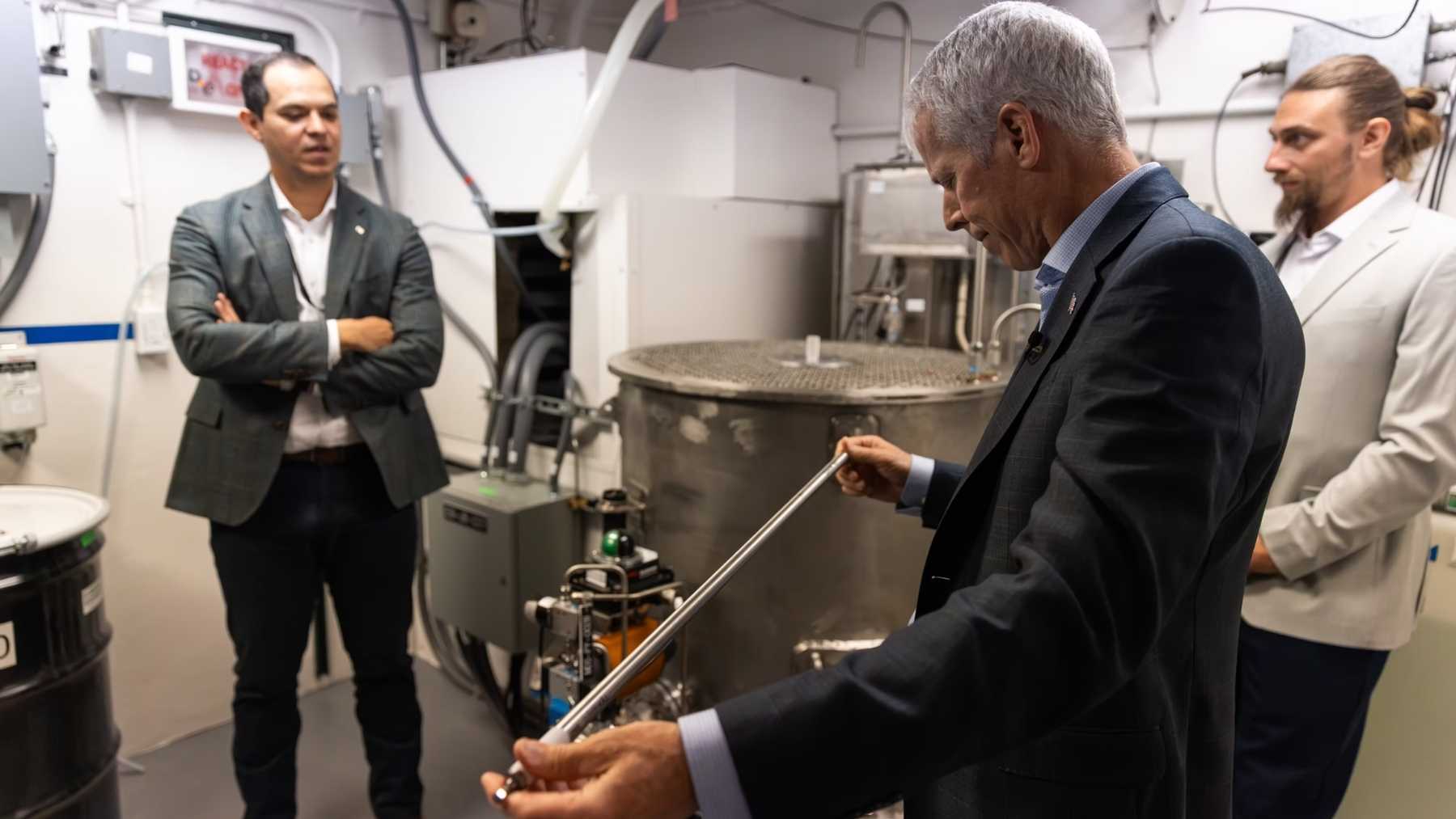
The site is an active construction zone now. On the day the loan closed, NextEra walked reporters through the reactor building, the refueling floor, the turbine building and the control room, and pointed out a new training facility and a warehouse going up on the property.
Palo isn’t sold on its new neighbor
Google’s buying most of the plant’s output, and it also wants a data center nearby. Iowa Public Radio reports that plan has drawn objections from Palo residents and strained relations between the city and Linn County. The restart everybody in Des Moines is applauding is landing differently eight miles up the road.
The money lands unevenly as well. Governor Kim Reynolds released a report from the state’s Nuclear Energy Task Force on September 3 that puts the restart’s annual economic impact at $346 million statewide, with $320 million of that inside Linn County. Of the 1,181 direct, indirect and induced jobs it counts for Iowa, 1,046 land in the same county.
The jobs are going back to people who lost them. Engineering director Paul Hansen told Iowa Public Radio that the plant kept a few dozen staff when it shut, while hundreds lost their jobs and most left the area. CBS2 reported on September 10 that Alex Neumann, who arrived at Duane Arnold in 2011 as a non-licensed operator and left as a senior reactor operator before the shutdown, is back on site for the restart.
NextEra says the reactor should be making power again no later than the first quarter of 2029, and possibly as early as the fourth quarter of 2028 if the work goes well. The NRC’s licensing bundle is due before January 2028, and that’s the date I’d actually watch.