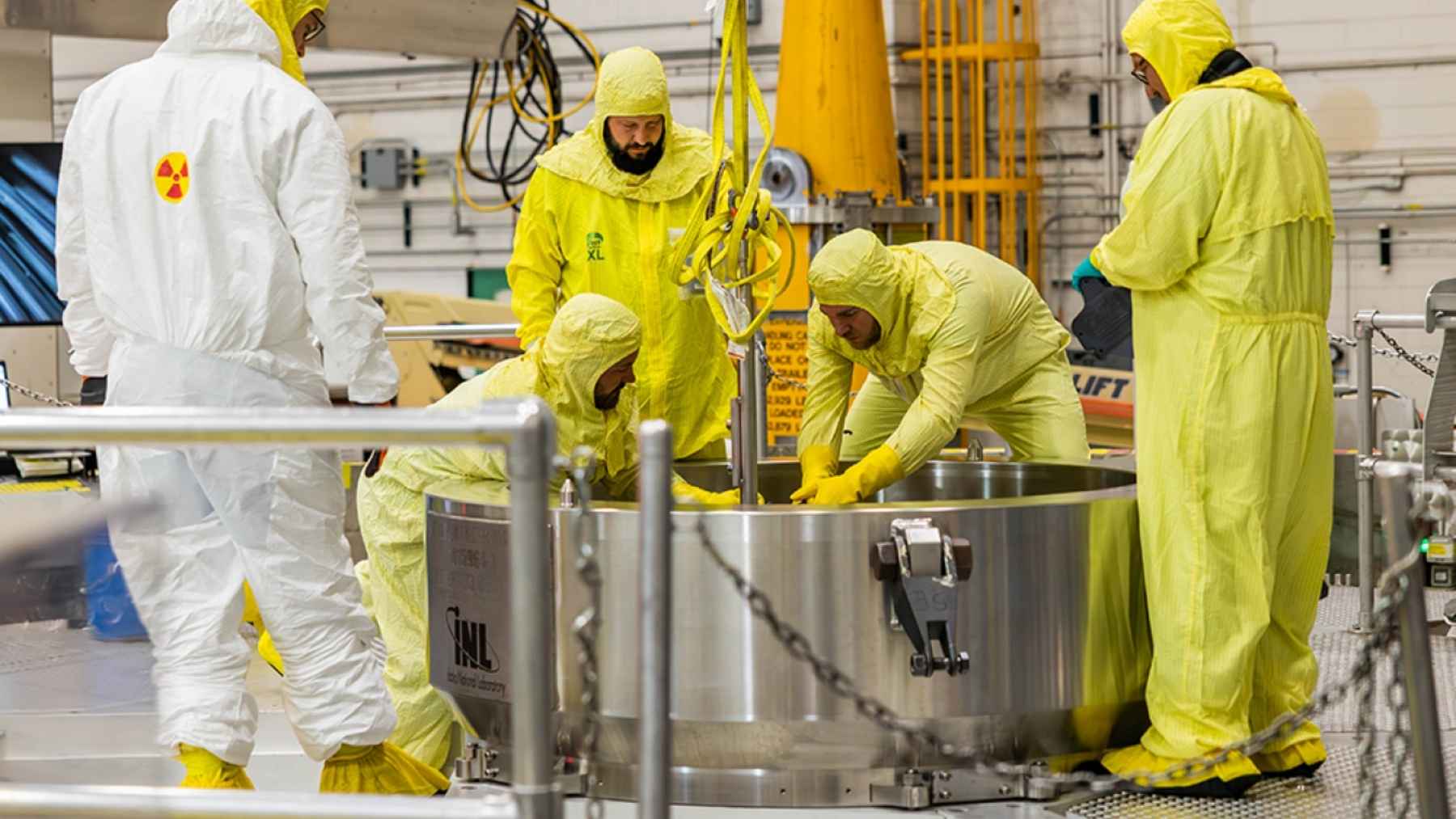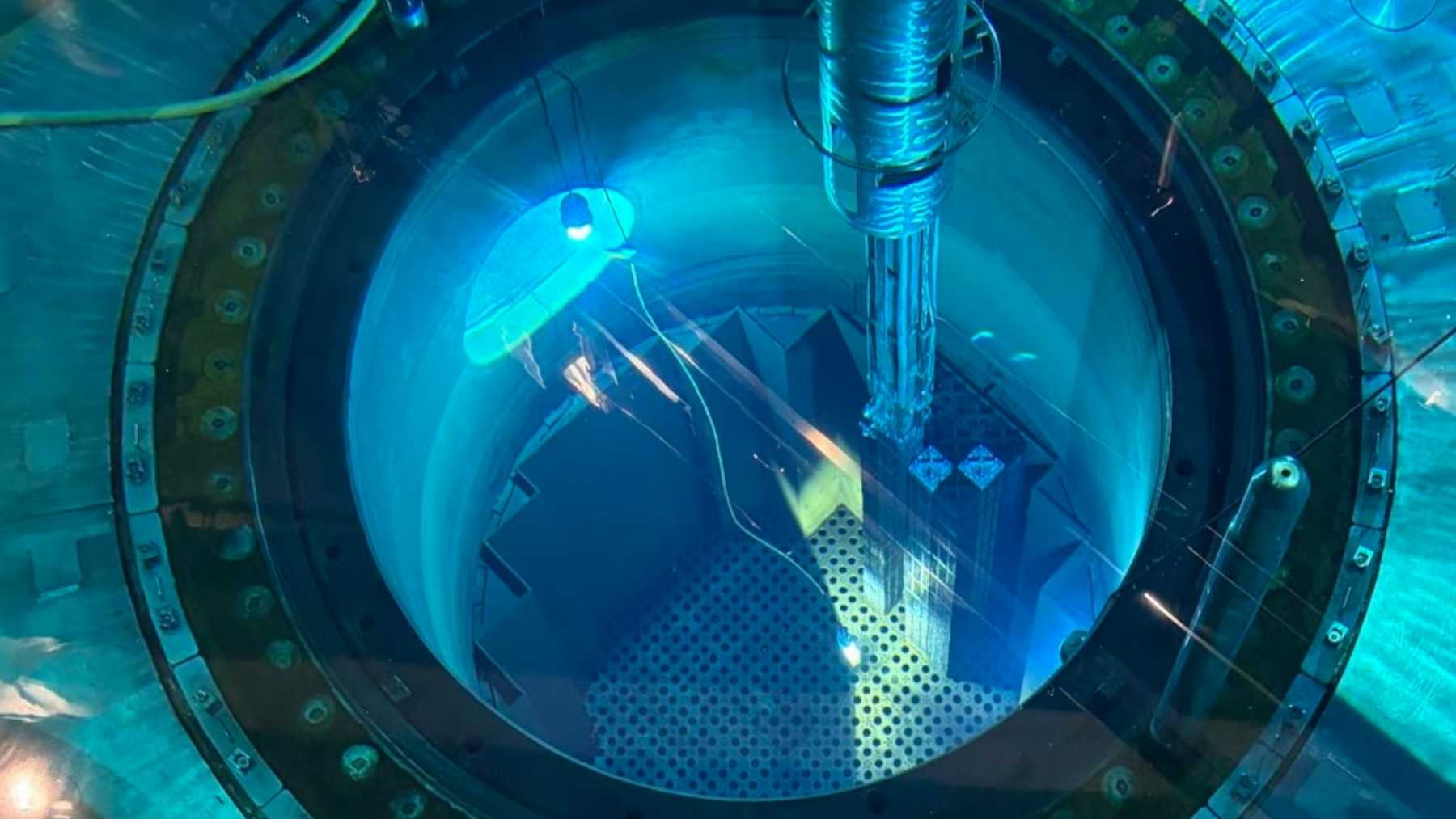

Three weeks ago, Palisades was the feel-good nuclear story of the year. On August 30, a crew at the shut-down plant on the Lake Michigan shore started lowering fuel bundles back into a reactor that had been sitting empty since 2022, the first time anyone has tried to pull an American reactor back out of decommissioning and switch it on again. Holtec, the owner, posted photos of blue water and a brand-new loading machine. Everyone covered it, including us.
Well, about that.
One of those fuel bundles isn’t standing up straight anymore. Holtec confirmed on September 21 that during fuel loading, one assembly “tilted from its upright position” after the crew had set it in the core and the loading machine’s grapple had already let go of it. Fuel loading has been paused ever since, and the company is now designing equipment just to lift that one bundle back out of the vessel and get it back to the plant’s spent fuel pool.
And you didn’t hear about it from Holtec. The first public version came from Reddit.
So what actually happened inside the vessel?
If you’ve never seen a nuclear fuel assembly, picture a bundle of 216 skinny metal rods packed into a square frame, standing about 12 feet tall, according to Holtec. The Palisades core takes 204 of them, slotted upright side by side like books in a crate. A machine rolling on rails over the flooded reactor pit grabs each assembly by the top, drives it over the right slot, lowers it in, and lets go.
Somewhere in the first days of loading, one of them got placed, got released, and then leaned over. Holtec hasn’t said how far it tilted, what it’s resting against, or how many assemblies were already sitting in the core when everything stopped. I’d genuinely like to know that last one, because it tells you how much of the job was left.
The regulator, at least, has been reassuring. Viktoria Mitlyng, a spokeswoman for the Nuclear Regulatory Commission, told The National there was “no radiological release” and no one got hurt. Holtec says it notified the NRC right away, and the plant’s own evaluation concluded the event didn’t rise to the level that triggers formal safety reporting. Which is why you didn’t hear about it. No one was required to tell you.
The regulator says tipped, not dropped
So how did the news get out? An anonymous Reddit post claimed the plant had dropped a partially used fuel assembly during loading. Edwin Lyman, a physicist who runs nuclear power safety work at the Union of Concerned Scientists, amplified the post and pointed out that more than two weeks had gone by with, in his words, “nothing but silence” from the company or the regulator. The National then put the question to the NRC, Mitlyng answered on September 21, and Holtec’s statement went up shortly after the paper published, by The National’s own account.
Does the difference between tipped and dropped actually matter? It does, and it’s pretty much the whole story. A dropped assembly means the machine lost its grip mid-lift and 12 feet of fuel rods came down onto whatever was underneath, and now you’re checking neighbors for damage. A tipped one means the bundle was already seated, the grapple had cleanly let go, and the thing leaned over afterward. Mitlyng was careful to make exactly that correction, and frankly she was right to, and that’s two very different days at a nuclear plant.
That still leaves an obvious question. Fuel assemblies aren’t supposed to lean.
Holtec has started a root cause evaluation to figure out why this one did, and until that comes back, no one outside the company can tell you whether the problem is the bundle, the slot, or the handling. The fuel in this core is a mix of fresh assemblies and partially used ones from the plant’s last runs before the 2022 shutdown, and Holtec hasn’t said which kind the leaning one is.
Getting one bundle out takes new tools and a license change
Here’s where it gets unusual. You can’t just send the loading machine back to pick the assembly up, apparently, because Holtec’s in-house engineering team is designing purpose-built retrieval and storage gear to carry the bundle back to the pool. The company also has a License Amendment Request in the works with the NRC, covering the retrieval method itself.
A License Amendment Request is basically the plant asking the regulator, in writing, for permission to do something its current license doesn’t cover, and the NRC reviews it before anyone touches anything. Mitlyng said the agency will evaluate it thoroughly, and NRC inspectors have been watching the fuel handling work on site from the start.
None of that is fast. Holtec has been telling people it wants Palisades back in service late this year or in early 2027, and that target has already moved more than once. Designing new tooling, getting a license amendment through the NRC, and pulling a leaning fuel assembly out of a reactor vessel doesn’t strike me as a quick detour, though I’ll admit the NRC has moved faster on this project than on pretty much anything else in its recent history.
The rest of the plant keeps moving
The tilted bundle hasn’t frozen the whole site. On September 11, Palisades reconnected to its 345-kilovolt switchyard after restoration work with ITC, the company that owns the transmission lines serving the plant. The switchyard is the plant’s on-ramp to the grid, the path its electricity takes out once the reactor is running, so that box had to get checked no matter what happens in the vessel.
After the leaning assembly is dealt with and the rest of the fuel goes in, the vessel gets bolted back together and the plant moves to Cold Shutdown, the next stop on the checklist toward actually making power. There’s still testing and NRC sign-offs stacked up beyond that.
Holtec says the root cause evaluation is underway and the retrieval equipment and license paperwork are both in the works, and as of the company’s September 21 update, fuel loading at Palisades is still on hold.