
- 3 MONTHS AGO · ENERGYA 22-inch Halliburton well is going sideways under a Texas cow pasture, triple the usual oil hole, so a 5,000-pound nuclear-waste canister can go down and come back up — no spent fuel on the pad, just the drill, a hole opener, and a warning about snakes
- 3 MONTHS AGO · ENERGYAn 86-ton borer has cut the hole that will take a 27-ton canister of spent nuclear fuel, 27.6 feet deep and 5 feet 9 inches wide in granite that formed 1.9 billion years ago, and it is allowed to wander less than an inch off vertical the whole way down
- 2 MONTHS AGO · ENERGYA 78-foot, 12-axle railcar built to haul spent nuclear fuel is getting a refurbished rail line in Idaho for its first cask, and fully loaded it puts about 355 tons on the rails yet sits lighter on each axle than the flatcar beside it, which carries 98 tons of welded steel
- 2 MONTHS AGO · ENERGYA 65-foot steel pear piled up 5 million volts to crack atoms open, spent the last 11 years lying on its side in a weedy lot outside Pittsburgh, and is now coming apart from the top down to stand again at the headquarters of the company that built it
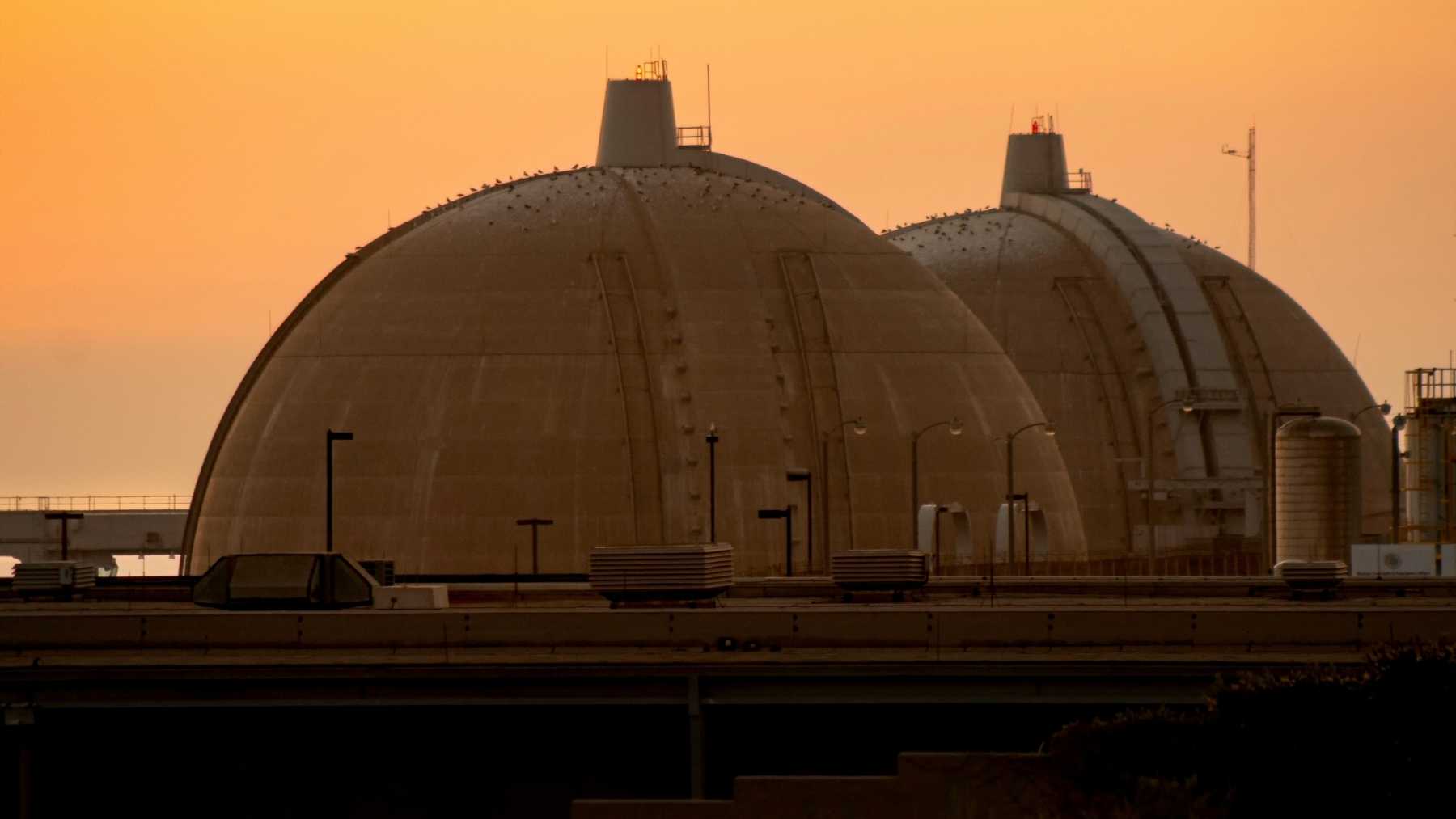
- TODAY · THIS ARTICLEWhile the twin domes of a California nuclear plant start coming down early next year, the 3.6 million pounds of fuel they held stays behind in 123 steel canisters about 100 feet from a seawall on the Pacific, built to take twice the shaking of the biggest quake expected
If you’ve ever driven Interstate 5 between San Diego and Los Angeles, you know the domes. The two giant concrete spheres on the Camp Pendleton shoreline have marked that stretch of coast for more than four decades, and I’d bet most of the people who pass them daily assume the plant behind the fence still makes electricity. It doesn’t. San Onofre shut down in 2013, and early next year, crews will finally start taking the twin domes apart.
But one thing in the Los Angeles Times piece on the demolition jumped out at me: the most radioactive thing on the property stays exactly where it is. The site holds 3.6 million pounds of spent nuclear fuel, sealed inside 123 steel canisters set in concrete right there on the beach, and the fuel isn’t going anywhere.
So why tear down the safe stuff and leave the dangerous stuff on the sand?
Because the domes are basically just concrete. The fission happened inside the reactors they housed, and once the fuel came out, what’s left is steel and cement that’s only mildly radioactive, if it’s radioactive at all. You can cut that up and ship it to licensed disposal sites, and Edison’s been doing exactly that for years, with most of the rubble already gone to Utah, Texas and Arizona. The fuel is a different animal. Under federal law, taking it is Washington’s job, and Washington’s never opened anywhere to put it. So it stays where it was burned.
So what exactly is staying on the beach?
San Onofre’s two working reactors shut down for good in June 2013 after a scandal over faulty replacement steam generators, and every fuel assembly eventually moved out of the cooling pools and into dry storage, with the last canister set in place in August 2020. The whole inventory now sits in two systems, per Southern California Edison: 50 canisters in a horizontal Orano NUHOMS installation the utility has been loading since 2003, and 73 canisters in a Holtec UMAX vault sunk into a concrete pad. That’s your 123.
Dry storage is a simple idea, and frankly a pretty good one. The fuel gets sealed inside a welded steel canister filled with helium, the canister slides into a reinforced concrete structure, and outside air does the cooling by flowing around the steel. Edison calls it passive cooling, which basically means there’s nothing mechanical in the loop to break. The Holtec vault alone took more than 18,000 cubic yards of concrete and over 920 tons of rebar, so as parking spots go, this is a fairly serious one.
Both systems, Edison says, exceed California’s earthquake requirements and are built to shrug off fires, flooding, projectiles and tsunamis. Which brings us to the obvious question.
How close is the ocean, exactly?
Close. The Times pegged its piece to a stretch of ugly surf this month, when waves fueled by Hurricane Marie chewed at parts of the Southern California coast, and it quotes oceanographer Kim McCoy pointing out that the canisters sit about 100 feet from the walkway that protects the plant’s seawall. McCoy’s spent years campaigning against storing nuclear waste on beaches, so he’s not exactly a neutral voice here, but he isn’t wrong about the geography either.
The same piece notes that most experts consider the near-term risk of erosion reaching the storage system extremely low. And Edison has an answer ready for pretty much every scenario you can throw at it. Manuel Camargo, the utility’s principal manager of decommissioning, told the Times that the maximum credible tsunami wouldn’t even top the seawall, and that the maximum credible earthquake, somewhere around magnitude 7.0, would deliver “about half of what this system is designed to withstand.” State data from the California Ocean Protection Council, he added, shows the seawall wouldn’t be under water before 2050. As engineering answers go, double the worst quake anyone expects is a fairly comfortable margin.
Edison’s also promised the California Coastal Commission that if modeling ever shows sea level rise or erosion turning into a real problem, it’ll move the waste to higher ground on the property. What specific result would trip that wire, I can’t tell you, because I couldn’t find it spelled out anywhere. Greg Jaczko, who used to run the Nuclear Regulatory Commission, told the Times he thinks the utility could be monitoring the canisters more than it does. Today that monitoring means tracking air temperature and radioactivity, checking canister exteriors for cracks, and inspecting fuel-free test canisters for signs of aging.
Getting it off the beach is Washington’s job
The reason the fuel is still there has nothing to do with waves. From 1982 through 2014, Edison’s customers paid into a federal fund that was supposed to build a permanent national repository for this material. The government picked Yucca Mountain in Nevada, then dropped the plan in 2011 in the face of local opposition. Utilities now sue the Department of Energy every year to claw back their storage costs, and according to Camargo, those lawsuits cost taxpayers $2 million a day. So America’s spent fuel just sits at about 80 reactor sites around the country, waiting. San Onofre is one of them, New Jersey’s Oyster Creek is another, and the pile keeps growing.
The current idea is different. The Department of Energy wants to build nuclear campuses that store waste and hand host communities money and development in return, and it signed memorandums of understanding in July with Utah, Tennessee, Oklahoma, Idaho and Louisiana to explore it. Camargo told the Times that Edison is already in discussions with Utah and Tennessee about how it can help. Consent plus cash is arguably a more promising formula than the approach that produced a mountain nobody is allowed to use, though similar efforts have come and gone before.
Other people aren’t waiting on the federal plan. One startup is drilling a 22-inch test borehole under a Texas cow pasture to prove spent fuel canisters can go down an oil-style well and come back up. Finland is furthest along of anybody and will soon start sealing canisters thousands of feet down in stable rock, with Sweden breaking ground on something similar. Meanwhile, California keeps its ban on new nuclear construction until the federal government provides permanent storage, which is part of why Diablo Canyon, up the coast, is the state’s last operating plant.
Camargo’s take, as he put it to the Times, is that the storage is safe enough that moving it never becomes anyone’s priority. And I think he’s probably right. A concrete pad that never makes news doesn’t force anybody in Congress to do anything.
Edison and the lawmakers backing the campus plan believe the fuel could be off the coast in 10 to 15 years. If they’re wrong, the fallback date is a long way out: the earliest canisters at San Onofre reach their intended 100-year lifespans in 2103, at which point the utility may have to start transferring 3.6 million pounds of fuel into brand-new canisters, most likely on the same stretch of coast.
 A reactor built from 664 two-inch uranium cubes hung on wires in heavy water under a German castle was Heisenberg’s last shot at a chain reaction, and two of the surviving cubes now show it needed about twice the uranium and heavy water it held, more of both than Nazi Germany hadEnergy · 1 week ago
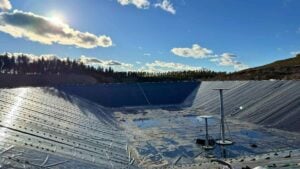 A 66-foot-deep gravel pit in Finland just started taking in about 100 million gallons of tap water, and once a nine-acre lid goes on top, it’s meant to hold enough summer heat at up to 194°F to cover as much as nearly a quarter of the town’s yearly heat demandEnergy · 1 week ago
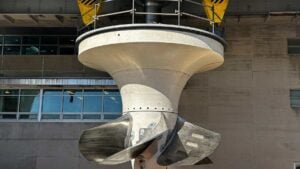 A 375,000-pound turbine now spins inside a Tennessee dam in place of one that ran for more than 80 years, and a federal watchdog just found that 196 of the 240 welds on the ring guiding water out of it failed on a job where some welders weren’t qualifiedEnergy · 1 week ago
 @leonardbachman ROOKIE2 months ago