
Your car’s first scheduled service is an oil change, a tire rotation and maybe an hour of a technician poking around with a checklist. The most powerful reactor in France just went in for its first scheduled service, and the appointment runs about a year.
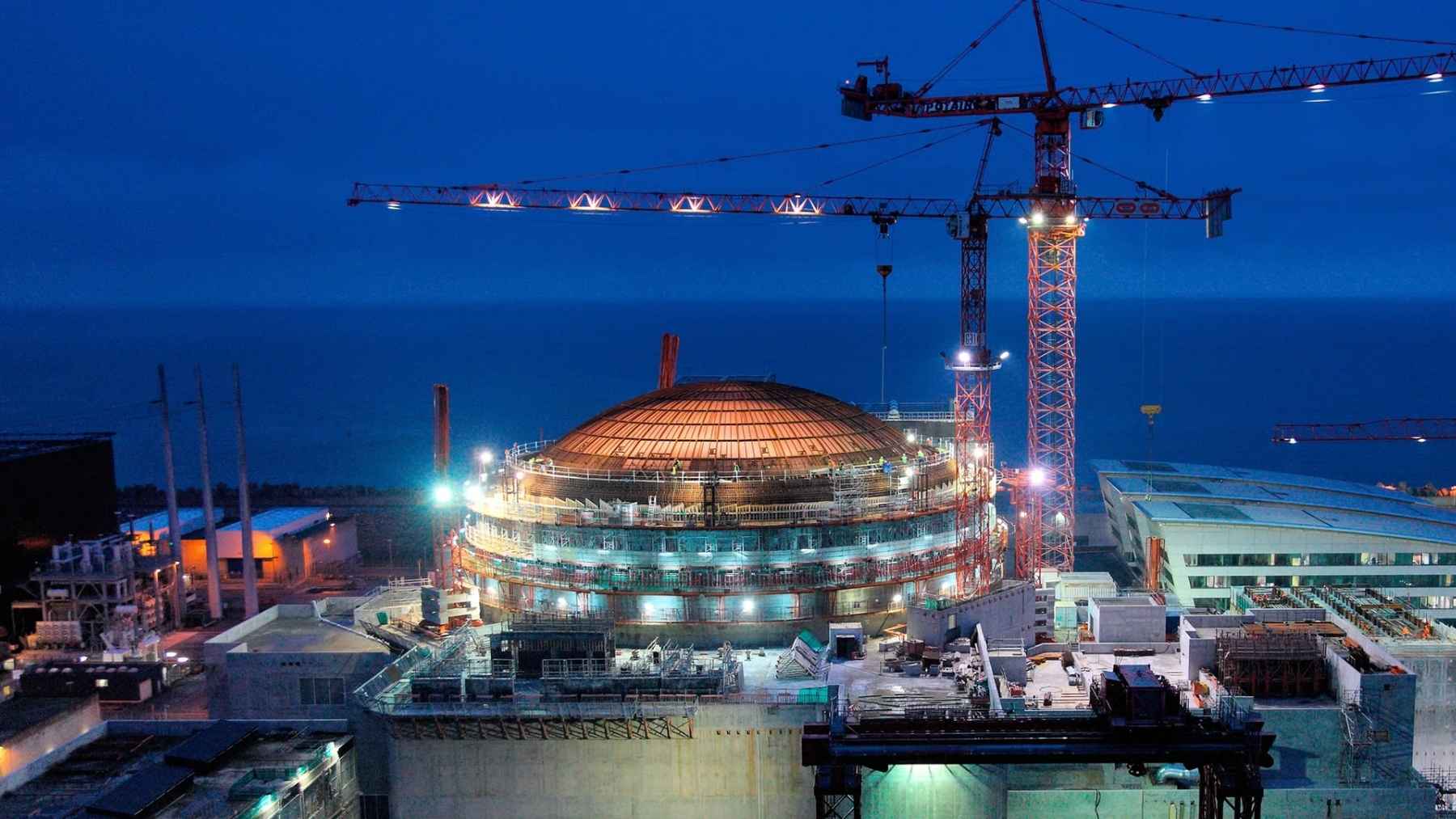
EDF pulled Flamanville 3 off the grid at 11:57 p.m. on September 26, three minutes before the day ran out, and opened what French rules call the first complete inspection. We walked you through this machine’s 18-year construction saga and the shape of this shutdown back in August, so I won’t rehash the cost overruns here. What’s new is that the outage has actually started, and that the star of the show, a 109-ton steel lid, has been sitting at the plant since June waiting for its moment.
So what does a reactor’s first service actually involve?
Every reactor in the French fleet goes through this. The rules require a complete inspection within 30 months of the first fuel loading, and Flamanville 3 loaded its fuel on May 8, 2024, so the clock ran out this fall. EDF puts the workload at about 20,000 separate tasks, with headcount peaking around 2,500 and 200 partner companies pitching in.
Renaud Crassous, deputy performance director of EDF’s nuclear production division, put the bill at “several hundred million euros” and compared the whole thing to the ten-year overhauls France runs on reactors hitting their 30th or 40th birthday. That’s a fairly remarkable thing to say about a unit that reached full power ten months ago, but the logic holds: a first-of-its-kind machine gets checked like a veteran.
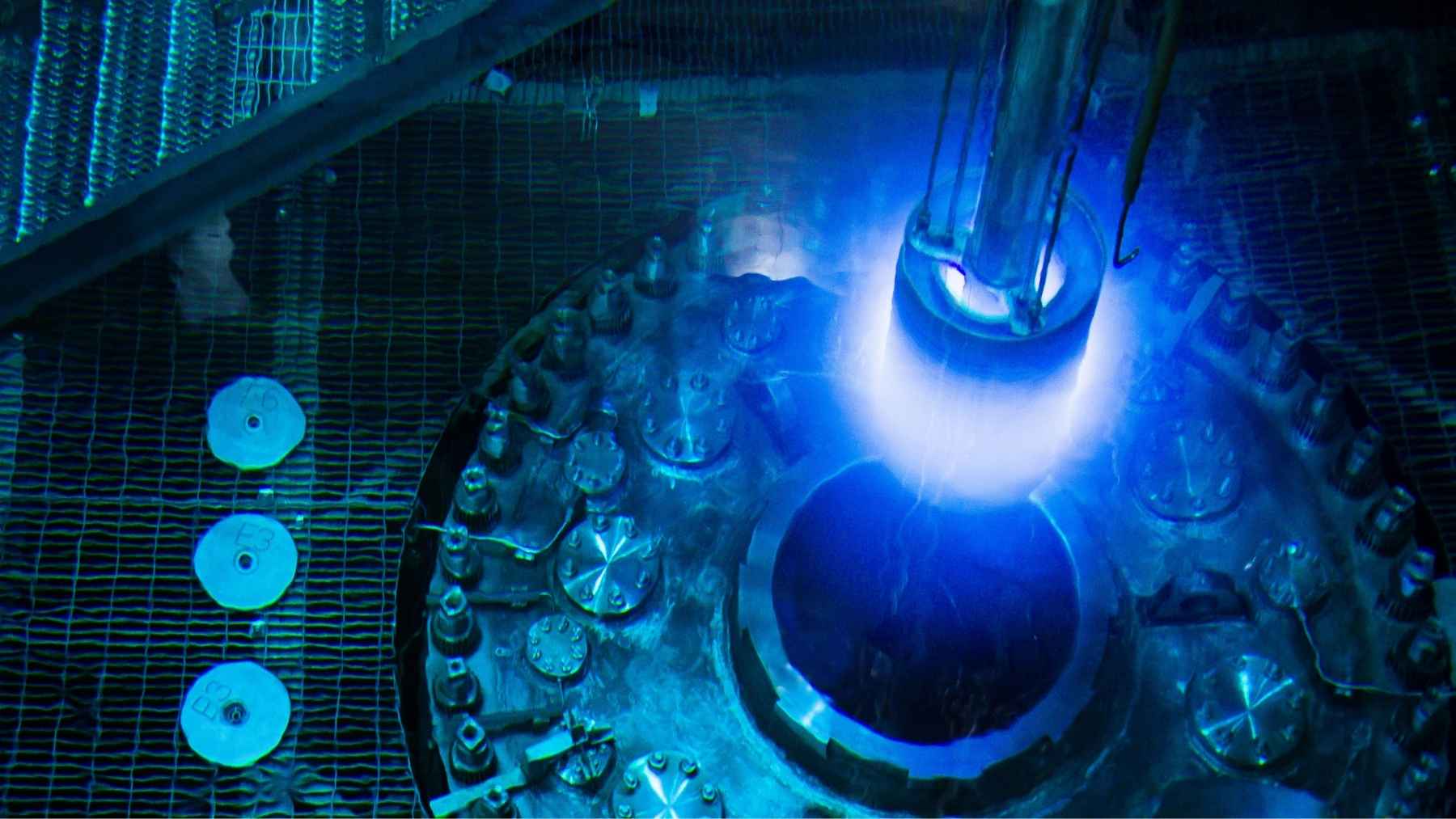
The big three are a hydraulic test of the primary circuit, leak-tightness tests on the containment building, and an inspection of the reactor vessel itself. If you’ve never run into a hydraulic test, it’s the plumbing inspection from hell. The primary circuit is the loop of water that hauls heat away from the core, and crews pump its pressure far beyond anything the reactor sees in normal service, then verify that nothing weeps, creeps or drips. The containment test is the same idea applied to the building around the reactor.
Why a year, though? France has run complete inspections at its Chooz and Civaux plants in 190 to 200 days, and Crassous says this one is longer simply because there’s more to check on a brand-new design. The plan says 350 days.
Why does a brand-new reactor need a new lid?
Because the original one has never been quite right, and pretty much everyone in French nuclear has known it for a decade.
France’s safety regulator made the problem public back in April 2015: parts of the steel forged for the vessel’s bottom and its lid carried carbon concentrations outside spec. Too much carbon in spots makes steel less tough than it should be, which isn’t a quality you want in the component that seals a reactor. The regulator let the plant run on that lid, and EDF committed to swapping it at this first complete inspection, a request AFP traces straight back to the ASNR, the French safety authority. If EPR steel drama sounds familiar, it should, because Britain’s regulator is working through its own vessel questions at Hinkley Point C right now.
The replacement is quite a piece of hardware. Framatome forged it at its Saint-Marcel plant in eastern France, and the bare head weighs about 109 US tons (99 metric tons), measures 18.9 feet across and stands 7.2 feet tall. It’s drilled with 105 penetrations: 89 for the control rod drive mechanisms and 16 for instrumentation lances. The drive mechanisms are the motors that raise and lower the rods that throttle the chain reaction, so that lid isn’t just a cap. It’s the reactor’s control panel, structurally speaking.
Getting it to the coast was a road trip in three acts. The head left Saint-Marcel by river barge down the Rhône, transferred to a cargo ship for the run around to Cherbourg, and covered the last leg to Flamanville by oversize road convoy, arriving on June 16. During the outage, crews will move all 89 drive mechanisms from the old head onto the new one and test the assembly.
And the old lid? It gets parked for two years in a building EDF put up specifically to hold it, then ships to a radioactive waste storage facility run by Andra, France’s national waste agency, in the Aube region. France built a whole structure so a lid could cool its heels, which tells you how casually you get to handle used reactor parts. You don’t.
The reactor beat its yearly target before it stopped
Now for the number I frankly didn’t expect to type. The machine ran well.
EDF set itself a 2026 production target of 7 terawatt-hours for Flamanville 3, and the reactor passed it on September 3, more than three weeks before the shutdown. Total output since grid connection stands at 9.9 terawatt-hours, and the unit feeds 1,600 megawatts of net power into the lines, the most of any of France’s 57 reactors. For a plant that spent nearly two decades as a punchline, that’s a genuinely decent first season.
It’s been that kind of year for EDF’s coastal fleet in general, though not always by choice. Up the coast, EDF’s Gravelines plant spent late August shutting reactors down by hand ahead of jellyfish swarms. Flamanville, at least, picked its own date.
One thing EDF hasn’t published is a reconnection date. The plan says 350 days, which lands around mid-September 2027 if nothing slips, and I’d gently note that this project’s track record with schedules isn’t exactly spotless. The French press is working off “close to a year,” and I’d treat anything more precise than that as a guess.
What’s not a guess is the scorecard EDF closed the cycle with: 9.9 terawatt-hours delivered, a 2026 target cleared on September 3, and a 109-ton replacement lid that’s been waiting on site since June 16 for the crews who are now, finally, allowed to touch it.