
Back in September we told you the Navy was putting a nuclear reactor on a weapons base in southern Indiana, and that the Pentagon wouldn’t say who was building it. Well, now it has. On October 20 the Department of the Navy picked Radiant Industries, a startup out of El Segundo, California, to design, build and deliver what the release calls a prototype Microreactor Power Plant at Naval Weapons Station Crane.
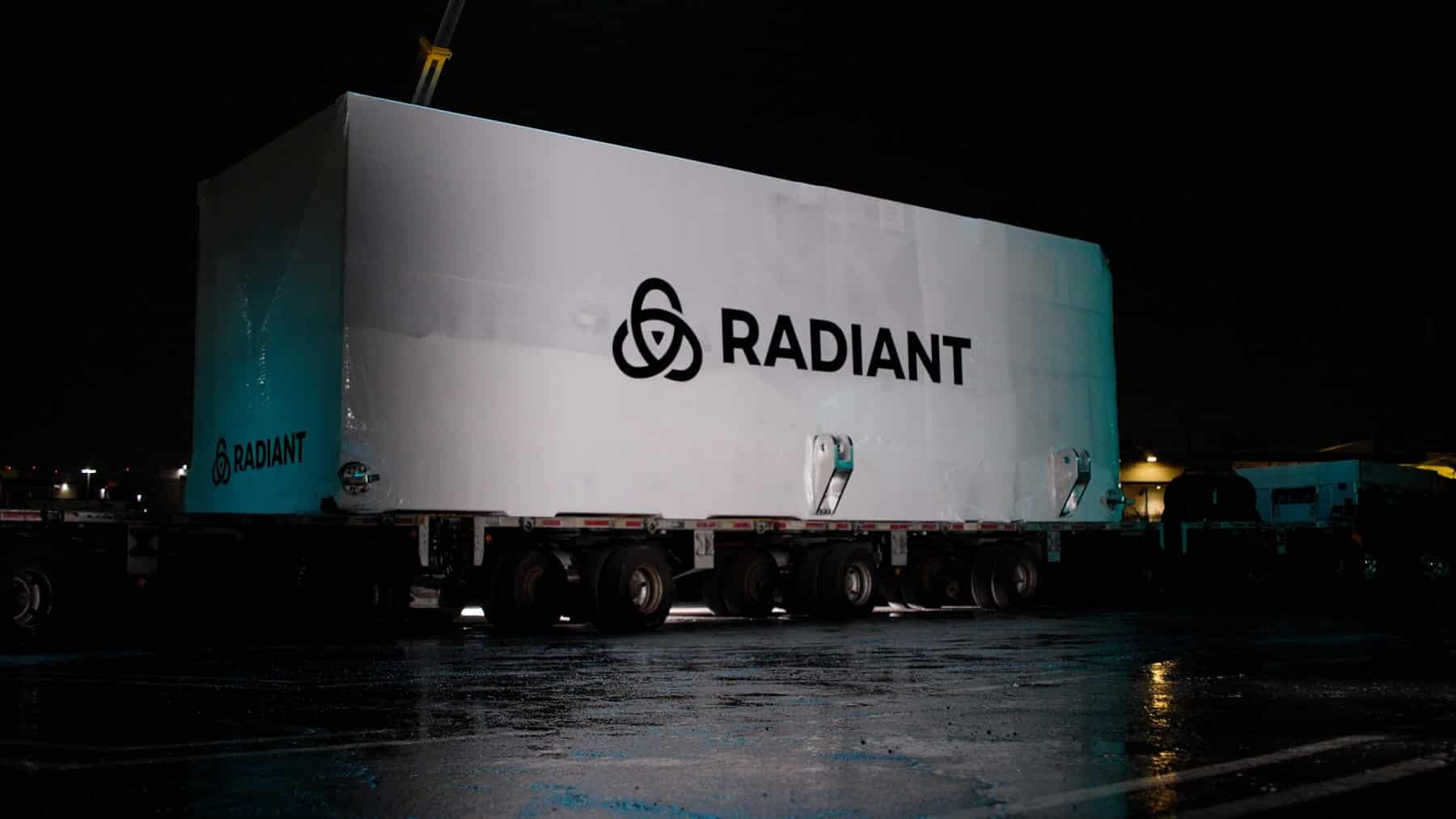
The machine is Radiant’s Kaleidos, and you can picture it pretty easily. It’s a 1-megawatt reactor that ships inside a 35-foot container, weighs about 70 tons by the company’s own figures, and is supposed to run for five years before anyone has to touch the fuel. That’s the pitch, anyway.
So is the Navy buying a reactor? Not exactly. The September announcement from the Department of War described the Crane unit as commercially owned and operated, which means Radiant builds it, Radiant runs it, and the base buys the power. The company is one of five the Army signed up in August under its Janus Program, and the Navy is basically borrowing the Army’s contract rather than running its own competition. The Navy says that’s faster. From the looks of things it’s also a lot less paperwork.
So what exactly is a reactor in a box?
If you’ve read about nuclear power at all, you probably picture a cooling tower, a turbine hall and a few thousand construction workers. Kaleidos is none of that, so let me spend two sentences on why.
The core uses TRISO fuel, which is uranium wrapped in tiny ceramic shells the size of poppy seeds, and the whole thing is cooled by helium gas instead of water. Helium doesn’t pick up radioactivity the way water does, and the fuel particles are designed to hold their fission products in at temperatures well above anything the reactor should see in normal use. That combination is what lets Radiant skip the pumps, the ponds and the big concrete pours.
The company’s spec sheet, the one it showed Wyoming lawmakers last year, puts the container at 11 feet wide, 11 feet tall and 35 feet long. That’s three feet taller and three feet wider than a standard shipping container, so this isn’t something you’d stack on a cargo ship next to the sneakers. It moves by truck, rail, ship or aircraft, and Radiant says it needs no cooling water and no major excavation at the site. Fuel goes in at the factory, and when the five years are up the reactor gets shut down, cools for up to a month, and goes back to the factory for a fresh core. Nothing spent stays behind on the base.
I like that last part more than any of the performance numbers, frankly. A weapons station that stores a quarter of the military’s conventional munitions is about the last place you want a fuel handling operation.
At 1 megawatt, though, Kaleidos won’t run the whole base. Crane covers about 62,000 acres, roughly 35 miles south of Bloomington, and it’s home to Crane Army Ammunition Activity and the Naval Surface Warfare Center’s Crane Division. One of these reactors covers the critical loads, the stuff that absolutely can’t go dark when a storm takes down the utility line. Diesel generators do that job today.
The Navy hasn’t done this since Antarctica
You may be wondering why a service that runs roughly 100 reactors at sea is making a fuss about one on land. The answer is that the Navy’s land-based power reactor record isn’t great.
The last one was a 1.8-megawatt plant at McMurdo Station in Antarctica, which the Navy shut down in September 1972 after 438 malfunctions, and we covered that whole saga when the Crane site was announced. There’s a submarine propulsion plant bolted to the ground in upstate New York for training, but that’s a classroom, not a power station. The Pentagon’s September release calls Crane the Navy’s first shore-based advanced microreactor, and that wording is careful for a reason.
It’s also Indiana’s first. The state has never generated a watt of commercial nuclear power. The only reactor running there today is a 12-kilowatt teaching unit in a basement at Purdue.
The deadline came before the reactor
Here’s a question I kept coming back to: why Crane, and why now?
The answer is a May 2025 executive order that tells the Pentagon to have a reactor operating on a domestic military base no later than September 30, 2028. The Army stood up Janus that October to make it happen, and on August 26 it split agreements worth up to $2.2 billion among five companies and five bases, with more than 20 microreactors expected across the department by 2031. Radiant’s slice is the biggest, up to $750 million for 15 Kaleidos units, starting with three at Fort Benning, Georgia.
Crane isn’t a new award on top of that. The Navy’s own release says so, and it reads to me like the service is pulling one of those 15 units onto its own base. Army official Jeff Waksman, who runs the installations and energy side, put it as the Army partnering with the Navy “to deliver the state of Indiana its first advanced microreactor,” which pretty strongly implies one reactor, not a farm of them.
The Pentagon’s September release said the Crane reactor would be installed no later than September 2028. The Navy’s October release doesn’t repeat that date, and it doesn’t put a dollar figure or a construction schedule on the Indiana project either. Brendan Rogers, the assistant Navy secretary who handles energy and installations, said the testing missions at Crane are “vital to the readiness of our fleet and the future fight,” which is the kind of thing you say when the project matters and the calendar is tight.
Two years is tight. Nuclear projects in this country usually take decades.
One catch: the reactor hasn’t run yet
I’d be a lot more relaxed about the schedule if Kaleidos had already made power somewhere. It hasn’t.
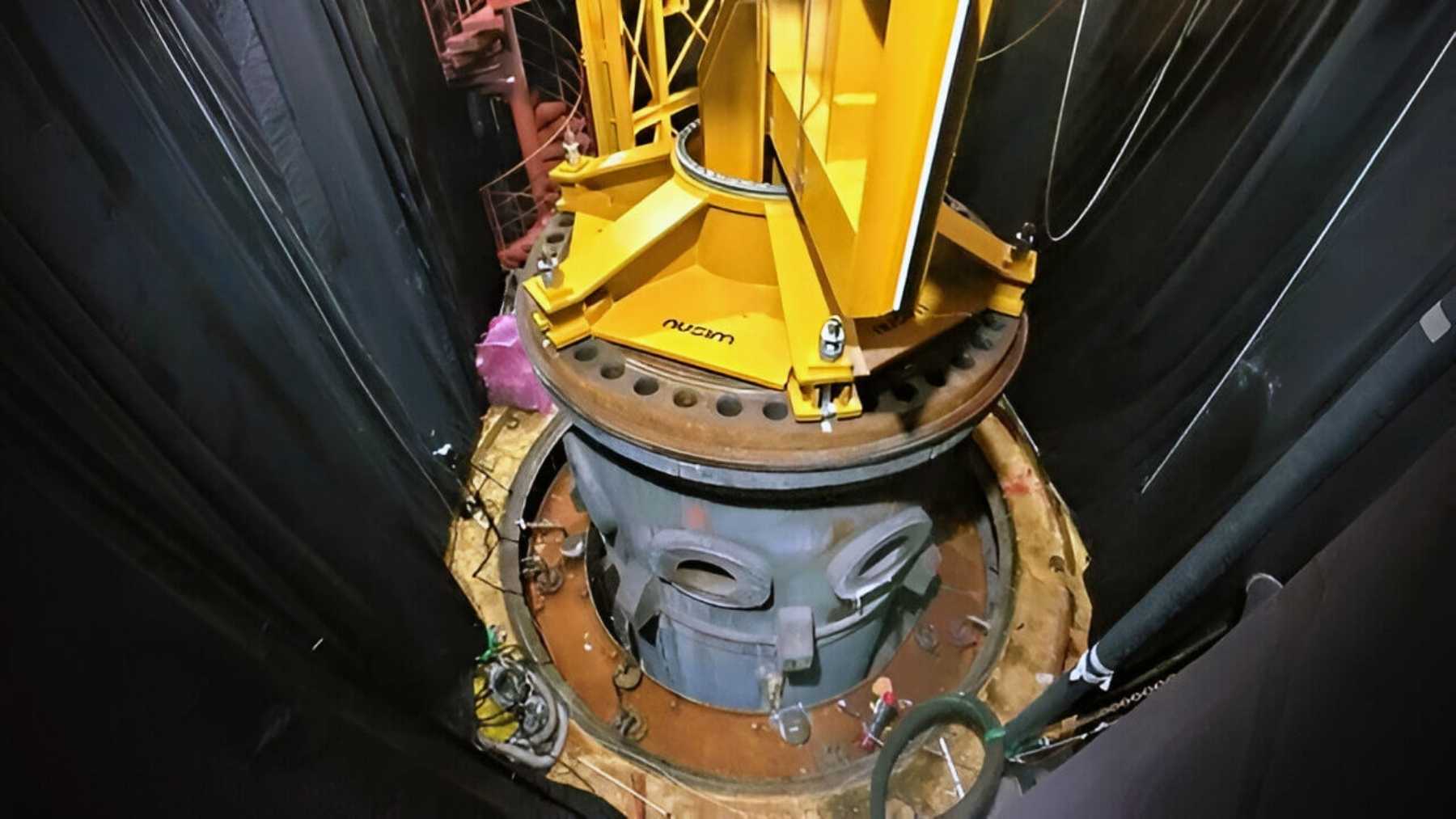
Radiant’s demonstration unit left El Segundo on a trailer on August 13 and rode more than 1,000 miles to Idaho National Laboratory, where it’s being installed inside the DOME test building. The plan there has five phases: load the fuel, go critical at zero power, climb to 1 megawatt of heat, reach full power, and then run 150 straight hours with nobody touching it. Radiant had said it wanted that campaign done by the end of September. As far as I can tell, the company hasn’t announced criticality, and its October 20 statement describes Kaleidos as in testing at DOME without saying which phase it’s in.
Does that mean the design is in trouble? I wouldn’t go that far. Zero-power criticality is a physics exam more than an engineering one, and four other American startups passed it this summer, starting with Antares in June. The harder test is the 150-hour run at full temperature, and nobody in that group has done that either. Radiant chose the harder path on purpose.
Still, Fort Benning, Buckley Space Force Base in Colorado and now Crane are all counting on the same machine, and that machine has three military services waiting on a test result in Idaho. Radiant says it’s the only nuclear company partnered with the Army, Navy and Air Force. That’s a nice line for a press release. It’s also a lot of eggs in one 70-ton basket.
There’s a second clock running in Tennessee, too. Radiant wants to mass-produce these things at a factory in Oak Ridge, and the Nuclear Regulatory Commission is reviewing the fuel-handling license for that plant with a decision expected by December 18.
Indiana had a strange week
The timing of the Crane pick wasn’t an accident, or if it was, it was a convenient one. On October 19, the day before, Amazon, American Electric Power and X-energy said they’d study a 960-megawatt nuclear plant in western Indiana. The same day, the state, the Hoosier Energy electric cooperative and the Canadian engineering firm AtkinsRéalis signed a memorandum to explore up to 6 gigawatts of CANDU reactors.
Those are memorandums and feasibility studies, which in this business can mean a plant or can mean a press release. The Crane reactor is a signed selection under a binding Army agreement, for a machine that already exists and is sitting in a test building. That makes it, oddly, the most concrete nuclear project in the state right now, at 1 megawatt against the 7,000 or so being floated around it.
The Navy says the next steps at Crane are environmental review, site design and regulatory coordination with federal, state and local partners, with the Naval Nuclear Propulsion Program providing technical support alongside the NRC. Radiant’s Kaleidos demonstration unit, which has to prove all of this works, was still being set up inside the DOME at Idaho National Laboratory as of the company’s October 20 announcement.