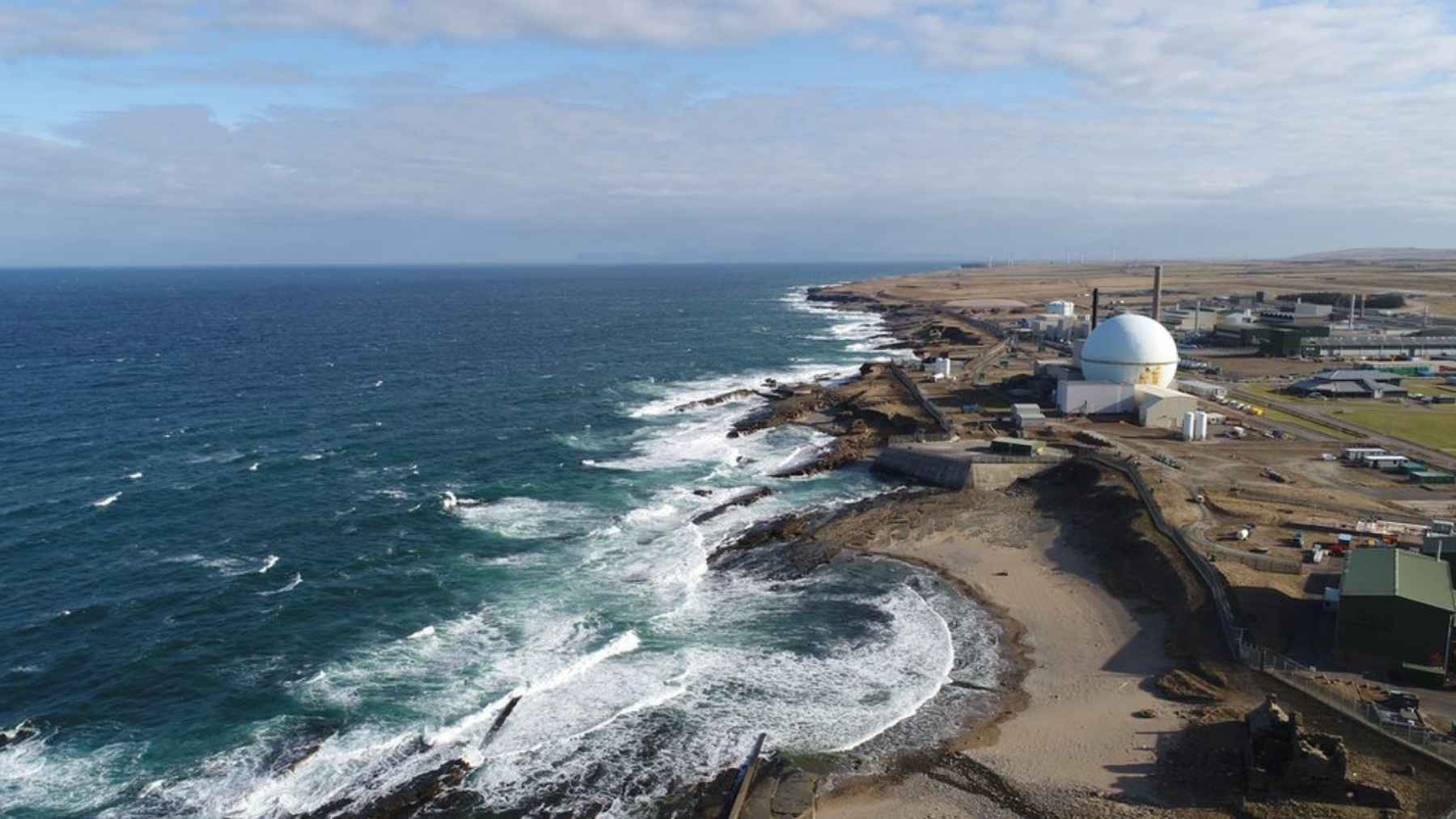

The pitch for Sizewell C has always come down to one simple idea. Build one giant reactor on the Somerset coast, make every expensive mistake on it, then run off a second one that lands cheaper and faster because it is a near-exact copy. Britain has leaned on that logic to justify a £38 billion (about $51 billion) nuclear plant, its first majority British-owned station in more than 30 years.
The one part nobody wanted a surprise on was the reactor vessel.
That is exactly where the surprise showed up. In an inspection report published on June 22 and first reported by New Civil Engineer, the UK’s nuclear regulator noted that the steel vessel being made for Sizewell C is racking up more flagged problems than the identical part did for its sister plant, Hinkley Point C. More non-conformance reports. A weld the ultrasound did not like. On the single component a reactor cannot be allowed to get wrong.
The one part you can’t get wrong
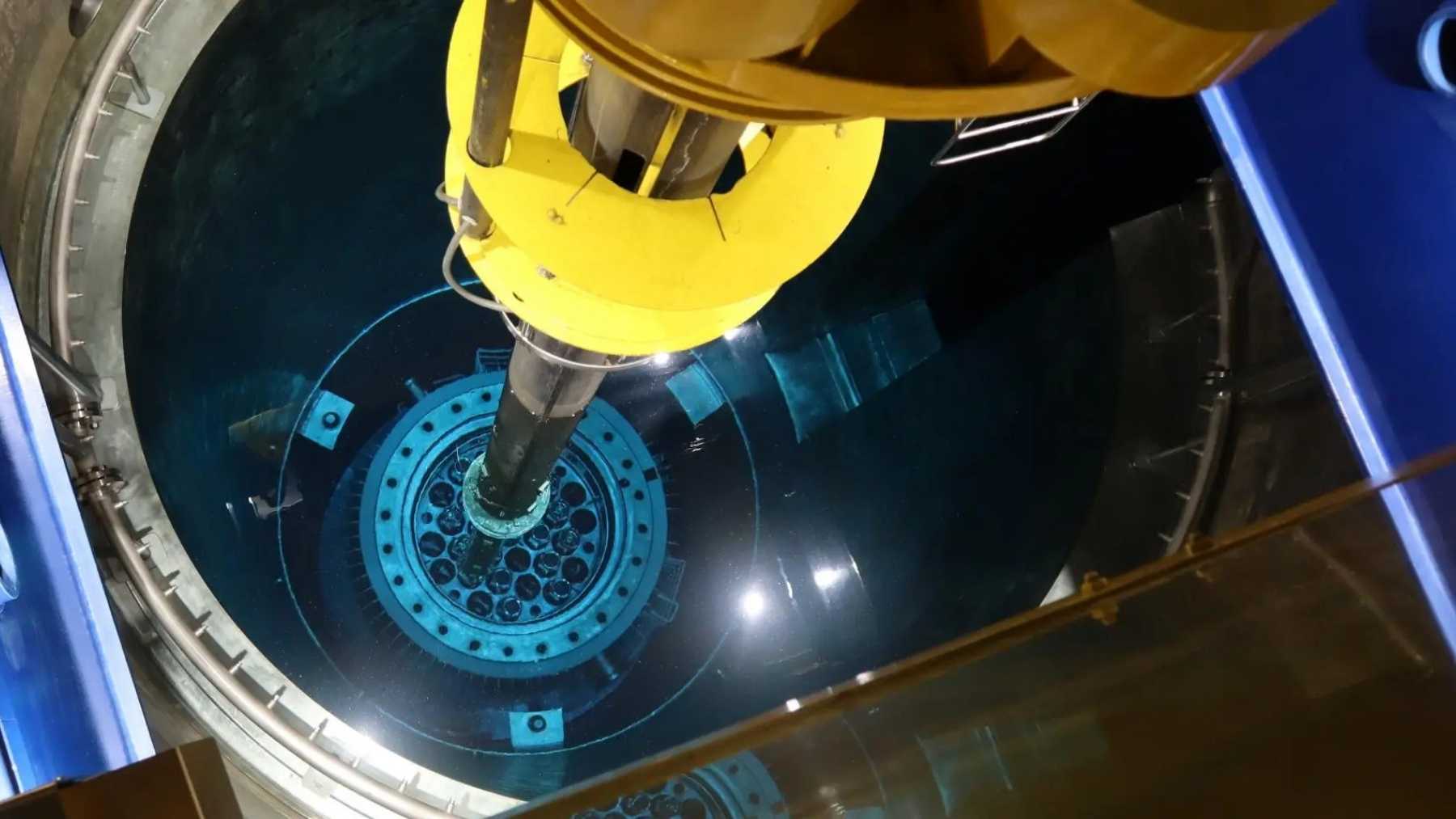
The reactor pressure vessel is the thick steel can that holds the nuclear fuel and the water around it, and it has to do that job without cracking for the 60-year life of the plant. Each of Sizewell’s two EPR reactors needs one. It is the same class of 13-metre (43-foot) forged-steel cylinder Framatome makes at its plant in Saint-Marcel, France.
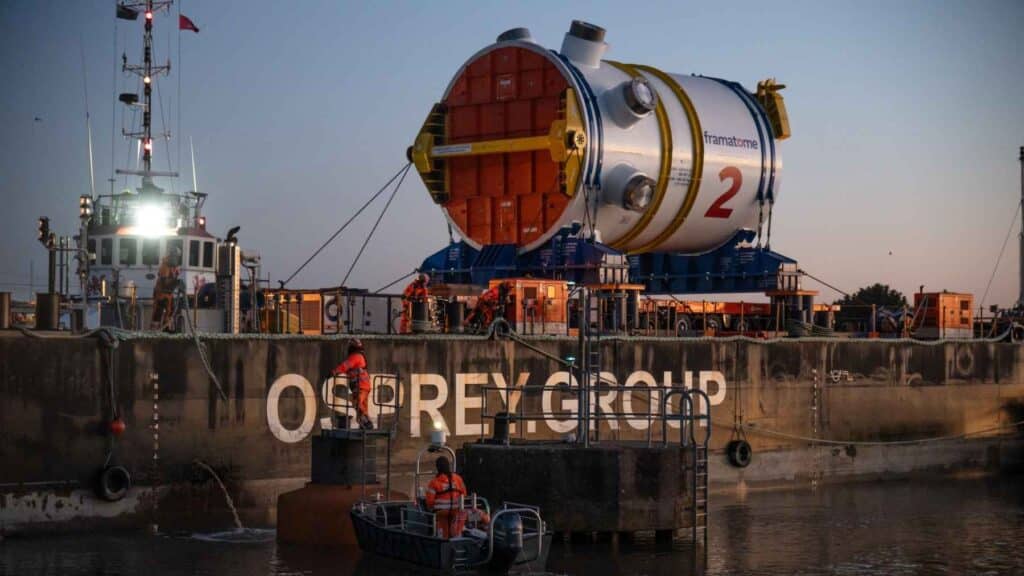
The regulator does not soften the stakes. In its own inspection record, the Office for Nuclear Regulation classes the vessel as a Nuclear Safety Class 1 component and a high integrity component, and states that “the consequences of failure during operation cannot be tolerated.”
That is the whole reason a couple of extra paperwork flags on a steel forging becomes news. On most industrial objects, a non-conformance report is routine housekeeping, a note that something did not match the spec and got corrected. On this one, every flag gets read line by line.
A weld the ultrasound didn’t like
The concrete finding sits in the vessel’s closure head, the removable lid that seals the top of the reactor. During manufacturing, in-process ultrasonic testing picked up what the report calls indications in the closure head weld. That is the scan flagging something inside the weld that has to be investigated and, in this case, repaired.
The inspector handled it the way you would hope. Formal actions were placed on Sizewell C to confirm the repair meets RCC-M, the French nuclear construction code, to prove the repaired weld passes inspection, and to run a root-cause analysis so the same thing is less likely to happen on the next seam.
Another action went further into the plumbing of quality control: making sure the raw ultrasonic data from Framatome’s automated scans gets handed over to Sizewell C and stored as part of the vessel’s lifetime quality records. On a component that has to be trusted for six decades, the paper trail is almost as important as the steel.
Why a single weld carries this much weight comes down to how these vessels are built. The gold standard is a seamless forged ring with no welds at all, made on one of the handful of giant presses on Earth that can squeeze a 500-tonne (550-US-ton) steel ingot, because every weld is a spot you have to inspect for the entire life of the reactor. The closure head weld is one of those spots. Catching a problem there now, in a factory in France, is a great deal cheaper than finding it after the lid is bolted onto a running plant in Suffolk.
The copy was supposed to be the boring one
Sizewell C’s entire cost argument rests on it being a faithful photocopy of Hinkley Point C. Same European Pressurised Reactor, same layout, same suppliers, the same crews expected to shift across as the first plant winds down. Do the hard version once, the thinking goes, and the second one gets smoother and cheaper.
So the vessel coming out of the forge with more flags than Hinkley’s is the opposite of the brochure. Sizewell C told the regulator as much directly: the number of non-conformance reports on its vessel has climbed compared with Hinkley’s.
The cause, according to both Sizewell C and Framatome, is not the steel and not the design. Their root-cause analysis points at human performance, the people, procedures and execution on the shop floor. In response, Framatome has rolled out a human-performance improvement plan across its whole Saint-Marcel site, not just the reactor-vessel line.
That fits how Saint-Marcel has been operating. Framatome has been running the plant like a car factory, borrowing lean-manufacturing methods and assembly-line rhythm to push enormous reactor parts out on a fixed schedule. Pace and pressure are exactly the conditions where human-performance slips tend to surface.
The regulator signed it off anyway
For all of that, the number most people miss is the one that matters most. Both licence conditions the inspector was checking came back green, the top rating on the scale, and so did the inspection as a whole.
The inspector recorded that Framatome’s surveillance arrangements are adequate and being implemented, that Sizewell C is managing its non-conformance reports appropriately, and that the welders and testing operators on the job were all properly qualified. The shortfalls that did turn up, including the weld repair and a gap in how one set of French inspection guides had been formally reviewed, were captured as minor items under the lowest tier of regulatory issue.
Sizewell C’s framing leans on all of that. “Replication means doing things better,” a company spokesperson said, arguing that its early, in-factory approach is precisely what let this problem get caught so soon. Two years into construction, with almost 2,000 people on site and nearly £1 billion (roughly $1.3 billion) in contracts already placed in the surrounding region, per the project’s own account, the developer is not treating a green-rated inspection as a crisis.
The EPR has been here before
Not everyone is reassured, and the reason is history. The campaign group Together Against Sizewell C flagged the rise in non-conformances as a concern, pointing to the money British consumers are on the hook for as the project’s costs climb.
EPR watchers do not have to reach far for a cautionary tale either. France’s Flamanville 3, the same reactor family, ran years late and billions over budget partly because of manufacturing and quality problems on major forgings, its own reactor vessel among them. That is the shadow hanging over any bad-news story about EPR steel.
It is also why the ONR is picking through this vessel while it is still being welded in France, rather than waiting for a finished lid to arrive on the Suffolk coast. The whole point of inspecting a component mid-manufacture is to catch the thing you cannot fix later while you still can.
Put the copy-paste pitch and the anxious history to one side, and what the report actually documents is a system doing its job. A scan caught something in a weld, the regulator wrote it down, and a repair is on the clock, years before the steel goes anywhere near a reactor building. The uncomfortable part for Britain is not that one flag. It is that the plant sold as the easy one is generating more of them than the plant everyone called hard.