
Two-and-a-half weeks ago, a test weight was submerged in the Danish harbor. It sat under 1,760 tons of water bags, testing if it could handle carrying that kinda thing out to sea.
But this was a rehearsal. The actual box is now sitting at the bottom of the Baltic Sea, the fourth element of a tunnel being built by Femern.
The Danish state company building the tunnel announced on September 28th that the fourth element had been immersed in the trench south of the island of Lolland and connected to the three already down there. Danis trade outlet Dansk Byudvikling reported that the final element was put in place over the weekend, either the 26th or 27th.
So how do you move an 81,000-ton box?
Slowly, and with an escort.
Each standard Fehmarnbelt element is 712 feet (217 meters) long and weighs more than 81,000 short tons (73,500 metric tons). To put this into perspective for our readers (and myself), a Ford Mustang is about 2.2 tons at its heaviest.
This is a very, very big box.
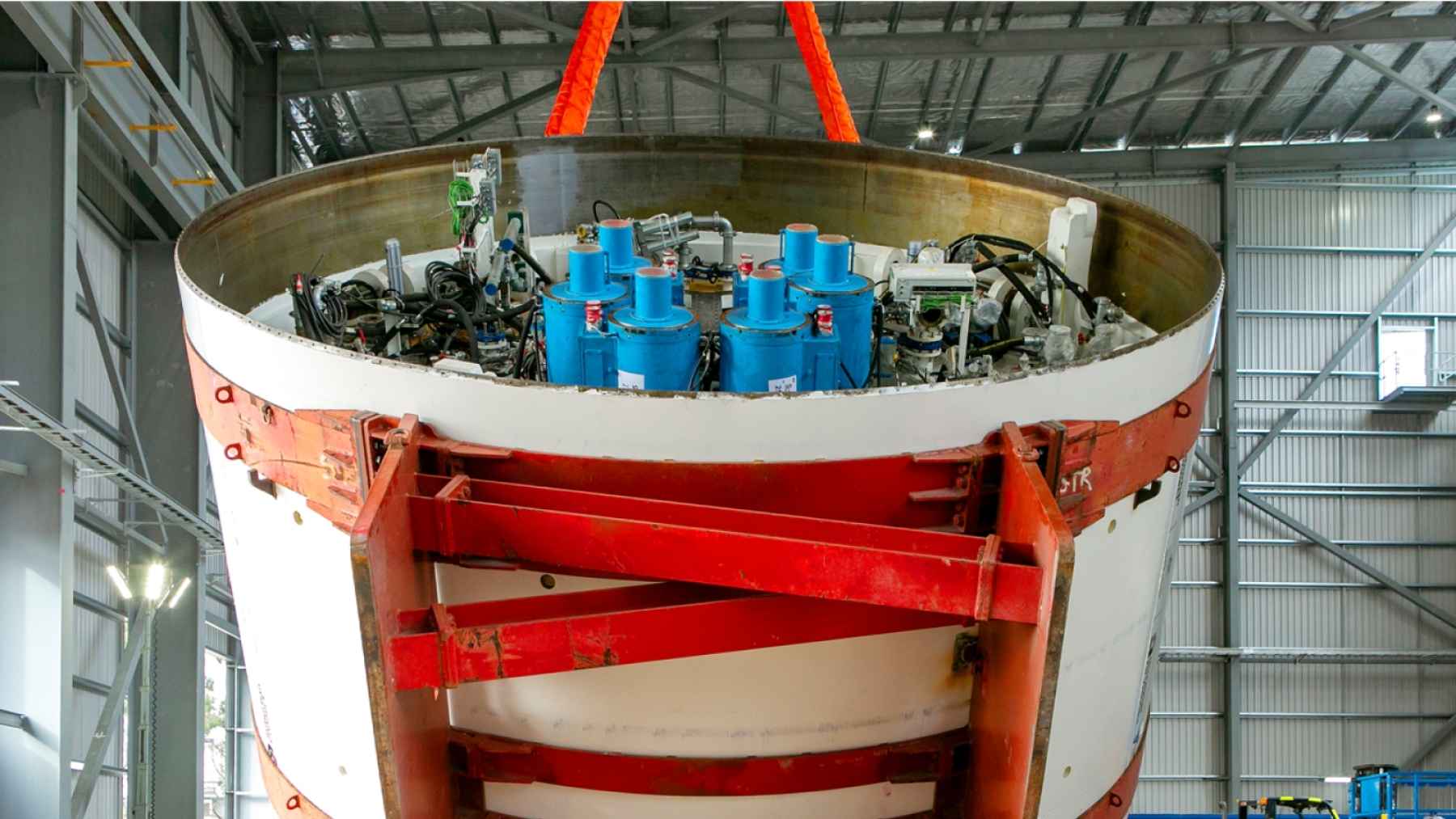
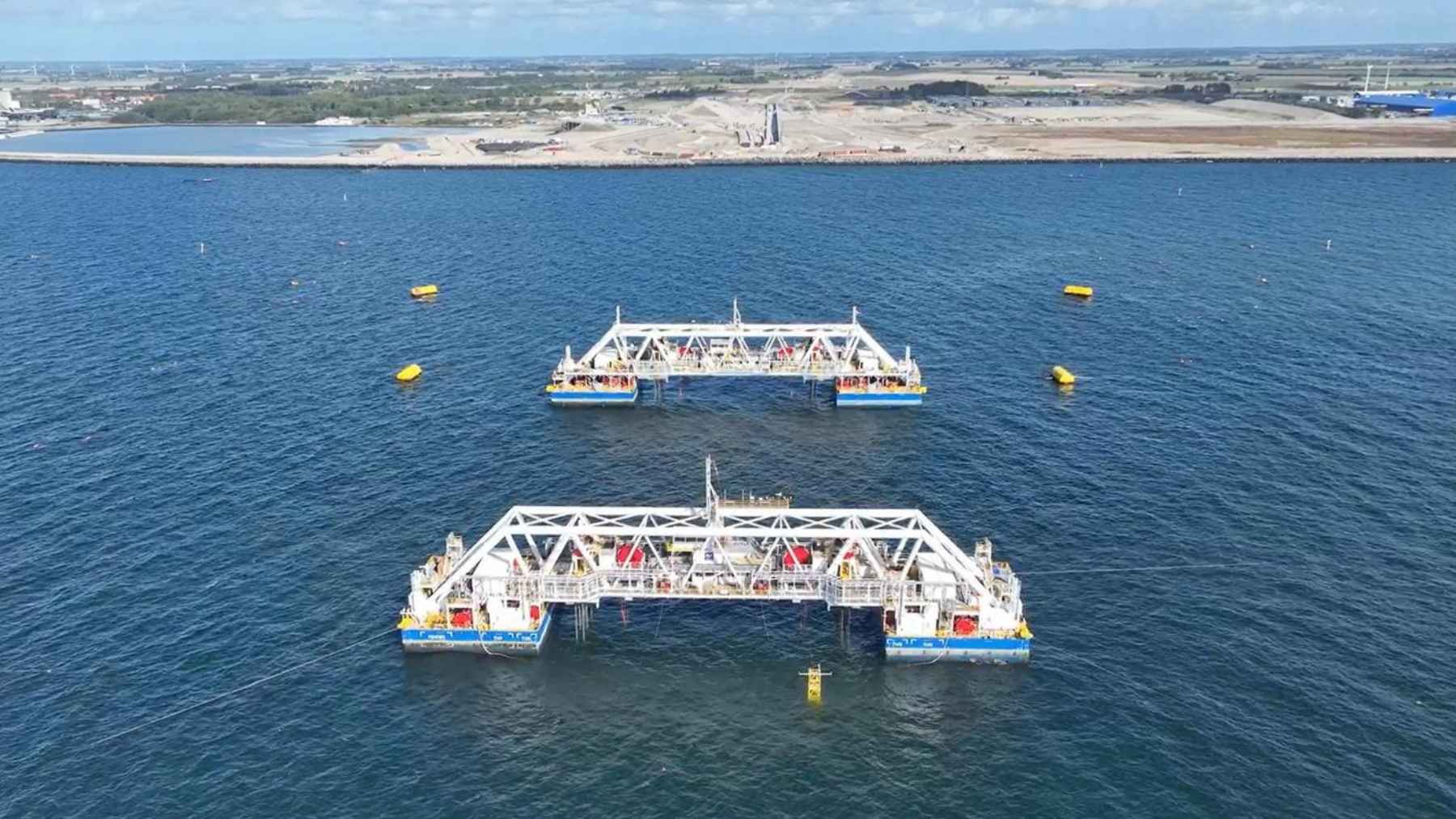
It traveled from the work harbor at the tunnel factory in Rødbyhavn to the immersion site behind tugboats and IVY, the purpose-built vessel that clamps onto both ends of the box and lowers it into the trench on winches.
If you’ve never thought about how an immersed tunnel gets built, the short version is that nobody digs it. The boxes are cast in a factory on land, sealed watertight, floated out like very ugly ships, and sunk one by one into a trench dredged into the seabed, where each new box is pulled tight against the last and the water between them gets pumped out.
When this one is finished, it’ll be the longest immersed tunnel anywhere, with a four-lane highway and two electrified rail tracks inside. Femern says the crossing to Germany will take 10 minutes by car.
Femern hasn’t said how deep this element is or how many hours the operation took, and I couldn’t find either number elsewhere. What the company did share is the name. Element number four is called Nykøbing Falster, because every box gets christened after a city along the Scan-Med corridor, the European transport spine running from Malta up to Finland that the tunnel will plug in to. Nykøbing Falster is the largest town on the Danish islands.
Naming an 81,000-ton slab of concrete after your regional market town is a pretty endearing habit for a megaproject, if you ask me. Otherwise, we’re just talking slabs and blocks.
Four down, 85 to go
So how far along is this thing, really?
With the fourth element connected, Femern counts nearly 2,950 feet (900 meters) of tunnel on the seabed, out of 11 miles (18 kilometers) between Rødbyhavn and Puttgarden on the German side. Femern’s framing it as the tunnel approaching its first kilometer. That’s the kind of milestone you reach for when the finish line is still a two-digit number of miles away.
I don’t mean that as a dig (and they don’t dig. Huh? Huh?). A tunnel assembled from 89 factory boxes spends years looking barely started, and then, at least on paper, the count should start moving fast.
I also ran the calendar. We had the third element connecting on August 1st, which makes the gap to this one roughly eight weeks, the longest between any two immersions so far. The early pace was rough enough that we did some ugly arithmetic on it back in July, and the gaps had been shrinking since.
So is eight weeks a bad sign? I’d say not this time, because of what this particular box spent part of September doing. It was the barbell. Crews stacked it with water bags and had IVY lift it to rehearse for the next, heavier-riding element, and you can’t tow a box out to sea while you’re using it as gym equipment.
Up next: the box with a basement
The fifth element to go down won’t be another 712-footer. Femern says the next one in line is the tunnel’s first special element, one of 10 shorter boxes cast with a basement under the roadway. The basement houses the tunnel’s technical installations, and at road level, the same box provides a service vehicle a place to pull over without blocking a lane of the highway.
Femern compares the whole thing to a four-story building, and it’s going down this fall.
That’s the lift all the water bags were about. A box with a basement hanging under it rides higher in the water on the way out, shifting more of its weight onto IVY. The vessel had to prove it could carry the load before the real thing left the harbor. It passed, and the fourth element got its roof cleared and went to sea.
Lasse Vester, deputy contract director at Sund & Bælt (Femern’s state-owned parent), said that once the first elements were on the seabed, “it was important to demonstrate that the equipment, method, and cooperation work in practice.” Each operation is still demanding, he added, but the team feels ready for the basement box.
Back on land, the casting lines at Rødbyhavn keep pouring. Femern puts the tally at 16 standard elements and three special ones cast so far, 19 of the 89 that the finished tunnel needs. Production running ahead of immersion is exactly what you want on a job like this, since a casting hall doesn’t care what the Baltic’s doing in November and a marine operation very much does.
Femern announced all this on September 28th and expects the first special element to go down before the fall is out. The crews at Rødbyhavn still have 70 boxes to pour.