
Filling a bathtub and getting in is the cheapest physics lesson there is. The water goes up. You get lighter, because the water you shoved out of the way is now holding part of you up. Pull yourself halfway back out and that help disappears, and your own weight lands on your arms again.
That’s more or less the problem Danish engineers have with the next piece of the Fehmarnbelt tunnel, and it’s why the piece before it spent part of last week sitting in a harbor under a pile of water bags.
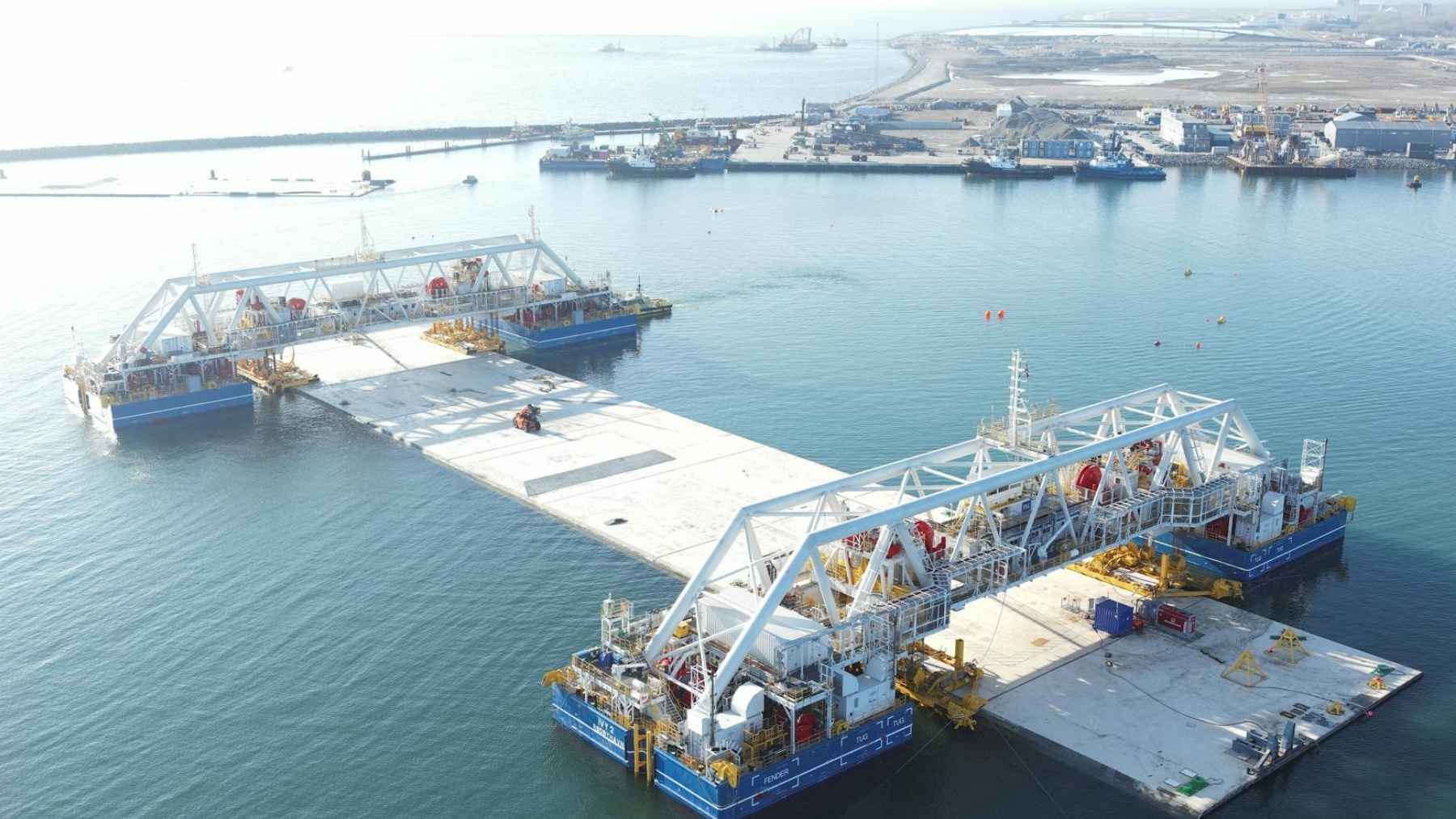
On September 11, Femern A/S said the immersion pontoon IVY had passed a load test in the work harbor at Rodbyhavn, on the Danish island of Lolland. Crews stacked large water bags on the roof of the fourth tunnel element and filled tanks inside it, about 1,760 short tons (1,600 metric tons) of extra weight in all. IVY had the element clamped at both ends, and then it had to pick all of that up.
So why does a pontoon that’s already put three of these boxes on the seabed need another test?
The fifth element is shorter, taller, and has a basement
The tunnel’s being built out of 89 concrete boxes cast in a factory on Lolland and floated out one at a time. Seventy-nine of them are standard: 712 feet long, 138 feet wide, more than 81,000 short tons (73,500 metric tons) apiece, hollow inside and divided into five tubes for the highway, the railroad and the service gear.
The other ten are the odd ones. Femern puts the special elements at 128 feet long, the same 138 feet wide, and 43 feet high, which it compares to a four-story building.
The extra height is underneath. Each special element has a basement, and Femern says that basement holds the tunnel’s technical installations.
So what does a tunnel keep in a basement? Essentially the utility room for an 11-mile hole under the Baltic, dropped in about every 1.2 miles, and Femern hasn’t gone into much more detail than that. Up at road level, the same box gives a service vehicle somewhere to pull off without sitting in a lane of traffic.
Here’s where the bathtub comes back. Because of that basement hanging below it, the special element has to ride higher in the water on the trip out to the trench. The higher you lift a floating thing, the less water it pushes aside, and the less the water holds it up. All that weight’s got to go somewhere, and it goes onto the pontoon.
You can’t rehearse that with a box that hasn’t been cast yet, so the crew faked it with the standard element already clamped in the harbor. To pass, IVY had to lift the fourth element to the same height the special one will need. It did.
“The test was a rehearsal for a highly complex technical operation,” said Lasse Vester, Deputy Contract Director at Sund & Bælt, the Danish state company that owns the project.
Using water bags to imitate a box that doesn’t exist yet is a pretty low-tech answer to a high-tech problem, and I mean that as a compliment.
IVY is actually two boats
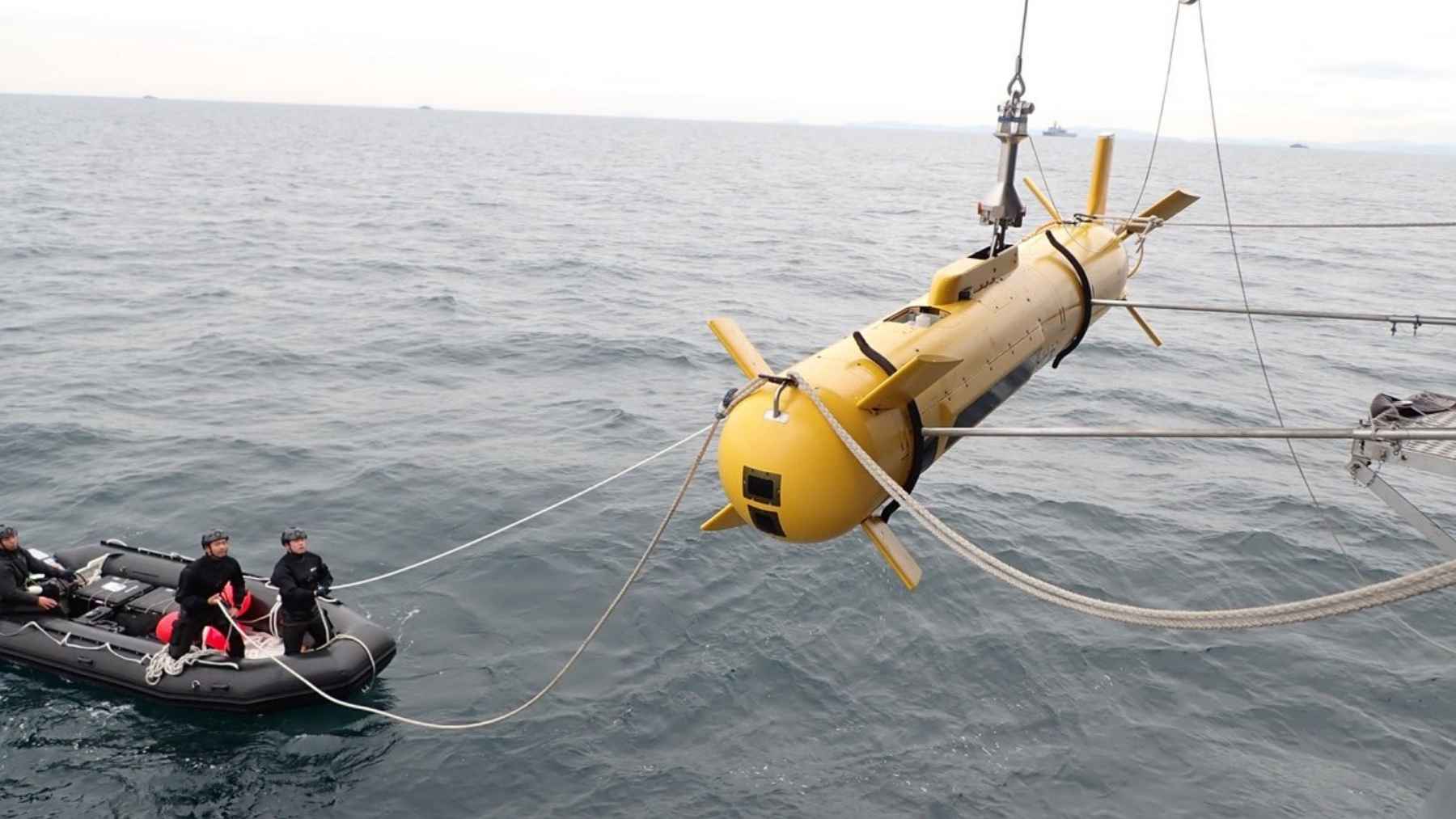
IVY is probably my favorite piece of hardware on this job, and it isn’t even one vessel. It’s IVY 1 and IVY 2, two pontoons that clamp onto opposite ends of a 712-foot element and carry it out with a float on each end. A 128-foot box is nowhere near long enough for that, so for the special elements the two units couple together and work as a single vessel instead. Between them they run 66 winches and roughly 14 miles of steel wire, and they’re rated to lower an element to 131 feet with what Femern calls millimeter precision. The Danish Maritime Authority signed the rig off in April.
One number I couldn’t get. Femern hasn’t published what a special element weighs, and it isn’t in any of the releases I went through. New Civil Engineer put those elements at about 23,000 short tons (21,000 metric tons) back in April, which would make one of them less than a third of a standard box, though the same writeup lists a width for them that doesn’t match the figure Femern published this month. So I’d call it a ballpark.
Three down, 86 to go
Three elements are on the bottom. The first was locked onto the Danish portal on May 7, the second went down on June 27, and the third was connected on the morning of Saturday, August 1. The fourth is the one in the harbor with the water bags coming off it, and once it’s down, the first 2,950 feet of an 11-mile tunnel are in place.
That’s a bit over half a mile, and that’s 85 boxes still on land.
The pace has been the real story here, and it’s getting better. The first two immersions were 51 days apart, which we went through in July when the arithmetic looked ugly. The second and third came in around 35 days apart. That’s still well off the interval the original schedule assumed, so I wouldn’t book a ferry replacement yet, but the direction is right. Vester said after the second immersion that he expected the work to speed up as the contractor got more practice, and so far that’s holding.
Femern put the test result out on September 11 and says the water bags are already coming off. The fourth element goes out next, and the first box with a basement after that one, more than 65 feet down.