
Most Nuclear Regulatory Commission event reports read like the back of a stereo manual. You get bus numbers, valve tags, mode changes, and enough acronyms to make your eyes cross. So I wasn’t expecting much when I opened the NRC’s Nov. 5 report, until I got to Event 58517 and a line you don’t run into very often: “This event occurred immediately following a lightning strike near the station.”
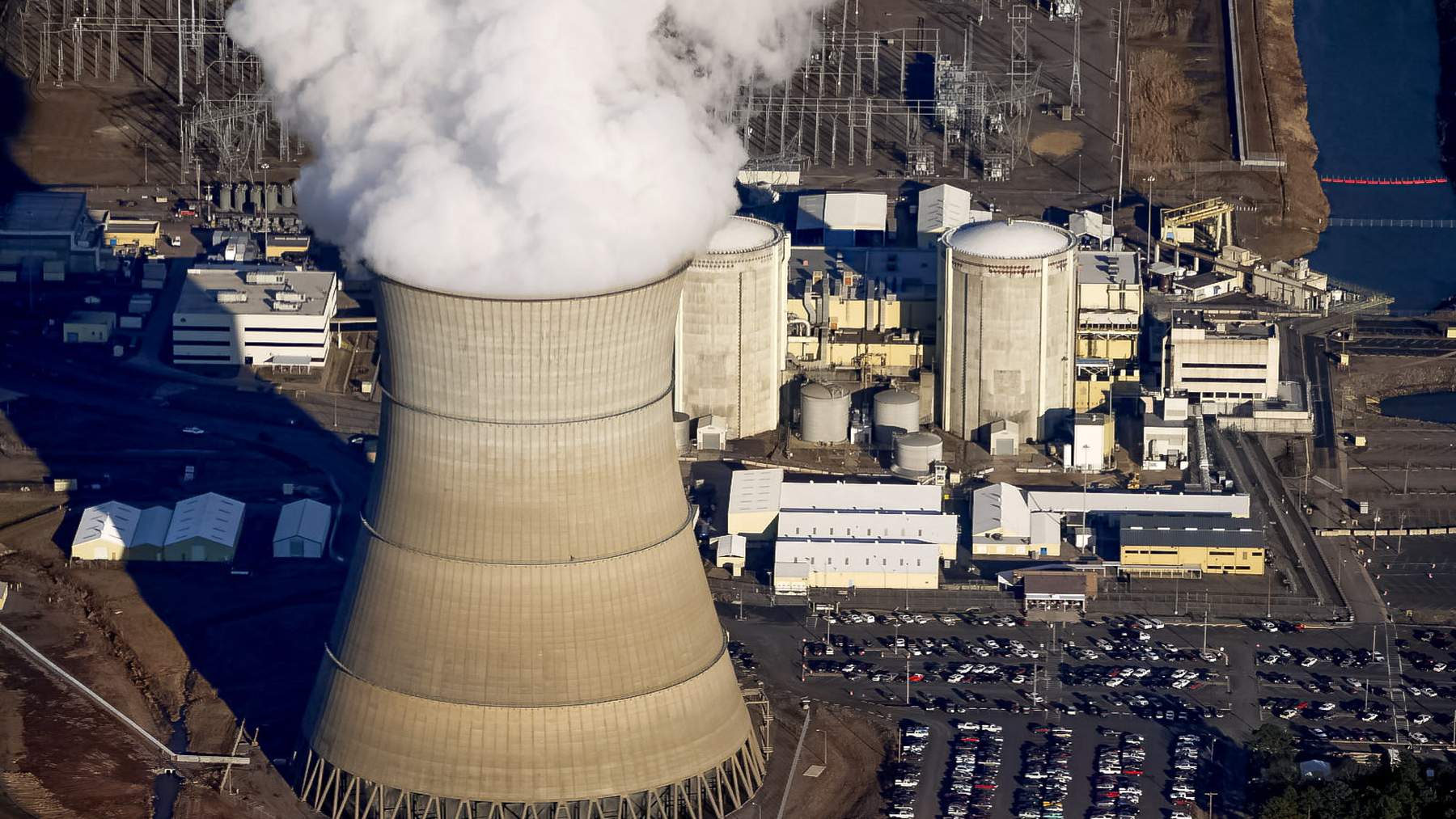
The station is Arkansas Nuclear One, a two-reactor Entergy plant at London, Arkansas, about 6 miles west-northwest of Russellville. At 8:38 a.m. Central on Tuesday, Nov. 3, Unit 2 was running at 100 percent when it shut itself down.
Two big electrical buses, 2H1 and 2H2, had gone dead. A bus is basically the breaker panel in your basement scaled up to 6,900 volts, and those two kept the reactor coolant pumps running. All of the pumps stopped, and the reactor’s protection system took it from there.
So did the lightning do it?
Pretty likely, but the report doesn’t quite say that. Entergy names the dead buses as the reason the pumps quit, then mentions the lightning separately, without saying where it hit or how it might’ve reached those buses. Local station 5NEWS reported that the pumps lost power after the strike, which gives you the same order of events and not much more.
I wouldn’t read anything into that. Entergy phoned this in at 1:08 p.m. Eastern, about three and a half hours after the trip, and that’s not a lot of time to work out a root cause. Compare that with Unit 1, the reactor next door, which went down on Aug. 29, 2003. The plant’s monthly report to the NRC called that one a “lightning induced scram,” but it was written weeks later.
So why does losing the pumps shut down a reactor?
Unit 2 is a pressurized water reactor, which means it has two separate loops of water. The first runs through the core under pressure and carries heat to the steam generators. There, that heat boils the water in the second loop, and the steam spins the turbine. The coolant pumps keep the first loop moving, and they run on electricity.
Take away the flow and the fuel rods can’t shed heat nearly as well. Normally, water touching a rod forms tiny bubbles that float away, and that’s a great way to move heat. Push it too far and those bubbles merge into a film of steam, which works more like an oven mitt. Engineers call that departure from nucleate boiling, and they keep a running ratio of how much margin is left before it happens.
The report says Unit 2 tripped for exceeding that ratio on protection channels 1 and 2. That sounds a lot scarier than it probably is. As I read it, the system’s calculated margin crossed its trip line, and that line exists so the control rods go in before the fuel ever gets there. I can’t find anything in the report about fuel damage. Entergy reported no sign of any radiological release or any effect on the public or plant workers.
All the rods went in. That automatic slam is what the industry calls a scram, and it’s frankly what you’d want a reactor to do when its pumps vanish. This one has tripped over less. On May 26, 2019, Unit 2 scrammed from 100 percent at 5:12 a.m. after a single coolant pump, 2P-32B, grounded out.
You might also be wondering why anything feeding those pumps gets labeled “non-vital,” which is a slightly alarming word to find in a nuclear plant report. In plant-speak, vital buses are the ones feeding safety equipment during an emergency. The coolant pumps matter a lot when the plant’s making power, but once a reactor’s shut down, hot water rising and cooler water sinking can pretty much do their job. That’s called natural circulation. The report doesn’t say when the pumps came back, or if they have yet.
The backup diesels started and then had nothing to do
Dropping the rods stops the chain reaction, but it doesn’t turn off the heat. Fuel keeps putting out decay heat long after a shutdown, so something still has to carry that away.
Water levels in steam generators A and B fell, and the emergency feedwater system started on its own and kept filling both of them. Entergy says it worked as designed. The usual destination for that steam, the main condenser, had lost its vacuum when the buses went down, so Unit 2 vented steam through its atmospheric dump valves instead.
Venting steam to the sky doesn’t sound great, I get it. But that’s second-loop steam, from the side of the plant that’s kept separate from the water running through the core. In that 2019 trip, the steam went to the condenser, which is the tidier option when it’s available.
Both emergency diesel generators also fired up by themselves, triggered by a slow transfer of plant power over to the grid through startup transformer 3. They never connected to anything. The 4,160-volt vital buses stayed live on offsite power the whole time, so the diesels were like a standby generator at your house that roars to life when the lights flicker, then finds out the utility is still there.
That’s arguably the most boring outcome available, and boring is good here. Entergy’s Waterford 3 in Louisiana didn’t get off so easy when it shut itself down at 10:45 p.m. on Oct. 16, because a bus transfer failed and one of its diesels had to pick up a load. Those are different plants with different triggers, and I’ve seen nothing that ties them together.
The only hands-on step the Arkansas report spells out involves service water, which is basically the cooling water plant equipment runs on. Pump 2P-4A tripped during all this, and operators started 2P-4B by hand to get loop 1 back.
Unit 2 had been on a pretty good run
This isn’t some forgotten machine. Unit 2 has been in commercial service since March 26, 1980, and its NRC license runs to July 17, 2038. It’s rated for 3,026 megawatts of heat, and Entergy lists 988 megawatts of electricity coming out the other end, so roughly two-thirds of that heat never becomes power.
It’s also fresh out of the shop. Entergy announced on May 5 that Unit 2 had come back from a refueling outage that began March 14 and cost more than $200 million. The work list included a new reactor vessel head, new main chillers, and new fill for the cooling tower.
Before that, the company says, Unit 2 ran for 501 days straight and went three consecutive fuel cycles without dropping offline between refuelings, more than 1,500 days in total. So about six months into a new cycle, that streak’s apparently over. There’s nothing in the report that connects the outage work to the trip, and with lightning in the picture, I wouldn’t go looking for it.
Entergy says the two Arkansas Nuclear One units together cover about 56% of the energy demand of its 730,000 Arkansas customers, so a shutdown of the bigger one isn’t nothing. Still, I can’t find any report of customers losing power over this, or any word on what replacement electricity is costing.
So when does it come back?
We don’t know yet. The report’s last update is dated Nov. 3, the NRC’s Nov. 6 report lists no new events, and 5NEWS didn’t have a restart date either. I also went through Entergy Arkansas’s news page and found nothing about the trip.
Hot standby at least keeps the options open. The reactor’s shut down, but the first loop stays hot and pressurized, and that generally makes for a much quicker return than a full cold shutdown. Unit 1’s 2003 lightning scram had it back on the grid by Sept. 1 of that year, about three days later, though that’s a different reactor and tells you very little about this one.
We’ve been covering a lot of these lately. Two days earlier, Nebraska’s Cooper station got shut down by hand over a shaky feedwater pump. Entergy will presumably owe the NRC a longer written report on this one, and that’s usually where you’d find a proper answer about the lightning.
The NRC’s Nov. 5 status report still had Arkansas Nuclear 2 at 0 percent power, with Arkansas Nuclear 1 at 100.