
TEPCO’s big robotic arm has spent most of 2026 parked inside the same building as the job it was built for. Just sitting there. But that’s about to change.
We covered the 72-foot machine back in July, when it was fresh out of testing, and the plan still called for a first grab attempt inside Fukushima Daiichi’s Unit 2 reactor this fall. The arm reached the plant in April, when it got hoisted into the Unit 2 reactor building on April 21. Then it sat.
On Friday, the sitting ended.
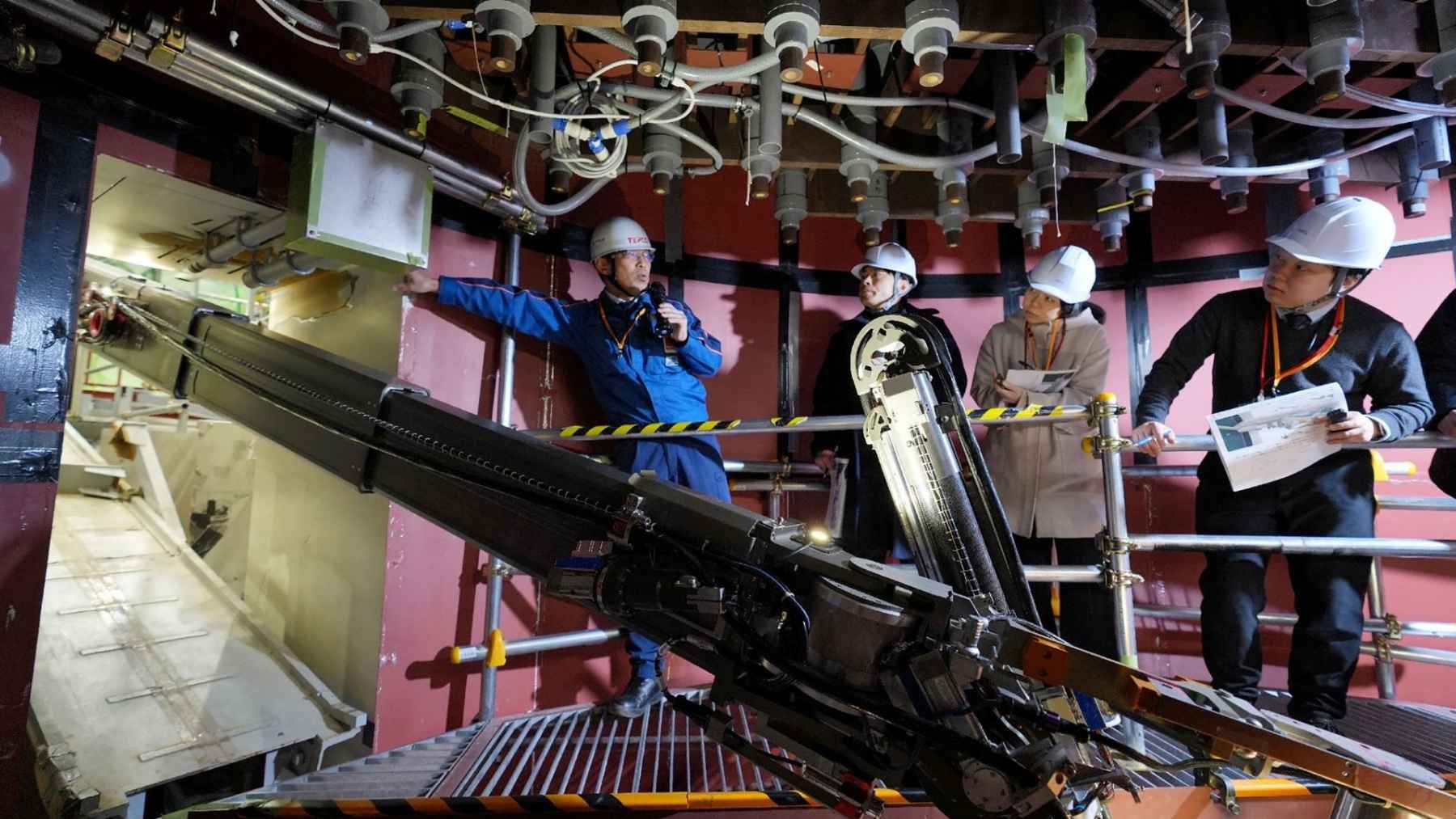
At 10 a.m. Japan time on October 2nd, the arm slipped its tip through a valve in the pipework that leads into the reactor’s containment vessel, according to Kyodo. The rest of the 4.6-ton machine followed through a 22-inch (55-centimeter) side opening called the X-6 penetration, the same front door that the fishing-rod device used for the first two grabs.
A penetration, in reactor-speak, is just a reinforced hole through the containment wall where pipes and cables pass. The arm unfolds as it goes, because when it isn’t working, it lives folded away inside a sealed metal box.
While the giant robot arm has finally moved, don’t expect it to be pinching melted fuel by the weekend. TEPCO plans to spend three to four months clearing obstacles from the route, including slicing steel rails apart with high-pressure water, while gathering 3D data on the vessel’s interior.
The whole operation should run about six months, and the grab attempt itself is now a 2027 job. Feels like I’m waiting for a Tesla vehicle to come out at this point.
So why is a robot cutting steel with water?
Fair question.
Fukushima already has a famous surplus of contaminated water, so hosing more of it around sounds backward at first. But a jet of plain water at high enough pressure slices straight through a steel plate. And it cuts cold, meaning it doesn’t torch or spark its way through the metal.
Machine shops and shipyards use the technique every day for exactly that reason. Inside a containment vessel, where nobody’s ever stepping in to put out a fire or redo a botched cut, water’s arguably the least bad cutting tool on the menu.
Which rails, exactly, and how much steel have to come out? Kyodo’s report doesn’t say, and TEPCO hasn’t published a cut list, so I can’t tell you. What the utility has said, however, is that the arm’s tip accepts interchangeable tools, and that a second, two-armed robot housed inside the storage box handles tool changes depending on the task.
A robot pit crew for a robot. Frankly, that’s my favorite detail in the whole setup. The future is here. Well, almost.
The arm lost its summer to a stuck joint
TEPCO’s own progress reports explain the quiet months. During function checks with the isolation valve still closed, operators couldn’t release the position-holding mechanism on one of the arm’s joints (joint No. 3, for the record), and the motor-and-reducer unit driving it was sent back to the Naraha test center for replacement, TEPCO explained.
The plan on paper back in April still promised debris sampling by this summer. The hardware didn’t cooperate, and the insertion slipped to October.
Delays are basically this machine’s biography. Development began in 2017 under the International Research Institute for Nuclear Decommissioning, an organization that no longer exists, with Mitsubishi Heavy Industries and the UK’s Veolia Nuclear Solutions handling the engineering, according to IEEE Spectrum.
The arm was supposed to handle the very first debris retrieval. The pandemic and a string of technical problems pushed it aside, and a fishing-rod-style gadget ended up making the first two grabs instead.
Meanwhile, the government has put about 7.8 billion yen into the arm and related projects along the way, which amounts to roughly $50 million. Against what this cleanup swallows, that’s close to a rounding error.
The target is still measured in grams
The 2024 and 2025 trials recovered about 0.9 grams of debris combined, and there’s still an estimated 880 tons of it sitting across the three wrecked reactors, with roughly 237 tons in Unit 2 alone. We ran the napkin math on that gap in the July piece, and the answer involved millions of years, so I won’t do that to you again. I’ll get a robot to do it next time.
These trials have a different job, however. The gram-scale samples tell chemists what the melted fuel turned into, and the 3D survey tells engineers where it sits and what’s blocking the way, so someone can design full-scale removal machinery based on real measurements rather than guesses.
Radiation inside the containment vessels still keeps workers out entirely, which is why so much of the debris and the conditions around it still aren’t mapped. You see the same survey-first, cut-second routine all over nuclear work now, like the caged drone that 3D-mapped Idaho’s radioactive waste vaults so a welding robot would know exactly where to open them.
When the grab does happen (and it will, right!?), it’ll look less like an excavator and more like an arcade claw machine. IEEE Spectrum’s breakdown of the arm describes how the assembly angles down toward the pedestal, the concrete structure holding up the reactor, then lowers its tip on a cable toward the debris field.
The gripper at the end carries two tiny pincers, about 5 square millimeters, built to pinch a pebble of debris and ride back out the way it came. Anything it recovers goes first into a sealed glovebox in the reactor building, then to a Japan Atomic Energy Agency lab in Ibaraki Prefecture for full analysis.
So the schedule, as of Friday: tip through the valve at 10 a.m. on October 2, three to four months of cutting and mapping, and a full operation Kyodo puts at about six months, which lands the third grab attempt in 2027.
The retrieval this arm was built for was originally supposed to start in 2021. It’s six years late and finally, physically, on its way in.
Right?
Right?
Sorry, I just wanna see the robot action we’ve been promised!