
Shut-down nuclear plants don’t usually go anywhere. The industry even has an official term for leaving one in place, SAFSTOR, which basically means you lock the gate for a few decades while the radiation decays and the cleanup fund earns interest. That’s what Vermont Yankee was headed for: close the plant, wait about 60 years, then start tearing things down.
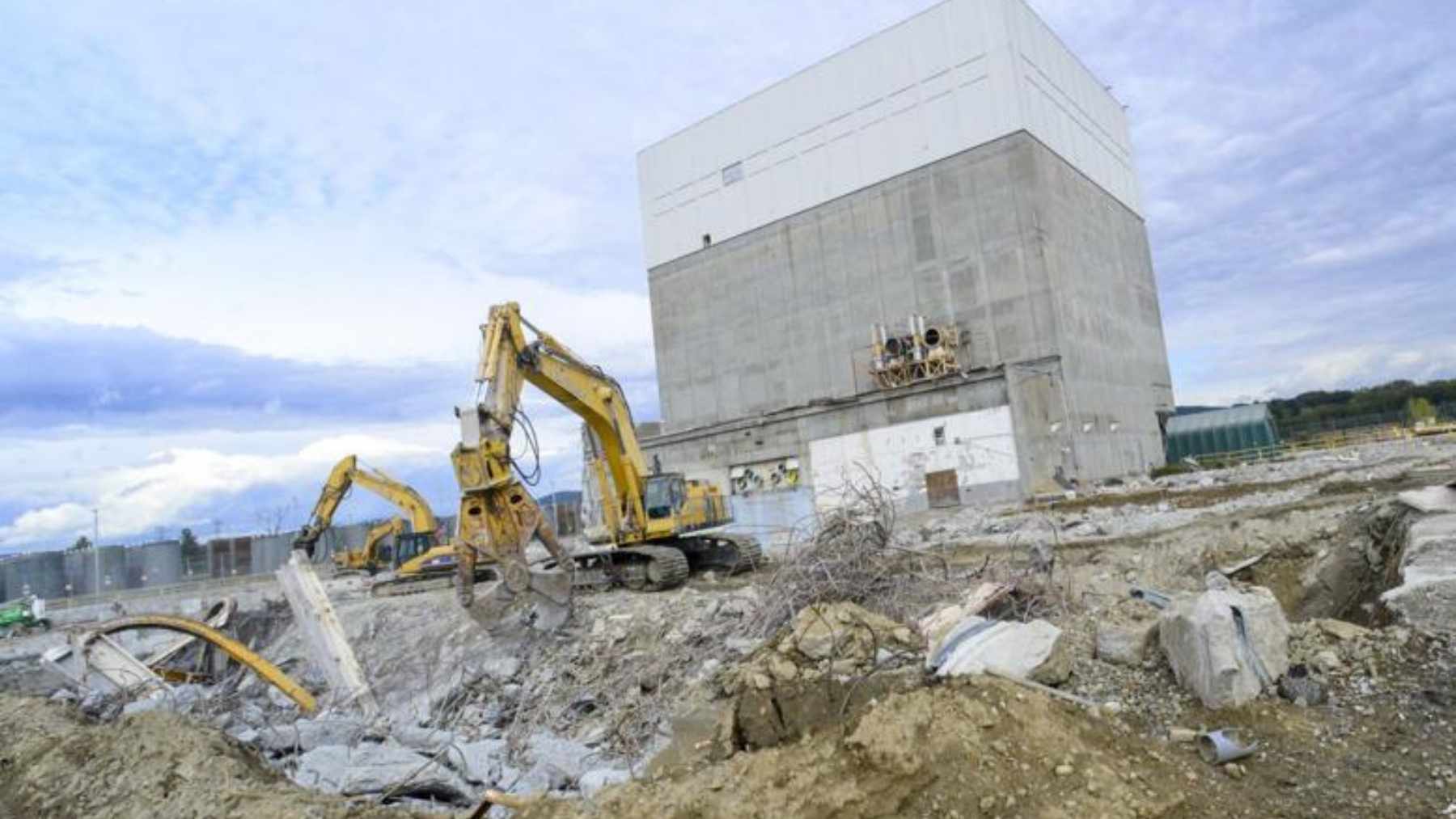
That’s not how it went. NorthStar Group Services bought the plant in 2019 with a promise to take it apart fast, and last week the company walked reporters around the 140-acre site in Vernon, Vermont, to show the results. The five-story reactor building that loomed over the Connecticut River for close to 50 years isn’t there anymore, and every other large industrial structure has come down with it.
Scott State, NorthStar’s executive chairman, put the project at “99 percent done,” according to VTDigger, which carried the Brattleboro Reformer’s report on September 23. What’s left, from the sound of it, could pass for a gravel contractor’s yard.
The plant itself went dark on December 29, 2014, when Entergy shut it down for economic reasons even though its operating license ran to 2032. Cheap natural gas had turned the 604-megawatt reactor into a money-loser in New England’s deregulated power market, and Entergy’s plan was to park the plant in SAFSTOR and let somebody deal with it around the 2070s.
NorthStar’s pitch, which won Vermont over in 2018 and 2019, was the opposite: start cutting right away and finish decommissioning and site restoration by 2030, 45 years sooner than the original schedule.
The money tells you how close they’re running it. NorthStar inherited a $602 million decommissioning trust fund with the plant, and State says about $8.5 million of it remains to cover the last several months of work. Somewhere between 50 and 80 workers are still out there, going by a NorthStar manager’s estimate. And in case you’re wondering, NorthStar posted financial guarantees to Vermont back in 2018 in case the fund ran dry; State says they won’t be needed.
So where does a five-story reactor building actually go?
Texas, mostly.
All the concrete from the reactor building and its foundation, about 28,000 cubic yards of it, went to Waste Control Specialists’ disposal facility in Andrews, Texas, a site that takes low-level radioactive waste from Texas, Vermont and other generators. And in case you’re asking why concrete counts as radioactive waste: concrete that spends four decades around an operating core doesn’t stay ordinary concrete.
Neutrons leaking out of the reactor slowly make trace elements inside the surrounding material radioactive, so the debris heads to a licensed disposal facility instead of a regular landfill. Vermont also wrote a clause into the sale agreement barring NorthStar from crushing the stuff and reusing it as fill on site, which strikes me as a pretty reasonable thing to insist on.
Some of that concrete wasn’t messing around, either. The reactor building’s foundation and walls ran up to 12 feet thick in places, and NorthStar agreed to dig everything out to 4 feet below the surface. The hole gets filled with clean crushed rock from a local Vermont quarry, roughly 28,000 cubic yards of it. So the site is essentially swapping 28,000 cubic yards of radioactive concrete for the same volume of clean local stone, which is about as tidy as demolition math ever gets.
The reactor vessel came apart underwater
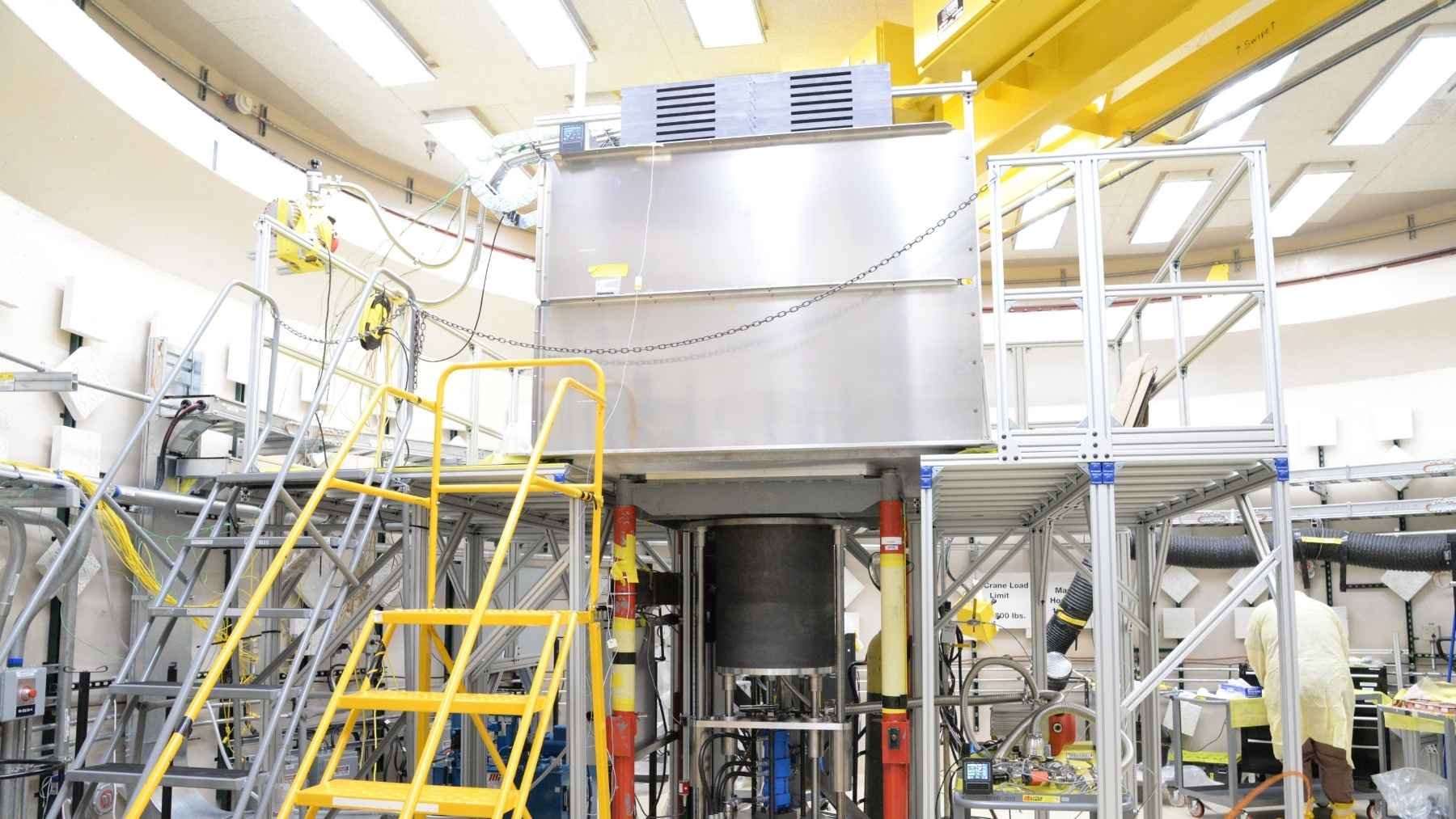
The building was arguably the easy half. The vessel inside it stood about 65 feet tall, measured more than 16 feet across, and weighed about 440 short tons (400 metric tons), the largest metal component in the whole plant. Orano’s crews spent 2019 through 2022 cutting it and its internals apart with remote-operated bandsaws, abrasive water jets and diamond wire saws, logging more than 280,000 work hours, and they did the trickiest cuts underwater.
Why underwater? Because water’s a genuinely excellent radiation shield, and it’s the same reason spent fuel cools off in pools. Keep a few feet of it between a worker and an irradiated hunk of steel and the dose drops to something you can manage, so the saws ran in flooded work zones while operators controlled them from a distance.
Geography forced the cutting in the first place. Getting anything enormous out of Vernon means one rail line or narrow roads through the hills, so hauling the vessel away whole wasn’t a real option. When Oregon’s Trojan plant came down, its reactor vessel floated up the Columbia River on a barge in one piece; Vermont Yankee’s left as packaged segments instead, part of about 694 short tons (630 metric tons) of low-level waste Orano shipped to the same Texas facility. The company wrapped that job in December 2022 and called it its first full segmentation of an American boiling water reactor.
The spent fuel isn’t going anywhere
Walk the property today and the structure you can’t miss sits at the north edge: 58 casks, each about 20 feet tall, built from steel and concrete and holding 2,996 spent fuel assemblies between them, per World Nuclear News. That’s every fuel assembly the plant burned through in 42-plus years of operation, sealed into Holtec HI-STORM storage modules by August 2018.
When does the federal government come get them? There’s no date. The national repository those casks are waiting on hasn’t been built, and building one’s a federal job, so the fuel sits in Vernon for the foreseeable future. The same standoff’s playing out at Oyster Creek in New Jersey, where the buildings go and the fuel stays. Decommissioning an American nuclear plant, it turns out, means demolishing everything except the fuel itself.
So is the site actually finished?
Not quite. The water discharge structure, a plain concrete outlet that used to return warmed cooling water to the Connecticut River, comes down early next year, and NorthStar points out it never handled anything radioactive. NorthStar says it’ll have the physical work done in 2027, and after that the Nuclear Regulatory Commission reviews the whole job before the land can be released for reuse, a check State expects to take a couple of years. Physical teardown, regulatory sign-off and site restoration should all be wrapped by 2030, the deadline NorthStar promised in the first place.
As for what the land becomes, NorthStar wouldn’t discuss it during the tour; keeping quiet on that was a condition of letting reporters in. VTDigger reports that a Texas firm called PowerTransitions holds a lease to scope out the property and has weighed everything from battery storage to a data center to a small modular reactor, though Vernon officials say batteries are the front-runner. I can’t find any of that confirmed by PowerTransitions itself, for what it’s worth. Still, I wouldn’t expect the lot to sit empty for long either way, because a cleared, flat industrial site next to an existing high-voltage substation is a pretty valuable piece of real estate in 2026.
State, who handed NorthStar’s CEO job over to Jeffrey Adix in July and stayed on as executive chairman and chief nuclear officer, told the Reformer the physical work will be finished in 2027, three years ahead of the 2030 deadline his company promised the state of Vermont.
Image credit: Vermont News & Media